Why a Tesla Rental in Los Angeles Makes Sense in 2026
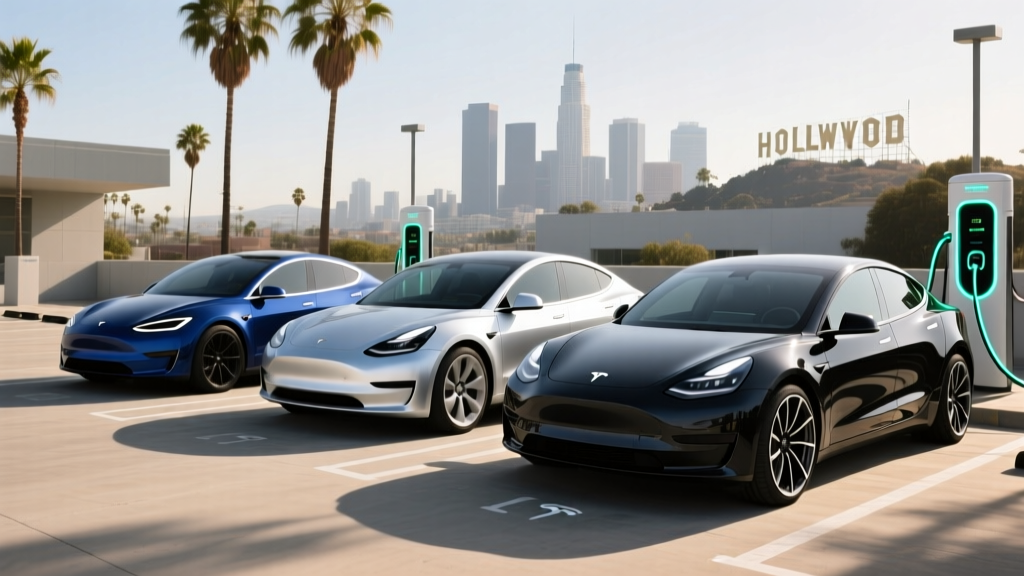
Los Angeles is arguably the best city in the United States to rent an electric vehicle. With over 1,200 public charging stations across LA County, dedicated HOV lane access for EVs on the 405 and 10 freeways, and year-round mild weather that preserves battery range, a Tesla rental in Los Angeles isn't just practical—it's often the most efficient way to navigate the sprawl. Whether you're visiting for a week, testing before you buy, or need a premium ride for a business trip, this guide breaks down exactly which Tesla model fits your trip, what you'll actually pay, and the real-world range and charging data rental companies rarely disclose.
Before we get into model-by-model specs, let's establish what matters when renting an EV versus owning one: you need to know the real-world range (not just the EPA sticker), where to charge during your stay, and which trim level the rental fleet is likely carrying. Most LA rental fleets stock base or mid-tier trims, not Performance variants.
2026 Tesla Model Lineup: Spec Comparison for Renters
The table below covers the five Tesla models you're most likely to encounter in Los Angeles rental fleets for the 2026 model year. All figures reflect EPA estimates and manufacturer-published data.
| Spec | Model 3 RWD | Model Y LR AWD | Model S LR | Model X LR | Cybertruck AWD |
|---|---|---|---|---|---|
| EPA Range | 363 mi | 320 mi | 402 mi | 335 mi | 340 mi |
| Battery (usable kWh) | ~60 kWh (LFP) | ~75 kWh (NMC) | ~95 kWh (NMC) | ~95 kWh (NMC) | ~123 kWh (NMC) |
| Max DC Fast Charge | 170 kW | 250 kW | 250 kW | 250 kW | 250 kW |
| 10–80% DCFC Time | ~25 min | ~22 min | ~27 min | ~28 min | ~35 min |
| Level 2 Home Rate | 11.5 kW (~44 mi/hr) | 11.5 kW (~44 mi/hr) | 11.5 kW (~44 mi/hr) | 11.5 kW (~44 mi/hr) | 11.5 kW (~37 mi/hr) |
| 0–60 mph | 5.8 sec | 4.8 sec | 3.1 sec | 3.8 sec | 3.9 sec |
| Horsepower | 271 hp | 384 hp | 670 hp | 670 hp | 600 hp |
| Drivetrain | RWD | Dual-Motor AWD | Dual-Motor AWD | Dual-Motor AWD | Dual-Motor AWD |
| MPGe (combined) | 132 MPGe | 117 MPGe | 120 MPGe | 102 MPGe | 76 MPGe |
| Cargo (cu ft, rear seats up) | 23 cu ft | 30 cu ft | 28 cu ft | 37 cu ft | 34 cu ft (bed + frunk) |
| Base MSRP (2026) | $38,990 | $44,990 | $79,990 | $84,990 | $79,990 |
Real-World Range vs. EPA Estimates: What Renters Actually Get
EPA range is measured under controlled lab conditions. Here's what to expect on actual Southern California roads:
- City/surface streets (LA Basin): Expect 95–105% of EPA range. Regenerative braking recovers energy in stop-and-go traffic on Wilshire, Sunset, or the 10 in rush hour.
- Highway cruising (70–80 mph on I-5 or 405): Expect 80–88% of EPA range. Aerodynamic drag dominates at speed. A Model 3 RWD rated at 363 mi EPA will deliver roughly 290–320 mi at 75 mph on a flat route to San Diego.
- Cold weather / mountain passes: LA rarely drops below 45°F, so cold-weather range loss is minimal here. However, if your rental trip includes Big Bear or Mammoth (elevation 7,000–8,000 ft), expect 15–25% range reduction from both temperature and altitude-related cabin heating.
- Climate control impact: Running AC at 72°F in a July heat wave in the Valley (110°F+) can reduce range by 5–10%. Teslas use a heat pump (standard since 2021), which is more efficient than resistive heating but still draws power.
Source: EPA range data from fueleconomy.gov; real-world factors based on owner-reported data and independent testing.
Charging a Tesla Rental in LA: Superchargers, Destinations, and Etiquette
One of the biggest advantages of renting a Tesla in Los Angeles over any other EV brand is access to the Tesla Supercharger network. As of early 2026, there are over 90 Supercharger stations in LA County alone, with many offering 250 kW V3 stalls. Here's what you need to know:
| Charging Level | Power (kW) | Miles Added per Hour | Where You'll Find It | Typical Use Case for Renters |
|---|---|---|---|---|
| Level 1 (120V) | 1.4 kW | ~3–5 mi/hr | Standard household outlet | Emergency only; not practical for rentals |
| Level 2 (240V) | 7.7–11.5 kW | ~30–44 mi/hr | Hotels, Airbnb, shopping centers, Tesla Destination Chargers | Overnight top-up at your hotel or rental property |
| DC Fast (Supercharger V3) | Up to 250 kW | ~700–1,000 mi/hr (peak) | Tesla Supercharger stations | 15–30 min stop on a road trip; fastest option |
| DC Fast (Supercharger V4) | Up to 350 kW | ~1,000+ mi/hr (peak) | Newer Tesla Supercharger locations | Available at select newer stations; Cybertruck-compatible |
Charging curve reality check: No EV sustains its peak charge rate for the entire session. A Model Y Long Range peaking at 250 kW will hold that rate from roughly 10% to 30% State of Charge (SoC), then taper to ~150 kW by 50%, and drop below 50 kW past 80%. This is why manufacturers quote 10–80% times rather than 0–100%. If you're charging from 80% to 100% at a Supercharger, expect it to take as long as the 10–80% session. Plan accordingly: charge to 80% and go.
Rental charging tip: Most LA-area hotels with EV charging (the Standard in Hollywood, the Ritz-Carlton downtown, Hotel Figueroa) offer Level 2 J1772 or Tesla Wall Connectors. Bring the Mobile Connector that comes in the Tesla's trunk, or confirm with the rental agency that it's included. Many agencies now omit it.
Which Tesla Should You Rent? A Decision Framework
Your ideal rental depends on trip type, passenger count, and budget. Here's how the lineup breaks down for common LA rental scenarios:
Choose the Model 3 if:
- You're a solo traveler or couple exploring LA, Santa Monica, and Malibu
- Budget is the priority (lowest daily rental rate, typically $70–$110/day)
- You want maximum efficiency (132 MPGe combined, lowest cost per mile)
- You don't need more than 23 cu ft of cargo space
Choose the Model Y if:
- You're a family of 3–5 needing 30 cu ft of cargo and available 7-seat config
- You're driving to San Diego, Joshua Tree, or Palm Springs (AWD helps in desert heat with AC load)
- You want the best balance of range, space, and rental availability (most common Tesla in LA fleets)
- Typical rental rate: $90–$150/day
Choose the Model S if:
- You want the longest range in the lineup (402 mi EPA—enough for LA to Vegas and back with one charge stop)
- Premium comfort matters for business travel or a special occasion
- Budget allows $180–$300/day
Choose the Model X if:
- You need 3-row seating for up to 7 passengers and 37 cu ft of cargo
- Falcon-wing doors are a conversation starter for events
- You're hauling gear for a family beach week or ski trip to Big Bear
- Typical rental rate: $200–$350/day
Choose the Cybertruck if:
- You want a unique experience and don't mind attention (you will get approached in parking lots)
- You need a truck bed for hauling—though note the 340-mi range drops significantly when towing
- Rental availability is limited and expensive ($250–$500/day in LA as of early 2026)
Pricing, Tax Credits, and the Buy-vs-Rent Question
Many people renting a Tesla in Los Angeles are test-driving before purchasing. Here's what the 2026 pricing and federal incentive landscape looks like if your rental convinces you to buy:
| Model | Base MSRP | Federal §30D Credit (max) | Effective Price (if eligible) | MSRP Cap? | Income Cap (AGI) |
|---|---|---|---|---|---|
| Model 3 RWD | $38,990 | Up to $7,500 | ~$31,490 | Passes ($55k sedan cap) | $150k single / $300k joint |
| Model 3 LR AWD | $45,990 | Up to $7,500 | ~$38,490 | Passes | $150k single / $300k joint |
| Model Y LR AWD | $44,990 | Up to $7,500 | ~$37,490 | Passes ($80k SUV cap) | $150k single / $300k joint |
| Model S LR | $79,990 | $0 (exceeds cap) | $79,990 | FAILS ($55k sedan cap) | N/A |
| Model X LR | $84,990 | $0 (exceeds cap) | $84,990 | FAILS ($80k SUV cap) | N/A |
| Cybertruck AWD | $79,990 | $0 (exceeds cap) | $79,990 | FAILS ($80k truck cap) | N/A |
Critical caveats on the §30D credit (per IRS.gov):
- The credit is subject to battery component and critical mineral sourcing requirements that change annually. As of 2026, vehicles with battery components from a "foreign entity of concern" (FEOC) are disqualified. Tesla's US-built battery packs for Model 3 and Model Y have generally qualified, but always verify the specific VIN's eligibility at the point of sale.
- The credit can now be transferred to the dealer at point of sale, reducing your purchase price immediately rather than waiting for a tax refund.
- Your modified adjusted gross income (MAGI) must fall below the caps listed above for the current or prior tax year.
- Always consult a tax professional before relying on the credit. Rules are subject to legislative change.
Rent vs. buy math for LA drivers: If you drive fewer than 8,000 miles per year and have reliable access to another vehicle, renting a Tesla for occasional road trips ($100–$150/day, 5–10 days/year) costs $500–$1,500 annually. A Model Y purchase at ~$37,490 after the credit, financed at 6% over 60 months, runs ~$725/month or $8,700/year—before insurance (averaging $2,200/year for a Tesla in LA County), registration, and charging. Renting makes financial sense for low-mileage drivers; buying wins for daily commuters covering 12,000+ miles annually.
Tech, Driver Assists, and What Renters Must Know About Autopilot
Every 2026 Tesla rental in Los Angeles will come equipped with Basic Autopilot as standard. Here's the breakdown of Tesla's driver-assistance tiers:
SAE Automation Level: Level 2 (Driver Assistance, NOT Self-Driving)
All Tesla driver-assist features—Basic Autopilot, Enhanced Autopilot, and Full Self-Driving (Supervised)—are classified as SAE Level 2. This means the driver must remain fully attentive, keep hands on the wheel, and be prepared to take over at any moment. Tesla's FSD (Supervised) can navigate city streets, stop lights, and highway interchanges, but it is not a Level 4 autonomous system like Waymo's robotaxis operating in San Francisco and Phoenix. Misuse of Level 2 systems has resulted in NHTSA investigations and fatal crashes. Treat every Tesla as a car that requires your active driving, not a self-driving pod.
What's included in a typical rental:
- Basic Autopilot (standard): Traffic-Aware Cruise Control and Autosteer (lane centering) on marked highways. Sufficient for 405 and I-5 cruising.
- Enhanced Autopilot ($6,000 option, rarely on rentals): Adds Auto Lane Change, Autopark, Summon, and Navigate on Autopilot (highway on-ramp to off-ramp).
- FSD Supervised ($8,000 option or $99/month, occasionally on rentals): Adds city-street autosteer, traffic light/stop sign recognition. Impressive but imperfect—expect occasional disengagements on complex LA intersections.
Standout tech features on all 2026 Teslas:
- 15.4-inch center touchscreen (Model 3/Y) or 17-inch (Model S/X) with built-in navigation, Spotify, Netflix, and YouTube (while parked)
- Over-the-air (OTA) software updates—your rental might get a new feature mid-trip
- Tesla app integration (rental agencies may or may not grant app access; confirm before pickup)
- Sentry Mode dashcam recording (requires a USB drive in the glovebox—bring your own)
- HEPA air filtration with Bioweapon Defense Mode (Model S/X/Y) — genuinely useful during LA wildfire smoke events
Notable drawbacks renters report:
- No physical buttons for climate, mirrors, or glovebox—everything is touchscreen. First-time Tesla renters need 15–20 minutes to learn the interface before driving.
- Phantom braking: Autopilot can brake unexpectedly for shadows, overpasses, or turning vehicles. Keep your foot near the accelerator to override.
- Panel gaps and interior minimalism: If you're coming from a Mercedes or BMW, the spartan interior takes adjustment.
- No Apple CarPlay or Android Auto. Navigation is Tesla-native only.
Pros and Cons of Renting a Tesla in Los Angeles
Pros
- Access to the Supercharger network—fastest, most reliable public charging in LA
- HOV lane access with a single occupant (verify the rental has a valid Clean Air Vehicle decal; California's DMV issues these, and they transfer with the vehicle)
- Regenerative braking makes LA stop-and-go traffic less fatiguing (one-pedal driving)
- Low "fuel" cost: charging at a Supercharger in LA averages $0.35–$0.48/kWh; a full Model Y charge costs ~$26–$36 vs. ~$65+ for gas in an equivalent SUV
- Quiet, smooth ride quality with instant torque for freeway merging
- HEPA filtration for wildfire season (Model Y/S/X)
Cons
- Learning curve for first-time EV renters (touchscreen-only controls, charging logistics)
- Rental agencies may not include the Mobile Connector or Tesla app access
- Insurance costs: some rental companies charge higher collision damage waivers for Teslas due to repair costs
- Supercharger idle fees ($0.50–$1.00/minute) if you leave the car plugged in after reaching your charge limit
- Parking garages with tight clearances can be nerve-wracking (Cybertruck especially at 82 inches wide)
- Range drops 10–20% on highway road trips—LA to Las Vegas requires one charge stop in a Model 3/Y
Where to Rent a Tesla in Los Angeles (2026)
Tesla rentals in LA are available through several channels, each with trade-offs:
- Turo (peer-to-peer): Widest selection, from Model 3 RWD at $65/day to Cybertruck at $400+/day. Hosts set their own rules on mileage, charging, and app access. Read reviews carefully—some hosts require you to return the car at the same SoC.
- Hertz Tesla fleet: Hertz maintains a fleet of Model 3 and Model Y vehicles at LAX and Burbank locations. Typically $80–$130/day. Standard rental terms, but confirm Supercharger access is enabled on the vehicle.
- Enterprise/Exotic car rentals: Specialty agencies in Beverly Hills and Santa Monica offer Model S, Model X, and Cybertruck rentals for $200–$500/day. Often include concierge delivery.
- Tesla's own rental/loaner program: Limited availability, typically reserved for Tesla owners needing a loaner during service.
Before you book, confirm:
- Does the rental include Supercharger access? (Some Teslas have it disabled or billed to the owner's account.)
- Is the Mobile Connector included for Level 1/2 emergency charging?
- What SoC level is required at return? (Most agencies require 50% or the same level as pickup; Supercharging near the airport before drop-off adds 20–30 minutes.)
- Does the vehicle have a valid California Clean Air Vehicle decal for HOV lane access?
Frequently Asked Questions
What is the real-world range of a Tesla Model 3 or Model Y on LA highways?
On the 405 or I-5 at 70–75 mph with AC running, expect a Model 3 RWD (363 mi EPA) to deliver approximately 290–320 real-world miles. A Model Y Long Range AWD (320 mi EPA) will net about 260–285 miles. In city driving with regenerative braking, you may match or slightly exceed EPA figures. Source: fueleconomy.gov and owner-reported data.
How fast does a Tesla charge at a Supercharger in Los Angeles?
At a V3 Supercharger (250 kW), a Model Y Long Range charges from 10% to 80% in approximately 22 minutes. A Model 3 RWD with its LFP battery peaks at 170 kW and takes about 25 minutes for the same session. Past 80%, charging slows dramatically—plan to unplug at 80% and drive.
How much does it cost to charge a Tesla rental at a Supercharger in LA?
As of early 2026, Tesla Supercharger rates in Los Angeles range from $0.35 to $0.48 per kWh depending on location and time of day (off-peak is cheaper). Charging a Model Y from 20% to 80% (~45 kWh) costs approximately $16–$22. A full 10–80% charge costs $25–$36. Compare this to $60–$75 for a tank of gas in a comparable SUV.
Does renting a Tesla in LA give me HOV lane access?
Only if the vehicle has a valid California Clean Air Vehicle (CAV) decal issued by the DMV. Teslas qualify, but the decal must be physically affixed to the vehicle and current. Ask the rental host or agency to confirm before booking. Driving in the HOV lane without a valid decal can result in a $490 fine.
Is it worth renting a Tesla vs. a gas car for an LA road trip?
For trips within a 200-mile radius of LA (San Diego, Santa Barbara, Palm Springs), a Tesla is often faster door-to-door because you skip gas station detours and a 20-minute Supercharger stop is comparable to a rest break. For trips exceeding 350 miles (Las Vegas, San Francisco), plan for one 25-minute charge stop. The cost-per-mile is lower in the Tesla ($0.05–$0.08/mi for electricity vs. $0.14–$0.18/mi for gas in a 25 MPG SUV).
What happens if I run out of charge in a Tesla rental?
Tesla's navigation system will warn you aggressively if your route exceeds available range and will route you through Superchargers automatically. If you do deplete the battery, Tesla Roadside Assistance can provide a flatbed tow to the nearest charger (not a mobile charge). Rental agencies typically charge a fee for this. Keep a 10–15% buffer on long drives.
Can I charge a Tesla rental at non-Tesla chargers in LA?
Yes. Tesla vehicles use the NACS (North American Charging Standard) connector natively. With the Tesla CCS adapter (included with most 2026 models), you can also use Electrify America, EVgo, and other CCS-equipped stations. Los Angeles has hundreds of non-Tesla DC fast chargers. Use the PlugShare or ChargePoint app to find them, and note that Tesla's built-in navigation only routes to Superchargers by default.
Warranty and Reliability: What Renters Should Know
While warranty coverage is primarily a concern for buyers, renters should understand what's covered in case of a mechanical issue during the rental period:
- New Vehicle Limited Warranty: 4 years / 50,000 miles (bumper to bumper). Any 2026 Tesla rental will be well within this window.
- Battery & Drive Unit Warranty: Model 3 RWD (LFP): 8 years / 100,000 miles. Model Y/S/X (NMC): 8 years / 120,000–150,000 miles depending on model. Tesla guarantees at least 70% battery capacity retention during this period.
- Roadside Assistance: Included for 4 years / 50,000 miles. Covers towing to the nearest Tesla Service Center or Supercharger.
If your rental Tesla displays a warning or error, contact both the rental agency and Tesla Roadside (1-877-798-3772). Most issues can be diagnosed and sometimes resolved via OTA while you wait.
For official safety ratings, see NHTSA.gov — the Model 3 and Model Y have earned 5-star overall safety ratings, and the Model S holds a 5-star rating as well. IIHS has named the Model 3 a Top Safety Pick+ in recent test years.