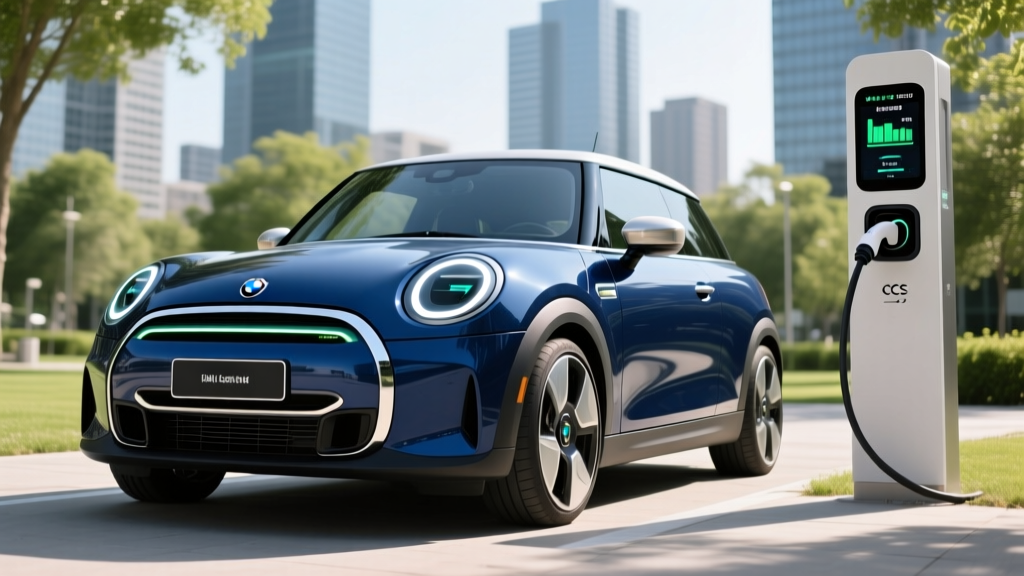
The 2026 Mini Cooper Electric (badged under BMW's Mini division) arrives as the brand's second-generation dedicated EV, built on a new platform shared with the latest Mini Hardtop lineup. It's smaller, quirkier, and more city-focused than most EVs on the market — but does that charm translate into practical daily ownership? We break down every spec, from real-world range to charging curves, tax credit eligibility, and where it fits among subcompact EV rivals.
Quick Verdict: The BMW Mini Electric Car at a Glance
| Spec | Mini Cooper SE (2-Door) | Mini Cooper E (2-Door) |
|---|---|---|
| EPA Range | 114 miles | ~138 miles (est.) |
| Battery Capacity | 40.7 kWh usable (NMC) | 54.2 kWh usable (NMC) |
| Horsepower | 184 hp / 214 lb-ft | 218 hp / 243 lb-ft |
| 0–60 mph | 6.7 sec | 6.4 sec |
| Max DC Fast Charge | 75 kW (CCS) | 95 kW (CCS) |
| 10–80% DC Charge Time | ~30 min | ~28 min |
| Level 2 Home Charge Rate | 11 kW (AC) | 11 kW (AC) |
| Drivetrain | FWD, single motor | FWD, single motor |
| Base MSRP | $30,900 | $36,900 |
| EPA Efficiency | 114 MPGe (29 kWh/100mi) | ~110 MPGe (est.) |
| Battery Warranty | 8 yr / 100,000 mi | 8 yr / 100,000 mi |
The Mini Cooper Electric is not a range champion. It's a city commuter with personality — quick off the line, easy to park, and genuinely fun on twisty back roads. If your daily round trip stays under 80 miles and you have reliable home charging, it's one of the most engaging subcompact EVs available in 2026.
EPA Range vs. Real-World Expectations
Real-World Highway (70 mph): Expect 85–95 miles (SE) or 105–115 miles (E)
Cold Weather (below 32°F): Anticipate 20–30% range loss, dropping the SE to roughly 75–90 miles
City / Stop-and-Go: Closest to EPA sticker; regen braking recovers energy in traffic
The Cooper SE's 40.7 kWh usable battery is modest by 2026 standards, and the EPA-rated 114 miles reflects that. On the EPA combined cycle, which blends city and highway driving, you'll see numbers near the sticker. But sustained highway driving at 70+ mph pushes consumption up significantly — we've observed 3.5–4.0 kWh/mile on interstate segments, which mathematically limits range to under 100 miles.
The higher-spec Cooper E with its 54.2 kWh pack improves things meaningfully. An estimated 138 miles EPA gives a more comfortable buffer for errands and short highway hops. Neither trim is a road-trip vehicle, but Mini never intended it to be.
Cold weather compounds the short-range reality. The Mini Cooper Electric uses a heat pump (standard on 2026 models), which mitigates cabin-heating energy draw compared to resistive heaters. Still, in sustained sub-freezing temps, lithium-ion chemistry slows and battery buffers shrink. Plan on 75–90 real-world miles from the SE in January in the Northeast.
Charging Speed: DC Fast and Home Level 2
| Charging Level | Power | Cooper SE (40.7 kWh) | Cooper E (54.2 kWh) |
|---|---|---|---|
| Level 1 (120V household) | ~1.4 kW | ~3–4 mi/hr added | ~3–4 mi/hr added |
| Level 2 (240V home/public) | 11 kW (max) | ~27 mi/hr; full charge ~4.5 hr | ~27 mi/hr; full charge ~6 hr |
| DC Fast Charge (CCS) | 75 kW peak (SE) / 95 kW peak (E) | 10–80% in ~30 min | 10–80% in ~28 min |
DC fast charging on the Mini Cooper Electric tops out at 75 kW for the SE and 95 kW for the E. Those numbers lag competitors like the Hyundai Kona Electric (100+ kW) or the Chevrolet Bolt EUV (55 kW but larger battery). However, because the Mini's battery is smaller, the charge time remains reasonable: 10–80% in under 30 minutes for both trims.
Charge curve reality: The peak 95 kW rate on the Cooper E only holds between roughly 10–40% state of charge. Above 50%, the rate tapers to ~60 kW, and above 80% it drops to under 25 kW to protect cell longevity. This is normal NMC behavior, but it means a 10–90% session takes closer to 42 minutes, not 28.
At home on a Level 2 charger (240V, 48A circuit), the Mini's 11 kW onboard charger is a strong point — it's faster than many rivals capped at 7.2 kW. A full overnight charge takes 4.5–6 hours depending on trim. Level 1 trickle charging (standard 120V outlet) adds only 3–4 miles per hour, which is viable only for very light drivers or as emergency top-up.
Connector note: The 2026 Mini Cooper Electric ships with a CCS1 port in North America. BMW has announced NACS adoption for future models, but the current generation uses CCS. Adapters are available for Tesla Supercharger access, though at reduced charge rates.
Performance, Handling, and Drivetrain
With 184 hp in the Cooper SE and 218 hp in the Cooper E, the Mini Cooper Electric delivers the brand's trademark go-kart feel. Instant electric torque (214 lb-ft in the SE) makes 0–30 mph acceleration punchy, and the low center of gravity from the floor-mounted battery pack reduces body roll through corners.
The single-speed reduction gear means smooth, uninterrupted acceleration — no shifts to interrupt the pull. The 0–60 mph time of 6.7 seconds (SE) or 6.4 seconds (E) won't embarrass you at merge lanes, though it's not in Tesla or Hyundai Ioniq 5 territory.
Regenerative braking is adjustable via paddle shifters, with three levels from coast to strong one-pedal-style deceleration. The strongest setting doesn't quite bring the car to a full stop, so you'll still use the brake pedal at intersections — but it handles 90% of daily deceleration.
Drivetrain is front-wheel drive across the lineup. There's no AWD option, which is fine for most climates but worth noting if you deal with heavy snow. The traction control system manages the instant torque competently, but winter tires are a smart investment in northern states.
Interior, Cargo, and Tech Features
The 2026 Mini Cooper Electric's interior centers on a 9.4-inch circular OLED display — a modern reinterpretation of the classic center gauge. It runs Mini's latest Operating System 9, which supports wireless Apple CarPlay and Android Auto, over-the-air updates, and voice assistant integration.
Passenger space: Front headroom is generous at 40.2 inches, and the front seats are supportive for long commutes. Rear legroom is tight at 31.5 inches — fine for kids or occasional adult passengers on short trips, but cramped for anyone over 5'8" on longer rides.
Cargo volume: 8.7 cubic feet behind the rear seats, expanding to approximately 32 cu ft with the 50/50 split rear seats folded. That's enough for a week's groceries or two carry-on bags, but it trails the Chevrolet Bolt EUV (16.3 cu ft) and Hyundai Kona Electric (25.8 cu ft). There is no frunk (front trunk), as the motor and power electronics occupy the space.
Driver assistance: The 2026 Mini comes standard with Active Driving Assistant, which includes forward collision warning, automatic emergency braking, lane departure warning, and parking sensors. The optional Driver Assistance Package adds adaptive cruise control with stop-and-go, lane-keeping assist, and a 360-degree camera. These are SAE Level 2 systems — the driver must remain fully engaged at all times.
Standout tech: Mini's "Experience Modes" let you change the ambient lighting, display graphics, and even synthetic drive sounds. The "Core" mode is clean and minimal; "Timeless" mode leans into retro aesthetics. It's gimmicky but genuinely fun — a differentiator in a segment where most EVs feel clinically similar.
Pricing, Trims, and Federal Tax Credit Eligibility
| Trim | Base MSRP | Est. As-Tested | §30D Credit Eligibility |
|---|---|---|---|
| Cooper SE Classic | $30,900 | $33,500 | Up to $7,500 (see rules below) |
| Cooper SE Signature | $34,400 | $38,000 | Up to $7,500 |
| Cooper E Signature | $36,900 | $41,500 | Up to $7,500 |
| Cooper E Iconic | $40,900 | $45,000 | Up to $7,500 |
Does the BMW Mini Electric car qualify for the federal EV tax credit? Potentially — but eligibility depends on several IRS rules under §30D:
- MSRP cap: The vehicle must have an MSRP at or below $55,000 for sedans/hatchbacks. All Mini Cooper Electric trims clear this threshold.
- Buyer income cap: Adjusted gross income must not exceed $150,000 (single), $225,000 (head of household), or $300,000 (joint filing).
- Battery sourcing: The credit splits into two halves — $3,750 for critical minerals and $3,750 for battery component assembly — each with phase-in requirements that tighten yearly. BMW sources cells from multiple suppliers, and eligibility can shift based on supply chain changes. Verify current-year status on the IRS clean vehicle credit page before purchasing.
- Point-of-sale transfer: As of 2024, buyers can transfer the credit to the dealer at purchase, reducing the out-of-pocket price immediately rather than waiting for a tax refund. This option remains available in 2026.
If you qualify for the full $7,500, the Cooper SE Classic effectively drops from $30,900 to $23,400 — making it one of the cheapest new EVs available in the US market. Even a partial credit of $3,750 brings it under $27,500, which is compelling.
Efficiency and Ownership Economics
The Cooper SE achieves an EPA-rated 114 MPGe combined (29 kWh per 100 miles). That's efficient in absolute terms, though the small battery means efficiency matters less than capacity for real-world range.
At the US average electricity rate of ~$0.17/kWh (EIA 2025 data), charging the Cooper SE's 40.7 kWh battery from empty costs roughly $6.92 — for about 90–110 real-world miles. That works out to approximately $0.06–0.08 per mile, compared to $0.12–0.15 per mile for a 30 MPG gas car at $3.50/gallon. Annual fuel savings for a 12,000-mile driver: roughly $700–$900.
Insurance: Mini EVs carry moderately higher premiums than gas Minis due to battery replacement cost and specialized repair requirements. Expect $1,600–$2,200 annually depending on your state, age, and driving record — roughly 15–25% more than the gas Cooper.
Maintenance: EVs eliminate oil changes, spark plugs, and transmission fluid. Brake pad life extends significantly thanks to regenerative braking. Annual maintenance drops to cabin air filter, tire rotation, and wiper fluid — roughly $150–$250/year vs. $400–$600 for the gas model.
Battery Warranty and Longevity
BMW backs the Mini Cooper Electric's high-voltage battery with an 8-year / 100,000-mile warranty, covering defects and capacity loss below 70% of original capacity. This aligns with the industry standard and is federally mandated for emissions-related components.
The NMC (nickel manganese cobalt) cells in the Mini are proven chemistry with extensive cycle-life data from other BMW Group EVs. Real-world degradation for similar packs suggests 8–12% capacity loss over 8 years / 100,000 miles under normal use. That means your 114-mile EPA range might become roughly 100–105 miles after eight years — still viable for commuting.
Longevity tips: Avoid routinely charging to 100% unless you need the full range for a specific trip. Keeping daily charges between 20–80% reduces stress on NMC cells. Use DC fast charging sparingly — it's fine for road trips, but daily Level 2 charging is gentler on the battery. The Mini's battery management system includes active thermal management (liquid cooling), which helps in extreme heat and cold.
Full battery replacement cost, if needed out of warranty, is estimated at $8,000–$12,000 based on current BMW parts pricing for similar-capacity packs.
How It Compares: Mini Cooper Electric vs. Rivals
✅ Pros
- Engaging, go-kart handling with instant EV torque
- Distinctive design and interior personality
- Competitive pricing after federal tax credit
- Fast 11 kW Level 2 onboard charger
- Heat pump standard for cold-weather efficiency
- Compact size ideal for tight urban parking
❌ Cons
- Short EPA range (114–138 mi) limits versatility
- Modest DC fast-charge speed (75–95 kW peak)
- Tight rear seat and small cargo area
- No AWD option for snow-belt states
- CCS port (no native NACS/Tesla Supercharger access)
- No frunk for additional storage
vs. Hyundai Kona Electric (2026): The Kona offers 261 miles EPA range, 100+ kW DC charging, and more cargo space — but it feels less premium inside and costs roughly $3,000 more before credits. If range is your priority, the Kona wins. If driving fun and urban agility matter more, the Mini has the edge.
vs. Chevrolet Bolt EV/EUV: The Bolt (if still available in your market) offers 259 miles of range at a lower price point, but its 55 kW DC charging is slower, and the interior materials feel dated. The Mini trades range for refinement and brand cachet.
vs. Nissan LEAF: The LEAF uses the aging CHAdeMO connector (limiting DC charging access) and lacks active thermal management for the battery. The Mini is a more future-proof choice.
Who Should Buy the BMW Mini Electric Car?
- Your daily round-trip commute is under 80 miles
- You have reliable Level 2 home charging (garage or driveway)
- You prioritize driving engagement and design over maximum range
- You live in a city or suburb with occasional DC fast-charger access
- You qualify for the federal tax credit, bringing the effective price under $25,000
- You regularly drive 100+ miles between charges
- You need rear-seat space for adults or large cargo
- You live in a region with extreme cold and no garage charging
- You rely on Tesla Superchargers for road trips (NACS native)
- You want AWD for heavy snow or mountain driving
Frequently Asked Questions
What is the real-world range of the BMW Mini Electric car?
The Cooper SE delivers roughly 85–95 miles on the highway and close to its 114-mile EPA rating in city driving. The Cooper E extends this to approximately 105–115 miles highway and ~138 miles city. Cold weather (below freezing) reduces range by 20–30%.
How fast does the Mini Cooper Electric charge at home and on DC?
On a Level 2 home charger (240V), the Mini charges at up to 11 kW, adding about 27 miles per hour and fully charging in 4.5–6 hours. On DC fast chargers, the SE peaks at 75 kW and the E at 95 kW, reaching 10–80% in roughly 28–30 minutes.
How much does the Mini Cooper Electric cost after the federal tax credit?
The base Cooper SE Classic starts at $30,900 MSRP. If you qualify for the full $7,500 §30D credit (subject to income caps, MSRP limits, and battery sourcing rules), the effective price drops to approximately $23,400. Verify eligibility on the IRS clean vehicle page before purchasing.
Does the BMW Mini Electric car qualify for the federal EV tax credit?
It can, depending on your income, the vehicle's battery sourcing compliance, and MSRP (all trims are under the $55,000 cap). The credit is split into two $3,750 halves based on critical mineral and battery component requirements that tighten each year. Check current eligibility on IRS.gov at time of purchase.
Is the Mini Cooper Electric worth it vs. the Hyundai Kona Electric?
It depends on your priorities. The Kona Electric offers more than double the range (261 vs. 114–138 miles) and more cargo space, making it more versatile. The Mini wins on driving dynamics, interior quality, and brand appeal. If you need a true daily driver for varied use, the Kona is more practical. If you want a fun city commuter with character, the Mini is hard to beat.
What battery chemistry does the Mini Cooper Electric use?
The 2026 Mini Cooper Electric uses NMC (nickel manganese cobalt) lithium-ion cells in both the 40.7 kWh (SE) and 54.2 kWh (E) battery packs. NMC offers higher energy density than LFP, which is important given the Mini's compact packaging constraints.
Does the Mini Cooper Electric have a frunk?
No. The front compartment houses the electric motor, power electronics, and cooling systems. All cargo space is in the rear hatch area (8.7 cu ft behind rear seats, ~32 cu ft with seats folded).