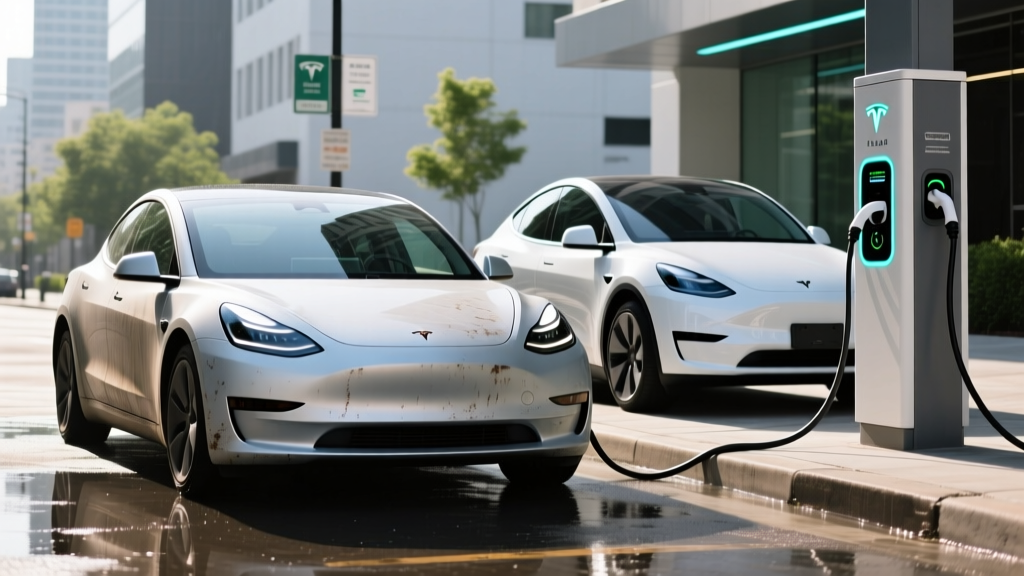
Tesla vehicles consistently dominate sales charts, but when it comes to dependability rankings, the story flips. Consumer Reports' 2025 Annual Auto Reliability Survey placed Tesla 23rd out of 30 brands, while J.D. Power's 2025 U.S. Vehicle Dependability Study ranked Tesla near the bottom at 226 problems per 100 vehicles — well above the industry average of 190. For buyers searching "Tesla last place reliability", the data paints a nuanced picture: world-class powertrains wrapped in inconsistent build quality and panel-fit issues that drag overall scores down.
This review examines the current 2026 Tesla Model 3 and Model Y lineup through the lens of real ownership — range, charging, pricing, tax credits, and whether the reliability concerns should keep you from buying one.
Why Tesla Ranks Last Place in Reliability Surveys
Understanding Tesla's reliability scores requires separating powertrain durability from build quality. The electric motors and battery packs in the Model 3 and Model Y are among the most proven in the industry, with failure rates well below those of internal-combustion powertrains. The problems dragging Tesla's scores down are almost entirely cosmetic and assembly-related:
- Panel gaps and misalignment: Inconsistent spacing between body panels remains Tesla's most cited complaint across Consumer Reports owner surveys.
- Paint quality: Chips, runs, and orange-peel texture are reported at higher rates than competitors like Hyundai, BMW, and Lexus.
- Interior trim and rattles: Early-production vehicles often exhibit squeaks from dashboard trim, seat rails, and door panels within the first 10,000 miles.
- Infotainment glitches: Phantom screen reboots, Bluetooth drops, and camera feed lag appear in owner forums, though over-the-air updates frequently address these.
- Heat pump failures (2021-2023 models): Earlier Model Y units experienced heat pump compressor issues that reduced cold-weather range; Tesla issued service bulletins and revised the component for 2024+ builds.
The critical takeaway: Tesla's powertrain is bulletproof by EV standards. It's the sheet metal, paint booth, and interior fitment that cost the brand its reliability ranking.
2026 Tesla Model 3: Specs, Range, and Efficiency
| Spec | Model 3 RWD | Model 3 Long Range AWD | Model 3 Performance |
|---|---|---|---|
| EPA Range | 272 mi | 363 mi | 315 mi |
| Battery (usable) | ~60 kWh (LFP) | ~79 kWh (NMC) | ~79 kWh (NMC) |
| Efficiency | 132 MPGe / 25 kWh/100mi | 134 MPGe / 25 kWh/100mi | 121 MPGe / 28 kWh/100mi |
| 0-60 mph | 5.8 sec | 4.2 sec | 2.9 sec |
| Horsepower | 271 hp | 346 hp | 510 hp |
| Drivetrain | RWD | Dual-motor AWD | Dual-motor AWD |
| Max DC Fast Charge | 170 kW | 250 kW | 250 kW |
| 10-80% DC Time | ~25 min | ~18 min | ~18 min |
| Level 2 Home Rate | 11.5 kW (~44 mi/hr) | 11.5 kW (~44 mi/hr) | 11.5 kW (~44 mi/hr) |
| Base MSRP | $38,990 | $45,490 | $52,990 |
2026 Tesla Model Y: Specs, Range, and Efficiency
| Spec | Model Y Long Range AWD | Model Y Performance |
|---|---|---|
| EPA Range | 320 mi | 285 mi |
| Battery (usable) | ~79 kWh (NMC) | ~79 kWh (NMC) |
| Efficiency | 123 MPGe / 27 kWh/100mi | 115 MPGe / 29 kWh/100mi |
| 0-60 mph | 4.8 sec | 3.5 sec |
| Horsepower | 384 hp | 455 hp |
| Drivetrain | Dual-motor AWD | Dual-motor AWD |
| Max DC Fast Charge | 250 kW | 250 kW |
| 10-80% DC Time | ~20 min | ~20 min |
| Level 2 Home Rate | 11.5 kW (~44 mi/hr) | 11.5 kW (~44 mi/hr) |
| Base MSRP | $44,990 | $50,490 |
Charging Speed: DC Fast and Home Level 2
Charging speed is where Tesla retains a significant ownership advantage — not because the vehicles charge faster than competitors in raw kW, but because the Supercharger network remains the most reliable public charging infrastructure in the U.S.
| Charging Level | Model 3 RWD (LFP) | Model 3 LR / Performance | Model Y LR / Performance |
|---|---|---|---|
| Level 1 (120V / 12A) | ~3 mi/hr | ~3 mi/hr | ~3 mi/hr |
| Level 2 (240V / 48A) | 11.5 kW (~30 mi/hr) | 11.5 kW (~44 mi/hr) | 11.5 kW (~40 mi/hr) |
| DC Fast Charge (peak) | 170 kW | 250 kW | 250 kW |
| 10-80% DC Time | ~25 min | ~18 min | ~20 min |
| Connector (2026) | NACS (native) | NACS (native) | NACS (native) |
Charging curve reality: The 250 kW peak rate on Long Range and Performance models is not sustained. Tesla's charge curve peaks around 20-30% State of Charge (SoC) and tapers significantly above 60%, dropping to ~75 kW by 80%. This is why the 10-80% time is a more useful metric than peak kW. The LFP battery in the RWD Model 3 has a different curve — it tolerates regular 100% charging better than NMC chemistry, making it ideal for daily commuters who charge at home every night.
For home Level 2 charging, Tesla's Wall Connector ($420) delivers up to 11.5 kW on a 60-amp circuit (48A continuous). Installation typically runs $800-$2,000 if your electrical panel has capacity, or $2,500-$5,000+ if a panel upgrade to 200A is needed.
Cargo, Interior Space, and Practicality
The Model 3 and Model Y differ significantly in practicality:
Model 3 (Highland refresh):
- Cargo (rear trunk + frunk): 23 cu ft total
- Rear legroom: 34.6 inches
- Front headroom: 40.3 inches
- Best for: Couples, solo commuters, those prioritizing efficiency over cargo
Model Y (Juniper refresh):
- Cargo (rear + frunk, seats up): 34 cu ft; seats folded: 72 cu ft
- Rear legroom: 37.0 inches
- Front headroom: 41.0 inches
- Optional 7-seat layout (third row is child-only, ~25 cu ft cargo loss)
- Best for: Families, road trippers, those needing crossover utility
The Juniper-refreshed Model Y (introduced 2025) added ventilated front seats, a rear touchscreen, ambient lighting, and improved suspension tuning that meaningfully reduces the crashy ride quality that plagued pre-2024 builds.
Pricing, Tax Credits, and Total Cost
| Model / Trim | Base MSRP | §30D Credit | Effective Price |
|---|---|---|---|
| Model 3 RWD | $38,990 | Up to $7,500* | ~$31,490* |
| Model 3 Long Range AWD | $45,490 | Up to $7,500* | ~$37,990* |
| Model 3 Performance | $52,990 | Up to $7,500* | ~$45,490* |
| Model Y Long Range AWD | $44,990 | Up to $7,500* | ~$37,490* |
| Model Y Performance | $50,490 | Up to $7,500* | ~$42,990* |
*Federal EV tax credit eligibility under IRS §30D requires meeting ALL of the following criteria, which change annually:
- MSRP cap: Sedans (Model 3) must be ≤$55,000; SUVs/trucks/vans (Model Y) must be ≤$80,000
- Buyer income cap: Modified AGI ≤$150,000 (single), $225,000 (head of household), $300,000 (joint)
- Battery sourcing: Increasing percentages of critical minerals and battery components must be sourced from the U.S. or FTA partners — this is the requirement most likely to reduce or eliminate the credit for specific builds
- Point-of-sale transfer: As of 2024+, eligible buyers can transfer the credit to the dealer at purchase, reducing the purchase price immediately rather than waiting for tax filing
Both the Model 3 and Model Y currently qualify for the full $7,500 credit for eligible buyers, but battery-sourcing rules tighten each year. Always verify current eligibility on the fueleconomy.gov tax credit page before purchasing. Consult a tax professional for your specific situation.
Reliability vs. Competitors: Is Tesla Worth It?
Here's how Tesla's reliability scores compare to key competitors in the EV sedan and crossover segments, based on Consumer Reports' 2025 predicted reliability ratings (out of 100):
- Hyundai Ioniq 5: 65/100 — above average, strong build quality
- BMW i4: 62/100 — above average, premium fitment
- Ford Mustang Mach-E: 48/100 — average, improved from early years
- Tesla Model 3: 42/100 — below average
- Tesla Model Y: 39/100 — below average
Despite lower reliability scores, Tesla retains advantages competitors cannot match:
Pros
- Best-in-class Supercharger network (17,000+ U.S. stalls)
- Industry-leading efficiency (kWh/100mi)
- OTA software updates add features post-purchase
- Strong resale value relative to other EVs
- Proven battery longevity (minimal degradation at 100K+ miles)
- Performance variants offer sports-car acceleration
Cons
- Below-average build quality (panel gaps, paint, trim rattles)
- No Apple CarPlay or Android Auto
- Service center wait times can exceed 2-3 weeks in some markets
- FSD (Supervised) remains SAE Level 2 — driver must stay engaged
- Minimal physical controls; everything routed through touchscreen
- Insurance premiums 15-25% higher than segment average
Who Should Buy a Tesla (and Who Shouldn't)
Choose Tesla if:
- You prioritize charging infrastructure reliability over panel-gap perfection
- You take regular road trips and want Supercharger access (even as the network opens to other brands, Tesla vehicles still get the most seamless plug-and-charge experience)
- You value OTA updates and software-driven feature improvements
- You want the lowest cost-per-mile efficiency in the segment
- You're comfortable with a touchscreen-first interface
Look elsewhere if:
- Build quality and premium fitment are top priorities (consider BMW i4, Hyundai Ioniq 5, or Genesis GV60)
- You need Apple CarPlay / Android Auto integration
- You live in an area with limited Tesla Service Center access
- You want physical buttons for climate, volume, and mirrors
- Insurance costs in your state push Tesla premiums beyond your budget
Warranty Coverage
Tesla's warranty structure is competitive with the EV segment:
- Basic Vehicle: 4 years / 50,000 miles
- Battery & Drive Unit (Model 3 RWD, LFP): 8 years / 100,000 miles, 70% minimum capacity retention
- Battery & Drive Unit (Model 3 LR/Performance, Model Y): 8 years / 120,000 miles, 70% minimum capacity retention
The 70% retention threshold is standard across the industry (matching Hyundai, Ford, and VW). Real-world data from fleet operators and owner-collected datasets on Tesla's battery information page suggests average degradation of approximately 10-12% at 100,000 miles for NMC packs and 8-10% for LFP packs — well within warranty limits.
Frequently Asked Questions
What is the real-world range of a Tesla Model 3 or Model Y?
The Model 3 Long Range AWD delivers 290-320 miles on the highway in mild weather, dropping to 220-260 miles in sub-freezing temperatures. The Model Y Long Range AWD returns 260-285 miles highway, and 200-230 miles in winter. City driving with regenerative braking often matches or slightly exceeds EPA figures.
How fast does a Tesla charge at home and on the road?
At home on a Level 2 (240V/48A) Tesla Wall Connector, the Model 3 and Model Y add approximately 30-44 miles of range per hour — enough for a full overnight charge. On DC fast chargers, Long Range and Performance models peak at 250 kW and charge from 10-80% in roughly 18-20 minutes. The RWD Model 3 peaks at 170 kW with a 10-80% time of about 25 minutes.
Does the Tesla Model 3 or Model Y qualify for the $7,500 federal tax credit?
Both models currently qualify for up to $7,500 under IRS §30D for eligible buyers who meet income caps ($150K single / $300K joint) and purchase vehicles under the MSRP cap ($55K for sedans, $80K for SUVs). Battery-sourcing requirements tighten annually and can affect eligibility. The credit can be transferred at point of sale. Always check IRS.gov for current-year rules and consult a tax professional.
Is Tesla's reliability really worse than other EV brands?
Yes, according to Consumer Reports and J.D. Power — but the issues are primarily cosmetic (panel gaps, paint, trim rattles) rather than mechanical. Tesla's electric powertrain and battery are among the most reliable in the industry. If you can accept minor cosmetic imperfections, the ownership experience is strong. If build quality is paramount, competitors like Hyundai, BMW, and Genesis score higher.
Should I buy a Tesla Model 3 or Model Y in 2026?
If you value the Supercharger network, best-in-class efficiency, and strong software — and you're willing to tolerate potential cosmetic quality variance — the Model 3 Long Range and Model Y Long Range remain excellent value after the $7,500 tax credit. If premium build quality, Apple CarPlay, or physical controls matter more to you, test-drive the Hyundai Ioniq 5, BMW i4, or Ford Mustang Mach-E before committing.