Tesla Regenerative Braking: What It Is and Why It Matters
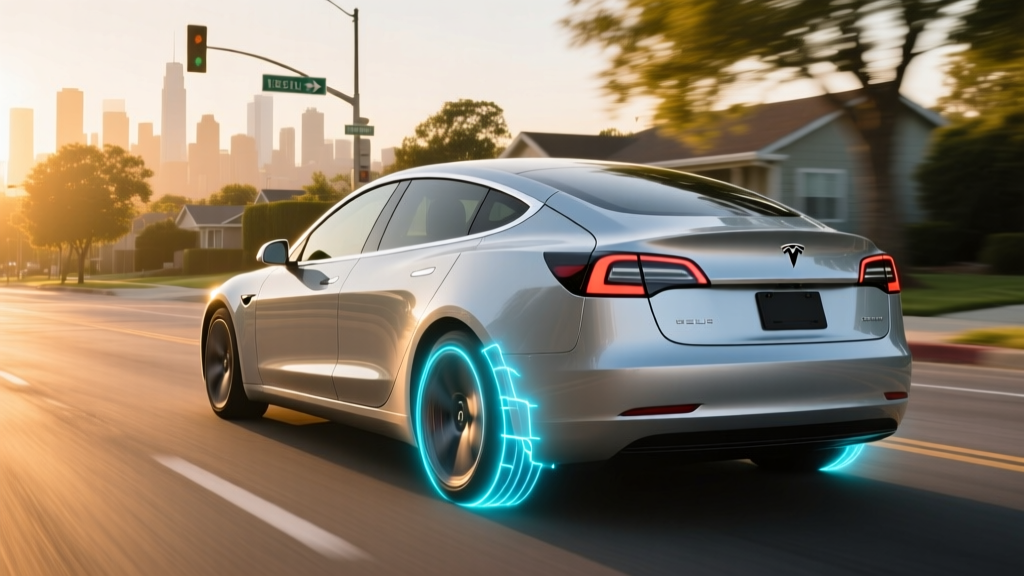
Regenerative braking is the defining driving experience of any Tesla. When you lift off the accelerator, the electric motor reverses its function — acting as a generator to convert kinetic energy back into electrical energy, slowing the vehicle while feeding charge back into the battery. This is what enables Tesla's signature one-pedal driving: in most daily scenarios, you rarely need to touch the brake pedal at all.
For 2026, Tesla's entire lineup — Model 3, Model Y, Model S, and Model X — uses aggressive regenerative braking as the default and, in most trims, only deceleration mode. Unlike earlier model years where drivers could toggle between "Low" and "Standard" regen, Tesla now locks regen to its maximum setting on most vehicles, with a "Hold" mode that brings the car to a complete stop without brake-pedal input. The result is measurably better efficiency, reduced brake-pad wear (many Tesla owners report original brake pads lasting 80,000+ miles), and an energy-recapture system that contributes directly to the vehicle's EPA-rated range.
This guide examines how Tesla's regenerative braking system works across the 2026 Model 3 and Model Y — the two highest-volume vehicles in Tesla's lineup — and how regen translates to real-world efficiency, range, and ownership costs.
How Regenerative Braking Affects Range and Efficiency
The EPA range sticker on any EV already factors in regenerative braking during its standardized test cycles. But the real-world impact of regen varies enormously depending on driving conditions — and this is where Tesla owners see the biggest divergence from the sticker.
EPA vs. Real-World Range — Tesla Model 3 Long Range AWD (2026):
EPA Estimated: 341 miles | City-heavy driving (regen-favorable): 330–350 miles | Highway cruising (70+ mph, minimal regen): 280–300 miles | Cold weather (below 32°F, mixed driving): 240–270 miles
Regenerative braking recovers the most energy in stop-and-go city driving and downhill routes. Highway driving, where you sustain speed with minimal deceleration, sees far less regen benefit. Cold weather reduces battery acceptance rate, meaning regen is often limited until the battery warms up — you'll notice the regen indicator on the dash shows reduced capability for the first 10–20 minutes of a cold drive.
The EPA rates the 2026 Model 3 Long Range AWD at 132 MPGe combined, which translates to approximately 25 kWh per 100 miles. That's among the most efficient vehicles in its class, and Tesla's regenerative braking system — combined with its industry-leading powertrain efficiency and low drag coefficient (Cd 0.219 for the refreshed Model 3) — is a significant contributor.
Regen Behavior in Cold Weather
One of the most common complaints from new Tesla owners in northern climates is reduced regenerative braking in winter. This is not a malfunction — it's a battery-protection measure. Lithium-ion batteries cannot safely accept high charge rates when cold, so Tesla's battery management system (BMS) temporarily limits regen power until the pack reaches optimal temperature. Expect regen to feel noticeably weaker for the first 10–20 minutes of a cold-soaked drive. The touchscreen displays a dotted line on the regen bar to indicate limited capability. Preconditioning the battery via the Tesla app before driving mitigates this substantially.
2026 Tesla Model 3: Full Specs and Efficiency Data
| Specification | Model 3 RWD | Model 3 Long Range AWD | Model 3 Performance |
|---|---|---|---|
| EPA Range | 272 miles | 341 miles | 315 miles |
| Battery (Usable) | ~57.5 kWh (LFP) | ~75 kWh (NMC) | ~75 kWh (NMC) |
| MPGe (Combined) | 132 MPGe | 132 MPGe | 124 MPGe |
| Efficiency | 25 kWh/100mi | 25 kWh/100mi | 27 kWh/100mi |
| 0-60 mph | 5.8 seconds | 4.2 seconds | 2.9 seconds |
| Horsepower | 271 hp | 346 hp | 510 hp |
| Drivetrain | RWD (single motor) | AWD (dual motor) | AWD (dual motor) |
| Max DC Fast Charge | 170 kW | 250 kW | 250 kW |
| 10–80% DCFC Time | ~25 minutes | ~25 minutes | ~25 minutes |
| Level 2 Charge Rate | 11.5 kW (~44 mi/hr) | 11.5 kW (~44 mi/hr) | 11.5 kW (~44 mi/hr) |
| Cargo Volume | 23 cu ft (trunk + frunk) | 23 cu ft (trunk + frunk) | 23 cu ft (trunk + frunk) |
| Rear Legroom | 35.3 inches | 35.3 inches | 35.3 inches |
| Base MSRP | $38,990 | $45,990 | $53,990 |
Battery Chemistry: LFP vs. NMC in the Model 3
The base Model 3 RWD uses a lithium iron phosphate (LFP) battery, while Long Range and Performance trims use nickel-manganese-cobalt (NMC) chemistry. This distinction matters for regen behavior and long-term ownership:
- LFP (RWD trim): Tesla recommends charging to 100% daily. LFP has a flatter voltage curve, which can make state-of-charge estimation less precise, but the chemistry offers longer cycle life and lower degradation. Regen behavior is identical in feel, but the smaller battery means total energy recaptured per stop event is lower.
- NMC (Long Range/Performance): Tesla recommends a daily charge limit of 80% for battery longevity, reserving 100% for road trips. Higher energy density gives more range but slightly faster long-term degradation. The larger buffer means regen energy has more capacity to be absorbed without hitting the top-of-charge ceiling.
2026 Tesla Model Y: Efficiency and Regen Performance
The Model Y remains Tesla's best-selling vehicle globally, and its regenerative braking system operates identically to the Model 3 — same software logic, same one-pedal "Hold" mode, same cold-weather limitations. The taller, heavier crossover body means slightly lower efficiency but the regen experience is equally strong.
| Specification | Model Y Long Range AWD | Model Y Performance |
|---|---|---|
| EPA Range | 320 miles | 285 miles |
| Battery (Usable) | ~75 kWh (NMC) | ~75 kWh (NMC) |
| MPGe (Combined) | 122 MPGe | 115 MPGe |
| Efficiency | 28 kWh/100mi | 29 kWh/100mi |
| 0-60 mph | 4.8 seconds | 3.5 seconds |
| Horsepower | 384 hp | 456 hp |
| Max DC Fast Charge | 250 kW | 250 kW |
| 10–80% DCFC Time | ~25 minutes | ~25 minutes |
| Level 2 Charge Rate | 11.5 kW (~37 mi/hr) | 11.5 kW (~37 mi/hr) |
| Cargo Volume (rear seats up) | 30 cu ft | 30 cu ft |
| Cargo Volume (rear seats folded) | 72 cu ft | 72 cu ft |
| Rear Legroom | 41.6 inches | 41.6 inches |
| Base MSRP | $46,990 | $52,490 |
The Model Y's higher curb weight (~4,400 lbs vs. ~3,900 lbs for the Model 3) means there's more kinetic energy to recapture during deceleration. In practice, this means regen feels slightly more pronounced in the Model Y — the vehicle has more momentum to convert, and you can feel the stronger deceleration pull when lifting off the accelerator at speed.
Charging Speed and Regenerative Braking: The Connection
Regenerative braking and charging infrastructure are deeply connected. The energy you recapture through regen needs to be stored efficiently, and that means understanding your charging options:
| Charging Level | Power (kW) | Miles Added per Hour | Use Case |
|---|---|---|---|
| Level 1 (120V outlet) | ~1.4 kW | 3–5 mi/hr | Overnight top-up; emergency use |
| Level 2 (240V, 48A) | 11.5 kW | 37–44 mi/hr | Home daily charging; full overnight refill |
| DC Fast Charge (V3 Supercharger) | Up to 250 kW | ~200 mi in 15 min | Road trips; quick stops |
| DC Fast Charge (V4 Supercharger) | Up to 350 kW* | ~250 mi in 15 min* | Newer deployments; faster peak rates |
*V4 Supercharger peak rates are vehicle-dependent. Model 3/Y currently cap at 250 kW even at V4 stations. Future hardware revisions may unlock higher acceptance rates.
Charging Curve Reality
Tesla's published 250 kW peak charge rate applies only between roughly 10–30% state of charge. The charge curve tapers significantly: by 50% SoC, you're typically seeing 150–170 kW; by 80%, it drops to around 60–80 kW. This is standard lithium-ion behavior, and the same physics apply in reverse during regenerative braking — regen power is strongest at mid-range SoC and limited near 100% to protect the battery. If you charge to 100% before a descent or city drive, you'll notice regen is temporarily reduced until SoC drops.
Federal Tax Credit and Pricing for 2026
Tesla's tax credit eligibility under IRS §30D has fluctuated due to battery-sourcing and critical-mineral requirements that phase in annually. Here's the current landscape:
| Trim | Base MSRP | Est. Federal Credit | Effective Price (before state incentives) |
|---|---|---|---|
| Model 3 RWD | $38,990 | Up to $7,500* | ~$31,490* |
| Model 3 Long Range AWD | $45,990 | Up to $7,500* | ~$38,490* |
| Model 3 Performance | $53,990 | Up to $7,500* | ~$46,490* |
| Model Y Long Range AWD | $46,990 | Up to $7,500* | ~$39,490* |
| Model Y Performance | $52,490 | Up to $7,500* | ~$44,990* |
*Eligibility for the full $7,500 credit requires meeting ALL of the following: buyer AGI below $150K (single) / $300K (joint), vehicle MSRP under $55K (sedans) or $80K (SUVs/vans), battery components manufactured in North America, and critical minerals sourced from the US or FTA partners. Rules tighten annually — verify current-year sourcing compliance on the IRS clean vehicle credit page and Tesla's checkout page, which displays credit eligibility at point of sale.
§30D Eligibility Checklist (2026):
- Buyer adjusted gross income: ≤ $150,000 (single) or ≤ $300,000 (married filing jointly)
- Vehicle MSRP cap: $55,000 for sedans (Model 3); $80,000 for SUVs (Model Y)
- Battery components: ≥ 60% manufactured in North America (2026 threshold)
- Critical minerals: ≥ 80% sourced from US or FTA-partner countries (2026 threshold)
- Vehicle must be new, purchased for personal use, and primarily used in the US
- Credit is non-refundable but can be transferred to the dealer as a point-of-sale discount
Driver Assistance, Tech, and Notable Drawbacks
Tesla's tech stack remains the most integrated in the EV market. Every 2026 Model 3 and Model Y includes:
- Autopilot (standard): Lane-centering, adaptive cruise control, and automatic emergency braking. This is SAE Level 2 — you must keep your hands on the wheel and eyes on the road at all times.
- Full Self-Driving (Supervised): $8,000 option or $99/month subscription. Adds automatic lane changes, navigate-on-Autopilot, traffic-light recognition, and city-street driving. Despite the name, this remains SAE Level 2 — full driver supervision is required. It is not a self-driving system.
- 15.4-inch touchscreen: All vehicle controls, media, and navigation run through a single display. No physical instrument cluster.
- Over-the-air updates: Tesla pushes regular software updates that can modify regen behavior, add features, and improve efficiency without a service-center visit.
- Sentry Mode / Dashcam: Uses the vehicle's external cameras for security recording and incident capture.
Important — Autopilot and FSD are NOT self-driving: Tesla's driver-assistance systems are classified as SAE Level 2 automation. The driver must remain fully engaged, monitor the road, and be prepared to take over instantly. Only Level 4 systems like Waymo's driverless robotaxi service operate without a human driver. Confusing Level 2 assist with autonomous driving is a serious safety risk.
Notable Drawbacks
- No adjustable regen: Unlike earlier model years or competitors like the Hyundai Ioniq 5 (which offers multiple regen levels via paddle shifters), Tesla now locks regen to maximum. If you prefer a coasting feel, you'll need to feather the accelerator — there's no software toggle.
- Minimalist interior: The absence of physical controls (no turn-signal stalk on the refreshed Model 3 — signals are on the steering wheel) frustrates some buyers. Everything runs through the touchscreen.
- Insurance costs: Tesla insurance premiums run 15–30% higher than comparable non-EV sedans and crossovers, driven by higher repair costs and parts pricing. Get a quote before purchasing.
- No Apple CarPlay / Android Auto: Tesla uses its proprietary infotainment system exclusively. Bluetooth audio streaming works, but phone-mirroring is not available.
Warranty and Long-Term Battery Durability
| Coverage | Model 3 RWD (LFP) | Model 3/Y Long Range & Performance (NMC) |
|---|---|---|
| Basic Vehicle | 4 years / 50,000 miles | 4 years / 50,000 miles |
| Battery & Drive Unit | 8 years / 100,000 miles | 8 years / 120,000 miles |
| Minimum Capacity Retention | 70% over warranty period | 70% over warranty period |
Tesla's battery warranty guarantees that the pack will retain at least 70% of its original capacity over the warranty period. Real-world data from Tesla's fleet suggests average degradation of approximately 8–12% over the first 100,000 miles for NMC packs, with LFP packs showing slightly slower degradation curves thanks to the chemistry's inherent cycle-life advantage. The regenerative braking system itself has no separate wear items — the electric motor and power electronics are covered under the drive-unit warranty.
Brake pad longevity is one of regen's most tangible ownership benefits. Because regenerative braking handles the majority of deceleration, the friction brakes are used primarily for final stops and emergency braking. It's common for Tesla owners to report original brake pads at 50–70% life remaining at 80,000 miles. Tesla recommends periodic brake-caliper lubrication in cold/wet climates to prevent corrosion from underuse.
Who Should Buy a Tesla in 2026?
Choose the Model 3 RWD ($38,990) if: You're a commuter with home charging, your daily round trip is under 100 miles, you want the lowest entry price with LFP battery longevity, and you don't need AWD.
Choose the Model 3 Long Range AWD ($45,990) if: You regularly take road trips over 250 miles, you live in a cold climate where the larger NMC battery and AWD provide range and traction confidence, or you want the fastest DC charging capability.
Choose the Model Y Long Range AWD ($46,990) if: You need crossover cargo space (72 cu ft with seats folded), you have a family needing rear-seat room (41.6" legroom), or you prefer a higher seating position with easy child-seat installation.
Consider a competitor (Hyundai Ioniq 5, BMW i4) if: You want adjustable regenerative braking levels, prefer physical controls and a traditional instrument cluster, want Apple CarPlay/Android Auto, or prioritize a more conventional service-center network.
Pros and Cons
Pros:
- Class-leading efficiency (25–28 kWh/100mi) boosted by aggressive regen
- One-pedal driving reduces brake wear and simplifies daily commuting
- Access to Tesla Supercharger network — the most reliable DC fast-charging system in the US
- Over-the-air updates continuously improve the vehicle post-purchase
- Strong resale value relative to EV competitors
- LFP battery option (Model 3 RWD) allows worry-free 100% daily charging
Cons:
- No adjustable regen — locked to maximum deceleration
- Touchscreen-only controls (no physical buttons, no instrument cluster)
- No Apple CarPlay or Android Auto
- Higher insurance premiums than non-EV competitors
- FSD (Supervised) remains Level 2 despite its name and $8,000 price
- Model Y pricing has climbed; competitors like the Ioniq 5 offer comparable space at similar cost
Frequently Asked Questions
What is the real-world range of a Tesla with regenerative braking?
The EPA rates the 2026 Model 3 Long Range AWD at 341 miles. In real-world city driving where regen recovers the most energy, expect 330–350 miles. On sustained highway trips at 70+ mph, expect 280–300 miles. In cold weather below freezing, plan for 240–270 miles due to reduced battery efficiency and limited regen capability until the pack warms up.
How fast does a Tesla charge at home and on the road?
At home on a 240V Level 2 charger (48A / 11.5 kW), a Model 3 or Model Y adds approximately 37–44 miles of range per hour — enough to fully recharge overnight from any daily driving. On a Tesla V3 Supercharger (250 kW peak DC), you'll go from 10% to 80% in roughly 25 minutes. The charge curve tapers above 50% SoC, so charging from 80–100% takes nearly as long as 10–80%.
How much does a Tesla cost after federal tax credits?
The 2026 Model 3 RWD starts at $38,990. With the full $7,500 federal tax credit (subject to income, MSRP, and battery-sourcing eligibility under IRS §30D), the effective price drops to approximately $31,490. The Model Y Long Range AWD starts at $46,990, falling to roughly $39,490 with the credit. Always verify current-year eligibility on the IRS clean vehicle credit page, as sourcing requirements tighten annually.
Is Tesla worth buying vs. competitors like Hyundai Ioniq 5 or BMW i4?
Tesla wins on Supercharger network access, over-the-air update capability, and overall efficiency. The Ioniq 5 offers adjustable regen, 800V architecture for faster peak charging at compatible stations, Apple CarPlay, and a more conventional interior. The BMW i4 provides a traditional luxury sedan experience with physical controls. If one-pedal driving, Supercharger access, and software-first design matter most, Tesla remains the benchmark. If you want hardware variety and conventional controls, test-drive the competition.
Does Tesla regenerative braking replace the friction brakes?
No. Regenerative braking handles the majority of daily deceleration, dramatically extending brake-pad life (often 80,000+ miles on original pads). But the friction brakes are essential for emergency stops, holding the vehicle at a complete stop on inclines, and situations where regen is limited (cold battery, full charge, or very high-speed stops). Tesla's friction brakes are a critical safety system — they're just used less frequently.
Can I turn off regenerative braking on a 2026 Tesla?
No. Tesla removed the adjustable regen setting from new vehicles starting with the 2021 model year for most markets. All current Model 3 and Model Y vehicles operate with maximum regenerative braking as the default. The "Hold" drive mode brings the car to a complete stop using regen alone. If you're transitioning from a gas car and find the deceleration aggressive, most drivers adapt within 1–2 weeks of daily driving.
Does regenerative braking work in all weather conditions?
Regen works in all weather, but its strength varies. In cold temperatures (below ~40°F), the battery management system limits regen to protect the battery until it warms up. On wet or icy roads, Tesla's traction-control system modulates regen to prevent wheel slip during deceleration. You'll see a dotted-line indicator on the dashboard when regen is operating at reduced capacity.