The Short Answer: Yes, Tesla Pioneered One-Pedal Regen
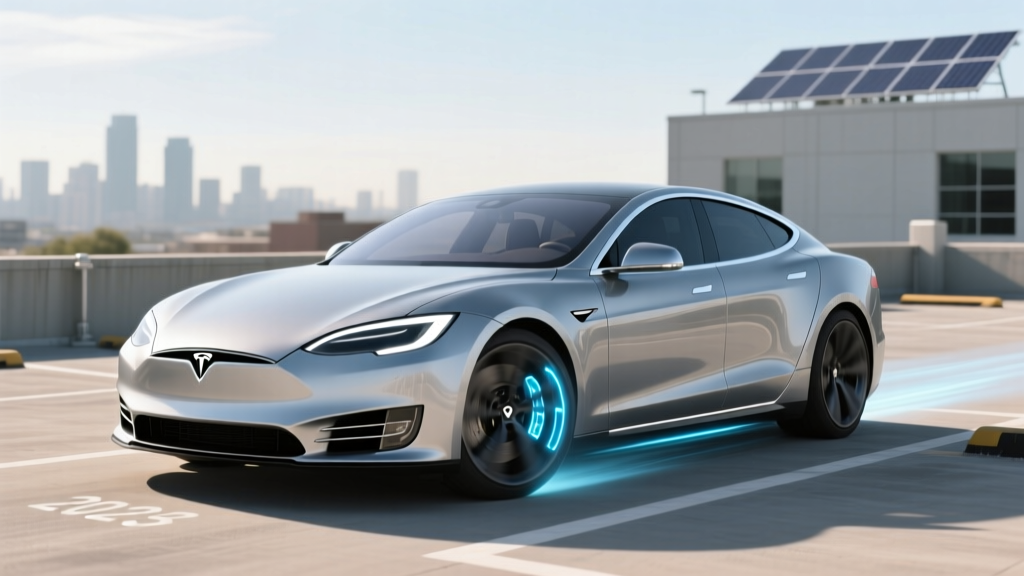
Every Tesla sold today — from the base Model 3 Rear-Wheel Drive to the Model X Plaid — uses regenerative braking as a core part of its driving experience. In fact, Tesla helped mainstream the concept of one-pedal driving in the EV world, where lifting off the accelerator slows the car substantially by converting kinetic energy back into battery charge. But how Tesla implements regen has evolved significantly since the company's early days, and understanding those changes matters if you're shopping for a 2026 Tesla or transitioning from a gas car.
This guide breaks down exactly how Tesla's regenerative braking system works across the current lineup, what settings you can control, and pairs that with a full ownership profile — range, charging speeds, pricing, and tax credit eligibility — so you can evaluate any Tesla with real numbers, not marketing copy.
How Tesla's Regenerative Braking Actually Works
Regenerative braking in a Tesla uses the electric motor as a generator when you lift off the accelerator pedal. The motor creates resistance that slows the vehicle while simultaneously sending electrical current back into the battery pack. In practical terms, this means you can drive most daily scenarios — city traffic, stoplights, highway deceleration — without touching the brake pedal.
The Settings: Standard vs. Low (Where Available)
Tesla's approach to regen adjustability has shifted over the years. As of the 2026 model year:
- Standard (High) Regen: This is the default and strongest setting. Lifting off the accelerator produces significant deceleration — roughly 0.2g to 0.3g of braking force — enough to bring the car to a complete stop in most Model 3 and Model Y variants. This is true one-pedal driving.
- Low Regen: In late 2020, Tesla briefly removed the ability to adjust regen strength, forcing all drivers into Standard mode. After significant owner feedback, the Low option was restored via an OTA update. Low regen lets the car coast more naturally, similar to a gas car with an automatic transmission in gear — useful for highway driving where you want momentum preservation or for new EV drivers easing into the experience.
To check or change your regen setting: go to Controls > Pedals & Steering > Regenerative Braking on the touchscreen. Note that some newer Tesla firmware versions have moved this under slightly different menu paths, but it remains accessible.
Stopping Mode: Hold, Roll, and Creep
Regen alone doesn't bring every Tesla to a full stop at zero mph — that's where Stopping Mode comes in:
- Hold: The car applies friction brakes automatically to hold at a complete stop. This completes the one-pedal experience. You never need the brake pedal in normal driving.
- Roll: The car stops applying regen at very low speeds, allowing it to roll freely (like neutral in a gas car). You must use the brake pedal to stop.
- Creep: Mimics a traditional automatic transmission — the car creeps forward when you release the brake. Familiar for gas-car converts.
2026 Tesla Lineup: Range, Battery, and Efficiency at a Glance
Tesla's current U.S. lineup spans four models. Here's how they compare on the metrics that matter most to buyers — with EPA figures and real-world expectations.
| Spec | Model 3 RWD | Model 3 Long Range AWD | Model Y Long Range AWD | Model S LR | Model X LR |
|---|---|---|---|---|---|
| EPA Range | 272 mi | 363 mi | 320 mi | 402 mi | 335 mi |
| Battery (usable) | ~57.5 kWh (LFP) | ~75 kWh (NMC) | ~75 kWh (NMC) | ~95 kWh (NMC) | ~95 kWh (NMC) |
| MPGe (combined) | 132 MPGe | 132 MPGe | 122 MPGe | 124 MPGe | 111 MPGe |
| kWh/100 mi | 25 | 25 | 28 | 27 | 30 |
| 0-60 mph | 5.8 sec | 4.2 sec | 4.8 sec | 3.1 sec | 3.8 sec |
| Horsepower | 271 hp | 384 hp | 384 hp | 670 hp | 670 hp |
| Drivetrain | RWD | AWD (dual motor) | AWD (dual motor) | AWD (dual motor) | AWD (dual motor) |
| Base MSRP | $38,990 | $45,240 | $46,630 | $79,990 | $84,990 |
Sources: EPA fueleconomy.gov, Tesla.com order pages. Pricing reflects 2026 model year base MSRP before destination fees.
• Highway-only at 75 mph: Expect 10–15% less range than EPA (e.g., Model 3 LR: ~310 mi real-world highway).
• Cold weather (below 32°F): Range drops 20–30% due to cabin heating and battery resistance. The Model 3 RWD with its LFP pack is particularly sensitive to cold — preconditioning is essential.
• City/commute driving: Regen recovers significant energy; you may meet or slightly exceed EPA estimates in stop-and-go traffic at moderate temps.
Charging Speeds: DC Fast, Level 2, and What to Expect
Charging speed is where Tesla maintains a significant advantage over most competitors, thanks to both the Supercharger network and the vehicles' charge acceptance rates. Here's the full picture.
| Charging Level | Model 3 / Y | Model S / X | What It Means |
|---|---|---|---|
| Level 1 (120V) | ~1 kW / 3–4 mi/hr | ~1 kW / 3–4 mi/hr | Emergency/trickle only |
| Level 2 (240V home) | 11.5 kW / ~37 mi/hr | 11.5 kW / ~34 mi/hr | Full charge overnight (8–10 hrs) |
| DC Fast Charge (peak) | 250 kW (V3 Supercharger) | 250 kW (V3 Supercharger) | Peak rate, not sustained |
| 10–80% DC time | ~25–30 min | ~30–37 min | With battery preconditioned |
Understanding the Charge Curve
Tesla's 250 kW peak charge rate is just that — a peak. The actual charge curve tells a more nuanced story. On a V3 Supercharger with a preconditioned battery:
- 10–30% SoC: The car pulls near its peak rate (200–250 kW for Model 3/Y)
- 30–60% SoC: Rate tapers gradually to roughly 120–150 kW
- 60–80% SoC: Further taper to 60–90 kW
- 80–100% SoC: Dramatic slowdown; charging above 80% on DC is painfully slow and not recommended for road trips
This is why Tesla's navigation system routes you through multiple shorter Supercharger stops rather than one long one — it's faster to charge 10–80% twice than to wait for 10–100% once.
LFP note for Model 3 RWD buyers: The lithium iron phosphate (LFP) battery in the base Model 3 charges slower on DC than the NMC packs in Long Range variants. Expect peak rates around 170 kW and 10–80% times closer to 30–35 minutes. However, LFP batteries can — and should — be charged to 100% regularly for battery calibration, unlike NMC packs which Tesla recommends keeping at 80% for daily use.
Pricing, Tax Credits, and True Cost to Buy
Tesla's pricing has stabilized after years of volatility. Here's where the lineup stands for 2026, including federal tax credit implications under IRS §30D rules.
| Model / Trim | Base MSRP | MSRP Cap (§30D) | Potential Credit | Est. After Credit |
|---|---|---|---|---|
| Model 3 RWD | $38,990 | Under $55K ✓ | Up to $7,500* | ~$31,490 |
| Model 3 Long Range AWD | $45,240 | Under $55K ✓ | Up to $7,500* | ~$37,740 |
| Model Y Long Range AWD | $46,630 | Under $80K ✓ | Up to $7,500* | ~$39,130 |
| Model S Long Range | $79,990 | Over $55K ✗ | $0 (MSRP cap) | $79,990 |
| Model X Long Range | $84,990 | Under $80K ✗ | $0 (MSRP cap) | $84,990 |
*The §30D federal EV tax credit has multiple requirements. Eligibility is NOT guaranteed. See checklist below. Credit can be applied as a point-of-sale rebate through a registered dealer, reducing your out-of-pocket cost at purchase. Source: IRS.gov
- Income caps: Modified AGI must not exceed $150K (single), $225K (head of household), or $300K (joint filers)
- MSRP caps: Sedans (Model 3, S) must be under $55,000; SUVs/pickups (Model Y, X) under $80,000
- Battery sourcing: A percentage of critical minerals and battery components must meet North American sourcing requirements — these thresholds increase annually
- Point-of-sale transfer: You can transfer the credit to the dealer at purchase for an immediate price reduction, or claim it on your tax return
- Tax liability: If claiming on your return (not point-of-sale), the credit is non-refundable — it can only reduce your tax liability to zero
Key caveat: The Model S and Model X exceed the §30D MSRP caps and do not qualify for the federal credit regardless of buyer income or battery sourcing. If these models matter to you, look for state-level incentives in your jurisdiction (check your state's energy office or AFDC for state-by-state listings).
Tech, Interior, and the Autopilot Question
Tesla's interior philosophy remains minimalist: a single 15.4-inch center touchscreen controls virtually everything, with no physical instrument cluster. The 2026 Model 3 "Highland" refresh added ventilated front seats, ambient lighting, rear-seat ventilation, and improved cabin noise insulation — addressing longstanding complaints about interior quality.
Driver Assistance: Autopilot and FSD (Supervised)
Autopilot (included): Traffic-Aware Cruise Control and Autosteer (lane centering) on highways. Reliable for long highway drives with clear lane markings.
FSD Supervised ($8,000 option or $99/month): Adds Navigate on Autopilot (automatic highway interchanges), Auto Lane Change, Autopark, Summon, and traffic light/stop sign recognition. Capabilities have improved substantially with the neural-network-based V12+ architecture, but the system still requires constant supervision and occasionally makes disconcerting decisions in complex urban environments.
Standout Tech Features
- Over-the-air (OTA) updates that regularly add features and improve performance
- Sentry Mode (dashcam recording when parked) and Dog Mode (climate control for pets)
- Tesla app integration: remote preconditioning, charge monitoring, location tracking, Summon
- Gaming and streaming on the center screen (Netflix, YouTube, Steam games while parked)
- Heat pump (standard on all models since 2021) — significantly improves cold-weather efficiency and range compared to resistive heating
Notable Drawbacks
- No Apple CarPlay or Android Auto — Tesla's proprietary infotainment only
- Minimalist interior means nearly all controls are buried in touchscreen menus (glovebox, mirror adjustment, wiper settings)
- Panel gaps and build quality, while improved, still lag behind German luxury competitors
- No physical buttons for climate, volume, or defrost — everything requires screen interaction
- Limited service center capacity in some regions — repair wait times can be long
Cargo, Passenger Space, and Practicality
Tesla's skateboard platform gives it packaging advantages over converted gas-car platforms. Here's what you actually get:
| Dimension | Model 3 | Model Y | Model S | Model X |
|---|---|---|---|---|
| Rear legroom | 35.2 in | 41.6 in | 35.4 in | 40.9 in |
| Cargo (behind rear seats) | 23 cu ft | 30 cu ft | 28 cu ft | 42 cu ft |
| Cargo (seats folded) | 65 cu ft | 76 cu ft | 65 cu ft | 88 cu ft |
| Front trunk (frunk) | 3.1 cu ft | 4.1 cu ft | 3.1 cu ft | 6.6 cu ft |
| Towing capacity | Not rated | 3,500 lbs | Not rated | 5,000 lbs |
The Model Y is the clear winner for families needing cargo space and rear-seat room. The Model 3's trunk is adequate for a sedan but the sloping roofline limits larger items. The Model X offers the most versatility, including an optional third row (though third-row space is tight for adults).
Warranty and Battery Longevity
Tesla's warranty structure is straightforward but not class-leading:
- Basic vehicle warranty: 4 years / 50,000 miles (all models)
- Battery & drive unit warranty (Model 3 RWD): 8 years / 100,000 miles, minimum 70% capacity retention
- Battery & drive unit warranty (Model 3 LR, Model Y, S, X): 8 years / 120,000 miles (Model 3/Y) or 150,000 miles (Model S/X), minimum 70% capacity retention
The 70% retention threshold is important: Tesla will replace or repair the battery if it degrades below 70% of original capacity within the warranty period. In real-world data from Tesla's own fleet reports, average degradation across the fleet is approximately 12% after 200,000 miles — well above the warranty threshold. LFP batteries (Model 3 RWD) show even lower degradation in many cases, with some owners reporting less than 5% loss after 60,000 miles.
Battery replacement cost (out of warranty): Based on current service pricing, a Model 3/Y battery replacement runs approximately $12,000–$16,000. Model S/X replacements are higher at $18,000–$22,000. These costs have been declining as battery manufacturing scales.
Who Should Buy a Tesla in 2026?
Choose the Model 3 Long Range AWD if: You need all-weather capability, take regular road trips over 250 miles, or live in a cold climate where the NMC battery's cold-weather performance and heat pump combination shine.
Choose the Model Y Long Range AWD if: You have a family, need cargo versatility, want SUV ride height, and road-trip frequently. The Model Y's 320-mile EPA range and Supercharger access make it one of the most practical EVs for cross-country travel.
Choose the Model S or X if: Budget is not a primary constraint, you want luxury sedan/SUV performance, and you value the extra range (Model S at 402 mi EPA). Understand that neither qualifies for the federal tax credit due to MSRP caps.
Pros, Cons, and the Competition
✓ Pros
- Supercharger network — still the most reliable DC fast-charging ecosystem in North America
- Industry-leading energy efficiency (kWh/100 mi) across the lineup
- OTA updates continuously improve the vehicle post-purchase
- Strong regenerative braking with customizable settings for one-pedal driving
- Excellent real-world range, especially with the heat pump in cold weather
- Low running costs — ~$0.04–$0.06/mile on home electricity vs. $0.12–$0.16/mile for gas equivalents
✗ Cons
- No Apple CarPlay / Android Auto — a dealbreaker for some buyers
- Touchscreen-only controls frustrate drivers who prefer physical buttons
- FSD (Supervised) costs $8,000 extra and still requires full driver attention
- Service center wait times can be weeks in some metro areas
- Model S/X do not qualify for the federal tax credit
- Insurance premiums are typically 15–25% higher than comparable gas vehicles
Key Competitors to Cross-Shop
The Hyundai Ioniq 5 (318 mi EPA, 800V architecture for ~18-min 10–80% charging) offers faster DC charging and a more conventional interior. The BMW i4 provides a more premium cabin and traditional controls at a higher price. For SUV buyers, the Ford Mustang Mach-E (312 mi EPA Extended Range) competes directly with the Model Y on price and offers CarPlay. The Chevrolet Equinox EV undercuts on price with 319 mi of range. All of these use the expanding NACS-compatible Supercharger network or CCS networks — Tesla's charging moat is narrowing as other automakers gain Supercharger access.
Frequently Asked Questions
Does Tesla have regenerative braking on every model?
Yes. Every Tesla — Model 3, Model Y, Model S, and Model X — uses regenerative braking as standard. There is no trim or configuration where regen is absent. It's a fundamental part of how the electric powertrain operates.
Can I turn off regenerative braking in a Tesla?
You cannot fully disable regen, but you can reduce its strength by selecting "Low" regenerative braking in the settings menu (where available on your firmware version). Low regen makes the car coast more like a traditional gas vehicle. The "Standard" setting provides the strongest regen and enables true one-pedal driving when paired with "Hold" stopping mode.
Why does regen feel weaker on cold mornings?
Lithium-ion batteries accept charge more slowly at low temperatures. Tesla's battery management system intentionally limits regenerative braking power when the battery is cold to prevent damage from lithium plating. You'll see a dotted or dashed line on the energy display indicating limited regen. As the battery warms — through driving, Supercharger preconditioning, or using the app to precondition while plugged in — full regen returns. This is normal and protective.
Does regenerative braking save money on brake pad replacement?
Significantly. Because regen handles most deceleration, the friction brake pads and rotors on a Tesla see far less wear than on a gas car. Many Tesla owners report original brake pads lasting 100,000+ miles. Tesla recommends periodic brake caliper lubrication (especially in cold/salted-road climates) to prevent the calipers from seizing due to underuse.
What is the real-world range of a Tesla?
Real-world range depends heavily on driving conditions. For the Model 3 Long Range AWD (363 mi EPA): expect roughly 310–330 miles in moderate-temperature mixed driving, 270–300 miles at sustained highway speeds (75 mph), and 250–280 miles in cold weather (below freezing) with cabin heating. The Model Y Long Range tracks similarly but 10–15% lower due to its larger frontal area and weight. Always precondition the battery before driving in cold weather to minimize range loss.
Does a Tesla qualify for the federal EV tax credit?
The Model 3 (both RWD and Long Range) and Model Y Long Range qualify for up to $7,500 under §30D, provided you meet income caps ($150K single / $300K joint) and the vehicle meets battery sourcing requirements. The Model S and Model X do not qualify because their MSRP exceeds the §30D cap ($55K for sedans, $80K for SUVs). Credit can be transferred to the dealer at point of sale for an immediate price reduction. Always verify current eligibility on IRS.gov before purchasing, as sourcing rules tighten annually.
Is a Tesla worth buying vs. competitors in 2026?
For most buyers, the Model 3 and Model Y remain strong choices due to the Supercharger network, efficiency, and pricing. However, the competitive gap has narrowed considerably. If you prioritize fast DC charging, the Hyundai Ioniq 5 and Kia EV6 (800V, ~18 min 10–80%) are compelling. If you want CarPlay and a more traditional interior, the Ford Mach-E or BMW i4 are worth test-driving. If you need maximum cargo space on a budget, the Chevrolet Equinox EV is a strong alternative. The Tesla advantage in 2026 is less about any single spec and more about the integrated ecosystem — Superchargers, OTA updates, and app experience remain best-in-class.