Quick Answer: Are Nissan Electric Vehicles Worth Buying in 2026?
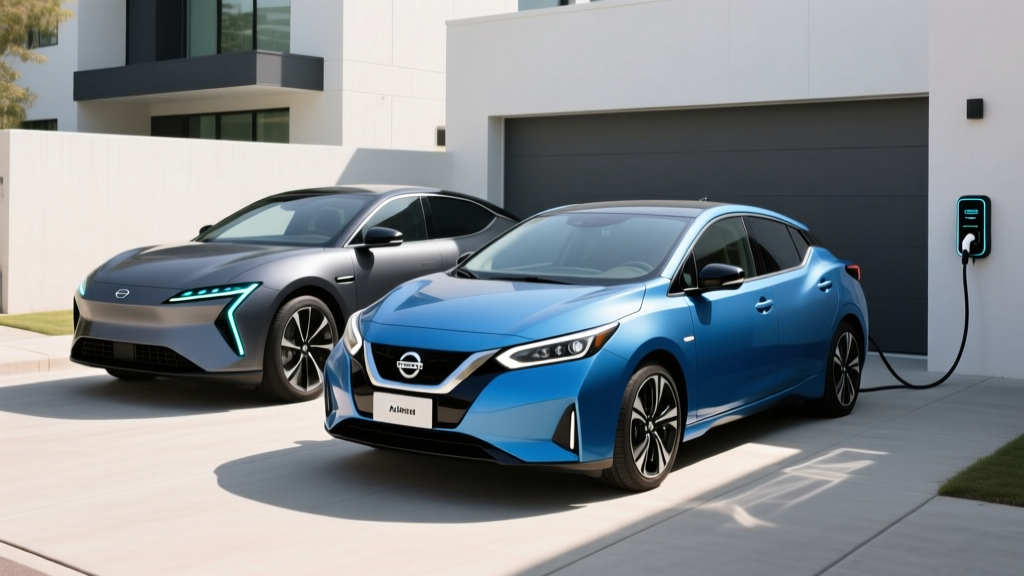
Nissan currently sells two battery-electric models in the U.S.: the Leaf (compact hatchback, EPA range up to 212 miles, starting ~$29,000) and the Ariya (compact SUV, EPA range up to 304 miles, starting ~$40,000). The Leaf is one of the most affordable new EVs available but uses the older CHAdeMO DC charging standard, limiting fast-charging options. The Ariya uses the more widely supported CCS connector and offers competitive range and tech. Both qualify for partial or full federal tax credits depending on battery sourcing and buyer income. Nissan EVs are best suited for buyers with reliable home Level 2 charging who primarily drive in moderate climates.
The 2026 Nissan EV Lineup at a Glance
| Spec | 2026 Nissan Leaf | 2026 Nissan Ariya |
|---|---|---|
| Body Style | Compact Hatchback | Compact SUV |
| EPA Range | 149 mi (S) / 212 mi (SV Plus) | 289–304 mi (varies by trim) |
| Battery (usable) | 40 kWh (S) / 60 kWh (SV Plus) | 63 kWh (Engage) / 87 kWh (e-4orce) |
| Battery Chemistry | NMC (lithium-ion) | NMC (lithium-ion) |
| DC Fast Charge (peak) | ~50 kW (CHAdeMO) | ~130 kW (CCS) |
| 10–80% DC Charge | ~60 min (40 kWh) / ~60 min (60 kWh) | ~35–40 min |
| Level 2 Rate | 6.6 kW (J1772) | 7.2 kW (J1772) |
| Horsepower | 147 hp (S) / 214 hp (SV Plus) | 216 hp (FWD) / 389 hp (e-4orce AWD) |
| 0–60 mph | ~7.4 sec (SV Plus) | ~7.5 sec (FWD) / ~4.8 sec (e-4orce) |
| Cargo Volume | 23.6 cu ft (rear seats up) | 22.8 cu ft (rear seats up) |
| Base MSRP | ~$29,135 (S) | ~$40,135 (Engage FWD) |
| Battery Warranty | 8 yr / 100,000 mi | 8 yr / 100,000 mi |
Real-World Range Reality Check: The Ariya's EPA 304-mile rating (Engage+ FWD with 87 kWh pack) is strong on paper. In highway testing at 70 mph in moderate temperatures, expect roughly 260–275 miles. In cold weather (below 30°F), range drops to approximately 210–230 miles due to cabin heating demands and reduced battery efficiency. The Leaf SV Plus (EPA 212 mi) realistically delivers 175–190 miles on the highway and 140–160 miles in freezing conditions. Neither model comes with a heat pump as standard on all trims — verify trim-level equipment if cold-weather driving is routine.
Nissan EVs vs Gas and Hybrid Alternatives
For buyers cross-shopping Nissan electric vehicles against gas or hybrid options, the financial case hinges on how you charge and how much you drive. Here's how the Ariya stacks up against comparable Nissan gas and hybrid models over five years and 75,000 miles:
| Cost Factor | Nissan Ariya (EV) | Nissan Rogue (Gas AWD) | Nissan Rogue (PHEV est.) |
|---|---|---|---|
| Base MSRP | $40,135 | $30,000 | ~$37,000 (est.) |
| Fed. Tax Credit (§30D) | Up to $7,500* | $0 | Up to $7,500* |
| Effective Purchase Price | ~$32,635 | $30,000 | ~$29,500 |
| Fuel/Energy (75k mi) | $2,400–$3,600** | $7,800–$9,400*** | $4,500–$5,800 |
| Maintenance (5 yr) | ~$1,200 | ~$3,500 | ~$2,800 |
| 5-Year Total Cost | ~$36,200–$37,400 | ~$41,300–$42,900 | ~$36,800–$37,800 |
* §30D credit eligibility depends on battery critical-mineral sourcing, buyer AGI caps ($150k single / $300k joint), and MSRP limits ($80k for SUVs). Verify current rules at IRS.gov before purchasing. Credit can now be transferred at point of sale as a down-payment reduction.
** Assumes home charging at $0.14/kWh and 3.5 mi/kWh. Public DC fast charging costs significantly more ($0.35–$0.50/kWh).
*** Assumes 28 MPG combined and $3.50/gallon.
The Ariya's effective purchase price after the federal credit lands close to a well-equipped Rogue, and the energy and maintenance savings widen the gap each year. However, if you cannot charge at home and must rely entirely on public DC fast charging, the Ariya's energy cost rises to roughly $5,000–$6,500 over 75,000 miles — still cheaper than gas but less compelling.
Charging Infrastructure: The CHAdeMO vs CCS Divide
This is the single most important ownership consideration that separates the Leaf from the Ariya.
Nissan Leaf (CHAdeMO): The Leaf remains one of the last mainstream EVs using the CHAdeMO DC fast-charging connector. While Electrify America and some regional networks still maintain CHAdeMO stalls, the industry has overwhelmingly standardized on CCS and, increasingly, Tesla's NACS. CHAdeMO infrastructure is shrinking relative to CCS/NACS growth. On road trips, you may find fewer operational CHAdeMO chargers, and peak speeds top out around 50 kW — meaning a 40–60 minute stop for a meaningful charge.
Nissan Ariya (CCS): The Ariya uses the CCS1 standard, compatible with Electrify America, EVgo, ChargePoint DC stations, and most non-Tesla fast chargers nationwide. With a peak rate of ~130 kW, the Ariya can add roughly 150–180 miles in a 30-minute session (10–80%). The charge curve tapers noticeably above 80% SoC — plan to unplug at 80% on road trips to minimize stop time.
Home charging is where both models shine. A Level 2 home charger (240V, 32–40 amps) refills either vehicle overnight. Installation typically costs $800–$2,000 depending on panel capacity, conduit run length, and local permit fees. If your home has a 200-amp electrical panel with spare capacity, expect the lower end. Older homes with 100-amp panels may need a $2,000–$4,000 panel upgrade — factor this into your first-year budget.
| Level | Power | Leaf (miles/hr) | Ariya (miles/hr) | Where |
|---|---|---|---|---|
| Level 1 (120V) | ~1.4 kW | ~4–5 mi/hr | ~4–5 mi/hr | Standard outlet |
| Level 2 (240V) | 6.6–7.2 kW | ~22–25 mi/hr | ~25–30 mi/hr | Home / workplace |
| DC Fast (CHAdeMO) | ~50 kW | ~100+ mi in 30 min | N/A | Public stations |
| DC Fast (CCS) | ~130 kW | N/A | ~150–180 mi in 30 min | Public stations |
Federal Tax Credits and Incentives for Nissan EVs
Under current IRS §30D rules, the Nissan Ariya and Leaf may qualify for up to $7,500 in federal clean vehicle tax credits, split into two components:
- $3,750 — Critical Minerals Requirement: A percentage of battery minerals must be sourced from the U.S. or free-trade-agreement countries. This threshold increases annually.
- $3,750 — Battery Component Requirement: Battery components must be manufactured or assembled in North America, with percentages rising each year.
- Buyer Income Caps: AGI must not exceed $150,000 (single), $225,000 (head of household), or $300,000 (joint filing).
- MSRP Caps: Vehicle MSRP must not exceed $55,000 (sedans/hatchbacks like the Leaf) or $80,000 (SUVs like the Ariya). All current Nissan EV trims fall within these limits.
- Point-of-Sale Transfer: Eligible buyers can transfer the credit to the dealer at purchase, receiving it as an immediate price reduction rather than waiting for a tax refund.
Critical-mineral and battery-sourcing requirements tighten each year. The credit amount available for any specific Nissan EV may change — always verify current eligibility on fueleconomy.gov before signing a purchase agreement. Many states also offer additional rebates (California's CVRP, Colorado's state credit, etc.) that stack with the federal incentive.
Real-World Ownership Considerations
Climate and Range
Nissan EVs use liquid-cooled battery packs, which manage heat better than the passive-air-cooled packs in early Leaf models. Still, cold weather reduces range 20–30% across both models. If you live in the upper Midwest or Northeast and regularly drive more than 120 miles in winter, the Ariya's larger battery provides a more comfortable buffer. The Leaf S (149-mile EPA range) becomes impractical for longer winter commutes once you account for cabin heating, which draws 2–4 kW continuously.
Insurance Costs
EV insurance premiums typically run 15–25% higher than equivalent gas vehicles due to higher repair costs and battery replacement risk. Expect annual premiums of roughly $1,800–$2,400 for the Ariya and $1,500–$2,000 for the Leaf, depending on your driving record, location, and coverage level. Get quotes before purchasing — the difference between insurers can be $500+ per year.
Maintenance
Nissan EVs eliminate oil changes, spark plugs, transmission fluid, and exhaust-system repairs. Primary maintenance items include cabin air filters, brake fluid checks, tire rotation (EVs wear tires faster due to instant torque and heavier weight), and wiper blades. Nissan's battery warranty covers capacity loss below a defined threshold (typically 9 bars out of 12 on the Leaf's capacity gauge, or roughly 65–70% capacity retention) for 8 years/100,000 miles. Based on industry data from sources like NHTSA and owner surveys, modern NMC packs in liquid-cooled systems retain 85–92% capacity after 100,000 miles.
ProPilot Assist — Not Self-Driving
Both the Leaf and Ariya offer Nissan's ProPilot Assist, a Level 2 driver-assistance system per SAE classification. It combines adaptive cruise control and lane-centering for highway use. The driver must keep hands on the wheel and eyes on the road at all times. This is not autonomous driving — it is a convenience feature that reduces fatigue on long trips. Nissan's ProPilot Assist 2.0 (available on higher Ariya trims) adds hands-off driving on pre-mapped divided highways but still requires driver attention and does not handle city streets, construction zones, or adverse weather.
SAE Automation Level: ProPilot Assist = Level 2 (partial automation, driver must supervise). This is functionally similar to Toyota Safety Sense, Honda Sensing, or Ford BlueCruise. It is not equivalent to Waymo's Level 4 driverless robotaxi service.
Myths vs Facts About Nissan Electric Vehicles
| Myth | Fact |
|---|---|
| "Nissan Leaf batteries all fail early" | Early 2011–2017 Leafs with passively air-cooled 24 kWh packs did experience accelerated degradation in hot climates. The current-generation Leaf (2018+, liquid-cooled, 40/60 kWh) shows far better longevity, with most owners reporting 90%+ capacity retention at 60,000 miles. |
| "You can't take a Nissan EV on a road trip" | The Ariya (CCS, 304-mi range) handles road trips well with planning — expect 2–3 DC fast-charge stops on a 600-mile drive. The Leaf is more limited due to CHAdeMO availability and slower 50 kW charging but is still viable for shorter intercity trips. |
| "EVs cost more to own than gas cars" | After applying the federal tax credit, the Ariya's 5-year total cost of ownership is competitive with or lower than the gas Rogue, primarily due to fuel and maintenance savings. Without the credit or without home charging, the equation shifts. |
| "The Leaf is discontinued" | Nissan continues to sell the Leaf in the U.S. as of 2026, though its long-term future is uncertain as the industry shifts to NACS. The Ariya is Nissan's strategic EV going forward. |
| "Nissan EVs don't qualify for tax credits" | Eligibility varies by model year, trim, and current sourcing rules. Both the Leaf and Ariya have qualified for partial or full credits in recent years. Always verify on IRS.gov before purchase. |
Decision Framework: Which Nissan EV Fits Your Situation?
Choose the Nissan Leaf if:
- You want one of the lowest-cost new EVs on the market (~$29,000 before credits)
- Your daily driving is under 80 miles round-trip
- You have reliable Level 2 home charging and rarely take road trips over 150 miles
- You live in a region with adequate CHAdeMO public charging infrastructure
- You prioritize affordability over cutting-edge charging speed or range
Choose the Nissan Ariya if:
- You need SUV cargo space and seating for five adults comfortably
- You want 260+ real-world miles of range for highway trips
- You need CCS compatibility for the widest public fast-charging access
- You want available AWD (e-4orce) for snow or rain
- You're willing to pay ~$40,000+ for a more modern, tech-forward EV platform
Look beyond Nissan if:
- You need NACS (Tesla Supercharger) access without an adapter — neither Nissan currently uses NACS natively
- You want 350+ miles of range (consider Hyundai Ioniq 6, Lucid Air, or Tesla Model 3 Long Range)
- You want DC fast charging above 200 kW (Ariya peaks at ~130 kW; competitors like the Ioniq 5 hit 240+ kW)
- You need three-row seating (Nissan does not currently offer an electric three-row SUV)
Frequently Asked Questions
Is the Nissan Ariya a good EV for first-time buyers?
Yes, with caveats. The Ariya offers competitive range, a comfortable interior, and CCS charging compatibility. However, its ~130 kW peak DC charging speed is slower than rivals like the Hyundai Ioniq 5 (~240 kW) or Tesla Model Y (~250 kW). If you frequently road-trip and value the shortest possible charging stops, test-drive those competitors as well. For primarily home-charged daily driving, the Ariya's charging speed is a non-issue — you plug in overnight and wake up full.
Will Nissan switch to the Tesla NACS connector?
Nissan has announced plans to adopt the NACS connector for future EV models, aligning with Ford, GM, Rivian, and most major automakers. Current 2026 Ariya and Leaf models still ship with CCS and CHAdeMO respectively. When the transition occurs, CCS-equipped Ariya owners will likely be able to use NACS-to-CCS adapters at Tesla Superchargers, similar to the adapters Ford and Rivian have deployed.
How long does a Nissan EV battery last?
Nissan warrants its EV batteries for 8 years or 100,000 miles against capacity loss below a defined threshold. Industry data suggests modern liquid-cooled NMC packs retain 85–92% of original capacity at 100,000 miles. A full battery replacement, if needed out of warranty, currently costs approximately $6,500–$9,000 for the Leaf and $10,000–$14,000 for the Ariya, though prices are expected to decline as battery manufacturing scales.
Can I charge a Nissan Leaf at a Tesla Supercharger?
Not currently. The Leaf uses CHAdeMO for DC fast charging, and Tesla Superchargers use NACS. No commercially available adapter converts CHAdeMO to NACS. The Ariya (CCS) will gain Supercharger access via a NACS adapter once Nissan's transition is complete and adapter availability is confirmed.
What is the real cost to charge a Nissan Ariya at home?
The Ariya's 87 kWh battery pack (e-4orce trims) costs approximately $12.20 to charge from empty to full at the U.S. residential average of $0.14/kWh. With the vehicle averaging roughly 3.2–3.5 miles per kWh, that works out to about $0.04–$0.05 per mile — compared to $0.12–$0.15 per mile for a gas SUV getting 28 MPG at $3.50/gallon. Over 15,000 miles per year, home charging saves roughly $1,200–$1,500 annually versus gasoline.
Does the Nissan Leaf still make sense in 2026?
It depends on your use case. At ~$29,000 before incentives, the Leaf S is one of the cheapest new EVs available. After a potential $7,500 credit, the effective price drops to roughly $21,600 — remarkable value for a practical commuter car. The 149-mile range limits it to urban and suburban duty with home charging. If that matches your driving pattern and you don't need frequent DC fast charging, the Leaf remains a smart, low-risk entry into EV ownership. If you need more range or road-trip capability, the Ariya or a competitor is the better investment.