If you are shopping for a Tesla in 2026, you have likely seen the phrase Tesla referral code floating around forums, Reddit threads, and YouTube descriptions. Unlike traditional dealer incentives, Tesla's referral program is peer-driven: existing owners share a link, and new buyers who use it can unlock a modest discount or bonus credits, while the referring owner earns rewards too. The program changes frequently — Tesla has paused, relaunched, and restructured it multiple times since 2023 — so understanding exactly what a referral code offers right now matters more than chasing an outdated deal.
This guide breaks down how the Tesla referral code works in 2026, then dives into the two vehicles most buyers use it on: the Model 3 and Model Y. You will find exact EPA range figures, battery chemistry details, DC fast-charging speeds, real-world range expectations, pricing, and federal tax credit eligibility under IRS §30D rules.
How the Tesla Referral Code Works in 2026
Tesla's referral program lets current Tesla owners share a personalized referral link. When a new buyer orders a vehicle through that link, both parties typically receive a benefit. As of early 2026, the most common structure is:
- New buyer: A price reduction (historically around $500–$1,000 off the purchase price, or equivalent Supercharger credits)
- Referring owner: Tesla credits redeemable for Supercharging miles, accessories, or entries into product giveaways
Important caveats: Tesla can modify or suspend the program at any time without advance notice. The referral link must be applied before you finalize your order in the Tesla app or on tesla.com — it cannot be retroactively added. Referral benefits are separate from and can stack with the federal EV tax credit, provided you meet IRS eligibility requirements.
2026 Tesla Model 3: Range, Battery, and Charging Specs
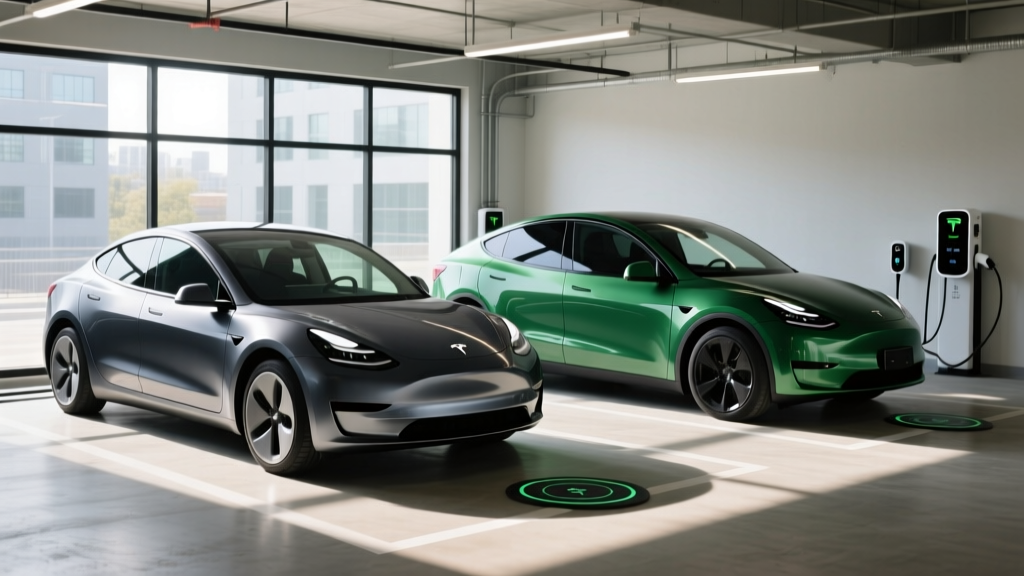
The refreshed Model 3 (introduced for the 2024 model year and carried into 2026 with minor updates) remains Tesla's most affordable sedan. It is available in three trims: Rear-Wheel Drive, Long Range AWD, and Performance AWD.
| Spec | RWD (Base) | Long Range AWD | Performance AWD |
|---|---|---|---|
| EPA Range | 272 mi | 363 mi | 315 mi |
| Battery (usable) | ~57 kWh | ~75 kWh | ~75 kWh |
| Chemistry | LFP | NMC | NMC |
| Drivetrain | RWD (single motor) | AWD (dual motor) | AWD (dual motor) |
| Horsepower | 271 hp | 346 hp | 510 hp |
| 0–60 mph | 5.8 sec | 4.2 sec | 2.9 sec |
| MPGe (combined) | 132 MPGe | 134 MPGe | 118 MPGe |
| Efficiency (kWh/100 mi) | 25 | 25 | 29 |
| Peak DC Fast Charge | 170 kW | 250 kW | 250 kW |
| 10–80% DC Time | ~25 min | ~18 min | ~18 min |
| Level 2 (240V/48A) | ~30 mi/hr | ~44 mi/hr | ~44 mi/hr |
| Base MSRP | $38,990 | $47,740 | $54,990 |
| Cargo Volume | 23 cu ft (trunk + frunk combined) | ||
| Rear Legroom | 35.2 in | ||
Sources: EPA / fueleconomy.gov, Tesla Model 3 specs.
The EPA sticker says 363 miles for the Long Range, but plan for roughly 290–310 miles on sustained highway driving at 70+ mph. In cold weather (below 32°F), expect a further 15–25% reduction, bringing usable range to approximately 230–260 miles. The RWD trim's LFP battery handles cold slightly worse in terms of range retention, but LFP chemistry allows routine charging to 100% without degradation concerns — a practical advantage for daily commuters.
2026 Tesla Model Y: Range, Battery, and Charging Specs
The Model Y is America's best-selling EV and the vehicle most buyers apply a Tesla referral code toward. The current generation carries over the 2025 refresh with updated styling, improved suspension tuning, and a ventilated-seat option on higher trims. Three trims are offered: Long Range RWD, Long Range AWD, and Performance AWD.
| Spec | Long Range RWD | Long Range AWD | Performance AWD |
|---|---|---|---|
| EPA Range | 320 mi | 308 mi | 277 mi |
| Battery (usable) | ~75 kWh | ~75 kWh | ~75 kWh |
| Chemistry | NMC | NMC | NMC |
| Drivetrain | RWD (single motor) | AWD (dual motor) | AWD (dual motor) |
| Horsepower | 346 hp | 384 hp | 456 hp |
| 0–60 mph | 5.8 sec | 4.8 sec | 3.5 sec |
| MPGe (combined) | 123 MPGe | 120 MPGe | 111 MPGe |
| Efficiency (kWh/100 mi) | 27 | 28 | 30 |
| Peak DC Fast Charge | 250 kW | 250 kW | 250 kW |
| 10–80% DC Time | ~20 min | ~20 min | ~20 min |
| Level 2 (240V/48A) | ~42 mi/hr | ~42 mi/hr | ~42 mi/hr |
| Base MSRP | $44,990 | $47,990 | $52,490 |
| Cargo Volume | 72 cu ft (rear seats folded), 30 cu ft (behind 2nd row) | ||
| Rear Legroom | 40.5 in | ||
Sources: EPA / fueleconomy.gov, Tesla Model Y specs.
The Long Range AWD's 308-mile EPA rating translates to approximately 250–275 miles on the highway at 70–75 mph. Cold-weather range loss is more pronounced on the Model Y than the Model 3 due to its larger frontal area and higher weight; expect 200–230 miles in sub-freezing conditions. The heat pump (standard on all trims) helps mitigate cabin-heating energy draw but does not fully offset battery resistance losses in extreme cold.
Charging in Practice: What the Numbers Mean
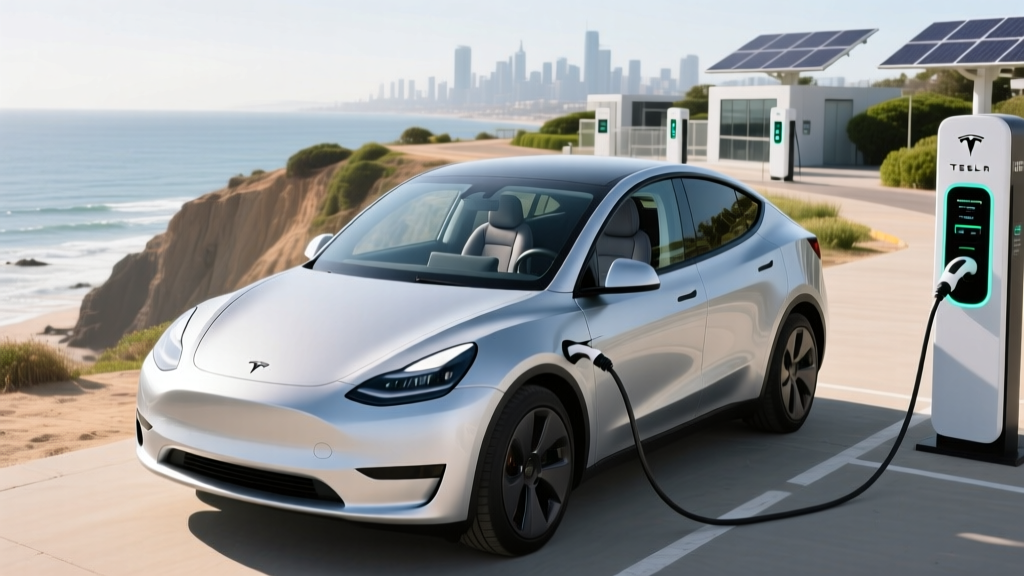
Tesla's Supercharger network remains the gold standard for public DC fast charging, with V3 stalls delivering up to 250 kW and V4 stalls rolling out in high-traffic corridors. However, peak kW is not sustained kW. Here is what the charge curve actually looks like:
- 10–30% SoC: The battery accepts peak power (up to 250 kW on Long Range/Performance trims). This is where you gain miles fastest.
- 30–60% SoC: Charge rate tapers to roughly 150–180 kW as the battery management system limits current to protect cell health.
- 60–80% SoC: Further taper to 80–120 kW. The final 20 percentage points take nearly as long as the first 50.
- Above 80%: Charging slows dramatically to ~30–50 kW. Tesla's navigation system will recommend a charge limit based on your route — trust it.
Preconditioning matters. If you navigate to a Supercharger using the car's built-in navigation, the battery will begin warming automatically, which can reduce 10–80% charge time by 5–10 minutes in cold weather. Arriving at a DC fast charger without preconditioning (for example, using a third-party app to launch the session) can significantly reduce initial charge speed.
At home, a Tesla Wall Connector on a 60-amp circuit (48A continuous) delivers up to 11.5 kW, which translates to roughly 30–44 miles of range per hour of charging depending on the trim. A full overnight charge from 20% to 80% takes approximately 5–6 hours — more than enough for any daily commute pattern.
Pricing, Tax Credits, and Total Cost After Incentives
The federal EV tax credit under IRS §30D can reduce your effective purchase price by up to $7,500, but eligibility depends on several factors that change annually:
- MSRP caps: Vans, SUVs, and pickups (including the Model Y, classified as an SUV) must have an MSRP at or below $80,000. Sedans (including the Model 3) must be at or below $55,000.
- Buyer income limits: Modified adjusted gross income (MAGI) must not exceed $150,000 (single), $225,000 (head of household), or $300,000 (joint filing).
- Battery sourcing: A percentage of critical minerals and battery components must be sourced from the U.S. or free-trade-agreement countries. This requirement tightens each year, and eligibility can shift mid-year.
- Point-of-sale transfer: As of 2024, you can transfer the credit to the dealer (Tesla) at purchase, reducing your out-of-pocket cost immediately rather than waiting until tax filing.
| Model / Trim | Base MSRP | Est. Tax Credit | Effective Price |
|---|---|---|---|
| Model 3 RWD | $38,990 | $7,500 (if eligible) | ~$31,490 |
| Model 3 Long Range AWD | $47,740 | $7,500 (if eligible) | ~$40,240 |
| Model 3 Performance | $54,990 | Varies* | ~$47,490* |
| Model Y Long Range RWD | $44,990 | $7,500 (if eligible) | ~$37,490 |
| Model Y Long Range AWD | $47,990 | $7,500 (if eligible) | ~$40,490 |
| Model Y Performance | $52,490 | $7,500 (if eligible) | ~$44,990 |
*Model 3 Performance MSRP is near the $55,000 sedan cap. Confirm current eligibility on fueleconomy.gov before ordering, as option packages can push MSRP above the cap.
Tech, Safety, and Driver Assistance
Both the Model 3 and Model Y share Tesla's current-generation infotainment platform: a 15.4-inch center touchscreen (Model 3) or 15-inch center touchscreen (Model Y) with no physical instrument cluster. All vehicle controls, media, and navigation run through this screen. An 8-inch rear touchscreen is available for rear-seat passengers on higher trims.
Autopilot and FSD (Supervised): Every Tesla ships with basic Autopilot (traffic-aware cruise control and lane centering). Full Self-Driving (Supervised) is an optional upgrade ($8,000 purchase or $99/month as of 2026) that adds automatic lane changes, intersection handling, and Navigate on Autopilot.
Both Autopilot and FSD (Supervised) are SAE Level 2 driver-assistance systems. The driver must remain attentive, keep hands on the wheel (or demonstrate engagement via Tesla's camera-based monitoring), and be prepared to take over at any moment. These systems do not make the vehicle autonomous. Only Level 4 services like Waymo operate without a driver.
Safety: Both the Model 3 and Model Y have earned NHTSA 5-star overall safety ratings and IIHS Top Safety Pick+ designations in recent test cycles. Standard safety features include automatic emergency braking, blind-spot monitoring, lane-departure warning, and rear cross-traffic alert.
Warranty Coverage
| Coverage | Model 3 RWD | Model 3 LR / Perf | Model Y (all trims) |
|---|---|---|---|
| Basic Vehicle | 4 yr / 50,000 mi | 4 yr / 50,000 mi | 4 yr / 50,000 mi |
| Battery & Drive Unit | 8 yr / 100,000 mi | 8 yr / 120,000 mi | 8 yr / 120,000 mi |
| Capacity Retention Threshold | 70% minimum over warranty period | ||
Tesla's battery warranty guarantees that the pack will retain at least 70% of its original capacity over the warranty period. Real-world degradation data from Tesla's fleet suggests most packs retain 90%+ capacity at 100,000 miles, with LFP packs (Model 3 RWD) showing slightly different degradation curves than NMC — typically less initial drop-off but a steadier linear decline. Full battery replacement outside warranty currently ranges from $12,000 to $16,000 depending on the pack, though this is rarely needed within the first decade of ownership.
Model 3 vs. Model Y: Which Should You Buy?
Choose Model 3 If:
- You prioritize maximum range per dollar (363 mi LR)
- You commute solo or with one passenger most days
- You want the lowest price point ($38,990 RWD)
- You prefer a sedan's lower center of gravity and sportier handling
- Rear-seat usage is occasional, not daily
Choose Model Y If:
- You need cargo space for a family (72 cu ft max)
- Regular rear-seat passengers need 40.5 in of legroom
- You want a higher seating position and easier entry/exit
- You occasionally tow (up to 3,500 lbs rated)
- You value SUV versatility over peak efficiency
Pros and Cons
Pros
- Access to the Supercharger network — the most reliable DC fast-charging ecosystem in North America
- Class-leading efficiency (25–30 kWh/100 mi depending on trim)
- Over-the-air updates continuously add features
- Strong resale value relative to other EVs
- LFP battery option (Model 3 RWD) allows 100% daily charging
- Minimal maintenance — no oil changes, rare brake pad replacement due to regen
Cons
- No physical buttons — all controls via touchscreen takes adjustment
- Insurance premiums tend to run 15–30% higher than comparable gas vehicles
- Service center wait times can be long in high-demand metro areas
- Model 3 rear seat is tight for tall adults on long trips
- FSD (Supervised) remains Level 2 despite the "self-driving" name
- No Apple CarPlay or Android Auto integration
Frequently Asked Questions
What is the real-world range of the Tesla Model 3 and Model Y?
For the Model 3 Long Range AWD, expect 290–310 highway miles in moderate weather and 230–260 in freezing temperatures. The Model Y Long Range AWD delivers approximately 250–275 highway miles in moderate weather and 200–230 in cold conditions. City driving with regenerative braking can actually exceed EPA estimates in stop-and-go traffic.
How fast does a Tesla charge at home and on the road?
On a Tesla Wall Connector (Level 2, 11.5 kW), you gain 30–44 miles of range per hour. On a V3 Supercharger (250 kW DC), the Long Range and Performance trims charge from 10–80% in approximately 18–20 minutes. The Model 3 RWD peaks at 170 kW, taking roughly 25 minutes for the same 10–80% session.
Does the Tesla Model 3 or Model Y qualify for the $7,500 federal tax credit?
Both can qualify, but eligibility depends on your income (MAGI limits apply), the vehicle's MSRP (sedans capped at $55,000, SUVs at $80,000), and battery-sourcing requirements that tighten annually. The point-of-sale transfer option lets you apply the credit directly at purchase. Check the IRS §30D page and fueleconomy.gov for current eligibility before ordering.
Can I combine a Tesla referral code with the federal tax credit?
Yes. The referral discount is a Tesla-applied price reduction, while the federal tax credit is a government incentive. They stack. A $500–$1,000 referral savings on top of a $7,500 tax credit can bring a Model 3 RWD to an effective price near $30,500–$31,000.
Is a Tesla worth buying versus competitors like the Hyundai Ioniq 6 or Ford Mustang Mach-E?
Tesla's advantages are the Supercharger network, software ecosystem, and efficiency. The Ioniq 6 offers a more traditional interior with physical controls and competitive range (361 mi SE), while the Mach-E provides a more engaging driving feel and CarPlay support. If reliable public fast-charging access is your top priority, Tesla's integrated ecosystem remains difficult to match. If interior quality and dealer service accessibility matter more, the competitors deserve a test drive.
How long do Tesla batteries last?
Tesla's warranty covers 8 years and 100,000–120,000 miles (depending on trim) with a 70% capacity retention guarantee. Fleet data indicates most Tesla battery packs retain 88–92% capacity at 150,000 miles. LFP packs in the Model 3 RWD tend to degrade more linearly, while NMC packs show a steeper initial drop that levels off. Full replacement costs $12,000–$16,000 out of warranty but is uncommon within the first 10–12 years.