The Joe Ward Tesla Take: Why the 2026 Model Y Long Range Still Commands Attention
Search "joe ward tesla" and you'll find a recurring theme: owners and reviewers who have put serious miles on Tesla vehicles tend to focus on the details that brochures gloss over — real-world range degradation, charging-curve taper, software quirks, and total cost of ownership over years rather than months. That's exactly the lens we're applying to the 2026 Tesla Model Y Long Range AWD, the best-selling EV in the U.S. and one of the most scrutinized vehicles on the road.
This review strips away marketing polish and delivers the numbers that matter: EPA range versus what you'll actually see on a highway in January, the difference between peak and sustained DC fast-charging rates, and whether the §30D federal tax credit actually applies to your household. If you've been following Joe Ward Tesla content or similar deep-dive ownership analyses, this is the spec-driven companion guide you need before signing a purchase agreement.
2026 Model Y Long Range: Core Specifications at a Glance
| Specification | 2026 Tesla Model Y Long Range AWD |
|---|---|
| EPA Estimated Range | 320 miles |
| Battery Capacity (Usable) | ~75 kWh (NMC chemistry) |
| Peak DC Fast-Charge Rate | 250 kW |
| 10–80% DC Fast-Charge Time | ~25 minutes |
| Level 2 Home Charging (11.5 kW) | ~44 miles per hour |
| 0–60 mph | 4.8 seconds |
| Horsepower | 384 hp (dual-motor) |
| Drivetrain | Dual-Motor AWD |
| Efficiency (Combined) | 122 MPGe / 28 kWh/100 mi |
| Cargo Volume (rear seats up) | 30.2 cu ft |
| Cargo Volume (rear seats folded) | 72.1 cu ft |
| Rear Legroom | 38.8 inches |
| Base MSRP | $48,990 |
| Battery & Drive Unit Warranty | 8 years / 120,000 miles |
Real-World Range: What the EPA Sticker Doesn't Tell You
EPA Sticker: 320 miles
Real-World Highway (70 mph, 75°F): ~275–290 miles
Cold-Weather Highway (30°F, heater on): ~230–250 miles
City / Commuter Driving (regen-heavy): ~300–315 miles
The 2026 Model Y Long Range posts an EPA-estimated 320 miles on a full charge, but anyone who has tracked their consumption through the Tesla energy app knows that number assumes a blend of city and highway driving at moderate temperatures. In EPA testing at fueleconomy.gov, the combined cycle yields 122 MPGe (28 kWh per 100 miles), which is competitive for a dual-motor crossover.
On sustained highway drives at 70–75 mph in fair weather, expect roughly 275 to 290 miles before needing to stop. Drop the ambient temperature to freezing and activate the cabin heat pump, and that figure contracts to approximately 230–250 miles. Tesla's heat pump system — standard since the 2021 refresh — mitigates cold-weather losses better than resistive heating, but physics still wins: battery internal resistance increases and cabin energy demand rises simultaneously.
For city commuters who can exploit regenerative braking on stop-and-go routes, 300+ miles is achievable. The Joe Ward Tesla ownership philosophy applies here: track your Wh/mi over a month of typical driving rather than fixating on the EPA number. Most Model Y owners settle into a real-world average of 250–270 Wh/mi, which translates to roughly 275–300 miles from the ~75 kWh usable battery.
Charging Speed: DC Fast, Level 2, and the Curve Reality
| Charging Method | Max Power (kW) | Miles Added per Hour | Notes |
|---|---|---|---|
| Level 1 (120V / 12A) | ~1.4 kW | ~3–4 mi/hr | Emergency / trickle only |
| Level 2 (240V / 48A) | 11.5 kW | ~44 mi/hr | Full overnight charge in ~7 hrs |
| DC Fast (Tesla Supercharger V3/V4) | 250 kW peak | ~162 mi in 15 min | Tapers significantly above 80% SoC |
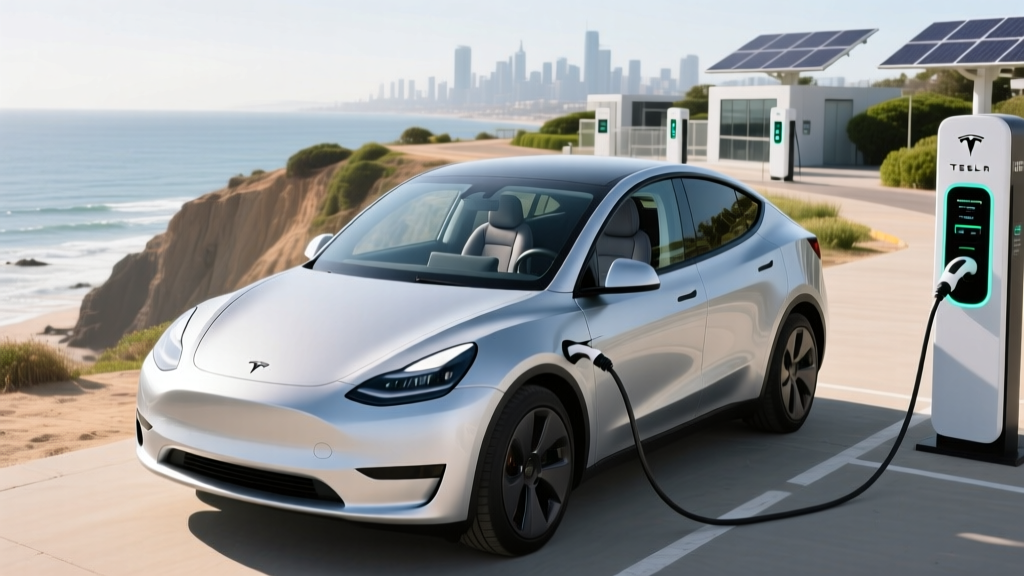
Tesla rates the 2026 Model Y Long Range at a peak DC fast-charge rate of 250 kW on V3 and V4 Superchargers using the NACS connector. The 10–80% charge takes approximately 25 minutes under ideal conditions — battery preconditioned, ambient temperature moderate, and stall not shared.
Here's where the charging-curve reality matters: the 250 kW figure is a peak, not a sustained rate. The NMC battery in the Model Y Long Range hits peak draw between roughly 15% and 40% state of charge, then progressively tapers. From 80% to 100%, charging slows dramatically — often below 30 kW — to protect cell longevity. The practical implication: plan road-trip stops around the 10–80% window for maximum efficiency. Charging from 80% to 100% at a Supercharger can add 20+ minutes for only ~60 miles of range.
At home, a Level 2 wall connector on a 60-amp circuit delivers 11.5 kW (48 amps), adding roughly 44 miles of range per hour. A full 0–100% charge completes in about 7 hours, making overnight charging trivial for daily driving needs. Installation typically requires a 240V / 60A circuit; budget $500–$2,000 for electrician labor depending on panel proximity and local permitting, on top of the $475 Tesla Wall Connector hardware cost.
Performance, Efficiency, and Daily Drivability
The dual-motor AWD powertrain produces 384 horsepower and launches the Model Y Long Range to 60 mph in 4.8 seconds — quick enough to merge confidently and overtake without drama, though it's the Performance trim (3.3 seconds) that satisfies enthusiasts. The Long Range prioritizes efficiency over outright acceleration, and the result is a combined 122 MPGe that ranks well in the midsize electric SUV segment.
Ride quality in the 2026 model benefits from the Juniper refresh introduced for the 2025 model year: revised suspension tuning, improved sound insulation, and ventilated front seats. The cabin is noticeably quieter at highway speeds compared to pre-2025 examples, addressing one of the most common complaints from long-term Tesla owners.
Cargo capacity remains a strong point: 30.2 cubic feet behind the second row and 72.1 cubic feet with the 60/40 split seats folded. The front trunk (frunk) adds another 4.1 cubic feet for charging cables or a small bag. Rear legroom measures 38.8 inches — adequate for adults on longer trips, though the sloping roofline limits headroom for passengers over six feet tall.
Pricing, Trims, and Federal Tax Credit Eligibility
| Trim | Base MSRP | Est. After §30D Credit* | Notes |
|---|---|---|---|
| Model Y Long Range AWD | $48,990 | $41,490 | Eligible if buyer meets income caps |
| Model Y Performance AWD | $52,490 | $44,990 | Under $80,000 MSRP cap for SUVs |
*Federal tax credit eligibility depends on multiple factors. Always verify current rules at irs.gov.
The 2026 Model Y Long Range starts at $48,990 (excluding destination), placing it well under the $80,000 MSRP cap for SUVs under IRS §30D rules. However, qualifying for the full $7,500 credit requires meeting several criteria simultaneously:
- Buyer Income Caps: Modified AGI must not exceed $150,000 (single), $225,000 (head of household), or $300,000 (joint filing)
- Battery Component Sourcing: A percentage of battery components must be manufactured or assembled in North America, with thresholds increasing annually
- Critical Minerals: A percentage of critical minerals must be sourced from the U.S. or FTA partners — this threshold also escalates yearly
- Point-of-Sale Transfer: As of 2024, buyers can transfer the credit to the dealer at purchase, reducing the out-of-pocket price immediately rather than waiting for tax filing
Tesla's battery sourcing has shifted across model years, and credit eligibility can change mid-year as supply chains adjust. Before purchasing, confirm the specific vehicle's credit status on the dealer's window sticker or Tesla's website, and consult a tax professional if your income is near the cap thresholds.
Technology, Driver Assistance, and the SAE Level Reality
SAE Automation Level: Tesla Autopilot and Full Self-Driving (Supervised) are Level 2 driver-assistance systems. The driver must remain engaged, hands on the wheel, and eyes on the road at all times. These systems do NOT make the vehicle self-driving.
The 2026 Model Y ships with Tesla's latest infotainment stack on a 15.4-inch center touchscreen, with rear passengers getting an 8-inch display for climate and entertainment control. Navigation, over-the-air updates, and the Tesla app ecosystem remain industry-leading in terms of integration — remote preconditioning, charge monitoring, and service scheduling are all seamless.
Autopilot (standard) includes Traffic-Aware Cruise Control and Autosteer lane centering. The optional Full Self-Driving (Supervised) package — priced at $8,000 or $99/month — adds automatic lane changes, traffic-light recognition, and city-street navigation. Despite the name, FSD remains a Level 2 system requiring continuous driver supervision. Tesla's vision-only approach (no LiDAR or radar in current production) continues to generate debate, and NHTSA monitoring of Tesla's ADAS performance is ongoing.
Standout features include the Sentry Mode dashcam system, Dog Mode climate control for pets, and the ability to stream media or play games while parked. Drawbacks? The absence of Apple CarPlay and Android Auto remains a dealbreaker for some buyers, and the minimalist interior — no physical stalks for turn signals in the refreshed Juniper cabin — requires an adjustment period that not every driver embraces.
Pros, Cons, and the Ownership Verdict
Pros
- Class-leading Supercharger network reliability and coverage
- Strong efficiency: 122 MPGe combined with dual-motor AWD
- Over-the-air updates continuously add features post-purchase
- Excellent cargo versatility (72.1 cu ft + frunk)
- Juniper refresh improves ride comfort and cabin noise
- Comprehensive 8-year / 120,000-mile battery warranty
Cons
- No Apple CarPlay or Android Auto integration
- FSD (Supervised) costs extra and remains Level 2 only
- Turn-signal buttons on steering wheel (no stalk) polarize drivers
- Rear headroom limited by coupe-like roofline for tall passengers
- Insurance premiums tend to run 15–25% higher than ICE equivalents
- Tax credit eligibility subject to sourcing-rule changes
Who the Model Y Long Range suits best: Daily commuters with home charging access, small families needing cargo flexibility, and road-trippers who value Supercharger network density. It's less ideal for buyers who demand CarPlay, prefer physical controls, or regularly carry tall rear-seat passengers.
Model Y Long Range vs. Key Competitors
Against the Hyundai Ioniq 5 (310 mi EPA, 350 kW peak charging), the Model Y trades slightly slower DC charging for superior cargo space and network access. The Ford Mustang Mach-E Extended Range (320 mi EPA) matches range but falls behind on efficiency and charging infrastructure. The Kia EV6 offers 800V architecture for faster charging but less rear-seat room.
The Model Y's moat remains the Supercharger network and software ecosystem. If public charging reliability is your top concern, Tesla's vertically integrated network still delivers the most consistent experience — though CCS-equipped competitors are gaining access to Superchargers via adapters and NACS adoption.
Frequently Asked Questions
What is the real-world range of the 2026 Tesla Model Y Long Range?
Expect 275–290 miles on highway drives in moderate weather, 230–250 miles in freezing conditions, and up to 315 miles in city driving with regenerative braking. The EPA sticker reads 320 miles, but real-world results depend heavily on speed, temperature, and terrain.
How fast does the Model Y Long Range charge at home and on the road?
On a Level 2 home charger (11.5 kW), it adds about 44 miles per hour, completing a full charge in roughly 7 hours. At a 250 kW DC Supercharger, 10–80% takes approximately 25 minutes, though the rate tapers significantly above 80% state of charge.
Does the 2026 Model Y qualify for the federal EV tax credit?
The Model Y Long Range at $48,990 is under the $80,000 MSRP cap for SUVs. However, buyer income limits ($150K single / $300K joint), battery-sourcing requirements, and critical-mineral thresholds all affect eligibility. Verify at irs.gov and consult a tax professional before assuming the full $7,500 credit.
Is the Tesla Model Y worth buying over the Ioniq 5 or Mach-E?
If Supercharger access, software integration, and cargo space are priorities, the Model Y remains the benchmark. If faster DC charging (800V architecture) or Apple CarPlay matter more, the Ioniq 5 and EV6 are strong alternatives. Test-drive both before deciding.
How long will the Model Y battery last?
Tesla warrants the battery for 8 years or 120,000 miles (whichever comes first) with a minimum 70% capacity retention threshold. Real-world data from high-mileage Tesla owners suggests NMC batteries typically retain 85–90% capacity at 100,000 miles when charged primarily to 80% and not routinely depleted to 0%.
What are the biggest ongoing ownership costs?
Insurance runs 15–25% higher than comparable gas crossovers. Electricity costs average $0.13–$0.16/kWh nationally, making home charging significantly cheaper than gasoline. Tire wear is accelerated due to vehicle weight and instant torque — budget for replacement every 25,000–35,000 miles.