Quick Verdict: Tesla Ditched Radar — Here's What That Means for Model Y Buyers
If you've been researching driver-assistance technology, you've likely asked: does Tesla use radar? The short answer for 2026 is no. Tesla removed ultrasonic sensors and radar from its entire fleet, relying exclusively on a camera-based system it calls Tesla Vision. The 2026 Model Y — now in its "Juniper" refresh generation — ships with eight external cameras and zero radar or ultrasonic hardware across all trims.
Whether that's a dealbreaker depends on your use case. The refreshed Model Y remains one of the most efficient, fastest-charging, and best-packaged electric SUVs on the market. But the vision-only approach to driver assistance carries real-world trade-offs that buyers deserve to understand before signing a purchase agreement.
This review covers the full 2026 Model Y lineup — specs, range, charging, pricing, tax credits, and a deep dive into what Tesla's radar-free sensor suite means for daily driving and highway safety.
Does Tesla Use Radar? The History and Current Sensor Stack
Tesla's sensor strategy has shifted dramatically over the past five years. Here's the timeline:
- Pre-2021: Model 3 and Model Y shipped with radar (front-facing), 8 cameras, and 12 ultrasonic sensors.
- May 2021: Tesla removed radar from North American Model 3 and Model Y production, transitioning to Tesla Vision (camera-only).
- October 2022: Ultrasonic sensors (parking proximity) were removed from new production vehicles.
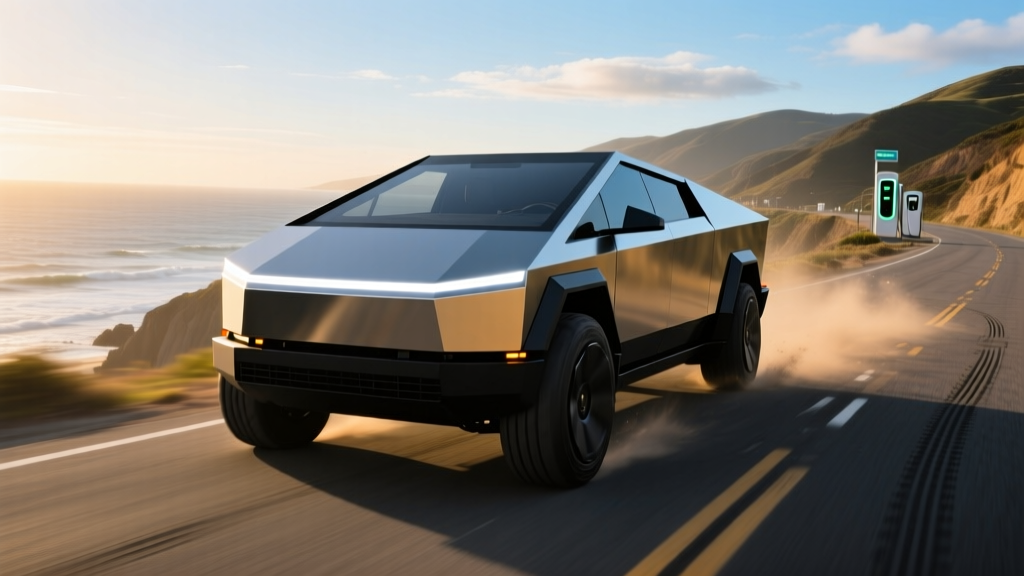
- 2023–2026: All new Tesla vehicles — Model 3, Model Y, Cybertruck, refreshed Model S/X — ship with 8 cameras only. No radar. No ultrasonics.
Tesla's argument is that a pure vision system, powered by advanced neural networks, can match or exceed multi-sensor fusion. The company processes camera data through its HW4 (Hardware 4) computer, which handles up to 300+ frames per second across the camera array.
What Tesla Vision Does Well
Camera-based systems excel at lane-keeping, traffic-sign recognition, and object classification. In NHTSA crash-testing, the Model Y has consistently earned 5-star overall ratings. The vision system handles highway lane-centering competently in clear conditions and performs well in moderate rain.
Where Vision-Only Falls Short
Radar measures distance and relative velocity directly — physics that cameras must infer. In heavy rain, fog, direct sun glare, or low-light scenarios, camera-only systems can experience reduced confidence. Owners report occasional phantom braking events (sudden deceleration with no obstacle) and occasional parking-distance estimation errors now that ultrasonic sensors are gone. Tesla has addressed many of these issues via over-the-air software updates, and the system continues to improve, but the fundamental physics limitation remains.
2026 Model Y Specs: Range, Battery, and Efficiency
| Spec | Long Range RWD | Long Range AWD | Performance AWD |
|---|---|---|---|
| EPA Range | 320 mi | 300 mi | 277 mi |
| Battery (usable) | ~75 kWh (NMC) | ~75 kWh (NMC) | ~75 kWh (NMC) |
| Efficiency | 122 MPGe / 28 kWh/100mi | 116 MPGe / 29 kWh/100mi | 111 MPGe / 30 kWh/100mi |
| Drivetrain | RWD (single motor) | AWD (dual motor) | AWD (dual motor) |
| Horsepower | ~346 hp | ~384 hp | ~456 hp |
| 0–60 mph | 5.8 sec | 4.1 sec | 3.5 sec |
| Max DC Charge | 250 kW | 250 kW | 250 kW |
| 10–80% DC Time | ~25 min | ~25 min | ~27 min |
| Base MSRP | $44,990 | $47,990 | $52,490 |
Source: EPA / fueleconomy.gov and Tesla.com. Specs reflect 2026 model year. Pricing excludes destination fee.
The Long Range RWD's EPA sticker reads 320 miles. In real-world highway driving at 70–75 mph, expect ~260–285 miles in mild weather. In cold weather (below 32°F), range can drop to ~220–250 miles due to battery resistance and cabin heating loads. City driving with regenerative braking recovers more energy, often achieving 290–310 miles. The heat pump (standard on all 2026 Model Y trims) helps mitigate cold-weather loss compared to older EVs without one.
Battery Chemistry: NMC, Not LFP
The 2026 Model Y Long Range and Performance trims use NMC (nickel manganese cobalt) cathode chemistry. NMC offers higher energy density than LFP (lithium iron phosphate), which is why the Long Range achieves 320 miles from a ~75 kWh pack. The trade-off: Tesla recommends daily charging to 80% for NMC batteries, reserving 100% for trips. The base Model Y RWD (if available in your market) may use an LFP pack, which tolerates daily 100% charges with less degradation but carries lower energy density.
Charging Speed: Supercharger Network Advantage
The Model Y's charging story in 2026 is defined by two things: 250 kW peak DC capability and native access to the Tesla Supercharger network — now the largest and most reliable fast-charging network in North America, with over 6,500 V3/V4 stalls in the U.S. alone.
| Charging Level | Power | Speed | Notes |
|---|---|---|---|
| Level 1 (120V) | ~1.4 kW | ~4 mi/hr | Emergency/trickle only |
| Level 2 (240V, 48A) | 11.5 kW | ~37 mi/hr | Full overnight charge in ~8 hrs |
| DC Fast (V3 Supercharger) | Peak 250 kW | ~162 mi in 15 min | 10–80% in ~25 min; tapers above 80% |
| CCS Adapter (non-Tesla DC) | Up to 250 kW | Varies by station | NACS native; CCS via included adapter |
Charging curve reality: The 250 kW peak only holds between roughly 10–30% State of Charge. From 30–60%, expect ~150–180 kW. Above 80%, the rate drops sharply to ~40–60 kW to protect battery health. This is why Tesla quotes 10–80% times rather than 0–100%. On a road trip, plan stops around the 10–80% window for fastest turnaround.
The 2026 Model Y uses the NACS (North American Charging Standard) connector natively. With Tesla opening its Supercharger network to other brands, NACS has become the de facto U.S. charging standard. Model Y owners can also use a CCS adapter (included) to access Electrify America, EVgo, and other non-Tesla networks — useful as a backup in areas with sparse Supercharger coverage.
Preconditioning Matters
When you navigate to a Supercharger in the car's built-in navigation, the Model Y automatically preconditions the battery — warming it to the optimal temperature for fast charging. Skipping preconditioning (e.g., using a third-party app to start DC charging without navigation) can add 5–10 minutes to your charge session, especially in cold weather. Always route through the car's nav for the fastest DC sessions.
Pricing, Tax Credits, and Total Cost
| Trim | Base MSRP | Destination | Est. §30D Credit | Effective Price* |
|---|---|---|---|---|
| Long Range RWD | $44,990 | $1,390 | Up to $7,500 | ~$38,880 |
| Long Range AWD | $47,990 | $1,390 | Up to $7,500 | ~$41,880 |
| Performance AWD | $52,490 | $1,390 | Up to $7,500 | ~$46,380 |
*Effective price assumes full $7,500 credit eligibility. Actual credit varies based on battery-sourcing compliance, buyer income, and current IRS rules.
Federal Tax Credit Eligibility (§30D)
The 2026 Model Y can qualify for up to $7,500 under the IRS §30D Clean Vehicle Credit, but eligibility depends on several conditions that change periodically:
- MSRP cap: SUVs must be under $80,000 — all Model Y trims qualify.
- Buyer income cap: AGI must not exceed $150,000 (single), $225,000 (head of household), or $300,000 (joint). Check your modified AGI against IRS §30D guidelines.
- Battery sourcing: The credit splits into two halves — $3,750 for critical-mineral sourcing and $3,750 for battery-component manufacturing. Tesla's North American battery production and supply chain have generally qualified for the full $7,500, but sourcing rules tighten annually. Verify current compliance on Tesla's website or with a tax professional.
- Point-of-sale transfer: As of 2024, you can transfer the credit to the dealer at purchase, reducing your out-of-pocket cost immediately rather than waiting for tax filing.
Important: Tax credit rules are subject to legislative and regulatory changes. Always confirm eligibility with IRS.gov and a qualified tax advisor before purchasing.
Interior, Cargo, and Technology
Passenger and Cargo Space
The refreshed Juniper-generation Model Y offers improved interior room over its predecessor:
- Front legroom: 41.8 inches
- Rear legroom: 41.6 inches (improved significantly over pre-2025 models)
- Cargo (rear seats up): 30.2 cu ft
- Cargo (rear seats folded): 72.1 cu ft
- Front trunk (frunk): 4.1 cu ft
For a compact electric SUV, the Model Y's cargo volume is class-leading. The flat floor (no transmission tunnel) and 60/40 split-folding rear seats make it practical for family gear, camping equipment, or large Costco runs. The frunk is small but useful for charging cables and a tire-inflation kit.
Infotainment and Standout Tech
The 2026 Model Y centers around a 15.4-inch touchscreen running Tesla's proprietary OS. Notable features:
- Tesla Vision / Autopilot: Standard adaptive cruise control, lane-centering, and automatic emergency braking. FSD (Supervised) available as a $8,000 option or $99/month subscription — still requires driver supervision at all times.
- Over-the-air updates: Tesla pushes regular software updates that add features, improve efficiency, and refine driving dynamics — no dealer visits required.
- Sentry Mode / Dashcam: All eight cameras record simultaneously, providing 360° surveillance when parked and dashcam footage while driving.
- Ventilated front seats: Standard on the Juniper refresh (previously a common complaint).
- Heat pump: Standard — critical for cold-climate efficiency and range preservation.
- Ambient lighting and acoustic glass: The Juniper refresh significantly reduced cabin noise compared to pre-2025 models.
Notable Drawbacks
- No physical buttons: Climate, mirrors, and glovebox are all controlled via touchscreen. Turn signals are on the steering wheel but wiper controls are screen-only.
- No Apple CarPlay / Android Auto: Tesla's ecosystem is closed. If you rely on phone projection, this is a dealbreaker.
- Vision-only parking: Without ultrasonic sensors, the car estimates parking distances visually. It works but is less precise than sensor-based systems, especially near low curbs or bollards.
- Rear-seat entertainment: A rear touchscreen is available but adds cost; not standard on all trims.
Warranty and Long-Term Ownership
Tesla's warranty coverage for the 2026 Model Y:
- Basic vehicle: 4 years / 50,000 miles
- Battery and drive unit: 8 years / 120,000 miles (Long Range RWD) or 8 years / 120,000 miles (AWD trims)
- Battery retention threshold: Tesla warrants that the battery will retain at least 70% capacity over the warranty period. If degradation exceeds 30%, Tesla will repair or replace the battery.
Real-world battery degradation data from high-mileage Tesla owners suggests NMC packs typically lose 5–10% capacity over the first 100,000 miles, with the degradation curve flattening significantly after the initial break-in period. Following Tesla's charging guidance (daily limit of 80%, occasional 100% for trips) maximizes longevity.
Insurance and Maintenance
Insurance premiums for the Model Y are above the compact-SUV average — expect $1,800–$2,800/year depending on your state, driving record, and coverage level. Tesla offers its own insurance product in many states, which uses real-time driving data to set premiums. Maintenance costs are low: no oil changes, no spark plugs, and brake pads last 100,000+ miles thanks to regenerative braking. Cabin air filter replacement every 2 years and tire rotation every 6,250 miles are the primary service items.
Model Y vs. Key Competitors: Is It Worth Buying?
- You prioritize Supercharger network access for road trips
- You want best-in-class efficiency (28 kWh/100mi) and charging speed
- You value OTA software updates and a closed, integrated tech ecosystem
- You're comfortable with vision-only driver assistance and touchscreen-centric controls
Look at competitors (Hyundai Ioniq 5, Ford Mustang Mach-E, Kia EV6) if:
- You want Apple CarPlay / Android Auto
- You prefer physical buttons and traditional switchgear
- Radar-backed driver assist gives you more confidence (Hyundai/Kia still use radar + camera fusion)
- You want 800V architecture for even faster DC charging (Ioniq 5/EV6 peak at ~350 kW on compatible stations)
The Model Y's strongest competitive advantage in 2026 remains the Supercharger network. While competitors have gained NACS access to Tesla's chargers, Tesla vehicles still enjoy the most seamless plug-and-charge experience — no apps, no RFID cards, no payment fumbling. For road-trippers, this alone can be decisive.
However, if the radar question matters deeply to you, Hyundai and Kia's sensor-fusion approach (camera + radar) provides a hardware redundancy that Tesla's vision-only system cannot match by design. For drivers in regions with frequent fog, heavy rain, or snow, that redundancy offers peace of mind.
Pros and Cons
✅ Pros
- Class-leading 320-mi EPA range (Long Range RWD)
- 250 kW DC fast charging; 10–80% in ~25 min
- Native Supercharger access — most reliable U.S. network
- Best-in-segment efficiency at 28 kWh/100mi
- Spacious 72.1 cu ft cargo with seats folded
- Heat pump standard (cold-weather range preservation)
- Continuous OTA improvements
- Strong resale value relative to EV segment
❌ Cons
- No radar or ultrasonic sensors — vision-only driver assist
- Phantom braking reports persist (though reduced in recent updates)
- No Apple CarPlay or Android Auto
- All climate/mirror/wiper controls are touchscreen-only
- Parking proximity estimation less precise without ultrasonics
- Insurance premiums above segment average
- FSD (Supervised) is expensive and still Level 2 — not autonomous
- Build-quality variability still reported by some owners
Who the 2026 Model Y Suits Best
Commuters: Excellent. 320 miles of range handles weeks of 30-mile daily commutes without charging. Home Level 2 charging at 11.5 kW replenishes the battery overnight in ~8 hours. Efficiency keeps electricity costs low — roughly $0.04–0.06 per mile at national average electricity rates.
Families: Very good. Rear legroom is generous at 41.6 inches (car seats fit easily). Cargo space handles strollers, groceries, and luggage. The Juniper refresh improved ride comfort and cabin quietness, making it more family-friendly than pre-2025 models.
Road trippers: Best-in-class. Supercharger coverage along U.S. interstates is unmatched. 250 kW charging means 15-minute stops add ~162 miles of range. Route planning via the car's navigation handles charger selection and preconditioning automatically.
Towing: Adequate but not exceptional. Maximum towing capacity is 3,500 lbs — enough for a small utility trailer or a pair of dirt bikes, but not a full-size camper. Expect range to drop 30–50% while towing at highway speeds.
Frequently Asked Questions
Does Tesla use radar in any 2026 vehicles?
No. As of 2026, no new Tesla vehicle — Model 3, Model Y, Model S, Model X, or Cybertruck — includes radar. Tesla transitioned to its camera-only Tesla Vision system starting in 2021 and completed the removal of ultrasonic sensors by late 2022. All perception, driver assistance, and parking functions are handled by eight external cameras and neural-network processing.
Is Tesla's vision-only Autopilot safe without radar?
Tesla's Autopilot earns strong safety scores in NHTSA testing, and real-world data shows low crash rates when the system is engaged. However, vision-only systems can struggle in heavy precipitation, direct sun glare, and low-visibility conditions where radar's ability to measure distance through obscurants would help. Tesla continues to improve the system via OTA updates, but the hardware limitation is inherent to the camera-only approach.
What is the real-world range of the 2026 Model Y Long Range?
The EPA rates the Long Range RWD at 320 miles. Real-world highway driving at 70–75 mph yields approximately 260–285 miles in mild weather, and 220–250 miles in sub-freezing temperatures. City driving with regenerative braking can approach or slightly exceed the EPA estimate. The standard heat pump helps mitigate cold-weather losses.
How fast does the Model Y charge at home?
On a 240V Level 2 home charger at 48 amps (11.5 kW), the Model Y adds approximately 37 miles of range per hour. A full charge from 10% to 100% takes roughly 8 hours — ideal for overnight charging. Installation of a Level 2 home charger typically costs $800–$2,000 depending on your electrical panel capacity and the distance from panel to charger location.
Does the 2026 Model Y qualify for the $7,500 federal tax credit?
The Model Y is eligible for up to $7,500 under the IRS §30D Clean Vehicle Credit, subject to buyer income limits ($150K single / $300K joint AGI), MSRP caps (under $80K for SUVs — all Model Y trims qualify), and battery critical-mineral and component sourcing requirements. Credit availability can change as sourcing rules tighten. Verify current eligibility at IRS.gov and consider consulting a tax professional. The credit can be transferred at point of sale to reduce your purchase price immediately.
Should I buy FSD (Supervised)?
FSD (Supervised) costs $8,000 upfront or $99/month and adds features like city-street auto-steering, traffic-light recognition, and automatic stop-sign handling. However, it remains an SAE Level 2 system — you must supervise it at all times. Most owners find standard Autopilot (included) sufficient for highway driving. We recommend trying the monthly subscription before committing to the full purchase, and evaluating whether the features justify the cost for your specific commute and driving patterns.
How does the Model Y compare to the Hyundai Ioniq 5 and Kia EV6?
The Ioniq 5 and EV6 offer 800V architecture (up to ~350 kW DC charging on compatible stations), Apple CarPlay/Android Auto, physical buttons, and radar-backed driver assist. The Model Y counters with superior Supercharger network access, better efficiency (lower kWh/100mi), OTA updates, and stronger cargo volume. If radar redundancy and phone integration matter to you, the Korean platforms are strong alternatives. If charging-network seamlessness and software integration are priorities, the Model Y leads.