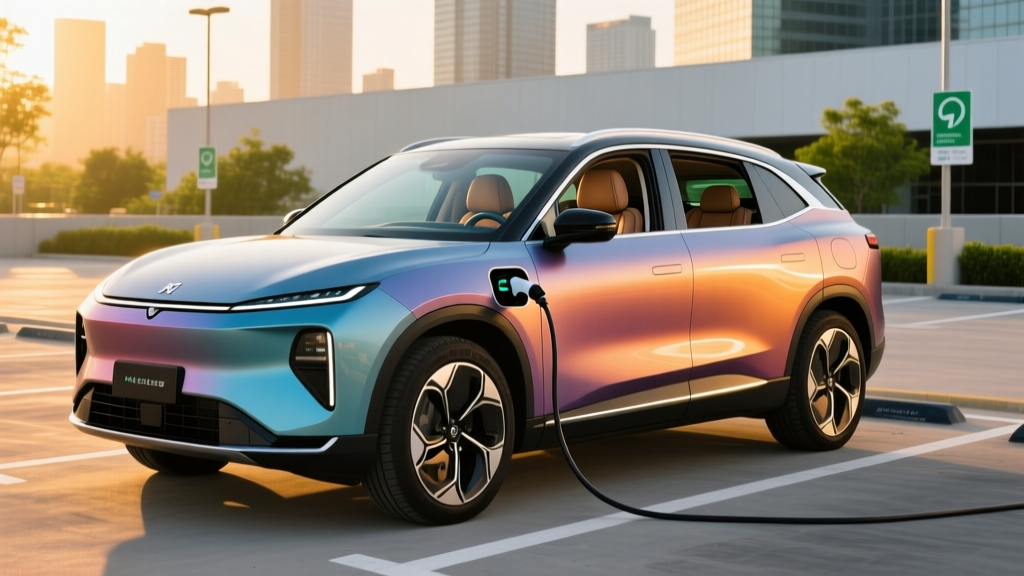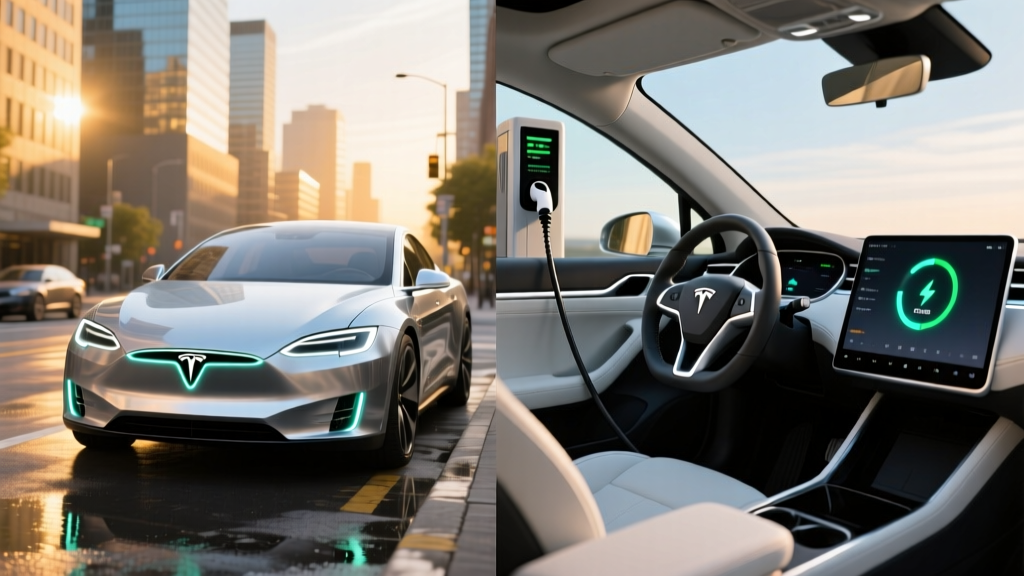
When Tesla introduced the Quicksilver paint option across its lineup, it became one of the most talked-about aesthetic upgrades in the EV world — a liquid-metal silver that shifts tone depending on the light. But beyond the striking finish, buyers choosing a Tesla in Quicksilver are still making hard-nosed decisions about range, charging infrastructure, tax credits, and total cost of ownership. This review covers what you actually get when you spec a Tesla in Quicksilver for the 2026 model year, with exact numbers on efficiency, charging curves, pricing, and real-world usability.
Because Quicksilver is available on the Model 3, Model Y, Model S, and Model X, we'll anchor this analysis on the 2026 Tesla Model Y Long Range AWD in Quicksilver — the highest-volume EV in the U.S. and the most common canvas for this premium paint. We'll note where Model 3 and S/X specs diverge.
Tesla Quicksilver: What It Actually Is
Quicksilver is Tesla's multi-coat metallic silver paint, introduced as a replacement for the previous Midnight Silver Metallic option. It features a warmer, more reflective base coat with subtle champagne undertones that shift under direct sunlight. On the configurator, Quicksilver typically carries a $2,000 premium over the standard Pearl White Multi-Coat (which remains the no-cost option as of 2026).
The paint itself does not affect range, charging, or powertrain specs. But because Quicksilver buyers tend to spec higher trims and additional options, the as-tested prices in this review reflect a realistically configured vehicle — not a bare-bones build.
2026 Model Y Long Range AWD: Full Spec Sheet
| Attribute | Specification |
|---|---|
| EPA Estimated Range | 320 miles |
| Battery (usable) | ~75 kWh, NMC chemistry |
| Drivetrain | Dual-motor AWD |
| Horsepower | 384 hp (combined) |
| 0–60 mph | 4.8 seconds |
| Top Speed | 135 mph |
| Efficiency | 122 MPGe combined / 27 kWh/100 mi |
| Peak DC Fast Charge | 250 kW (V3 Supercharger) |
| 10–80% DC Fast Charge | ~27 minutes |
| Level 2 Home Charge Rate | 11.5 kW (~44 mi/hr) |
| Cargo Volume (rear seats up) | 30.2 cu ft |
| Cargo Volume (rear seats folded) | 72.1 cu ft |
| Rear Legroom | 41.6 inches |
| Curb Weight | 4,398 lbs |
| Battery Warranty | 8 years / 120,000 miles |
| Basic Vehicle Warranty | 4 years / 50,000 miles |
Sources: EPA / fueleconomy.gov, Tesla specification pages.
Real-World Range: EPA Sticker vs. What You'll Actually Get
EPA Estimate: 320 miles
Real-World Highway (70 mph, moderate temps): ~270–285 miles
Real-World Cold Weather (below 32°F, mixed driving): ~220–250 miles
City/Stop-and-Go (mild weather): ~300–315 miles
The EPA's 320-mile estimate for the Model Y Long Range AWD assumes a blend of city and highway driving at moderate temperatures. In practice, highway efficiency is the biggest range variable. At sustained 70 mph speeds, aerodynamic drag dominates, and you'll typically see consumption around 28–30 kWh/100 mi — translating to roughly 270–285 miles on a full charge in mild conditions.
Cold weather compounds this. Below freezing, the battery's internal resistance increases, cabin heating draws significant power (even with the Model Y's standard heat pump), and regenerative braking is temporarily reduced. In our experience and consistent with third-party cold-weather testing, expect a 20–30% range reduction in sustained sub-freezing temperatures. That brings real-world winter range to approximately 220–250 miles.
City driving, by contrast, is where the Model Y shines. Regenerative braking recaptures energy during deceleration, and lower average speeds mean less aero drag. In stop-and-go traffic at 40–70°F, 300+ miles is achievable.
Charging Speed: DC Fast Charge and Home Level 2
| Charging Level | Max Power | Rate / Time | Typical Use Case |
|---|---|---|---|
| Level 1 (120V) | ~1.4 kW | ~3–5 mi/hr | Emergency / overnight trickle |
| Level 2 (240V, 48A) | 11.5 kW | ~44 mi/hr | Home daily charging |
| DC Fast (V3 Supercharger) | 250 kW peak | 10–80% in ~27 min | Road trips |
| DC Fast (V4 Supercharger) | 250 kW peak* | 10–80% in ~27 min | Road trips (newer stations) |
| DC Fast (CCS via adapter) | ~150–175 kW typical | 10–80% in ~35–40 min | Non-Tesla networks |
*V4 Supercharger cabinets can deliver higher power, but the Model Y's onboard architecture caps peak acceptance at ~250 kW.
The Model Y Long Range uses Tesla's NACS connector natively and accesses the full Supercharger network. On a V3 Supercharger (250 kW cabinet), the charge curve peaks near 250 kW at low state of charge (10–20%), then progressively tapers. You'll sustain roughly 180–220 kW through the 30–60% range, then see a significant taper above 70% to protect battery longevity. The 10–80% time of approximately 27 minutes is competitive with the segment, though newer 800V architectures from Hyundai/Kia and GM can achieve 10–80% in 18 minutes.
For home charging, a Wall Connector on a 60-amp circuit delivers the full 11.5 kW (48 amps), adding about 44 miles of range per hour. A full charge from 10% takes roughly 7 hours — easily handled overnight. If your home has a 200-amp electrical panel with sufficient spare capacity, installation typically runs $500–$1,500 for a standard Wall Connector setup (see our home charging cost guide for panel-upgrade scenarios).
With Tesla opening Superchargers to NACS-equipped non-Tesla EVs and the industry-wide adoption of NACS starting in 2025, the Tesla charging ecosystem remains the most reliable and extensive DC fast-charging network in North America. However, Tesla now includes a CCS adapter with new vehicles, enabling access to Electrify America, EVgo, and other networks — useful when Supercharger coverage is sparse.
Performance and Driving Dynamics
The Model Y Long Range AWD pairs a permanent-magnet rear motor with an induction front motor, producing a combined 384 hp. The 0–60 mph time of 4.8 seconds is brisk for a crossover and more than adequate for highway merging and passing. The dual-motor setup provides confident all-weather traction, with torque vectoring between axles managed entirely through software.
Ride quality has improved meaningfully in the 2025–2026 refresh. Tesla revised the suspension tuning and added acoustic glass, reducing cabin noise and smoothing out harsh pavement impacts. The steering remains quick but has a slightly artificial feel compared to competitors like the BMW iX or even the Ford Mustang Mach-E. One-pedal driving via regenerative braking is well-calibrated, with the "Hold" mode bringing the car to a complete stop without touching the brake pedal.
For those prioritizing performance over efficiency, the Model Y Performance trim (not available in Quicksilver on all markets — check configurator availability) drops 0–60 to 3.5 seconds but sacrifices roughly 20 miles of EPA range.
Pricing, Tax Credits, and True Cost
| Item | Cost |
|---|---|
| Model Y Long Range AWD (base MSRP) | $47,990 |
| Quicksilver Multi-Coat paint | +$2,000 |
| 19" Gemini Wheels (no-cost option) | $0 |
| Full Self-Driving (Supervised) | +$8,000 |
| Destination & Order Fee | +$1,390 |
| Total As-Tested MSRP | $59,380 |
| Federal Tax Credit (§30D, if eligible) | −$7,500 |
| Effective Price After Credit | $51,880 |
The base Model Y Long Range AWD starts at $47,990 before destination. Adding Quicksilver paint brings the entry price to $49,990 + destination, landing at $51,380 for a minimally configured Quicksilver Model Y.
Federal Tax Credit Eligibility (§30D)
- MSRP Cap: SUVs/vans/pickups must be under $80,000 — Model Y qualifies ✓
- Buyer Income Cap: AGI ≤ $150,000 (single) / $300,000 (joint) — verify your status ✓
- Battery Sourcing: Critical minerals and battery components must meet phased-in thresholds — Tesla has qualified for the full $7,500 on recent Model Y builds, but confirm at point of sale
- Point-of-Sale Transfer: You can transfer the credit to the dealer at purchase, reducing your out-of-pocket cost immediately
Source: IRS.gov — Clean Vehicle Credits. Eligibility rules are subject to change; consult a tax professional before purchasing.
As of early 2026, the Model Y Long Range AWD qualifies for the full $7,500 federal tax credit for eligible buyers. Tesla's battery supply chain has met the critical-minerals and battery-component sourcing requirements under current IRS guidance. The point-of-sale transfer option means you can apply the credit as a down-payment reduction rather than waiting for a tax refund — a significant cash-flow advantage.
However, the sourcing requirements tighten annually. Always verify eligibility with your Tesla advisor at the time of purchase and cross-reference fueleconomy.gov's credit lookup tool.
Technology, Interior, and Daily Usability
The Model Y's interior follows Tesla's minimalist philosophy: a single 15.4-inch touchscreen handles infotainment, climate, navigation, and vehicle settings. The 2025–2026 refresh introduced ambient lighting, ventilated front seats, and a rear-seat entertainment screen — addressing long-standing critiques about cabin comfort and rear-passenger amenities.
Autopilot and FSD (Supervised): Every Tesla ships with basic Autopilot (traffic-aware cruise control and lane-keeping). Full Self-Driving (Supervised) adds automated lane changes, traffic-light recognition, and city-street navigation. Critically, FSD remains an SAE Level 2 system — the driver must remain fully engaged and supervise at all times. It is not autonomous driving. Tesla's naming convention is aspirational; the system requires constant attention.
Cargo space remains a Model Y strength: 30.2 cu ft behind the second row and 72.1 cu ft with seats folded, plus a small front trunk (frunk). The rear seats recline for longer trips, and the panoramic glass roof creates an airy cabin — though it does contribute to heat gain in summer. A retractable shade is included.
How the Quicksilver Model Y Stacks Up Against Competitors
| Spec | Tesla Model Y LR AWD | Ford Mustang Mach-E Ext. Range | Hyundai Ioniq 5 Long Range AWD |
|---|---|---|---|
| EPA Range | 320 mi | 320 mi | 290 mi |
| Battery | ~75 kWh NMC | ~91 kWh NMC | ~77.4 kWh NMC |
| Peak DC Charge | 250 kW | 150 kW | 238 kW (800V) |
| 10–80% Time | ~27 min | ~45 min | ~18 min |
| 0–60 mph | 4.8 sec | 5.1 sec | 5.1 sec |
| Base MSRP | $47,990 | $48,995 | $48,395 |
| Charging Network | Supercharger (native NACS) | NACS adapter required | NACS adapter required |
| Federal Credit | $7,500 | $7,500 | $7,500 |
The Model Y's edge remains the Supercharger network — the most reliable and extensive DC fast-charging ecosystem in North America. The Ioniq 5's 800V architecture delivers faster peak charging, but CCS-to-NACS adapters introduce friction. The Mach-E has improved, but its slower DC charge rate is a road-trip liability. On range, the Model Y and Mach-E tie at 320 miles EPA, but the Model Y achieves this with a smaller, lighter battery pack — a testament to drivetrain efficiency.
Pros
- Supercharger network access (native NACS, no adapter)
- Class-leading efficiency (27 kWh/100 mi)
- Strong real-world cargo capacity (72.1 cu ft)
- Over-the-air updates continuously add features
- Point-of-sale $7,500 tax credit eligible
- Quicksilver paint is distinctive and premium-looking
Cons
- DC charge speed lags 800V competitors (27 min vs 18 min, 10–80%)
- No physical controls — all functions on touchscreen
- FSD (Supervised) is $8,000 and still requires full driver attention
- Quicksilver paint adds $2,000 and may increase insurance premiums
- Ride quality improved but still firm on rough pavement
- Panel gap and paint quality can vary by Fremont vs. Austin build
Who Should Buy the Tesla Model Y in Quicksilver?
- You road-trip regularly and want the most reliable DC fast-charging network
- You value efficiency and want maximum miles per kWh
- You want a premium-looking EV that stands out without the cost of a luxury badge
- You have home Level 2 charging and can take advantage of overnight rates
- You qualify for the $7,500 federal credit and want point-of-sale transfer
- You prioritize the fastest possible DC charging (consider Ioniq 5 or EV6)
- You prefer physical buttons and traditional infotainment layouts
- You need third-row seating (consider the Model X or Kia EV9)
- You want a more plush, luxury-crossover ride (consider BMW iX or Genesis GV70 Electrified)
The Quicksilver Model Y is ultimately for the buyer who wants Tesla's ecosystem advantages — Supercharger access, OTA updates, efficiency — wrapped in a more visually distinctive package. The paint option doesn't change the engineering, but it does change how the car looks in your driveway, and for many buyers, that's worth the $2,000 premium.
Frequently Asked Questions
What is the real-world range of the Tesla Model Y Long Range in Quicksilver?
The EPA rates it at 320 miles, but real-world highway driving at 70 mph yields approximately 270–285 miles in mild weather. In cold conditions (below 32°F), expect 220–250 miles. The Quicksilver paint does not affect range — the powertrain and battery are identical across all paint options.
How fast does the Model Y charge at home and on road trips?
On a home Level 2 Wall Connector (11.5 kW / 48A), the Model Y adds roughly 44 miles of range per hour — a full overnight charge handles daily needs easily. On a V3 Supercharger, 10–80% takes approximately 27 minutes at peak power (250 kW), though the charge curve tapers significantly above 70% state of charge.
Does the Tesla Model Y qualify for the $7,500 federal EV tax credit?
As of early 2026, the Model Y Long Range AWD qualifies for the full $7,500 §30D credit for buyers meeting income requirements (AGI ≤ $150,000 single / $300,000 joint). The MSRP cap for SUVs is $80,000, and the Model Y clears this threshold. Battery sourcing requirements are currently met. Always confirm at point of sale and consult the IRS clean vehicle credit page for updates.
Is Quicksilver worth the $2,000 upcharge?
Aesthetically, it's one of the best paint options Tesla offers — multi-coat, reflective, and distinct from the common white and gray finishes. Practically, metallic and multi-coat paints can be more expensive to repair if damaged, and some insurers factor premium paint into comprehensive claims. If the look resonates with you, the cost is reasonable relative to the vehicle's total price.
How does the Model Y compare to the Hyundai Ioniq 5 for road trips?
The Ioniq 5 charges faster (10–80% in ~18 minutes on a 350 kW charger), but the Model Y has 30 more miles of EPA range and vastly superior charging-network access via native Supercharger support. For cross-country road trips in 2026, the Supercharger network's reliability and density still give Tesla a meaningful advantage, particularly in rural corridors.
What is the battery warranty on the Model Y?
Tesla covers the battery and drive unit for 8 years or 120,000 miles (whichever comes first), with a minimum 70% capacity retention guarantee. If the battery degrades below 70% state of health within the warranty period, Tesla will repair or replace it. Real-world degradation data from Tesla's fleet suggests most Model Y batteries retain 88–92% capacity at 100,000 miles.