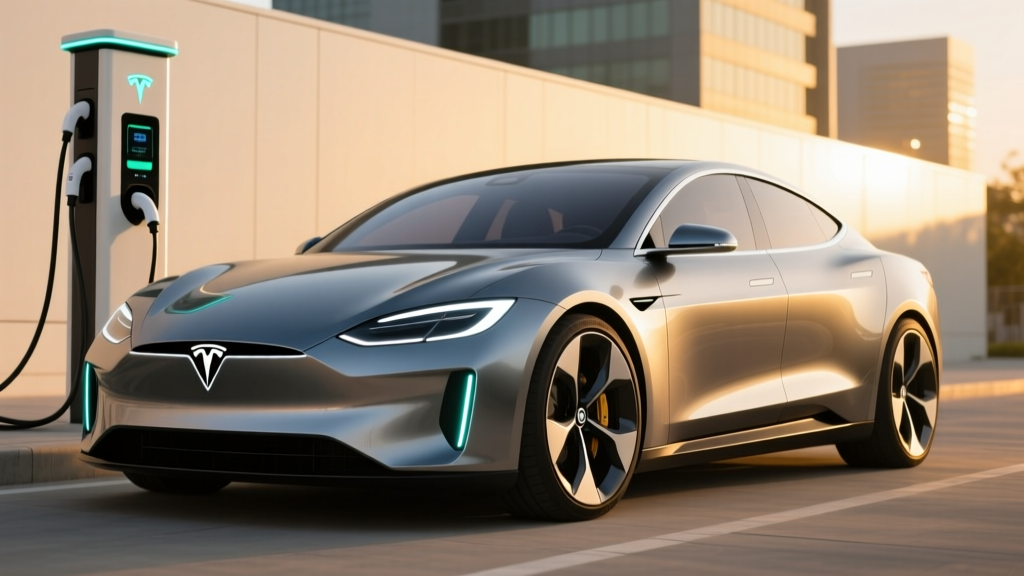
Tesla's 2026 lineup has expanded, but one name that keeps surfacing in forums and rumor threads is the Tesla Quadra. Before you start configuring a build or visiting a showroom, here's the critical context: as of early 2026, the Tesla Quadra has not been officially announced, priced, or listed on Tesla's website or in any EPA certification filing. There is no confirmed battery pack, no EPA range sticker, and no MSRP. What follows is a comprehensive breakdown of what is known, what is rumored, and how a vehicle in this rumored segment would stack up against Tesla's actual, purchasable models today.
If Tesla does introduce a Quadra nameplate, it would need to meet the same data-driven benchmarks we apply to every EV on the market. Below, we outline the exact specifications any buyer should demand — and how Tesla's current lineup (Model Y, Model 3, Cybertruck) already fills the roles the Quadra is rumored to target.
What Is the Tesla Quadra? Separating Rumor from Reality
The "Tesla Quadra" name has circulated in EV enthusiast communities since late 2024, typically described as either a compact crossover slotting below the Model Y, a quad-motor performance variant of an existing platform, or a next-generation vehicle built on Tesla's rumored "Redwood" compact architecture. None of these descriptions have been confirmed by Tesla, Inc. through any official channel — no press release, no SEC filing, no Tesla blog post, and no appearance in the EPA's electric vehicle database.
Why does this matter? Because EV buyers need hard numbers — not speculation — to make a $40,000+ purchasing decision. Let's look at what any legitimate Tesla Quadra would need to deliver, benchmarked against the vehicles Tesla actually sells in 2026.
Battery, Range & Efficiency: The Numbers That Matter
Any new Tesla model in 2026 would likely draw from two proven battery chemistries the company already deploys at scale:
| Attribute | LFP (Lithium Iron Phosphate) | NMC (Nickel Manganese Cobalt) |
|---|---|---|
| Energy Density | Lower (~160 Wh/kg cell-level) | Higher (~250 Wh/kg cell-level) |
| Charge to 100% Daily? | Yes — Tesla recommends 100% for LFP | No — 80% daily limit recommended |
| Cold-Weather Performance | More range loss in freezing temps (~30-35%) | Better cold-weather retention (~20-25% loss) |
| Cycle Life | 3,000+ cycles | 1,500-2,000 cycles |
| Typical Tesla Application | Model 3/Y RWD (Standard Range) | Long Range & Performance trims |
If the Quadra is positioned as an affordable compact, an LFP pack in the 55-65 kWh usable range is the most probable configuration, similar to the current Model 3 RWD. If it's a performance-oriented quad-motor variant, expect an NMC pack in the 75-85 kWh range to support higher discharge rates.
A compact Tesla crossover with a ~60 kWh LFP pack and ~270-mile EPA rating would realistically deliver:
- City/commute driving (65 mph avg): ~250-265 miles
- Highway road trips (75-80 mph): ~215-235 miles
- Freezing weather (below 32°F): ~180-200 miles with cabin heating
- With preconditioning + heat pump: Cold-weather loss reduced by ~5-8%
For efficiency, Tesla's current vehicles achieve between 25-28 kWh per 100 miles (roughly 120-135 MPGe combined). A smaller, lighter Quadra could potentially push toward 24 kWh/100mi — class-leading if realized.
Charging Speed: DC Fast Charge & Home Level 2
Charging speed is arguably the single most important spec after range. Here's what a 2026-era Tesla platform delivers, and what a Quadra would likely inherit:
| Charging Level | Power (kW) | Miles Added per Hour | Notes |
|---|---|---|---|
| Level 1 (120V household) | ~1.4 kW | ~3-5 mi/hr | Emergency/trickle only |
| Level 2 (240V home, 48A) | ~11.5 kW | ~35-44 mi/hr | Full charge overnight (~6-7 hrs for 60 kWh) |
| DC Fast Charge (V3 Supercharger) | Peak ~170-250 kW | ~750+ mi/hr (peak) | 10-80% in ~18-25 min depending on pack |
| DC Fast Charge (V4 Supercharger) | Up to ~325 kW (capable) | TBD by vehicle acceptance rate | Vehicle must support higher C-rate to benefit |
Understanding the charge curve: Peak kW is not sustained kW. A vehicle that "peaks at 250 kW" may only hold that rate from roughly 10-30% State of Charge (SoC), then taper to ~150 kW through 50%, and drop further above 80%. The 10-80% time is the number that actually matters for road trips. For a ~60 kWh LFP pack, expect a 10-80% session of approximately 22-28 minutes at a V3 Supercharger. An NMC Long Range pack (~80 kWh) could achieve 15-20 minutes if Tesla enables higher C-rate charging on a new platform.
All new Teslas ship with the NACS (North American Charging Standard) connector natively, granting access to Tesla's Supercharger network — consistently the most reliable DC fast-charging network in the U.S. with uptime rates exceeding 95% at most stations.
Performance, Drivetrain & Handling Expectations
Tesla doesn't make slow cars. Even the most affordable Model 3 RWD hits 0-60 mph in approximately 5.8 seconds with ~271 horsepower. If the Quadra follows Tesla's pattern:
| Spec | Projected Quadra RWD | Projected Quadra AWD/Dual-Motor | Current Model Y LR AWD (2025) |
|---|---|---|---|
| 0-60 mph | ~5.5-6.2 sec | ~3.8-4.5 sec | 4.8 sec |
| Horsepower | ~270-300 hp | ~380-450 hp | 384 hp |
| Drivetrain | Single motor RWD | Dual motor AWD | Dual motor AWD |
| Top Speed | ~125 mph | ~135-155 mph | 135 mph |
A "quad-motor" Quadra variant — if it exists — would likely produce 800+ hp with individual wheel torque vectoring, targeting sub-2.5-second 0-60 times in the vein of the Model S Plaid. That's a niche performance product, not a volume seller.
Interior, Cargo & Technology
Tesla's interior philosophy is polarizing: minimalist to the point of austerity, with nearly all controls funneled through the central touchscreen. A Quadra would almost certainly continue this approach.
Projected dimensions (based on compact crossover segment norms and Tesla's packaging efficiency):
- Front headroom: ~40.0-41.0 inches
- Rear legroom: ~36.0-38.0 inches
- Cargo behind rear seats: ~25-30 cu ft
- Cargo with seats folded: ~60-68 cu ft
- Frunk (front trunk): ~3-4 cu ft (typical for Tesla's skateboard platform)
Expected technology highlights:
- 15.4-inch center touchscreen with Tesla's latest UI (no Apple CarPlay/Android Auto — Tesla's ecosystem only)
- Autopilot standard (SAE Level 2): adaptive cruise, lane centering, automatic emergency braking, blind-spot monitoring
- Full Self-Driving (Supervised) available as a ~$8,000 add-on or subscription (~$99/month) — still SAE Level 2 requiring active driver supervision
- Over-the-air updates continuously adding features and refinements
- Heat pump standard for efficient cabin heating and battery preconditioning
- Sentry Mode, Dog Mode, Camp Mode — Tesla's signature software features
Pricing, Trims & Federal Tax Credit Eligibility
Since the Quadra has no confirmed pricing, we can project based on Tesla's current positioning and the rumored "affordable compact" segment target:
| Projected Trim | Estimated MSRP | §30D Credit Potential | Effective Price (if eligible) |
|---|---|---|---|
| Quadra RWD (Base) | ~$28,000-$33,000 | Up to $7,500 | ~$20,500-$25,500 |
| Quadra Long Range AWD | ~$38,000-$43,000 | Up to $7,500 | ~$30,500-$35,500 |
| Quadra Performance | ~$48,000-$55,000 | Up to $7,500 | ~$40,500-$47,500 |
Federal tax credit rules (IRS §30D) for 2026 — critical caveats:
- MSRP cap: SUVs/crossovers must be under $80,000; sedans under $55,000
- Buyer income cap: Modified AGI must not exceed $150,000 (single), $225,000 (head of household), or $300,000 (joint filing)
- Battery sourcing: Critical minerals and battery components must meet escalating domestic/free-trade-partner sourcing percentages — Tesla has been working to comply, but specific eligibility varies by model and build date
- Point-of-sale transfer: As of 2024+, eligible buyers can transfer the credit to the dealer at purchase, reducing the out-of-pocket price immediately rather than waiting for a tax refund
- Verification: Always check the latest eligibility list at fueleconomy.gov and consult a tax professional — rules change and vehicle eligibility is updated periodically by the IRS
Warranty, Ownership Costs & Long-Term Outlook
Tesla's current warranty structure is competitive and any new model would likely follow the same framework:
- Basic vehicle warranty: 4 years / 50,000 miles
- Battery & drive unit warranty: 8 years / 100,000 miles (RWD) or 8 years / 120,000 miles (AWD/LR), with a minimum 70% capacity retention guarantee
- Battery degradation reality: Tesla's LFP packs have shown approximately 8-12% degradation over 100,000 miles based on fleet data; NMC packs typically show 10-15% over the same distance
- Battery replacement cost (out of warranty): $12,000-$18,000 depending on pack size — though most packs outlast the vehicle
Estimated 5-year total cost of ownership advantages:
- Fuel savings: At $0.13/kWh national average electricity and 3.5 mi/kWh efficiency, driving 12,000 miles/year costs roughly $445/year in electricity vs. ~$1,500+/year in gasoline for a comparable ICE vehicle
- Maintenance savings: No oil changes, no spark plugs, minimal brake wear (regen braking), no transmission fluid — estimated $300-500/year savings
- Insurance: Tesla insurance premiums run 15-30% higher than comparable non-EVs — factor in $1,800-$2,800/year depending on state and driving record
- Depreciation: EVs have seen steeper depreciation in 2024-2025 as the market adjusted; a sub-$30K Tesla would likely hold value better due to high demand at that price point
Tesla Quadra vs. the Competition: Is It Worth Waiting For?
If you're considering holding off on a purchase waiting for the Quadra, here's what it would compete against — and what's available right now:
| Attribute | Tesla Model 3 RWD (2025) | Chevrolet Equinox EV 2LT (2025) | Hyundai Ioniq 5 SE (2025) |
|---|---|---|---|
| EPA Range | 272 mi | 319 mi | 303 mi |
| Battery | ~60 kWh (LFP) | ~85 kWh (NMC) | 77.4 kWh (NMC) |
| DC Fast Charge Peak | ~170 kW | ~150 kW | ~240 kW |
| 10-80% DCFC Time | ~25 min | ~30 min | ~18 min |
| 0-60 mph | 5.8 sec | ~7.9 sec | 7.4 sec |
| Base MSRP | ~$38,990 | ~$33,600 | ~$42,600 |
| §30D Credit Eligible | Yes (verify build date) | Yes | Varies (check IRS) |
- Buy NOW if: You need a vehicle within 6 months, want confirmed specs and tax-credit eligibility, and value proven reliability data. The Model 3 RWD or Equinox EV are excellent, purchasable options today.
- Wait if: You're 12-18+ months from purchasing, want the absolute lowest-price Tesla ever made, and are comfortable with uncertainty around specs, availability, and credit eligibility.
- Look elsewhere if: You need Apple CarPlay, prefer traditional dealer service, want a confirmed 300+ mile range, or need a third row — none of these are Tesla strengths.
Pros & Cons: What a Tesla Quadra Would Likely Deliver
- Access to Tesla Supercharger network (best-in-class reliability)
- Industry-leading software and OTA update cadence
- Lowest potential entry price for a new Tesla ever
- Strong efficiency (kWh/100mi) from lightweight platform
- Minimal maintenance costs vs. ICE alternatives
- LFP battery option allows daily 100% charging without degradation concern
- Not yet announced — no confirmed specs, pricing, or timeline
- Tesla's minimalist interior not universally loved
- No Apple CarPlay or Android Auto support
- Insurance premiums 15-30% above segment average
- Build quality consistency still a concern at some factories
- FSD (Supervised) remains expensive and is NOT autonomous driving
- Service center wait times can be weeks in some markets
Frequently Asked Questions
What is the real-world range of the Tesla Quadra?
The Tesla Quadra has no confirmed EPA range because the vehicle has not been officially announced. Based on comparable Tesla models with similar projected battery sizes (~55-65 kWh LFP), a realistic expectation would be 250-280 miles EPA, with real-world highway driving yielding approximately 210-240 miles and cold-weather driving dropping to 175-200 miles.
How fast does the Tesla Quadra charge?
Unconfirmed. However, based on Tesla's current LFP-equipped vehicles, expect a peak DC fast-charge rate of approximately 170 kW on V3 Superchargers, with a 10-80% session taking roughly 22-28 minutes. Home Level 2 charging at 11.5 kW (48A, 240V) would add approximately 35-44 miles of range per hour.
How much would the Tesla Quadra cost after tax credits?
If priced at a rumored $25,000-$33,000 base MSRP and eligible for the full $7,500 federal §30D credit, the effective price could drop to approximately $17,500-$25,500 for eligible buyers. However, eligibility depends on the buyer's income (under $150K single / $300K joint), battery component and critical mineral sourcing requirements, and the vehicle's final MSRP — all of which are unconfirmed for an unannounced vehicle.
Does the Tesla Quadra qualify for the federal EV tax credit?
Cannot be determined until Tesla officially announces the vehicle and the IRS evaluates its battery sourcing compliance. Tesla's current U.S.-built models (Model 3, Model Y from Fremont/Austin) have generally qualified, but eligibility changes periodically. Always verify at fueleconomy.gov before purchasing.
Is the Tesla Quadra worth waiting for vs. buying a Model 3 or Model Y now?
If you need a vehicle in 2026, no — the Quadra doesn't exist as a purchasable product. The Model 3 RWD at ~$38,990 (potentially ~$31,490 after credit) is an excellent, proven EV available today. If you're not in a rush and want the cheapest Tesla ever made, monitoring Tesla's official announcements is worthwhile, but don't delay a needed purchase for an unconfirmed product.
What are the biggest drawbacks of Tesla ownership in 2026?
Higher-than-average insurance premiums, no smartphone integration (CarPlay/Android Auto), inconsistent panel gaps and build quality depending on factory, limited service center availability in rural areas, and the fact that FSD (Supervised) — despite its name — requires full driver attention at all times and does not make the car self-driving.
This article will be updated immediately upon any official Tesla announcement regarding the Quadra nameplate. Last reviewed: early 2026. All projected specifications are estimates based on Tesla's current technology and segment norms — not confirmed manufacturer data.