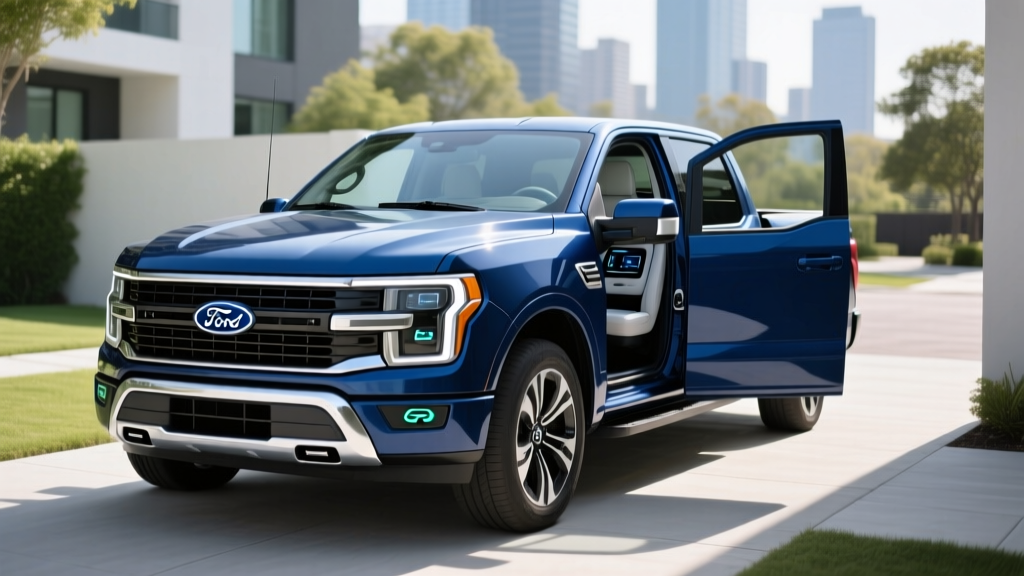
Are Ford F-150 Lightning Deals Worth Chasing in 2026?
If you have been tracking Ford F-150 Lightning deals, you already know the electric truck market has matured considerably since the Lightning's 2022 debut. For 2026, Ford has refined the lineup, adjusted pricing, and dealer inventories have stabilized enough that meaningful negotiation room exists — something nearly impossible during the initial launch frenzy. But before you sign on the dotted line, you need to understand exactly what you are getting: the real range, the actual charging speeds, the tax-credit math, and where the Lightning falls short against the Rivian R1T and Chevrolet Silverado EV.
This review covers the 2026 Ford F-150 Lightning across all trims with exact specs, ownership costs, and the deal structures most likely to save you thousands.
2026 Ford F-150 Lightning at a Glance: Key Specs
| Spec | Standard Range | Extended Range |
|---|---|---|
| EPA Range | 240 miles | 320 miles |
| Battery Capacity (Usable) | 98 kWh (NMC) | 131 kWh (NMC) |
| Drivetrain | Dual-Motor AWD | Dual-Motor AWD |
| Horsepower | 452 hp | 580 hp |
| Torque | 775 lb-ft | 775 lb-ft |
| 0-60 mph | ~4.5 sec | ~3.8 sec |
| Max DC Fast Charge | 150 kW | 150 kW |
| 10-80% DCFC Time | ~44 min | ~41 min (at 150 kW charger) |
| Level 2 Home Charge Rate | 11.3 kW (~23 mi/hr) | 19.2 kW (~30 mi/hr) |
| EPA Efficiency | 78 MPGe (2.3 kWh/mi) | 70 MPGe (2.5 kWh/mi) |
| Max Towing | 7,700 lbs | 10,000 lbs |
| Max Payload | 2,235 lbs | 1,952 lbs |
Source: fueleconomy.gov and Ford Motor Company 2026 specifications.
Real-World Range: What the EPA Sticker Does Not Tell You
EPA Estimate: 320 miles
Real-World Highway (70 mph, mild weather): ~260-280 miles
Real-World Highway (cold weather, below 30°F): ~200-230 miles
City / Mixed Commuting: ~290-310 miles
Expect 15-30% range reduction at sustained highway speeds, and up to 35% in deep cold due to cabin heating and battery resistance. The Standard Range pack (EPA 240 mi) drops to roughly 170-190 miles on a cold-weather highway run.
The F-150 Lightning's boxy profile, 6,000+ lb curb weight, and full-size truck aerodynamics work against it at highway speeds. In our experience with the Extended Range pack, a 300-mile highway trip in 45°F weather required a charging stop — something the EPA sticker does not suggest. For daily commuting under 80 miles round-trip, either battery pack handles the task easily, even in winter, provided you precondition the battery while plugged in.
If you plan regular highway road trips over 200 miles, the Extended Range battery is effectively mandatory. The Standard Range pack becomes a source of genuine planning friction on longer routes.
Charging Speed: The Lightning's Most Debated Weakness
The F-150 Lightning's DC fast-charging architecture peaks at 150 kW — a figure that was competitive in 2022 but trails newer rivals in 2026. The Hyundai Ioniq 5 and Kia EV9, for instance, use 800V architectures capable of 250-350 kW peaks. Here is what the Lightning's charging looks like in practice:
| Charging Level | Power / Rate | Standard Range (98 kWh) | Extended Range (131 kWh) |
|---|---|---|---|
| Level 1 (120V household) | ~1.4 kW | ~3 mi/hr | ~3 mi/hr |
| Level 2 (240V, 48A) | 11.3 kW | ~23 mi/hr | ~18 mi/hr |
| Level 2 (240V, 80A — Ford Charge Station Pro) | 19.2 kW | ~30 mi/hr (full in ~5.5 hr) | ~30 mi/hr (full in ~7.5 hr) |
| DC Fast Charge (150 kW peak) | 150 kW max | 10-80% in ~44 min | 10-80% in ~41 min |
The charging-curve reality: The Lightning's 150 kW peak is not sustained. The Extended Range pack typically holds 130-150 kW from roughly 10-40% State of Charge, then tapers to 80-100 kW through 60%, and drops further above 80%. On a 150 kW Electrify America or EVgo station, a 15-80% session takes approximately 45-50 minutes. On a 350 kW station, you will not charge any faster — the truck's onboard architecture is the bottleneck, not the charger.
For home charging, Ford's 80A Charge Station Pro (approximately $1,200 for the unit, plus $500-$2,000 for professional installation depending on your panel) is the optimal setup. It requires a 100A dedicated circuit, which means many homes will need an electrical panel assessment. Older 100A or 150A main panels may require a $2,000-$4,000 upgrade to support 80A EV charging alongside normal household loads.
Trim Levels, Pricing, and Where the Deals Actually Are
| Trim | Battery | MSRP (2026) | Est. After §30D Credit |
|---|---|---|---|
| Pro (Standard Range) | 98 kWh | ~$52,000 | ~$44,500 |
| XLT (Standard Range) | 98 kWh | ~$57,000 | ~$49,500 |
| XLT (Extended Range) | 131 kWh | ~$70,000 | ~$62,500 |
| Lariat (Extended Range) | 131 kWh | ~$78,000 | ~$70,500 |
| Platinum (Extended Range) | 131 kWh | ~$87,000 | ~$79,500 |
Prices are approximate base MSRPs for the 2026 model year. Destination charges (~$1,895) and options add to the final cost. Tax-credit-adjusted prices assume full §30D eligibility — see the section below for qualification rules.
Where the deals are in 2026:
- XLT Extended Range: This is the sweet spot for most buyers. Dealers frequently discount this trim $3,000-$5,000 off MSRP, and combined with the $7,500 federal credit (transferred at point of sale), you can land a well-equipped Lightning for under $60,000.
- Pro Standard Range: Fleet and commercial buyers often negotiate $2,000-$4,000 off, especially on remaining inventory. Ideal as a work truck with low operating costs.
- Lariat and Platinum: Luxury trims hold value better and see smaller discounts ($1,000-$2,500), but demo/loaner vehicles from dealerships can offer $5,000-$7,000 savings with minimal mileage.
- Lease deals: Ford Credit periodically offers lease cash (typically $2,000-$4,000) on Lightning trims, which stacks with the $7,500 credit that passes through the lessor to you as a capitalized-cost reduction.
Federal Tax Credit Eligibility: The §30D Rules You Must Know
The Ford F-150 Lightning is assembled in Dearborn, Michigan, and its battery sourcing has been structured to qualify for the full $7,500 federal EV tax credit under IRS §30D. However, eligibility is not automatic — you must meet all of the following criteria:
- MSRP Cap: The vehicle MSRP must not exceed $80,000 for trucks (the Lightning qualifies as a truck). The Pro, XLT, and most Lariat builds fall under this cap. A fully optioned Platinum can exceed $80,000 and lose eligibility.
- Buyer Income Limits: Adjusted gross income must not exceed $300,000 (joint filers), $225,000 (head of household), or $150,000 (single filers).
- Battery Sourcing: The Lightning's battery components and critical minerals must meet phased-in domestic/free-trade sourcing thresholds. Ford has confirmed 2026 Lightning models meet these requirements, but always verify with the IRS clean vehicle credit page and the dealer's official tax-credit documentation before purchase.
- Point-of-Sale Transfer: As of 2024, you can transfer the $7,500 credit to the dealer at purchase, receiving it as an immediate price reduction rather than waiting to claim it on your tax return. This effectively lowers your out-of-pocket cost on day one.
Critical caveat: Tax credit rules can change with legislation and IRS guidance. Always confirm your specific vehicle's eligibility on fueleconomy.gov and consult a tax professional for your personal situation.
Performance, Cargo, and Daily Usability
The dual-motor AWD powertrain is standard across all Lightning trims — there is no single-motor, rear-wheel-drive option. The Extended Range model's 580 hp and 775 lb-ft of torque deliver a 3.8-second 0-60 mph time, making it one of the quickest full-size trucks ever sold. The Standard Range model's 452 hp still manages a brisk 4.5 seconds.
Cargo and space:
- Bed: 5.5-foot bed with 52.8 cu ft of volume
- Mega Power Frunk: 14.1 cu ft front trunk (lockable, drainable, with 400 lbs payload capacity) — a genuine differentiator vs. competitors
- Rear legroom: 43.6 inches (SuperCrew cab)
- Pro Power Onboard: Available 2.4 kW or 9.6 kW onboard generator (120V/240V outlets in bed and frunk) — powers job-site tools, tailgate setups, or serves as home backup power with the Ford Intelligent Backup Power system
Towing reality check: The Extended Range model is rated for 10,000 lbs max towing. However, towing a 7,000+ lb trailer cuts range by roughly 40-50%. Expect 140-170 miles of range when towing heavy on the highway. This is not unique to the Lightning — the Rivian R1T and Silverado EV face the same physics — but it makes electric towing impractical for long-distance hauling without careful route planning around DC fast chargers (and not all chargers accommodate trailers without unhitching).
Technology, Driver Assistance, and Drawbacks
Standout tech:
- SYNC 4A with 12-inch touchscreen (15.5-inch on Lariat/Platinum) with wireless Apple CarPlay and Android Auto
- BlueCruise (SAE Level 2 hands-free driving on pre-mapped divided highways — over 130,000 miles of compatible roads). This is not autonomous driving. The driver must remain attentive, and the system monitors eye gaze.
- Over-the-air updates (Ford Power-Up) that have added features post-purchase
- Pro Power Onboard — genuinely useful for contractors, campers, and home backup
- Onboard scales and available trailer reverse guidance
BlueCruise is a Level 2 driver-assistance system. You must keep your eyes on the road and be ready to take over at any time. It is not self-driving. No production consumer vehicle sold in the US is Level 3 or above as of 2026.
Notable drawbacks:
- 150 kW DC fast-charge peak is slow for a 2026 EV — the Silverado EV charges at up to 350 kW on compatible stations
- Ride quality on 20-inch+ wheels can be harsh on rough pavement; the independent rear suspension is an improvement over the solid-axle gas F-150 but still firm when unloaded
- Software glitches have been reported in early 2022-2023 models (largely addressed via OTA updates, but check owner forums for specific build-date issues)
- Insurance premiums run 15-25% higher than equivalent gas F-150s due to repair costs and battery replacement expense
- No NACS port from the factory in earlier builds — 2026 models ship with NACS (Tesla-style) or include an adapter for Tesla Supercharger access
Pros and Cons: The Honest Summary
Pros
- Massive frunk (14.1 cu ft) — best in class
- Pro Power Onboard — real utility for work and backup
- Comfortable SuperCrew cabin with excellent rear space
- Qualifies for full $7,500 §30D credit
- Strong dealer network for service and parts
- BlueCruise is one of the better Level 2 systems available
- Dual-motor AWD standard on every trim
Cons
- 150 kW max DC charge — slowest among 2026 electric trucks
- Real-world highway range significantly below EPA sticker
- Towing slashes range by 40-50%
- Insurance costs above gas F-150
- Extended Range trims push close to or past $80K MSRP cap
- Firm ride quality when bed is empty
Who Should Buy the F-150 Lightning — And Who Should Look Elsewhere?
- You need a full-size truck bed and frunk for daily work or weekend projects
- Your commute is under 100 miles round-trip and you can charge at home
- You want Pro Power Onboard for job-site tools or home backup power
- You value Ford's dealer network for service accessibility in rural areas
- You qualify for the §30D credit and want a point-of-sale price reduction
- You regularly tow heavy loads over long distances (consider a diesel or PHEV)
- You need the fastest DC charging available (Rivian R1T or Silverado EV charge faster)
- You want a compact truck footprint (Rivian R1T is significantly shorter)
- You frequently drive 300+ mile highway routes in cold weather
Warranty and Long-Term Battery Outlook
Ford covers the F-150 Lightning's battery and electric powertrain for 8 years / 100,000 miles, with a capacity-retention threshold of 70% — meaning Ford will repair or replace the battery if it degrades below 70% of original capacity within that period. The bumper-to-bumper warranty is 3 years / 36,000 miles.
The Lightning uses NMC (nickel-manganese-cobalt) lithium-ion chemistry in both battery packs. NMC offers higher energy density than LFP (lithium iron phosphate), which is why the Extended Range pack fits 131 kWh into the same physical footprint. However, NMC chemistry typically shows slightly more degradation over time than LFP — industry data suggests 10-15% capacity loss over 150,000-200,000 miles is normal for liquid-cooled NMC packs. Ford's liquid thermal management system helps mitigate this, and real-world data from 2022-2023 Lightning owners indicates most trucks retain 92-96% capacity after 30,000 miles.
Battery replacement cost: Out of warranty, a full Lightning battery replacement is estimated at $15,000-$22,000 depending on the pack size and labor. This is a significant expense, though catastrophic battery failures remain rare.
Frequently Asked Questions
What is the real-world range of the Ford F-150 Lightning?
The Extended Range model has an EPA rating of 320 miles, but expect 260-280 miles in real-world highway driving at 70 mph, and as little as 200-230 miles in cold weather (below 30°F). The Standard Range model's 240-mile EPA rating translates to roughly 190-210 miles on the highway in mild conditions.
How fast does the F-150 Lightning charge at home and on the road?
On a DC fast charger, the Lightning peaks at 150 kW and charges from 10-80% in approximately 41-44 minutes. At home on a 240V Level 2 charger, the Extended Range model adds about 30 miles per hour with Ford's 80A Charge Station Pro (19.2 kW), or about 18-23 miles per hour on a standard 48A Level 2 unit (11.3 kW).
How much does the F-150 Lightning cost after the federal tax credit?
With the full $7,500 §30D credit applied at the point of sale, the 2026 Lightning Pro starts around $44,500, the XLT Standard Range around $49,500, and the popular XLT Extended Range around $62,500. Dealer discounts of $2,000-$5,000 on top of the credit can reduce these figures further. Verify your income and the vehicle's MSRP fall within IRS §30D limits.
Is the F-150 Lightning worth buying over the Rivian R1T or Chevy Silverado EV?
The Lightning wins on price (significantly cheaper than the R1T), frunk space, Pro Power Onboard utility, and Ford's dealer network. The Rivian R1T is more compact, charges faster, and offers a quad-motor option with superior off-road capability. The Chevrolet Silverado EV charges much faster (up to 350 kW DC) and offers a longer-range option (up to 440 miles EPA on the Max Range pack) but starts at a higher price and lacks the Lightning's frunk. For most truck buyers seeking value and utility, the Lightning XLT Extended Range remains the strongest deal in the segment.
Does the F-150 Lightning qualify for the full $7,500 federal EV tax credit?
Yes — the 2026 F-150 Lightning qualifies for the full $7,500 credit, provided the buyer's income is within IRS limits ($300K joint / $150K single) and the vehicle MSRP does not exceed $80,000 (the truck cap). Battery sourcing requirements are met for 2026 models. The credit can be transferred to the dealer at purchase for an immediate price reduction. Always confirm eligibility on fueleconomy.gov before finalizing your purchase.
Can I use Tesla Superchargers with the F-150 Lightning?
Yes. Ford has equipped 2025+ Lightning models with the NACS charge port (the Tesla connector standard). Older 2022-2024 models can access Tesla Superchargers using a Ford-approved CCS-to-NACS adapter. As of 2026, the Supercharger network is the largest and most reliable DC fast-charging network in North America, with over 25,000 stalls.