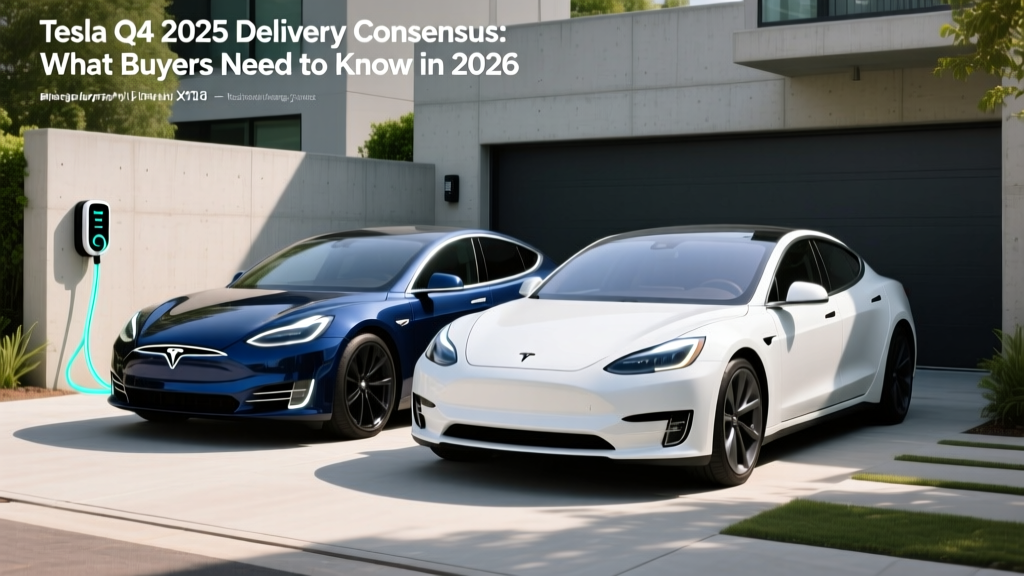
Wall Street analysts and Tesla watchers spent late 2025 fixated on one metric: the Tesla Q4 2025 delivery consensus. That number — the aggregated forecast of how many vehicles Tesla would hand over between October and December 2025 — became a proxy for the company's competitive position heading into 2026. But for actual EV shoppers, the delivery consensus tells a different story. It reveals which models Tesla is prioritizing, which trims are flowing through Fremont, Austin, and Shanghai, and where pricing and availability stand right now.
This guide translates that Wall Street signal into a buyer's roadmap. We break down every current Tesla model you can order in early 2026, with exact EPA range figures, real-world charging data, battery chemistry details, and the latest §30D federal tax credit rules. Whether the Q4 2025 delivery consensus beat or missed expectations, these are the vehicles you can actually buy today.
Why the Tesla Q4 2025 Delivery Consensus Matters for Buyers
The Q4 2025 delivery consensus hovered around 480,000–500,000 vehicles across global markets, according to analyst aggregations. Tesla's actual reported deliveries for the quarter serve as a real-time indicator of production mix — specifically, how heavily the company is weighting the refreshed Model Y (codenamed Juniper), the volume-leading Model 3 Highland, and the Cybertruck ramp versus legacy demand for Model S and Model X.
For buyers, the delivery mix matters because it signals inventory availability. A Q4 weighted heavily toward Model Y and Model 3 means those lots have more flexibility for negotiation, while a Cybertruck-heavy mix signals constrained supply and firmer pricing. Heading into 2026, Tesla's US lineup includes four core consumer vehicles, each with distinct specs, pricing, and tax credit profiles.
2026 Tesla Model 3: The Efficiency Benchmark
The refreshed Model 3 (internally "Highland") continues into the 2026 model year with minor software and packaging updates. It remains the most efficient sedan in Tesla's lineup and one of the most efficient EVs on the market per EPA ratings.
| Spec | RWD (Standard Range) | Long Range AWD | Performance |
|---|---|---|---|
| EPA Range | 272 mi | 363 mi | 315 mi |
| Battery (usable) | ~60 kWh (LFP) | ~79 kWh (NMC) | ~79 kWh (NMC) |
| MPGe (combined) | 132 MPGe | 125 MPGe | 118 MPGe |
| kWh/100 mi | 25 | 27 | 29 |
| 0–60 mph | 5.8 sec | 4.2 sec | 2.9 sec |
| Horsepower | 271 hp | 346 hp | 510 hp |
| Drivetrain | RWD (single motor) | AWD (dual motor) | AWD (dual motor) |
| Base MSRP | $38,990 | $45,490 | $52,990 |
Charging Speed
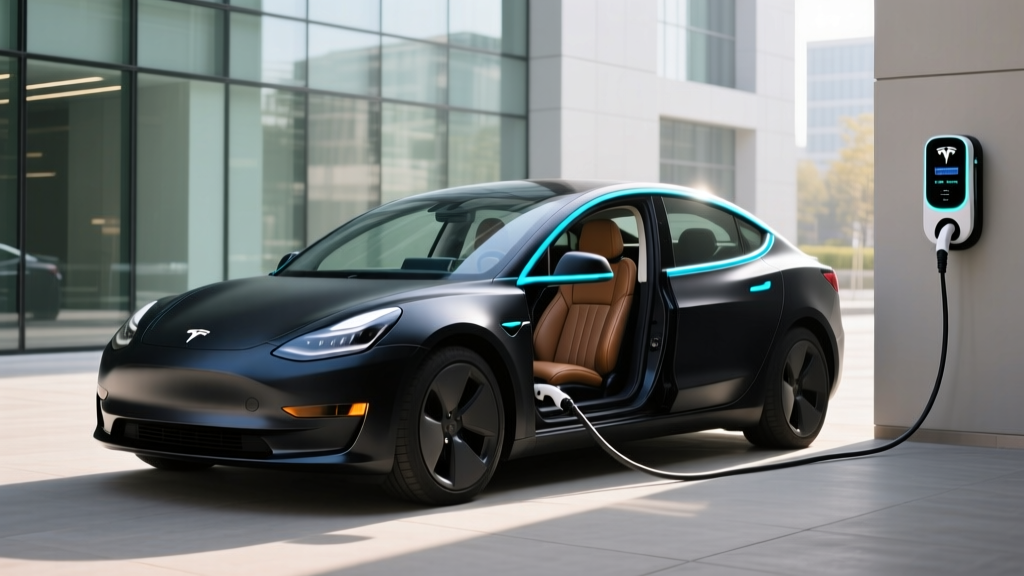
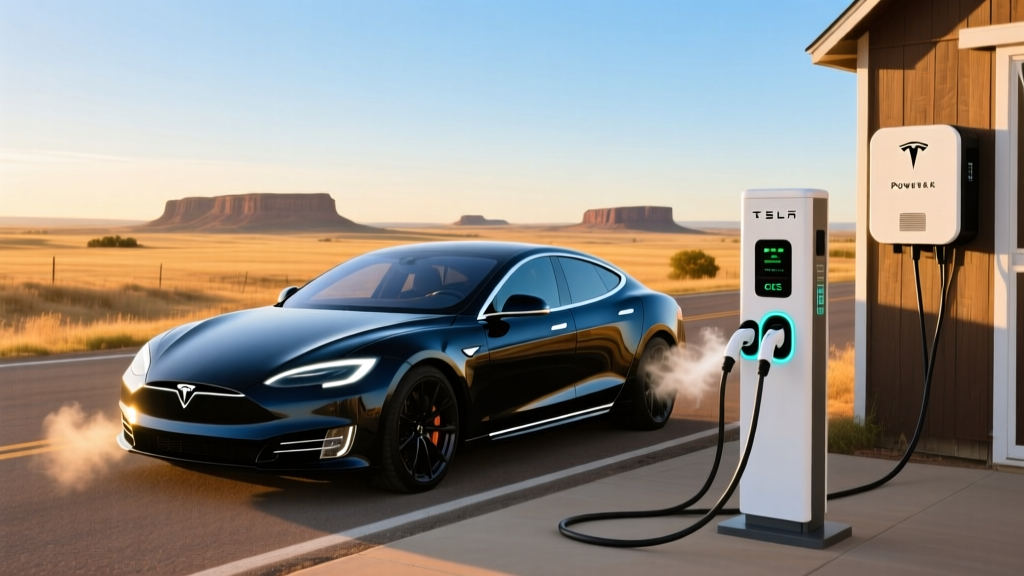
The Model 3 Long Range peaks at approximately 250 kW on a V3 Supercharger, achieving a 10–80% charge in roughly 25 minutes. The RWD model with its LFP pack peaks closer to 170 kW, with a 10–80% session taking about 30 minutes. At home on a Level 2 (240V/48A) Wall Connector, the Long Range adds about 44 miles of range per hour; the RWD adds roughly 30 miles per hour. Both use the native NACS connector — no adapter needed at Tesla Superchargers, and a growing number of non-Tesla networks now support NACS natively or via adapter.
Interior, Cargo, and Tech
The Highland refresh brought ventilated front seats, ambient lighting, rear-seat ventilation controls, and improved cabin insulation. Cargo space is 23 cu ft (trunk + frunk combined). Rear legroom measures 35.3 inches — adequate for adults but tighter than the Model Y. The 15.4-inch center touchscreen handles all vehicle controls; there is no traditional instrument cluster. Standard Autopilot includes Traffic-Aware Cruise Control and Autosteer (SAE Level 2). Full Self-Driving (Supervised) remains a $8,000 option or $99/month subscription — and despite the name, it requires active driver supervision at all times.
2026 Tesla Model Y: The Volume Leader
The Model Y received its "Juniper" refresh for the 2025 model year and carries into 2026 as Tesla's highest-volume vehicle globally — a fact reflected heavily in the Q4 2025 delivery consensus numbers. It's the default choice for families who want Tesla's Supercharger network access without stepping up to the larger Model X.
| Spec | Long Range AWD | Performance |
|---|---|---|
| EPA Range | 335 mi | 295 mi |
| Battery (usable) | ~79 kWh (NMC) | ~79 kWh (NMC) |
| MPGe (combined) | 117 MPGe | 111 MPGe |
| 0–60 mph | 4.8 sec | 3.5 sec |
| Horsepower | 384 hp | 510 hp |
| Cargo Volume | 76 cu ft (rear seats folded) | |
| Base MSRP | $46,490 | $53,990 |
Charging and Practicality
The Model Y Long Range charges at up to 250 kW DC, with 10–80% taking approximately 24 minutes on a V3 Supercharger. Home Level 2 charging on a 48A circuit adds about 42 miles per hour. The Juniper interior now features a front-row ambient light bar, ventilated seats, a rear touchscreen for passengers, and improved sound insulation. With 76 cu ft of cargo space (rear seats folded), it out-cargoes most compact SUVs and accommodates an optional third row for occasional 7-passenger use — though that third row is best suited for small children.
2026 Tesla Cybertruck: The Polarizing Pickup
Cybertruck production ramped significantly through 2025, and its growing share of deliveries was a notable variable in the Q4 2025 consensus. For 2026, Tesla offers the Cybertruck in AWD and Cyberbeast trims (the single-motor RWD variant was discontinued after limited availability).
| Spec | AWD | Cyberbeast |
|---|---|---|
| EPA Range | 340 mi | 320 mi |
| Battery (usable) | ~123 kWh (NMC) | ~123 kWh (NMC) |
| 0–60 mph | 4.1 sec | 2.6 sec |
| Horsepower | 600 hp | 845 hp |
| Towing Capacity | 11,000 lbs | |
| Bed Length | 6 ft (vault) | |
| Base MSRP | $79,990 | $99,990 |
Cybertruck charges at up to 350 kW at V4 Superchargers (where available), with 10–80% in roughly 20 minutes. On standard V3 stations, it peaks at 250 kW and takes about 28 minutes. At $79,990+, the Cybertruck exceeds the IRS §30D MSRP cap for trucks ($80,000), making federal tax credit eligibility extremely tight and trim-dependent — see the tax credit section below.
2026 Tesla Model S and Model X: The Flagship Holdouts
Model S and Model X continue into 2026 with minimal changes. They represent a small fraction of Tesla's delivery volume — and the Q4 2025 consensus reflected that, with combined global deliveries estimated at under 10,000 units for the quarter. They remain relevant for buyers who need maximum range, luxury features, or the performance of Plaid trims.
| Spec | Model S LR | Model S Plaid | Model X LR | Model X Plaid |
|---|---|---|---|---|
| EPA Range | 402 mi | 359 mi | 348 mi | 320 mi |
| 0–60 mph | 3.1 sec | 1.99 sec | 3.8 sec | 2.5 sec |
| HP | 670 | 1,020 | 670 | 1,020 |
| Cargo (cu ft) | 28 | 28 | 88 | 88 |
| Base MSRP | $74,990 | $89,990 | $79,990 | $94,990 |
Both models use a ~100 kWh NMC battery pack and charge at up to 250 kW DC. Model S Long Range's 402-mile EPA rating remains the highest of any Tesla. However, neither model qualifies for the §30D federal tax credit — their MSRPs exceed the $55,000 sedan / $80,000 SUV cap, and they are manufactured at Fremont with battery sourcing that does not meet current critical-mineral requirements.
Federal Tax Credit Eligibility: The §30D Reality for 2026 Teslas
Federal EV tax credit rules under IRS §30D continue to evolve. As of early 2026, the $7,500 credit breaks into two halves — $3,750 for battery component manufacturing and $3,750 for critical mineral sourcing — and buyers must meet income caps and vehicle MSRP caps. Tesla's point-of-sale transfer option allows dealers to apply the credit as an immediate price reduction if eligibility is confirmed.
- MSRP cap: $55,000 for sedans (Model 3 qualifies); $80,000 for SUVs and trucks (Model Y qualifies; Cybertruck borderline)
- Buyner income cap: AGI ≤ $150,000 (single) / $300,000 (joint) / $225,000 (head of household)
- Battery sourcing: Critical minerals and battery components must meet escalating percentage thresholds from US or FTA-partner nations — Tesla's LFP cells (CATL-sourced in RWD Model 3) may fail the critical-mineral prong, potentially reducing the credit to $3,750 or $0 depending on current-year rules
- Final assembly: Must be in North America — all US-market Teslas qualify (Fremont, Austin)
- Point-of-sale transfer: Available; confirm with your tax professional before relying on it
| Model | MSRP Under Cap? | Estimated Credit | Key Caveat |
|---|---|---|---|
| Model 3 RWD | Yes ($38,990) | $3,750–$7,500 | LFP battery sourcing may limit to $3,750 |
| Model 3 Long Range | Yes ($45,490) | $7,500 | NMC pack with qualifying sourcing |
| Model 3 Performance | Yes ($52,990) | $7,500 | NMC pack qualifies |
| Model Y LR | Yes ($46,490) | $7,500 | Strong credit candidate |
| Model Y Perf. | Yes ($53,990) | $7,500 | Strong credit candidate |
| Cybertruck AWD | Borderline ($79,990) | $0–$7,500 | Just under $80K truck cap; verify |
| Model S / X | No | $0 | Exceeds MSRP cap |
Always verify current eligibility at fueleconomy.gov and consult a tax professional before making purchase decisions based on credit assumptions. Rules change, and battery sourcing requirements tighten annually.
Tesla Warranty Coverage and Long-Term Ownership
Tesla's warranty structure is straightforward but not class-leading compared to Hyundai/Kia's 10-year offerings:
- Basic vehicle warranty: 4 years / 50,000 miles
- Battery and drive unit: 8 years / 100,000 miles (Model 3 RWD); 8 years / 120,000 miles (Model 3 LR, Model Y, Model S, Model X)
- Battery capacity retention threshold: Tesla warrants that the battery will retain at least 70% of its original capacity during the warranty period
Real-world degradation data from fleet aggregators shows Tesla NMC packs typically lose about 10–12% capacity over the first 100,000 miles, with the curve flattening significantly afterward. LFP packs (Model 3 RWD) show slightly more initial degradation (12–15% in the first 80,000 miles) but excellent long-term stability. Out-of-warranty battery replacement costs remain steep — roughly $12,000–$16,000 for a Model 3/Y pack and $20,000+ for Model S/X, though prices have been gradually declining.
Who Should Buy a Tesla in 2026?
- Choose Model 3 RWD if: You want the lowest-cost entry to the Supercharger network, commute under 200 miles daily, and can charge at home. The LFP battery rewards frequent 100% charging.
- Choose Model 3 Long Range if: You take regular road trips and want 300+ real-world highway miles between stops. Best efficiency-to-range ratio in the lineup.
- Choose Model Y Long Range if: You need family cargo space, car-seat room, and optional 7-passenger seating. The Q4 2025 delivery consensus confirmed this is Tesla's volume priority — expect good availability and potential inventory deals.
- Choose Cybertruck if: You need a truck bed and 11,000-lb towing, and accept the range penalty of its aerodynamics. Not the most efficient choice for daily commuting.
- Choose Model S LR if: You want 400-mile EPA range, premium features, and don't need the tax credit. Best grand-touring EV Tesla offers.
- Look elsewhere if: You want a traditional instrument cluster, physical buttons, Apple CarPlay/Android Auto, or the longest warranty in the industry. Tesla's minimalist approach and 4-year basic warranty aren't for everyone.
Frequently Asked Questions
What was the Tesla Q4 2025 delivery consensus, and did Tesla meet it?
The analyst consensus for Tesla Q4 2025 deliveries ranged from approximately 480,000 to 500,000 vehicles globally. Tesla's official delivery report, published in early January 2026, confirmed the actual figure — check Tesla Investor Relations for the precise number. The delivery mix heavily favored Model Y and Model 3, consistent with the Juniper and Highland production ramps.
What is the real-world range of a Tesla in 2026?
Real-world range depends on the model, driving conditions, and weather. The Model 3 Long Range delivers roughly 300–320 highway miles and 250–280 in freezing weather. The Model Y LR provides about 275–295 highway miles. Cybertruck drops to 260–290 at highway speeds and far less when towing. Always treat EPA estimates as a best-case baseline, not a guarantee.
How fast does a Tesla charge at home and on the road?
At home on a Level 2 Tesla Wall Connector (48A/240V), expect 30–44 miles of range per hour depending on the model — an overnight charge easily refills any Tesla. On DC fast charging, Model 3 and Model Y peak at 250 kW (10–80% in ~25 minutes), while Cybertruck can reach 350 kW at V4 Superchargers (~20 minutes). Charge speed tapers significantly above 80% SoC — plan to charge to 80% on road trips for the best time efficiency.
Does Tesla qualify for the $7,500 federal EV tax credit?
It depends on the model and your income. Model 3 and Model Y trims priced under the MSRP cap ($55K sedans, $80K SUVs/trucks) can qualify for up to $7,500, provided the buyer's AGI is within limits and the battery meets sourcing requirements. The LFP-equipped Model 3 RWD may only qualify for $3,750 due to critical-mineral sourcing rules. Model S and X exceed the MSRP cap and do not qualify. Always verify at irs.gov before purchasing.
Is Tesla's Autopilot or FSD actually self-driving?
No. Both Autopilot and Full Self-Driving (Supervised) are SAE Level 2 driver-assistance systems. The driver must remain fully engaged, hands on or near the wheel, and eyes on the road at all times. Tesla's cabin camera monitors attention. Only Level 4 systems — like Waymo's driverless robotaxi service in select cities — operate without a human driver. Do not treat any Tesla system as autonomous.
Is a Tesla worth buying vs competitors in 2026?
Tesla's advantages remain the Supercharger network (the most reliable DC fast-charging network in North America), strong efficiency, and over-the-air updates. Competitors like the Hyundai Ioniq 5, BMW i4, and Ford Mustang Mach-E offer compelling alternatives with better build quality, physical controls, or longer warranties. If Supercharger access and efficiency are your top priorities, Tesla still leads. If you value interior refinement, dealer service, or a traditional driving interface, cross-shop aggressively.