When Tesla released its Q3 2024 earnings call transcript in late October 2024, it offered more than just quarterly financials. For EV buyers and owners, the call revealed critical signals about production cadence, pricing strategy, Full Self-Driving (Supervised) adoption rates, and the roadmap that has shaped the Tesla lineup now on sale in 2026. This article dissects the key takeaways from that earnings call and translates them into real-world buying guidance for today's Tesla shoppers.
Below, we'll map the most consequential data points from the Q3 2024 call to the current Model 3, Model Y, Model S, Model X, and Cybertruck lineups — including EPA range, charging speeds, pricing, and tax-credit eligibility under current IRS §30D rules.
Why the Q3 2024 Earnings Call Still Matters for 2026 Buyers
Q3 2024 was a pivotal quarter for Tesla. The company reported $25.2 billion in revenue, delivered over 462,890 vehicles, and confirmed several strategic shifts that are now fully reflected in the 2026 model year:
- Model Y refresh timeline: Management signaled continued production optimization at Giga Texas and Giga Berlin, leading to the updated Model Y variants now available.
- FSD (Supervised) revenue inflection: Tesla reported FSD take-rate improvements and deferred revenue recognition changes — directly relevant to whether the $8,000 add-on (or $99/month subscription) is worth it today.
- Cost-per-vehicle reduction: Tesla noted cost of goods sold (COGS) per vehicle dropped below $35,000, enabling the aggressive pricing seen across the 2026 lineup.
- Energy storage growth: Megapack deployments hit record levels, underscoring Tesla's pivot toward energy — a factor in Supercharger network expansion reliability.
For a buyer in 2026, these data points explain why Tesla's pricing is where it is, why FSD is structured the way it is, and whether the company's trajectory supports long-term ownership confidence.
Current Tesla Lineup: 2026 Specs at a Glance
Here's how the core Tesla models stack up today, reflecting the production and pricing decisions set in motion during and after Q3 2024:
| Spec | Model 3 Long Range AWD | Model Y Long Range AWD | Model S Long Range | Cybertruck AWD |
|---|---|---|---|---|
| EPA Range | 363 mi | 330 mi | 402 mi | 340 mi |
| Battery (usable) | ~75 kWh (NMC) | ~75 kWh (NMC) | ~95 kWh (NMC) | ~123 kWh (NMC) |
| Peak DC Charge | 250 kW | 250 kW | 250 kW | 250 kW (350 kW capable) |
| 10–80% Time | ~25 min | ~25 min | ~30 min | ~22 min (at 350 kW stall) |
| Level 2 (11.5 kW) | ~44 mi/hr | ~44 mi/hr | ~52 mi/hr | ~54 mi/hr |
| 0–60 mph | 4.2 sec | 4.8 sec | 3.1 sec | 4.1 sec |
| Horsepower | 346 hp | 384 hp | 670 hp | 600 hp |
| Drivetrain | Dual-Motor AWD | Dual-Motor AWD | Dual-Motor AWD | Dual-Motor AWD |
| MPGe (combined) | 131 MPGe | 122 MPGe | 124 MPGe | 77 MPGe |
| Base MSRP | $48,380 | $48,380 | $79,990 | $79,990 |
| Cargo (rear seats up) | 23 cu ft | 30 cu ft | 28 cu ft | 67 cu ft (bed) |
| Battery Warranty | 8 yr / 120,000 mi | 8 yr / 120,000 mi | 8 yr / 150,000 mi | 8 yr / 120,000 mi |
Sources: fueleconomy.gov (EPA), Tesla.com spec pages. Specs reflect 2026 model year.
Real-World Range: What the EPA Sticker Doesn't Tell You
The EPA estimates are measured on controlled dynamometer cycles. Here's what to expect in practice:
- Highway driving (70–80 mph): Expect 85–90% of EPA range. A Model 3 LR rated at 363 mi will deliver roughly 308–327 mi at sustained highway speeds.
- Cold weather (below 32°F): Range drops 20–30%. The same Model 3 LR may return 254–290 mi in freezing conditions, even with Tesla's heat pump and battery preconditioning.
- City / stop-and-go: Regenerative braking recovers energy, often yielding 95–100% of EPA range or slightly above.
The Q3 2024 earnings call highlighted Tesla's thermal management efficiency gains, and the 2026 models continue to benefit from the heat-pump architecture introduced with the Model Y. However, physics remains physics: cold batteries and high-speed aerodynamic drag will always reduce range. Plan road trips using 80% of EPA range as your safe buffer.
Charging Speed and Infrastructure: The Supercharger Advantage
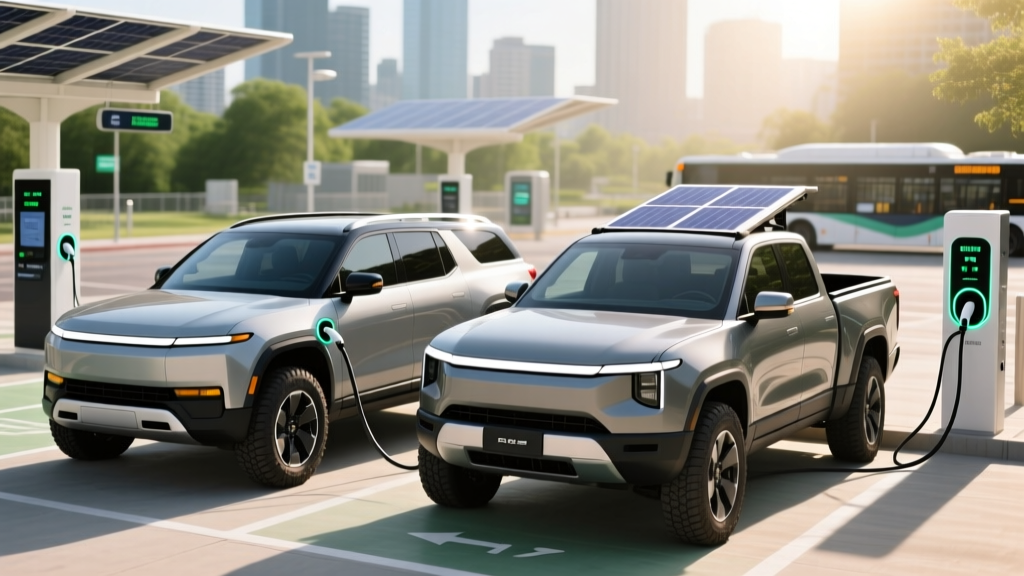
Tesla's Q3 2024 call emphasized continued Supercharger network expansion, and that investment has paid off. As of 2026, the Tesla Supercharger network remains the most reliable DC fast-charging ecosystem in North America, with over 6,500 stalls in the U.S. alone.
| Charging Level | Power (kW) | Miles Added per Hour | Typical Use Case |
|---|---|---|---|
| Level 1 (120V household) | ~1.4 kW | ~3–5 mi/hr | Overnight trickle; emergency top-ups |
| Level 2 (240V, 48A) | 11.5 kW | ~44–54 mi/hr | Home daily charging; full overnight fill |
| DC Fast (V3 Supercharger) | 250 kW peak | ~1,000+ mi/hr (peak) | Road trips; 10–80% in ~25 min |
| DC Fast (V4 Supercharger) | 350 kW peak | ~1,200+ mi/hr (peak) | Cybertruck; newer stalls at select corridors |
Charge-curve reality: Peak kW is not sustained kW. A Model 3 Long Range hitting a V3 Supercharger at low SoC may briefly pull 250 kW, but the curve tapers significantly above 50% SoC. The 10–80% time of ~25 minutes reflects this taper — don't expect a linear 250 kW draw across the entire session. Plan to charge to 80% and move on; the last 20% can take as long as the first 70%.
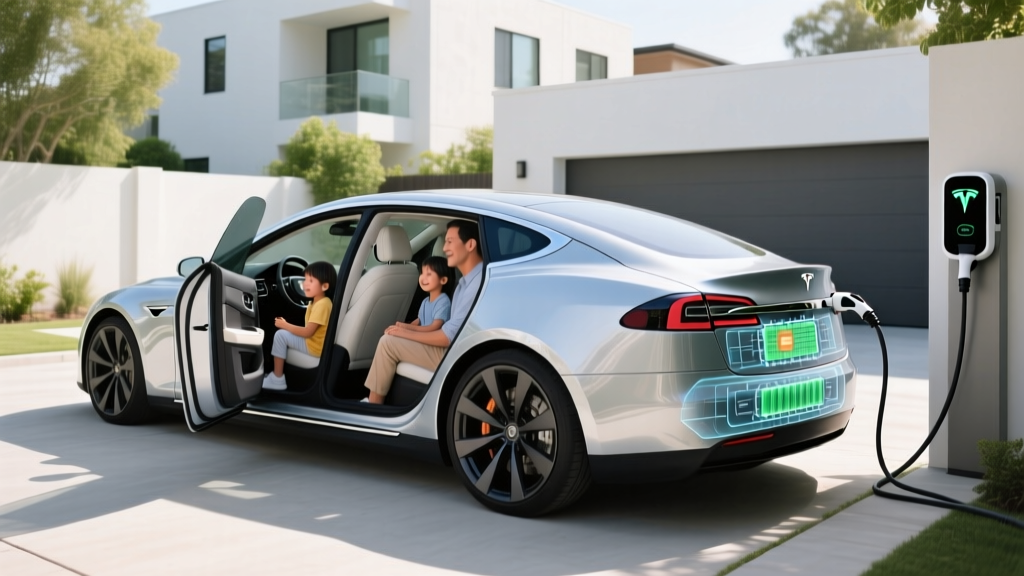
For home Level 2 charging, Tesla's Wall Connector ($420) at 48 amps on a 60A circuit is the recommended setup. Installation typically runs $800–$2,000 depending on panel proximity and whether a service upgrade is needed. Consult a licensed electrician for final specs.
Pricing, Trims, and Federal Tax Credit Eligibility
Tesla's Q3 2024 call made clear the company's commitment to cost reduction, and that strategy continues to drive aggressive pricing in 2026. Here's the current pricing landscape and how the federal §30D tax credit factors in:
| Model / Trim | Base MSRP | As-Tested (typical config) | §30D Credit Eligibility | Effective Price (after max credit) |
|---|---|---|---|---|
| Model 3 RWD | $38,990 | $40,490 | Eligible — up to $7,500 | ~$31,490 |
| Model 3 Long Range AWD | $48,380 | $50,880 | Eligible — up to $7,500 | ~$40,880 |
| Model Y Long Range AWD | $48,380 | $51,380 | Eligible — up to $7,500 | ~$40,880 |
| Model S Long Range | $79,990 | $85,490 | Not eligible (exceeds MSRP cap) | $79,990+ |
| Cybertruck AWD | $79,990 | $89,990 | Not eligible (exceeds MSRP cap for trucks: $80,000) | $79,990+ |
- MSRP caps: Sedans/wagons ≤ $55,000; SUVs/pickups/vans ≤ $80,000.
- Buyer income caps: AGI ≤ $150,000 (single), $225,000 (head of household), $300,000 (joint).
- Battery sourcing: Critical minerals and battery component requirements phase up annually — verify current-year thresholds on IRS.gov §30D.
- Point-of-sale transfer: Eligible buyers can transfer the credit to the dealer at purchase, reducing the out-of-pocket price immediately.
Eligibility varies by buyer. Consult a tax professional before relying on the credit.
The Q3 2024 call's emphasis on COGS reduction directly enabled the Model 3 RWD's sub-$39K price point — a figure that, after the $7,500 credit, makes it one of the most affordable long-range EVs on the market. The Model Y Long Range, now classified as an SUV under the $80,000 cap, also qualifies for the full credit for eligible buyers.
Tech, FSD, and Driver Assistance: What Q3 2024 Revealed
Tesla Autopilot and FSD (Supervised) are SAE Level 2 driver-assistance systems. The driver must remain fully engaged, hands on the wheel (or torque-applied), and eyes on the road at all times. These systems are NOT self-driving. Only Level 4 services like Waymo operate without a human driver in defined areas.
During the Q3 2024 call, Tesla management reported that cumulative FSD miles driven had surpassed 2 billion miles, with meaningful improvements in intervention-free miles per the company's internal data. Key updates reflected in 2026 models include:
- FSD (Supervised) v13 architecture: End-to-end neural network approach replacing legacy heuristic code, yielding smoother lane changes, better unprotected-left-turn handling, and more natural speed management.
- Autopilot (standard): Includes Traffic-Aware Cruise Control and Autosteer. Competent for highway use but requires active supervision.
- Infotainment: 15.4-inch center touchscreen (Model 3/Y), 17-inch (Model S/X), with Netflix/YouTube/theater mode while parked, gaming support, and over-the-air updates.
- Vision-only approach: Tesla continues to rely on cameras without LiDAR or radar, a point of ongoing debate in the ADAS community.
FSD (Supervised) does NOT eliminate the need for driver attention. It may struggle with construction zones, unmapped roads, severe weather, and complex multi-lane intersections. The driver is legally responsible for all vehicle actions at all times. NHTSA continues to monitor ADAS safety data.
Who Should Buy a Tesla in 2026?
- You want access to the most reliable, extensive DC fast-charging network in North America (Supercharger).
- Over-the-air updates and a software-forward ownership experience matter to you.
- You're a daily commuter or road-tripper who benefits from 300+ miles of range and 25-minute fast-charge stops.
- You qualify for the §30D credit and want an effective price in the low $30Ks (Model 3 RWD) or low $40Ks (Model Y LR).
- You prefer physical controls, Apple CarPlay/Android Auto, or a traditional dealer service experience.
- You need a luxury sedan with a premium interior (Model S competes more on performance than materials vs. Mercedes EQS or BMW i7).
- You need a compact EV for tight urban parking (all Teslas are mid-size or larger).
- You're uncomfortable with a vision-only ADAS approach without LiDAR redundancy.
Tesla vs. Key Competitors: Quick Comparison
| Spec | Tesla Model Y LR | Hyundai Ioniq 5 LR AWD | Ford Mustang Mach-E ER AWD |
|---|---|---|---|
| EPA Range | 330 mi | 290 mi | 312 mi |
| Battery | ~75 kWh NMC | 84 kWh NMC | 91 kWh NMC |
| Peak DC Charge | 250 kW | 240 kW | 150 kW |
| 10–80% Time | ~25 min | ~18 min | ~38 min |
| 0–60 mph | 4.8 sec | 5.1 sec | 5.1 sec |
| Base MSRP | $48,380 | $50,200 | $49,995 |
| Charging Network | Supercharger (native) | NACS adapter / Supercharger access | NACS adapter / Supercharger access |
The Ioniq 5 charges faster (thanks to its 800V architecture), and the Mach-E offers a more conventional crossover feel with CarPlay support. But the Model Y's combination of range, Supercharger access, and cargo space remains difficult to match holistically.
Frequently Asked Questions
What is the real-world range of Tesla's 2026 models?
Expect 85–90% of EPA range on the highway and 70–80% in cold weather. A Model 3 LR (EPA 363 mi) delivers roughly 310 mi on a warm highway run and 260–290 mi in freezing temperatures. Always plan trips with a 20% buffer.
How fast does a Tesla charge at home and on the road?
At home on a Level 2 Wall Connector (11.5 kW / 48A), Teslas add 44–54 miles of range per hour, fully replenishing overnight. On DC fast chargers, V3 Superchargers deliver 10–80% in roughly 25 minutes at a peak of 250 kW, tapering above 50% SoC.
How much does a Tesla cost after federal tax credits?
For eligible buyers (meeting income caps and sourcing requirements), the Model 3 RWD drops from $38,990 to approximately $31,490 after the $7,500 §30D credit. The Model Y Long Range drops from $48,380 to roughly $40,880. The Model S and Cybertruck exceed MSRP caps and do not qualify. Verify eligibility on IRS.gov.
Is Tesla worth buying vs. competitors in 2026?
For buyers prioritizing range, Supercharger access, and software features, Tesla remains the default choice. Competitors like the Hyundai Ioniq 5 offer faster charging and CarPlay; the Ford Mach-E offers a more traditional driving feel. Your decision should weigh charging infrastructure access, interior preferences, and ADAS philosophy.
Does Tesla qualify for the federal EV tax credit?
The Model 3 and Model Y qualify for up to $7,500 under IRS §30D for buyers meeting income caps ($150K single / $300K joint) and battery-sourcing requirements. The Model S and Cybertruck are ineligible due to MSRP cap exceedance. Credit availability depends on current-year critical-mineral and battery-component thresholds — always verify before purchase.
What are the biggest pros and cons of buying a Tesla?
Pros: Best-in-class Supercharger network, strong range, OTA updates, low running costs, spacious interiors (especially Model Y), strong safety ratings from NHTSA.
Cons: No Apple CarPlay/Android Auto, minimal physical controls, vision-only ADAS (no LiDAR), inconsistent panel gaps reported by some owners, service center availability varies by region, insurance premiums can be higher than segment average.