The VW-Rivian Partnership: What It Means for Buyers in 2026
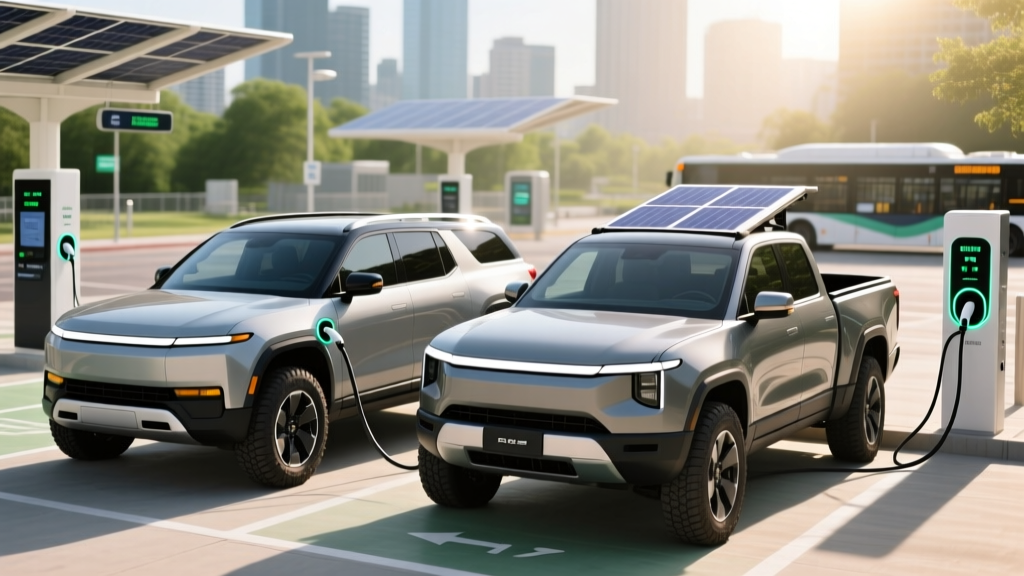
When Volkswagen Group injected up to $5.8 billion into Rivian through a joint-venture Rivian partnership announced in mid-2024, the move sent shockwaves through the EV industry. By 2026, that partnership has begun bearing fruit — not in the form of rebadged vehicles, but through shared electrical architecture, software co-development, and a strengthened balance sheet that has allowed Rivian to accelerate its Gen 2 platform rollout. The 2026 Rivian R1S (SUV) and R1T (truck) are the direct beneficiaries, arriving with more range, faster charging, and sharper pricing than their predecessors.
This review examines the 2026 R1S Dual-Motor and R1T Dual-Motor — the volume sellers in Rivian's lineup — through the lens of real ownership: what range you'll actually see, how quickly they charge, what the tax-credit picture looks like, and whether the VW-backed Rivian is now a safer bet than going it alone.
2026 Rivian R1S and R1T: Core Specifications at a Glance
| Spec | R1S Dual-Motor (Standard) | R1S Dual-Motor (Max Pack) | R1T Dual-Motor (Standard) | R1T Dual-Motor (Max Pack) |
|---|---|---|---|---|
| EPA Range | ~330 mi | ~420 mi | ~340 mi | ~420 mi |
| Battery Capacity (usable) | ~95 kWh | ~141 kWh | ~95 kWh | ~141 kWh |
| Battery Chemistry | NMC (2170 cells) | NMC (2170 cells) | NMC (2170 cells) | NMC (2170 cells) |
| Max DC Fast Charge | 220 kW | 220 kW | 220 kW | 220 kW |
| 10–80% DCFC Time | ~25 min | ~35 min | ~25 min | ~35 min |
| Level 2 Charge Rate | 11.5 kW (~30 mi/hr) | 11.5 kW (~30 mi/hr) | 11.5 kW (~30 mi/hr) | 11.5 kW (~30 mi/hr) |
| 0–60 mph | 4.5 sec | 4.5 sec | 4.5 sec | 4.5 sec |
| Horsepower | 533 hp | 533 hp | 533 hp | 533 hp |
| Drivetrain | Dual-Motor AWD | Dual-Motor AWD | Dual-Motor AWD | Dual-Motor AWD |
| MPGe (combined) | ~73 MPGe | ~70 MPGe | ~76 MPGe | ~72 MPGe |
| Efficiency | ~46 kWh/100 mi | ~48 kWh/100 mi | ~44 kWh/100 mi | ~47 kWh/100 mi |
| Towing Capacity | 7,700 lb | 7,700 lb | 11,000 lb | 11,000 lb |
| Base MSRP | $74,900 | $87,900 | $69,900 | $82,900 |
Note: Specs reflect 2026 model-year estimates based on Rivian's published data and EPA fueleconomy.gov listings. Final EPA certification numbers may vary by ±5 miles. Quad-Motor and Tri-Motor trims are available at higher price points with different performance figures.
Real-World Range: Beyond the EPA Sticker
R1S Max Pack — EPA: 420 mi. In mixed real-world driving (70 mph highway, 72°F, moderate HVAC), expect ~350–370 miles. In cold weather (below 32°F) at highway speeds, plan for ~280–310 miles due to battery resistance and cabin heating loads. The R1S's boxy SUV profile carries a drag penalty above 65 mph that cuts efficiency noticeably.
R1T Max Pack — EPA: 420 mi. Similar highway expectation of ~350–370 miles unloaded. Towing a 5,000-lb trailer at 65 mph drops range to roughly 200–220 miles — a reality all electric trucks face, not unique to Rivian.
Standard Pack (~330–340 mi EPA): Real-world highway expectation is ~275–295 miles in mild weather, ~220–245 miles in cold conditions. Adequate for daily commuting and moderate road trips, but Max Pack is strongly recommended for anyone regularly driving 200+ miles between charging stops.
Rivian's thermal management system has improved with the Gen 2 platform. Battery preconditioning — which warms the pack ahead of a DC fast-charge stop — now engages automatically when a Supercharger or Electrify America station is entered into navigation. This is critical: arriving at a charger with a cold battery can cut peak charge rates in half.
Charging Speed: DC Fast Charge and Home Level 2
The 2026 R1S and R1T both support a peak DC fast-charge rate of 220 kW, an improvement over the ~200 kW peak of earlier models, enabled partly by the software and architecture co-development under the VW-Rivian partnership. However, as with all EVs, peak rate is not sustained rate.
| Charging Method | Power | R1S Standard (~95 kWh) | R1S Max (~141 kWh) |
|---|---|---|---|
| Level 1 (120V household) | ~1.4 kW | ~3–4 mi/hr | ~3–4 mi/hr |
| Level 2 (240V, 48A home charger) | 11.5 kW | ~30 mi/hr | ~30 mi/hr |
| DC Fast Charge (peak) | 220 kW | 10–80% in ~25 min | 10–80% in ~35 min |
| DC Fast Charge (sustained avg.) | ~140–160 kW | ~180 mi in 30 min | ~200 mi in 30 min |
Charging-curve reality: The 220 kW peak holds roughly from 10% to 30% state of charge (SoC). From 30–60%, expect ~170–180 kW. Above 80%, the rate tapers sharply to protect battery health — typically dropping below 50 kW. This is why Rivian (and the industry) quotes 10–80% times rather than 0–100%. If you're road-tripping, plan your stops around 10–80% windows for the fastest turnaround.
For home charging, a 48-amp Level 2 wall connector on a 60-amp circuit delivers the full 11.5 kW, replenishing the Standard Pack overnight in roughly 8–9 hours and the Max Pack in 12–14 hours. Most owners who charge nightly never need public DC fast charging for daily use.
Pricing, Trims, and Federal Tax Credit Eligibility
Rivian's pricing has shifted with the 2026 model year. The dual-motor configurations remain the volume leaders, while the tri-motor and quad-motor trims command significant premiums.
| Trim / Config | Base MSRP | Federal §30D Credit | Effective Price |
|---|---|---|---|
| R1T Dual-Motor Standard | $69,900 | Up to $7,500* | ~$62,400 |
| R1S Dual-Motor Standard | $74,900 | Up to $7,500* | ~$67,400 |
| R1T Dual-Motor Max Pack | $82,900 | Up to $7,500* | ~$75,400 |
| R1S Dual-Motor Max Pack | $87,900 | Up to $7,500* | ~$80,400 |
*Critical tax-credit caveats for 2026 (IRS §30D):
- MSRP cap: Trucks (R1T) must be under $80,000 MSRP; SUVs/vans (R1S) under $80,000. The R1S Max Pack at $87,900 exceeds the cap and does not qualify. The R1T Max Pack at $82,900 also exceeds the $80,000 truck cap. Only Standard Pack trims at $69,900 (R1T) and $74,900 (R1S) are under the limit.
- Buyer income cap: Modified adjusted gross income must not exceed $150,000 (single), $225,000 (head of household), or $300,000 (joint filers).
- Battery sourcing: A percentage of critical minerals and battery components must be sourced from the U.S. or FTA partners. Rivian has worked to qualify, but the exact credit amount ($3,750 or $7,500) depends on current-year sourcing thresholds. Verify on IRS.gov before purchasing.
- Point-of-sale transfer: As of 2024+, eligible buyers can transfer the credit to the dealer at purchase, reducing the out-of-pocket price immediately rather than waiting for tax filing.
Consult a tax professional and the official IRS Clean Vehicle Credit page for your specific eligibility. Rules are subject to legislative change.
Interior, Cargo Space, and Standout Technology
The R1S seats up to seven in three rows, though the third row is best suited for children or short trips — legroom measures approximately 30 inches back there. With the third row folded, cargo volume reaches roughly ~58 cu ft; fold both rear rows and you get a van-like ~105 cu ft. The R1T offers a 4.5-foot bed with a lockable tonneau cover and the signature Gear Tunnel — a pass-through compartment behind the cab that holds roughly 11 cu ft of gear, ideal for camping equipment or golf bags.
Tech highlights:
- 15.6-inch center touchscreen running Rivian's in-house OS — responsive, with native route planning that factors in charging stops and battery preconditioning.
- Rivian Driver+ (SAE Level 2): Adaptive cruise control with lane centering on mapped highways. This is a hands-on, eyes-on driver-assist system — not autonomous driving. Comparable to Ford BlueCruise or GM Super Cruise in capability, though Rivian's hands-on-wheel requirement is stricter than Ford's eyes-free zones.
- Over-the-air (OTA) updates: The VW partnership's shared software architecture is expected to enhance OTA reliability and feature velocity through 2026 and beyond.
- Camp Kitchen option: A slide-out kitchen system that integrates with the Gear Tunnel — a niche but beloved feature among overlanding buyers.
- Powered tonneau and frunk: The R1T's front trunk (frunk) offers ~11 cu ft of lockable storage with a drain plug for use as a cooler.
Notable drawbacks: The R1S third row remains cramped for adults. Infotainment, while improved, lacks Apple CarPlay and Android Auto — Rivian insists on its native system, which frustrates some buyers accustomed to phone mirroring. Service center density is still limited outside major metros; the VW partnership may eventually expand the service network, but that's a future benefit, not a current reality.
Battery Warranty, Longevity, and the VW Partnership Factor
Rivian covers the battery pack and drive units with an 8-year / 175,000-mile warranty, with a capacity retention threshold of 70% — meaning Rivian will repair or replace the pack if it degrades below 70% of original capacity within that window. This is competitive with Tesla's 8-year/120,000–150,000-mile coverage and slightly more generous on mileage.
The NMC (nickel manganese cobalt) chemistry used in both Standard and Max packs offers high energy density but is more susceptible to calendar degradation if routinely held at 100% SoC. Rivian recommends daily charging to 80–90% and reserving 100% charges for road trips. In Recurrent Auto's battery data, NMC packs from comparable EVs show roughly 5–8% degradation after 100,000 miles — well within Rivian's warranty buffer.
The VW-Rivian partnership adds a layer of long-term confidence. VW's $5.8B commitment signals that Rivian will have the capital to honor warranties, source cells at scale, and invest in next-gen LFP (lithium iron phosphate) chemistry for future base trims — though no LFP R1S/R1T has been announced for 2026. For buyers worried about Rivian's financial staying power compared to legacy automakers, the VW backing is a meaningful de-risk factor.
Who Should Buy the 2026 Rivian R1S or R1T?
Choose the R1S if: You need three-row seating for family duty, want genuine off-road capability (8.9 inches of ground clearance with air suspension, up to 14.9 inches in Max mode), and plan regular road trips where the Max Pack's 420-mile EPA range reduces charging-stop anxiety.
Choose the R1T if: You want a daily-drivable pickup with 11,000-lb towing, the Gear Tunnel for adventure gear, and don't need more than five seats. The R1T's lower starting price ($69,900) makes it the easier tax-credit qualifier.
Look elsewhere if: You need Apple CarPlay/Android Auto, live far from a Rivian service center, or primarily drive in extreme cold where range loss of 25–35% makes the Standard Pack uncomfortably tight for long commutes.
Pros and Cons
- Class-leading EPA range with Max Pack (420 mi)
- Genuine off-road capability with air suspension
- Strong DC fast charging (220 kW peak, ~25 min 10–80%)
- VW partnership adds financial stability and software R&D
- Generous 8-yr/175,000-mi battery warranty
- R1T Gear Tunnel and frunk offer unique utility
- Over-the-air updates continue to add features
- Max Pack trims exceed $80K MSRP cap — no federal tax credit
- No Apple CarPlay or Android Auto
- R1S third row is cramped for adults
- Service center network still limited in rural areas
- Real-world highway range 15–20% below EPA sticker
- Efficiency (44–48 kWh/100 mi) lags sleeker EVs
- Premium pricing even before options
Frequently Asked Questions
What is the real-world range of the 2026 Rivian R1S and R1T?
With the Max Pack (EPA 420 mi), expect ~350–370 miles in mild-weather highway driving and ~280–310 miles in freezing conditions. Standard Pack models (EPA 330–340 mi) deliver ~275–295 miles highway in mild weather and ~220–245 miles in cold. Towing cuts range roughly in half regardless of pack size.
How fast does the Rivian R1S/R1T charge at home and on the road?
On a 48-amp Level 2 home charger (11.5 kW), both models add roughly 30 miles per hour of charging, fully replenishing overnight. On DC fast chargers, the 220 kW peak enables a 10–80% charge in ~25 minutes (Standard) or ~35 minutes (Max). Sustained average rates are closer to 140–160 kW across a typical charging session.
Does the 2026 Rivian R1S or R1T qualify for the federal EV tax credit?
The R1T Dual-Motor Standard ($69,900) and R1S Dual-Motor Standard ($74,900) fall under the $80,000 MSRP cap and may qualify for up to $7,500 under IRS §30D, subject to buyer income limits and battery-sourcing requirements. Max Pack trims exceed the cap and do not qualify. Always verify current eligibility at IRS.gov and with a tax professional.
How does the VW-Rivian partnership affect me as a buyer?
The partnership provides Rivian with capital stability and shared software/electrical-architecture development. For buyers, this means reduced risk of the company folding, potentially faster feature updates via OTA, and the prospect of expanded service infrastructure over time. It does not mean VW branding or shared dealerships — Rivian remains an independent brand with its own direct-sales model.
Is the Rivian R1T worth buying over the Ford F-150 Lightning or Chevy Silverado EV?
The R1T wins on driving dynamics, off-road capability, and range (420 mi Max vs. ~320 mi for the Lightning Extended Range). The F-150 Lightning wins on interior space, service network breadth, and lower entry pricing. The Silverado EV offers the longest range (up to ~440 mi EPA on 4WT trim) but is larger and less agile. Choose Rivian if you value adventure-oriented design and driving refinement; choose Ford or Chevy if dealer proximity and work-truck utility are priorities.
What battery chemistry does Rivian use, and does it affect longevity?
The 2026 R1S and R1T use NMC (nickel manganese cobalt) lithium-ion cells in 2170 format. NMC offers high energy density, enabling the 420-mile Max Pack, but is more sensitive to sustained high-SoC storage than LFP. Rivian's 8-year/175,000-mile warranty with a 70% retention floor provides strong protection. For maximum longevity, charge to 80–90% daily and avoid leaving the vehicle at 100% SoC for extended periods.