Every Tesla earnings call drops a payload of data that Wall Street parses for margins and delivery guidance — but for EV shoppers, the real value is buried in the product roadmap, battery chemistry updates, and pricing signals. The Tesla earnings call transcript Q2 2025 was no exception. With the refreshed Model Y (internally dubbed "Juniper") now fully ramped in production and Model 3 Highland settling into its second model year, Tesla's mid-2025 financial briefing gave us the clearest picture yet of what the lineup looks like heading into 2026.
This article translates the key takeaways from that call into the data points that actually matter if you're considering a Tesla purchase: real-world range, charging speeds, battery chemistry, pricing after tax credits, and how the current lineup stacks up against an increasingly competitive field.
What the Q2 2025 Earnings Call Revealed About Tesla's Current Lineup
Tesla's Q2 2025 call, held in late July, confirmed several things buyers have been watching closely:
- Model Y Juniper has completed its global production ramp, with the refreshed crossover now accounting for the majority of Tesla's quarterly deliveries.
- Battery chemistry shifts continue: LFP (lithium iron phosphate) packs now power all standard-range RWD variants, while NMC (nickel manganese cobalt) remains in Long Range and Performance trims for energy density.
- Gross margins improved modestly quarter-over-quarter, signaling that Tesla's recent price cuts may have found a floor — good news for buyers who've been timing a purchase.
- FSD (Supervised) take-rate and subscription revenue were highlighted as growing contributors, though Tesla reiterated it remains a SAE Level 2 driver-assist system requiring full driver engagement.
For buyers, the practical upshot: the 2026 model-year Tesla lineup is the most settled it's been in two years. No imminent refreshes, no surprise discontinuations. What you see on the configurator is what you'll drive home.
2026 Tesla Model Y: Range, Battery, and Efficiency
The refreshed Model Y remains Tesla's volume leader and the best-selling EV globally. Here's the spec breakdown that matters:
| Spec | Model Y RWD | Model Y Long Range AWD | Model Y Performance |
|---|---|---|---|
| EPA Range | 274 mi | 320 mi | 292 mi |
| Battery (usable) | ~60 kWh (LFP) | ~78 kWh (NMC) | ~78 kWh (NMC) |
| Drivetrain | RWD, single motor | AWD, dual motor | AWD, dual motor |
| Horsepower | ~295 hp | ~384 hp | ~456 hp |
| 0-60 mph | 6.6 sec | 4.8 sec | 3.5 sec |
| Efficiency | 125 MPGe / 27 kWh/100mi | 122 MPGe / 28 kWh/100mi | 111 MPGe / 30 kWh/100mi |
| Cargo (rear seats up) | 34.3 cu ft (76 cu ft folded) | ||
| Base MSRP | $44,990 | $48,990 | $52,990 |
Charging Speed: DC Fast Charge and Home Level 2
Charging remains a Tesla strong suit, thanks to the Supercharger network — now open to other brands via the NACS connector standard Tesla pioneered. But peak kW numbers only tell part of the story.
| Charging Level | Model Y RWD (LFP) | Model Y Long Range (NMC) |
|---|---|---|
| Level 1 (120V, 12A) | ~3 mi/hr | ~4 mi/hr |
| Level 2 (240V, 48A / 11.5 kW) | ~37 mi/hr | ~44 mi/hr |
| DC Fast Charge (peak) | 170 kW | 250 kW |
| 10-80% DCFC Time | ~28 min | ~25 min |
Charging-curve reality check: The Long Range's 250 kW peak is sustained only between roughly 10-30% state of charge. Above 50%, the curve tapers significantly — by 70% SoC, you're typically seeing 80-100 kW. This is normal lithium-ion behavior, but it means the "15-minute" marketing claim applies only to partial fills. Plan 25-30 minutes for a realistic 10-80% stop on a road trip.
For home charging, Tesla's Wall Connector ($420) delivers up to 11.5 kW on a 60-amp circuit. Most Model Y owners report 0-100% overnight fills in 7-9 hours on Level 2, which is more than adequate for daily use. If your home has a 200-amp electrical panel, installation typically runs $800-$2,000 including the breaker, wiring, and permit — but older homes may need a panel upgrade ($2,000-$5,000+). Always get a quote from a licensed electrician before committing.
Pricing, Tax Credits, and Total Cost
Tesla's pricing has stabilized after the aggressive cuts of 2023-2024. Here's where the lineup stands and how the federal tax credit factors in:
| Trim | Base MSRP | Est. Destination | Potential §30D Credit | Effective Price |
|---|---|---|---|---|
| Model Y RWD | $44,990 | $1,390 | Up to $7,500* | ~$38,880 |
| Model Y Long Range AWD | $48,990 | $1,390 | Up to $7,500* | ~$42,880 |
| Model Y Performance | $52,990 | $1,390 | Up to $7,500* | ~$46,880 |
| Model 3 RWD | $38,990 | $1,390 | Up to $7,500* | ~$32,880 |
| Model 3 Long Range AWD | $42,490 | $1,390 | Up to $7,500* | ~$36,380 |
*Critical tax credit caveats: The IRS §30D credit is not automatic. Eligibility depends on:
- Buyer income caps: AGI must not exceed $300,000 (joint), $225,000 (head of household), or $150,000 (single).
- MSRP caps: Vans/SUVs/pickups capped at $80,000; sedans at $55,000. All current Model Y and Model 3 trims fall under these limits.
- Battery sourcing: The full $7,500 requires meeting both critical-minerals and battery-component sourcing thresholds, which tighten annually. Tesla's LFP packs (primarily sourced from CATL in China) have faced scrutiny on the component requirement — check the latest IRS guidance on fueleconomy.gov before purchasing.
- Point-of-sale transfer: Since Jan 2024, you can transfer the credit to the dealer at purchase, reducing your out-of-pocket cost immediately rather than waiting for a tax refund.
Consult a tax professional to confirm your personal eligibility. Rules are subject to legislative change.
Technology, Driver Assist, and Interior
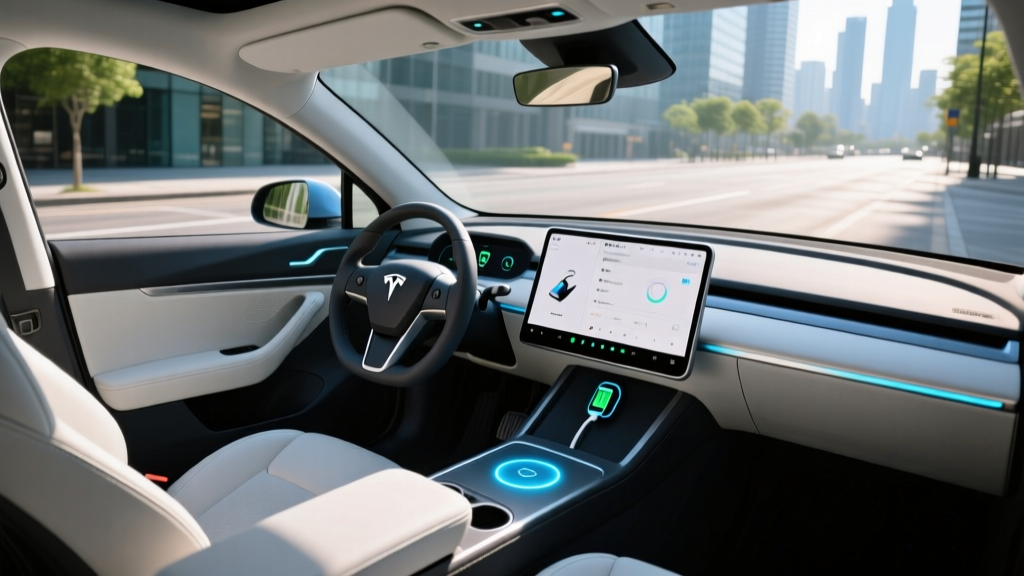
The Juniper-refreshed Model Y brought meaningful interior upgrades: ventilated front seats, ambient lighting, a rear-seat touchscreen, power-folding second row, and improved cabin insulation that noticeably reduces road noise at highway speed. The 15.4-inch front touchscreen runs Tesla's latest software with wireless CarPlay still notably absent — Tesla's ecosystem remains proprietary.
Autopilot and FSD (Supervised): Every Tesla ships with basic Autopilot (traffic-aware cruise control + lane centering). The $8,000 FSD (Supervised) upgrade adds automated lane changes, traffic light/stop sign recognition, and city-street navigation. However, this remains SAE Level 2 — you must keep your hands on the wheel and eyes on the road at all times. Tesla's camera-only vision approach (no LiDAR or radar) works well in clear conditions but can struggle in heavy rain, fog, or construction zones.
How the 2026 Tesla Lineup Compares to Key Rivals
The earnings call emphasized Tesla's competitive position, so let's ground that in specs. Here's the Model Y Long Range AWD against its closest competitors:
| Attribute | Tesla Model Y LR AWD | Hyundai Ioniq 5 Limited AWD | Ford Mustang Mach-E Premium AWD ER |
|---|---|---|---|
| EPA Range | 320 mi | 290 mi | 312 mi |
| Battery | ~78 kWh NMC | 84 kWh NMC | 91 kWh NMC |
| Peak DC Charge | 250 kW | 350 kW (800V) | 150 kW |
| 10-80% DCFC | ~25 min | ~18 min | ~38 min |
| 0-60 mph | 4.8 sec | 4.5 sec | 5.1 sec |
| Cargo (rear up) | 34.3 cu ft | 27.2 cu ft | 29.7 cu ft |
| Base MSRP | $48,990 | $54,200 | $51,975 |
| NACS Native? | Yes | 2025+ models | Adapter required |
The verdict: The Model Y still wins on cargo space, Supercharger network access, and software integration. The Ioniq 5 charges noticeably faster on 800V architecture (a real advantage on road trips). The Mach-E has improved but lags on DC charge speed. None of the three is a bad choice — it depends on your priorities.
Who Should Buy a Tesla in 2026?
Choose Tesla if:
- You road-trip frequently and want the most reliable, widespread DC fast-charging network (Supercharger coverage remains unmatched in rural corridors).
- You value over-the-air updates that add features post-purchase.
- Cargo capacity matters — the Model Y's 76 cu ft with seats folded leads the compact EV SUV class.
- You want the lowest effective price after the §30D credit in the premium EV crossover segment.
Look elsewhere if:
- You want the fastest possible DC charging (Hyundai/Kia's 800V platform is 7-10 minutes quicker per stop).
- Apple CarPlay/Android Auto integration is non-negotiable.
- You prefer a traditional dealership experience with in-person service rather than Tesla's mobile-ranger/service-center model.
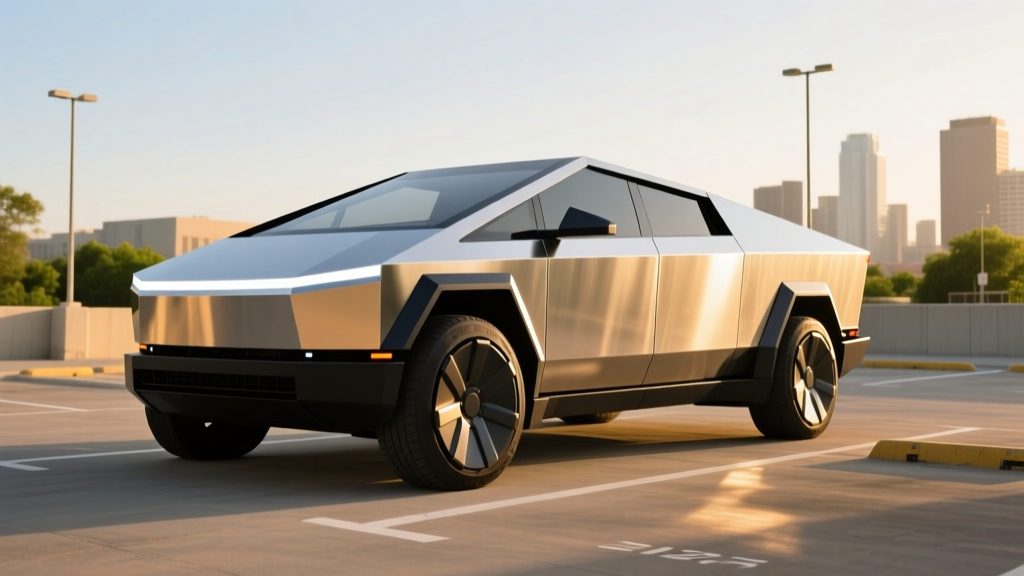
- You need a truck bed or three-row seating (wait for Cybertruck availability updates or consider the Rivian R1S).
Warranty and Long-Term Ownership
Tesla's warranty structure is competitive but not class-leading:
- Basic vehicle: 4 years / 50,000 miles
- Battery & drive unit (Long Range/Performance): 8 years / 120,000 miles, with a minimum 70% capacity retention guarantee
- Battery & drive unit (RWD/LFP): 8 years / 100,000 miles, 70% retention
The 70% retention threshold is the industry standard. In practice, Tesla's NMC packs have shown roughly 12-15% degradation at 150,000 miles based on fleet data, and LFP chemistry tends to degrade even more slowly over calendar life while offering a higher cycle count. Out-of-warranty battery replacement remains expensive — $12,000-$16,000 for a Model Y pack — but the data suggests most owners won't need one within typical ownership periods.
Frequently Asked Questions
What is the real-world range of the 2026 Tesla Model Y?
The Long Range AWD carries an EPA estimate of 320 miles. In real-world highway driving at 70-75 mph, expect 265-285 miles. In cold weather (below freezing), range can drop to 220-250 miles without preconditioning. The RWD model's 274 EPA miles translates to roughly 225-240 highway, 190-210 in cold conditions.
How fast does the Model Y charge at home and on the road?
On a home Level 2 charger (240V, 48A), the Model Y adds roughly 37-44 miles per hour, fully charging overnight. On a V3 Supercharger (250 kW peak), the Long Range achieves 10-80% in approximately 25 minutes, though the charging curve tapers substantially above 50% state of charge.
Does the Tesla Model Y qualify for the $7,500 federal EV tax credit?
All Model Y trims fall under the $80,000 MSRP cap for SUVs, and Tesla's US assembly satisfies domestic production requirements. However, the full $7,500 depends on battery-component and critical-minerals sourcing thresholds that tighten annually. The LFP (RWD) pack, sourced largely from CATL, may not meet the battery-component requirement in all model years. Always verify current eligibility on fueleconomy.gov and consult a tax professional.
Is the Tesla Model Y worth buying over the Hyundai Ioniq 5 or Ford Mach-E?
The Model Y leads in cargo space (34.3 cu ft vs 27-30 for rivals), Supercharger network access, and effective price after tax credits. The Ioniq 5 charges faster on DC (18 min vs 25 min, 10-80%). The Mach-E offers a more traditional dealership experience. If road-trip charging infrastructure and cargo volume are top priorities, the Model Y retains the edge.
What are the biggest pros and cons of the 2026 Model Y?
- Class-leading cargo volume (76 cu ft folded)
- Supercharger network — most reliable DC charging in North America
- Strong efficiency (27-30 kWh/100mi) reduces charging costs
- OTA updates continuously add features
- LFP chemistry in RWD allows 100% daily charging without degradation concern
- No Apple CarPlay or Android Auto
- DC charge speed (250 kW peak) lags 800V competitors (Ioniq 5 at 350 kW)
- FSD remains Level 2 despite $8,000 price tag and "Supervised" branding
- Service model (mobile ranger / limited centers) frustrates some owners
- Ride quality on Performance trim is firm for daily commuting
Did the Q2 2025 earnings call announce any new Tesla models?
Tesla referenced "more affordable models" in its pipeline during the Q2 2025 call but provided no firm timeline, pricing, or specifications. These are considered announced/preliminary and should not factor into a near-term purchase decision. The current Model 3 and Model Y lineup represents Tesla's available, production-ready offerings for 2026.
Sources: fueleconomy.gov (EPA range and efficiency data), IRS §30D Clean Vehicle Credit guidance, Tesla Q2 2025 earnings call transcript and investor deck.