If you own or are considering a Tesla Model 3 or Model Y, you've likely encountered the "Premium Connectivity" prompt on the in-car screen. For 2025 model-year vehicles, Tesla continues to bundle this subscription as a trial period before requiring a $99/year (or $9.99/month) fee. But what exactly do you get, and is it worth the recurring cost? This review examines every Premium Connectivity feature, ties it to the hardware and software platform of the current Model 3 Highland and refreshed Model Y Juniper, and gives you the full ownership picture — range, charging, pricing, and tax credits included.
What Tesla Premium Connectivity Actually Includes
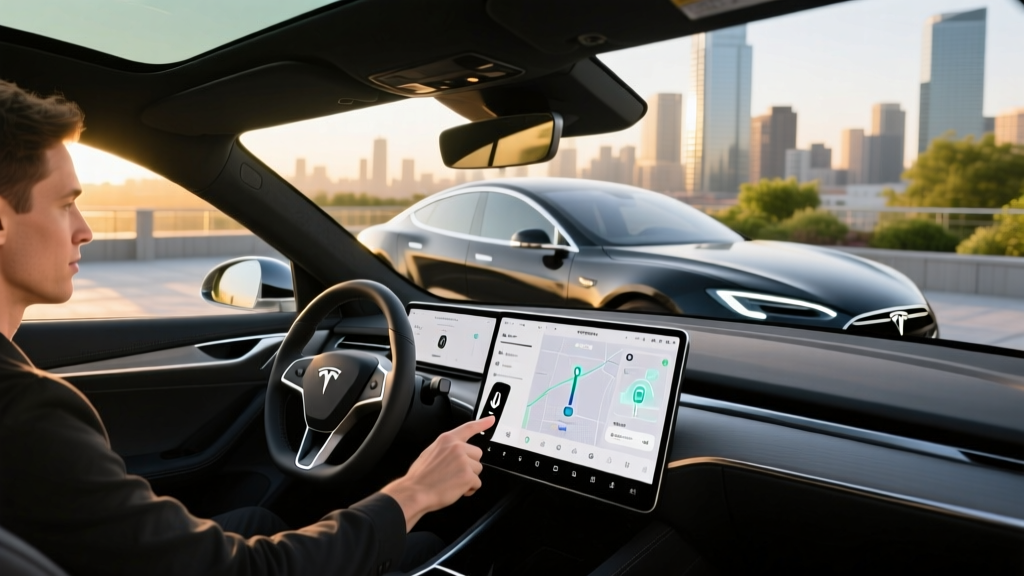
Standard Connectivity — which comes free on every Tesla — covers basic navigation, Bluetooth streaming, and over-the-air (OTA) software updates via Wi-Fi. Premium Connectivity unlocks the cellular-dependent features that turn your Tesla into a rolling smart device:
- Live Traffic Visualization: Real-time congestion overlays on the navigation map, enabling dynamic rerouting around slowdowns.
- Satellite-View Maps: High-resolution aerial imagery layered onto the map, useful for identifying parking lots, trailheads, and charging station layouts.
- Video Streaming: Netflix, YouTube, Twitch, and Disney+ playback on the center touchscreen — available only while parked.
- Music Streaming via Bluetooth & Cellular: Native Spotify, Tidal, and Tesla's own streaming service without needing your phone connected.
- Caraoke: Lyrics-synced karaoke with a library of thousands of songs, streamed over cellular.
- Internet Browser: Full Chromium-based web browser accessible from the touchscreen.
- Sentry Mode Live Camera Access: View your car's external cameras remotely from the Tesla mobile app — a security feature that streams over LTE.
- Dashcam Viewer: Review and download dashcam clips directly on the car's screen without pulling the USB drive.
For 2025, Tesla has not changed the feature set significantly from 2024. The key differentiator remains cellular data delivery: without Premium Connectivity, these features either disappear entirely or require you to tether your phone's hotspot — a clunky workaround that drains your mobile battery and eats into your phone plan's data cap.
The Vehicles Behind the Features: Model 3 and Model Y Specs
Premium Connectivity is a software layer that sits on top of Tesla's current hardware. To evaluate whether the subscription is worth it, you need to understand the vehicles it runs on. Here are the core specifications for the 2025 lineup:
| Spec | 2025 Model 3 Long Range AWD | 2025 Model Y Long Range AWD |
|---|---|---|
| EPA Range | 341 miles | 320 miles |
| Battery Capacity | ~79 kWh usable (NMC) | ~79 kWh usable (NMC) |
| Drivetrain | Dual-Motor AWD | Dual-Motor AWD |
| Horsepower | 346 hp | 384 hp |
| 0-60 mph | 4.2 seconds | 4.8 seconds |
| MPGe (Combined) | 132 MPGe | 122 MPGe |
| Efficiency | 25 kWh/100mi | 28 kWh/100mi |
| Max DC Fast Charge | 250 kW | 250 kW |
| 10-80% DC Charge Time | ~25 minutes | ~25 minutes |
| Level 2 Home Charging | 11.5 kW (~44 mi/hr) | 11.5 kW (~44 mi/hr) |
| Cargo Volume | 23 cu ft (rear) + 3 cu ft frunk | 30 cu ft (rear) + 4 cu ft frunk |
| Rear Legroom | 35.3 in | 37.0 in |
| Battery Warranty | 8 years / 120,000 miles | 8 years / 120,000 miles |
| Base MSRP | $47,740 | $48,240 |
The EPA-estimated 341 miles (Model 3) and 320 miles (Model Y) assume a mix of city and highway driving at moderate temperatures. In sustained 75-mph highway driving, expect roughly 280–300 miles from the Model 3 and 265–285 miles from the Model Y. In sub-freezing temperatures (below 32°F), range can drop 20–30%, bringing real-world figures down to 220–250 miles. Preconditioning the battery while plugged in mitigates some cold-weather loss, and the heat pump (standard on all 2025 models) helps cabin efficiency.
Charging Speed: From Home to the Supercharger Network
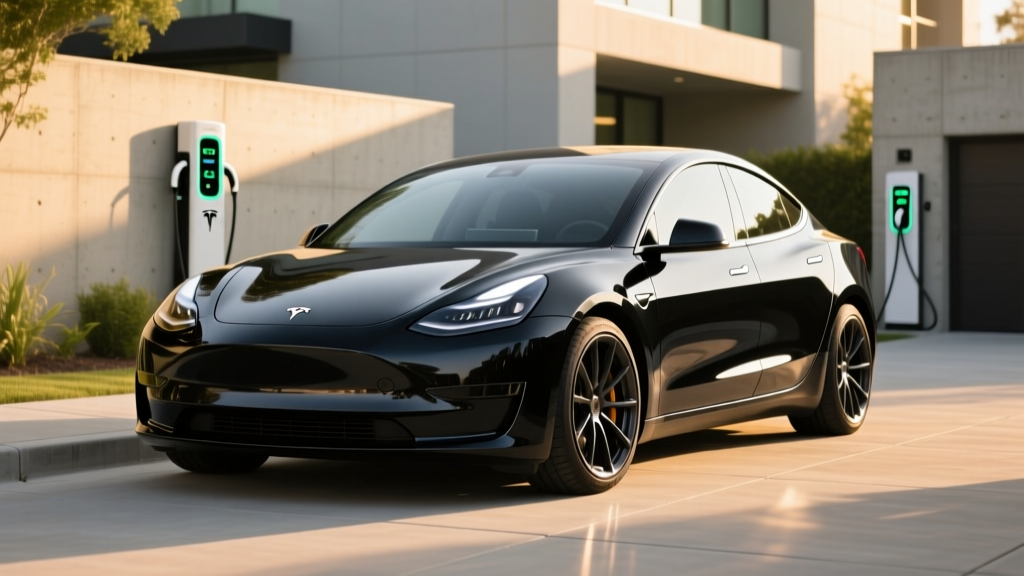
The 2025 Model 3 and Model Y both use a 400-volt architecture with a peak DC fast-charge rate of 250 kW on V3 Superchargers. Here's what that translates to in practice:
| Charging Method | Power (kW) | Miles Added Per Hour | Notes |
|---|---|---|---|
| Level 1 (120V outlet) | ~1.4 kW | ~3–5 mi/hr | Emergency/trickle only |
| Level 2 (240V, Wall Connector) | 11.5 kW | ~44 mi/hr | Full overnight charge in ~7–8 hrs |
| DC Fast (V3 Supercharger) | Peak 250 kW | ~1,000 mi/hr (peak) | 10-80% in ~25 min; tapers above 80% |
| DC Fast (V4 Supercharger) | Up to 250 kW* | Similar to V3 | *Model 3/Y limited to 250 kW even on V4 posts |
Charging curve reality: The 250 kW peak is only sustained between roughly 10–30% state of charge (SoC). From 30–60%, the rate tapers to approximately 150–170 kW, and above 80% it drops further to under 50 kW to protect battery longevity. This means a 10–80% session takes about 25 minutes, but a 10–95% session can stretch past 45 minutes. Plan road-trip stops accordingly — charging to 80% and moving on is almost always faster than waiting for a full battery.
At home, the Tesla Wall Connector on a 60-amp circuit delivers 11.5 kW (48 amps continuous), adding roughly 44 miles of range per hour. A full charge from 10% takes about 7–8 hours — easily accomplished overnight. Installation costs vary widely: expect $800–$2,000 if your electrical panel has spare capacity, or $2,500–$5,000+ if a panel upgrade to 200 amps is needed. Always consult a licensed electrician for a site-specific quote.
Pricing, Tax Credits, and the Connectivity Cost
Here's what the 2025 Model 3 and Model Y cost before and after incentives:
| Trim | Base MSRP | Est. Federal Credit (§30D) | Effective Price |
|---|---|---|---|
| Model 3 RWD | $38,990 | Up to $7,500* | ~$31,490* |
| Model 3 Long Range AWD | $47,740 | Up to $7,500* | ~$40,240* |
| Model 3 Performance | $52,990 | Up to $7,500* | ~$45,490* |
| Model Y Long Range AWD | $48,240 | Up to $7,500* | ~$40,740* |
| Model Y Performance | $52,490 | Up to $7,500* | ~$44,990* |
*IRS §30D Federal Tax Credit Eligibility — Critical Caveats: The $7,500 credit is not automatic. Per IRS guidelines, you must meet all of the following:
- Income caps: Modified AGI ≤ $150,000 (single), $225,000 (head of household), $300,000 (joint).
- MSRP caps: Vehicle MSRP must not exceed $55,000 for sedans (Model 3) or $80,000 for SUVs/trucks (Model Y).
- Battery sourcing: A percentage of critical minerals and battery components must be sourced from the U.S. or free-trade-agreement partners. These thresholds increase annually, and eligibility can change mid-year.
- Point-of-sale transfer: As of 2024, buyers can transfer the credit to the dealer at purchase, reducing the out-of-pocket price immediately — but you must still meet income requirements at tax-filing time, or the credit is recaptured.
Always verify current eligibility on irs.gov and consult a tax professional before relying on the credit in your purchase decision.
The Premium Connectivity cost in context: At $99/year ($8.25/month), Premium Connectivity is a minor line item compared to the vehicle's purchase price. New 2025 Teslas include a 30-day free trial of Premium Connectivity. After that, you either subscribe or lose access to the features listed above. For comparison, BMW charges $250/year for its ConnectedDrive suite, and GM's OnStar plans range from $15–$45/month.
Standout Tech and Notable Drawbacks
Pros
- Industry-leading Supercharger network reliability — consistently rated highest for uptime and plug-and-charge ease
- OTA updates continuously add features; your car improves over time without dealer visits
- Best-in-class efficiency: the Model 3 LR achieves 132 MPGe combined, reducing per-mile electricity cost
- Minimalist interior with excellent build quality on the refreshed Highland/Juniper platforms
- Ancillary features (Sentry Mode live view, dashcam viewer) add genuine security value
Cons
- Touchscreen-dependent controls: no physical buttons for climate, wipers, or glovebox — distracting while driving
- Turn signal stalks removed on Model 3 Highland; signals are now on the steering wheel rim (polarizing)
- No Apple CarPlay or Android Auto — you're locked into Tesla's ecosystem
- Rear visibility in Model Y is limited; the rear camera helps but isn't a full substitute
- Premium Connectivity feels like a feature that should be standard at this price point
Autopilot and FSD (Supervised): Every 2025 Tesla ships with basic Autopilot (traffic-aware cruise control and lane centering). Full Self-Driving (Supervised) is an $8,000 one-time purchase or $99/month add-on that enables automatic lane changes, traffic light/stop sign recognition, and city-street navigation. Crucially, FSD is an SAE Level 2 system — the driver must remain fully engaged, hands on the wheel, eyes on the road at all times. It is not autonomous driving. Only Level 4 services like Waymo operate without a human driver in defined geofenced areas.
Who Should Buy This EV — And Who Should Subscribe to Premium?
Buy a Tesla Model 3 or Model Y if:
- You have reliable home charging access (garage or driveway with a 240V circuit).
- You value efficiency and low per-mile cost — the Model 3 LR at 25 kWh/100mi costs roughly $3.75 to "fill" at the national average residential rate of $0.15/kWh.
- You take regular road trips and want access to the most reliable DC fast-charging network in the U.S.
- You're a tech-forward buyer who appreciates OTA updates and integrated software.
Subscribe to Premium Connectivity if:
- You rely on real-time traffic navigation daily (commuters in metro areas benefit most).
- You use Sentry Mode frequently and want remote camera access for peace of mind.
- You regularly stream music natively without wanting to connect your phone.
- You want satellite-view maps for outdoor recreation or unfamiliar parking areas.
Skip Premium Connectivity if:
- You primarily drive locally and know your routes — basic navigation works fine without live traffic.
- You always connect your phone for music via Bluetooth (Spotify/Apple Music still work without the subscription).
- You're comfortable tethering your phone's hotspot for occasional video streaming or browser use.
Tesla Premium Connectivity vs. Competitor Subscriptions
At $99/year, Tesla's Premium Connectivity is among the most affordable connected-car subscriptions in the market. Here's how it compares:
- BMW ConnectedDrive: ~$250/year for remote services, live traffic, and real-time navigation. No video streaming.
- GM OnStar Premium: ~$45/month ($540/year) for navigation, Wi-Fi hotspot, and remote access.
- Hyundai Bluelink: Free for the first 3 years on new EVs; ~$199/year afterward for remote and navigation services.
- Ford BlueCruise: $75/year for hands-free driving on mapped highways (a driver-assist feature, not connectivity).
Tesla's plan stands out for its low price and breadth of entertainment features. The trade-off is ecosystem lock-in — there's no CarPlay fallback if you dislike Tesla's native apps.
Frequently Asked Questions
What is the real-world range of the 2025 Tesla Model Y?
The EPA rates the Model Y Long Range AWD at 320 miles. In real-world highway driving at 75 mph, expect approximately 265–285 miles. In cold weather (below freezing), that can drop to 220–250 miles. Preconditioning and using seat heaters instead of cabin heat can recover some range.
How fast does the Model 3 charge at a Supercharger?
The 2025 Model 3 Long Range peaks at 250 kW on V3 and V4 Superchargers, achieving a 10–80% charge in approximately 25 minutes. The charge rate tapers significantly above 80% to protect battery health, so a 10–95% session takes roughly 45 minutes.
How much does a 2025 Tesla cost after the federal tax credit?
If you qualify for the full $7,500 §30D credit, the Model 3 RWD drops to approximately $31,490 and the Model Y Long Range to roughly $40,740. Eligibility depends on your income, the vehicle's MSRP, and battery-sourcing requirements that change annually. Verify on irs.gov before purchasing.
Is Premium Connectivity included with a new Tesla purchase?
New 2025 Teslas include a 30-day free trial of Premium Connectivity. After that, it costs $99/year or $9.99/month. It is not included permanently with the vehicle purchase.
Is Tesla's FSD actually self-driving?
No. Full Self-Driving (Supervised) is an SAE Level 2 driver-assistance system. The driver must remain fully attentive, with hands on the steering wheel and eyes on the road. It does not replace the driver. True autonomous (Level 4) driving is currently only available through commercial robotaxi services like Waymo in limited geofenced areas.
Does the 2025 Model 3 or Model Y qualify for the federal EV tax credit?
Both vehicles are eligible for up to $7,500 under §30D, provided you meet income caps ($150K single / $300K joint), the MSRP is within limits ($55K sedans / $80K SUVs), and battery-sourcing requirements are met. Eligibility can shift as sourcing thresholds tighten each year. Check the IRS clean vehicle credit page for current status.
Can I use Premium Connectivity features without subscribing?
Most Premium features require the subscription. However, basic navigation, Bluetooth audio streaming, and OTA updates work without it. You can also tether your phone's mobile hotspot to access some features like the browser or video streaming, though this is less convenient and uses your phone's data plan.