Why BMW Is Sunsetting the US iX
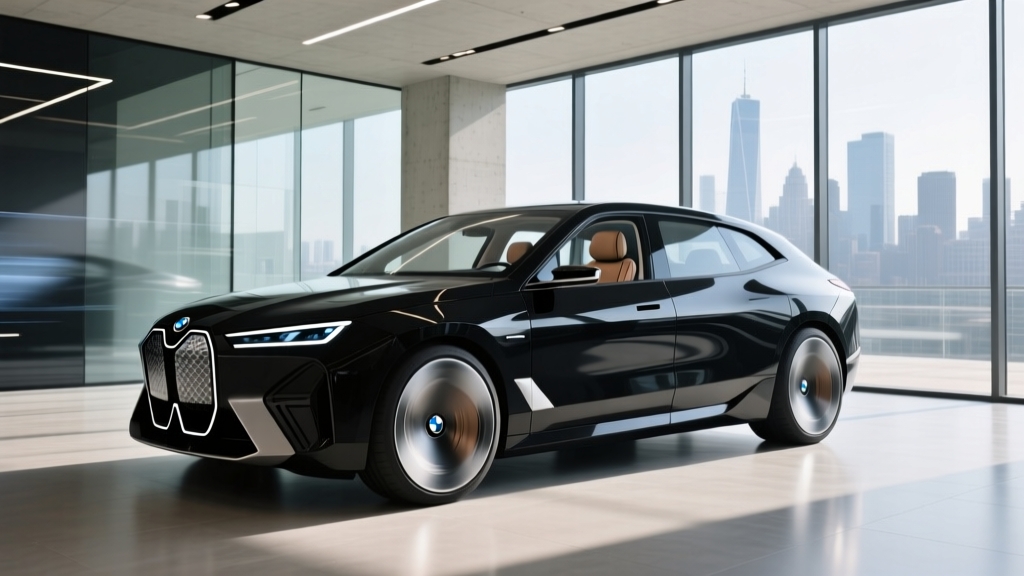
If you've been tracking BMW's electric SUV lineup, the headline is hard to miss: BMW ends US iX allocations for Neue Klasse EV models beginning with the next product cycle. The current-generation iX — BMW's flagship electric crossover built on the CLAR platform — will see its final US allocation window close as the automaker pivots production capacity toward its dedicated Neue Klasse architecture, expected to underpin next-generation EVs from 2027 onward.
For buyers, this creates a narrow decision window. The 2026 BMW iX remains available through remaining dealer inventory and final allocation slots, but once those are gone, the next electric BMW SUV you'll be able to order will be an entirely different vehicle. Here's exactly what the 2026 iX delivers — and whether it's worth securing one before the allocation door shuts.
2026 BMW iX: Full Spec Breakdown
| Spec | iX xDrive50 | iX M60 |
|---|---|---|
| Base MSRP | $87,250 | $111,500 |
| EPA Range | 324 miles | 288 miles |
| Battery (usable) | 105.2 kWh (NMC) | 105.2 kWh (NMC) |
| Drivetrain | Dual-motor AWD | Dual-motor AWD |
| Horsepower | 516 hp | 610 hp |
| 0–60 mph | 4.4 sec | 3.6 sec |
| Max DC Fast Charge | 195 kW | 195 kW |
| 10–80% DC Time | ~34 min | ~34 min |
| Level 2 Charge Rate | 11 kW (~30 mi/hr) | 11 kW (~30 mi/hr) |
| MPGe (combined) | 86 MPGe | 78 MPGe |
| Efficiency | 39 kWh/100mi | 43 kWh/100mi |
| Cargo (rear seats up) | 35.5 cu ft | 35.5 cu ft |
| Cargo (rear seats folded) | 77.9 cu ft | 77.9 cu ft |
| Battery Warranty | 8 yr / 100,000 mi | 8 yr / 100,000 mi |
Sources: fueleconomy.gov, BMW USA product specifications.
Real-World Range: What the EPA Sticker Doesn't Tell You
EPA Estimated Range: 324 miles (xDrive50) / 288 miles (M60)
Real-World Expectation: Expect approximately 265–290 miles on highway-heavy trips at 70–75 mph in moderate temperatures. In cold weather (below 32°F), plan for a 20–30% reduction, bringing usable range to roughly 225–260 miles for the xDrive50. City driving with regenerative braking can push closer to or slightly above EPA figures.
The iX's 105.2 kWh usable battery pack (NMC chemistry) provides substantial energy reserves, but this is a heavy, aerodynamically challenged SUV. At highway speeds, efficiency drops noticeably compared to the EPA combined cycle, which blends city and highway driving. The iX does feature a heat pump as standard equipment, which mitigates some cold-weather range loss by efficiently warming the cabin without drawing heavily from the traction battery — but physics still wins in deep winter conditions.
For context, on a 300-mile road trip at 75 mph in 45°F weather with climate control running, plan one DC fast-charge stop. The iX won't make that distance on a single charge under those real-world conditions.
Charging Performance: DC Fast and Home Level 2
The 2026 iX uses a CCS1 connector for DC fast charging (BMW has not adopted NACS for this generation). Here's what charging actually looks like across the three levels:
| Level | Power | Speed | Use Case |
|---|---|---|---|
| Level 1 (120V) | ~1.4 kW | ~4 mi/hr | Emergency/trickle only |
| Level 2 (240V, 48A) | 11 kW | ~30 mi/hr | Home overnight, full charge in ~10 hrs |
| DC Fast Charge | Peak 195 kW | 10–80% in ~34 min | Road trips, public stations |
The 195 kW peak DC charge rate is respectable but not class-leading — competitors like the Hyundai Ioniq 5 and Kia EV6 accept up to 240+ kW on 800V architectures. BMW's 400V system in the iX means the charge curve tapers earlier: you'll see close to 195 kW between 10–40% state of charge, then a progressive step-down through 80%. Above 80%, charging slows dramatically to protect battery longevity, so road-trip strategy should target 10–80% sessions rather than full fills.
At home on a Level 2 wallbox (BMW offers the Wallbox Plus at 11 kW), a depleted battery reaches full in roughly 10 hours. Most owners who plug in nightly will rarely need the full duration — a typical 40-mile daily commute replaces in under 90 minutes on Level 2.
Performance and Driving Dynamics
The xDrive50's dual-motor all-wheel-drive powertrain delivers 516 horsepower and a 4.4-second 0–60 mph time — genuinely quick for a 5,600-pound luxury SUV. The M60 bumps output to 610 hp and drops the sprint to 3.6 seconds, with a more aggressive throttle map and M-tuned adaptive suspension.
Both trims feature BMW's adaptive two-axle air suspension, rear-wheel steering (up to 3 degrees), and one-pedal driving mode with adjustable regenerative braking levels. The iX is not a sports car, but it manages its mass competently — body roll is controlled, and the steering, while numb by BMW's historical standards, is precise enough for confident highway merging and cornering.
Towing capacity is rated at 3,500 pounds with the factory hitch — adequate for a small trailer or a pair of jet skis, but not in the same league as the Rivian R1S or Ford F-150 Lightning for serious hauling.
Pricing, Trims, and Federal Tax Credit Eligibility
The 2026 iX lineup keeps things simple with two trims:
| Trim | Base MSRP | As-Tested (typical options) |
|---|---|---|
| iX xDrive50 | $87,250 | $94,000–$98,000 |
| iX M60 | $111,500 | $118,000–$125,000 |
Does the BMW iX Qualify for the Federal EV Tax Credit?
Under current IRS §30D rules, the BMW iX faces significant obstacles to federal tax credit eligibility:
- MSRP Cap: SUVs must have an MSRP at or below $80,000. Both iX trims exceed this threshold, making them ineligible for the new-vehicle credit regardless of other factors.
- Battery Sourcing: Even if pricing were within cap, the iX's battery cell sourcing and critical mineral supply chain would need to meet escalating annual thresholds (2026 requires 80% critical minerals from US/FTA partners, 100% battery components manufactured or recycled in North America). BMW's supply chain for the current iX does not fully satisfy these requirements.
- Buyer Income Limits: AGI caps apply — $300,000 joint / $225,000 head of household / $150,000 individual — though this is moot given the MSRP disqualification.
Bottom line: The 2026 BMW iX does not qualify for the $7,500 federal EV tax credit. Buyers should not factor this incentive into their purchase math. Some state-level incentives may apply — check your local DMV or energy office for current programs.
Interior, Tech, and Daily Livability
The iX cabin is one of BMW's most distinctive interiors: a hexagonal steering wheel, a curved display running BMW iDrive 8.5 (a 14.9-inch touchscreen merged with a 12.3-inch instrument cluster), and available open-pore wood and microfiber upholstery. The panoramic electrochromic glass roof can switch between transparent and opaque with a button press — a genuinely impressive party trick.
Passenger space is generous: 40.2 inches of front legroom and 38.5 inches in the rear. The flat floor (no transmission tunnel) makes the rear middle seat usable for adults on shorter trips. Cargo volume at 35.5 cu ft behind the second row is competitive with the Mercedes EQE SUV but trails the larger Rivian R1S.
Driver assistance: The iX comes with BMW Driving Assistant Professional, which includes adaptive cruise with stop-and-go, lane centering, and automatic lane change on highways. This is a SAE Level 2 system — the driver must remain attentive and keep hands on or near the wheel at all times. It is not self-driving. The system is competent for highway cruising but requires more steering-wheel interaction than GM's Super Cruise or Ford's BlueCruise.
Notable drawbacks: The iDrive 8.5 interface buries some climate and seat functions in submenus. There is no front trunk (frunk) — the space under the hood houses electronics. And at 5,600+ pounds, tire wear is accelerated; budget for replacement rubber every 25,000–30,000 miles on OEM tires.
Pros
- Excellent ride quality with standard air suspension
- Spacious, premium interior with unique design
- Strong real-world range for a luxury SUV (265–290 mi highway)
- Heat pump standard — better cold-weather efficiency
- Competitive DC fast-charge times for road trips
- Generous rear-seat legroom
Cons
- No federal tax credit eligibility (MSRP above $80K cap)
- 195 kW peak charge rate trails 800V competitors
- No front trunk (frunk)
- Heavy — accelerated tire wear expected
- iDrive menu complexity for basic climate controls
- CCS1 connector; no NACS adapter included (Supercharger access limited)
- Limited remaining allocation — availability tightening
Who Should Buy the 2026 BMW iX Before Allocations End?
The iX is best suited for luxury SUV buyers who prioritize ride comfort, interior refinement, and brand prestige over maximum charging speed or tax-credit savings. If you fall into one of these profiles, securing one of the final allocation slots may be worthwhile:
- Luxury commuters with home Level 2 charging who want a premium daily driver with 300+ mile range potential and don't need public fast-charging often.
- BMW loyalists who prefer the brand's driving dynamics and dealer experience and want to stay in the ecosystem before the Neue Klasse transition potentially changes BMW's EV character entirely.
- Two-car households where the iX serves as the primary vehicle and a second car handles longer road trips where the 195 kW charge rate and CCS connector might feel limiting.
Look elsewhere if: You need the fastest possible DC charging (consider Hyundai/Kia/Genesis on 800V), you want federal tax credit eligibility (the Tesla Model X and certain configurations of the Rivian R1S may still qualify, subject to sourcing rules), or you need serious towing capacity (Rivian R1S or the upcoming electric BMWs on Neue Klasse may offer more).
Warranty and Long-Term Ownership
BMW covers the iX battery and electric powertrain for 8 years or 100,000 miles, whichever comes first. The warranty guarantees the battery will retain at least 70% of its original capacity during that period — consistent with industry norms. The basic vehicle warranty is 4 years / 50,000 miles, with complimentary scheduled maintenance for 3 years / 36,000 miles.
NMC battery chemistry in the iX has proven durable in early fleet data, with typical degradation of 5–8% over the first 50,000 miles. To maximize longevity, BMW recommends keeping state of charge between 20–80% for daily use and limiting DC fast charging to road trips rather than daily routine. The iX's battery management system includes active liquid cooling/heating, which helps manage thermal stress during fast charging and extreme temperatures.
Insurance costs for the iX run 15–25% higher than comparable ICE BMW X5 models, reflecting the higher repair costs for EV-specific components. Get quotes before purchasing — this is a significant ownership cost that many buyers overlook.
Frequently Asked Questions
What does "BMW ends US iX allocations for Neue Klasse EV models" actually mean?
It means BMW is closing the order books for the current-generation iX in the United States to redirect production resources toward its next-generation Neue Klasse electric vehicles, expected to begin arriving from 2027. Existing dealer inventory and already-allocated units remain available, but new factory orders will cease.
What is the real-world range of the 2026 BMW iX?
The EPA rates the xDrive50 at 324 miles and the M60 at 288 miles. In real-world highway driving at 70–75 mph in moderate temperatures, expect 265–290 miles for the xDrive50. In cold weather (below freezing), plan for 225–260 miles. City driving with regen braking can approach or slightly exceed EPA numbers.
How fast does the BMW iX charge at home and on the road?
On a Level 2 home charger (240V, 11 kW), the iX adds about 30 miles of range per hour, with a full charge taking roughly 10 hours. On DC fast chargers, it peaks at 195 kW and charges from 10–80% in approximately 34 minutes. Charge speed tapers significantly above 80% SoC.
Does the 2026 BMW iX qualify for the $7,500 federal EV tax credit?
No. Both iX trims exceed the $80,000 MSRP cap for SUVs under IRS §30D rules, making them ineligible regardless of buyer income or battery sourcing. Some state-level incentives may be available — check your state's energy office or DMV for current programs.
Is the BMW iX worth buying vs. the Mercedes EQE SUV or Tesla Model X?
The iX wins on ride quality and interior design distinction. The Tesla Model X offers faster Supercharger network access (NACS native), available federal credit eligibility on certain trims, and a frunk. The Mercedes EQE SUV is slightly smaller and less powerful but similarly priced. If BMW brand loyalty and air-suspension comfort are priorities, the iX is compelling — but act before allocations close.
Will the Neue Klasse replacement be better?
BMW has announced Neue Klasse will feature 800V architecture (enabling faster charging), next-generation cylindrical battery cells with higher energy density, and a new software platform. However, final US specs, pricing, and availability remain unconfirmed. If you need an electric BMW SUV now, the current iX is a known quantity; waiting for Neue Klasse means a 2027+ timeline with preliminary specifications only.