Quick Verdict: Who Should Pay for Tesla's Performance Upgrade?
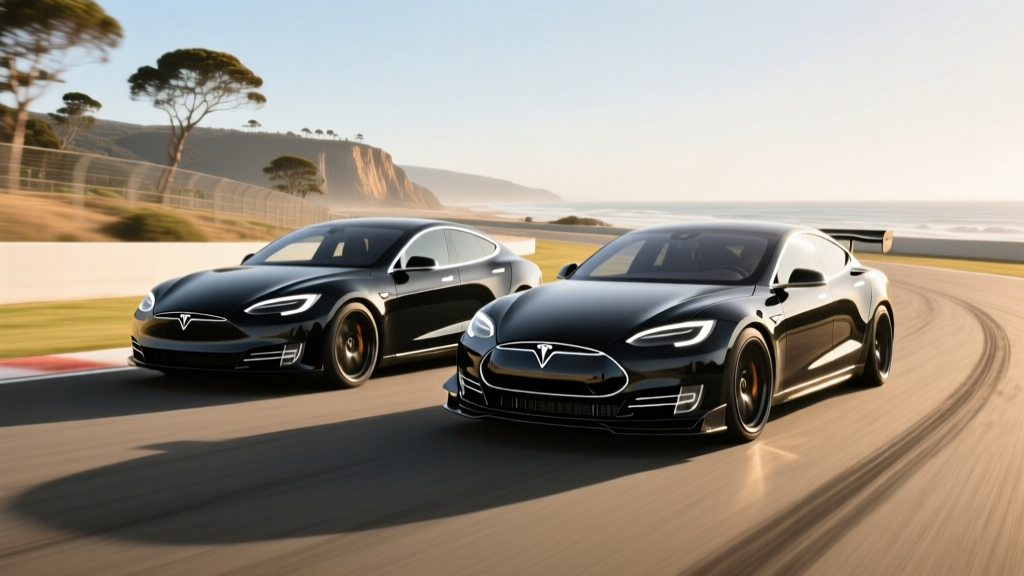
Tesla's performance trims have always occupied a specific niche: delivering supercar acceleration in practical, daily-drivable electric sedans. For 2026, the Tesla performance upgrade story centers on two models — the Model 3 Performance (starting at $52,990) and the Model S Plaid (starting at $89,990). Both offer sub-3-second 0-60 mph times, but they serve very different buyers. The Model 3 Performance is the accessible track-capable daily driver; the Model S Plaid is the no-compromise luxury missile. This review dissects what you actually get for the performance premium — range trade-offs, charging realities, and whether the federal tax credit applies.
EPA estimates tell only part of the story. The 2026 Model 3 Performance carries an EPA-estimated 315 miles of range, while the Model S Plaid is rated at 359 miles. In real-world highway driving at 70-75 mph, expect the Model 3 Performance to deliver approximately 260-280 miles and the Plaid around 295-315 miles. In cold weather (below 30°F), knock off another 15-25% due to battery resistance and cabin heating demands. Performance trims use stickier, wider tires and more aggressive alignment settings that increase rolling resistance — the range penalty versus Long Range trims is typically 20-40 miles EPA.
2026 Tesla Performance Lineup: Spec Comparison
| Specification | Model 3 Performance | Model S Plaid |
|---|---|---|
| Base MSRP | $52,990 | $89,990 |
| EPA Range | 315 mi | 359 mi |
| Battery (usable) | ~75 kWh (NMC) | ~95 kWh (NMC) |
| 0-60 mph | 2.9 seconds | 1.99 seconds |
| Horsepower | ~510 hp | 1,020 hp |
| Drivetrain | Dual-Motor AWD | Tri-Motor AWD |
| Top Speed | 163 mph | 200 mph |
| MPGe (combined) | 113 MPGe | 116 MPGe |
| Efficiency | 30 kWh/100mi | 29 kWh/100mi |
| Max DC Charge Rate | 250 kW | 250 kW |
| 10-80% DC Time | ~25 min | ~30 min |
| Level 2 Rate | 11.5 kW (~44 mi/hr) | 11.5 kW (~34 mi/hr) |
| Cargo Volume | 23 cu ft (trunk+frunk) | 28 cu ft (trunk+frunk) |
| Rear Legroom | 35.2 in | 35.4 in |
| Battery Warranty | 8 yr / 120,000 mi | 8 yr / 150,000 mi |
| Federal Tax Credit | Eligible (up to $7,500) | Not eligible (MSRP cap) |
Sources: fueleconomy.gov, Tesla.com specifications. Figures reflect 2026 model year. Battery chemistry is NMC (nickel manganese cobalt) for both performance trims — Tesla reserves LFP chemistry for standard-range RWD models due to its lower energy density.
Charging Speed: What Performance Owners Actually Experience
Both the Model 3 Performance and Model S Plaid peak at 250 kW on DC fast chargers, specifically at Tesla V3 Superchargers. Here's what that means in practice:
| Charging Level | Power (kW) | Model 3 Perf (mi/hr) | Model S Plaid (mi/hr) |
|---|---|---|---|
| Level 1 (120V) | ~1.4 kW | ~5 mi/hr | ~4 mi/hr |
| Level 2 (240V, 48A) | 11.5 kW | ~44 mi/hr | ~34 mi/hr |
| DC Fast (V3 Supercharger) | Peak 250 kW | ~170 mi in 15 min | ~200 mi in 15 min |
Charging curve reality: The 250 kW peak only holds between roughly 10-30% State of Charge (SoC). By 50% SoC, power tapers to approximately 150 kW, and above 80% it drops below 50 kW. This is why Tesla quotes 10-80% times rather than 0-100%. On a road trip, plan your stops around the 10-80% window for maximum efficiency. The Model 3 Performance hits 10-80% in approximately 25 minutes; the Plaid's larger pack takes roughly 30 minutes under optimal conditions.
Preconditioning matters: Both models automatically precondition the battery when you navigate to a Supercharger. If you arrive at a charger without preconditioning (for instance, driving to a third-party CCS station with an adapter), expect peak rates to be 30-50% lower until the battery reaches optimal temperature. In cold weather, preconditioning is essential — without it, you might peak at only 100-120 kW.
For home charging, both vehicles support 11.5 kW on a Level 2 Wall Connector installed on a 60-amp circuit. The Model 3 Performance adds roughly 44 miles of range per hour of charging; the Plaid adds about 34 miles per hour due to its larger battery consuming more energy per mile. An overnight charge (8-10 hours) fully replenishes either vehicle.
Performance vs. Range: The Inevitable Trade-Off
Choosing a Tesla performance upgrade means accepting a range penalty. Here's the math:
- Model 3 Long Range AWD: EPA 341 miles — $47,990
- Model 3 Performance: EPA 315 miles — $52,990 (26 fewer miles, $5,000 more)
- Model S Long Range: EPA 402 miles — $74,990
- Model S Plaid: EPA 359 miles — $89,990 (43 fewer miles, $15,000 more)
The range difference comes from wider performance tires (255/35R20 on the Model 3 Performance vs. 235/40R19 on the Long Range), more aggressive camber settings, and the energy demands of the track-capable drivetrain calibration. On the highway at sustained 75+ mph speeds, the gap widens further — aerodynamic drag and tire friction compound. In our experience, a Model 3 Performance driven at highway speeds in 40°F weather with the heat on will realistically deliver 220-240 miles before you want to find a charger.
That said, the Plaid's tri-motor setup is remarkably efficient for what it delivers. At 29 kWh/100mi combined, it's barely thirstier than the Model 3 Performance at 30 kWh/100mi, despite having double the horsepower. Tesla's silicon carbide inverters and heat pump contribute to this efficiency advantage over competitors like the Lucid Air Sapphire or Porsche Taycan Turbo GT.
Interior, Tech, and Daily Livability
The Model 3 Performance's cabin is minimalist to a fault. You get a 15.4-inch center touchscreen that handles virtually all vehicle functions, a 9-speaker audio system, heated and ventilated front seats, heated rear seats, and a glass roof. Rear legroom at 35.2 inches is adequate for adults on shorter trips but tight for long journeys. The 23 cu ft of combined cargo space (trunk plus frunk) handles weekly groceries and a couple of carry-on bags.
The Model S Plaid upgrades significantly: a 17-inch center touchscreen, a rear 8-inch display for passengers, a 22-speaker audio system, more premium materials, and 28 cu ft of cargo space. The hatchback design makes loading bulkier items easier than the Model 3's sedan trunk. Rear legroom is marginally better at 35.4 inches.
Autopilot and FSD (Supervised): Both models come with Tesla's basic Autopilot (traffic-aware cruise control and lane centering). Full Self-Driving (Supervised) remains an $8,000 add-on or $99/month subscription as of 2026. This is a SAE Level 2 driver-assistance system — you must keep your hands on the wheel and eyes on the road at all times. It is not autonomous driving. FSD handles highway interchanges, traffic lights, and some city streets, but requires constant supervision and can make errors in construction zones, adverse weather, and complex intersections.
Track Mode (Model 3 Performance) and Plaid Mode (Model S): The Model 3 Performance includes Track Mode, which lets you adjust stability control, regenerative braking, and torque distribution for closed-course driving. The Plaid's tri-motor torque vectoring is always active and provides extraordinary cornering grip. Neither feature makes these cars autonomous on a track — they enhance driver control, not replace it.
Federal Tax Credit and Pricing Breakdown
This is where the two performance models diverge sharply. Under the IRS §30D clean vehicle credit rules for 2026:
- MSRP Cap: Sedans must be under $55,000; SUVs/trucks under $80,000
- Income Cap: AGI must not exceed $150,000 (single), $225,000 (head of household), or $300,000 (joint)
- Battery Sourcing: Critical minerals and battery components must meet escalating domestic/free-trade-agreement thresholds
- Point-of-Sale Transfer: Eligible buyers can transfer the credit to the dealer for an immediate price reduction
Always verify current eligibility on IRS.gov and consult a tax professional. Rules and sourcing requirements change annually.
| Pricing Detail | Model 3 Performance | Model S Plaid |
|---|---|---|
| Base MSRP | $52,990 | $89,990 |
| Destination Fee | $1,390 | $1,390 |
| As-Tested (w/ FSD + paint) | ~$63,880 | ~$101,380 |
| §30D Credit Eligible? | ✅ Yes (under $55K cap) | ❌ No (exceeds $55K sedan cap) |
| Effective Price (with max credit) | ~$45,490 | $89,990 |
The Model 3 Performance qualifies for the full $7,500 federal credit if you meet income limits and the vehicle's battery sourcing meets 2026 thresholds. The point-of-sale transfer option lets you apply this directly at purchase, effectively reducing the price to roughly $45,490 before state incentives. The Model S Plaid, as a sedan priced well above $55,000, does not qualify for §30D regardless of buyer income. This is a significant financial consideration.
Pros and Cons
- Model 3 Performance: supercar acceleration at a fraction of supercar pricing, especially after tax credit
- Access to Tesla's Supercharger network — the most reliable DC fast-charging ecosystem in North America
- Over-the-air updates continuously add features and refine performance
- Tri-motor Plaid torque vectoring delivers genuine handling capability, not just straight-line speed
- Industry-leading efficiency (kWh/100mi) in the performance sedan segment
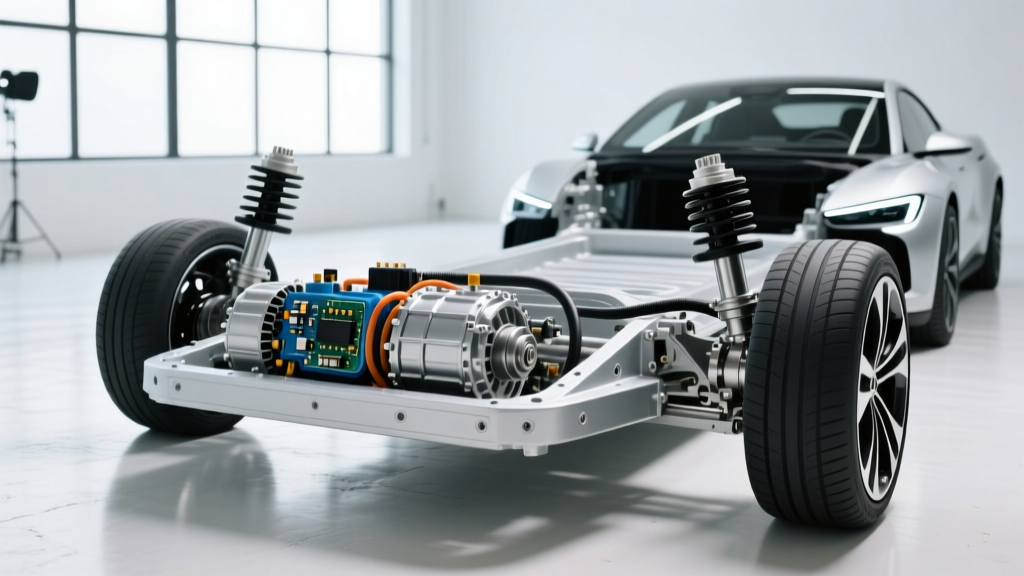
- Low center of gravity and balanced weight distribution from skateboard battery architecture
- 20-40 mile range penalty versus Long Range trims
- Model S Plaid: no federal tax credit eligibility due to MSRP cap
- Minimalist interior lacks physical controls — everything requires touchscreen interaction
- Insurance premiums are 20-40% higher than comparable non-performance EVs
- FSD (Supervised) remains a Level 2 system requiring full driver attention despite its name
- Performance tire replacement costs $1,200-$2,000 per set, with shorter tread life (15,000-25,000 mi)
- Model 3 rear seat space is tight for taller passengers on long trips
Competitor Check: Is the Tesla Performance Upgrade Worth It?
The performance EV sedan segment has grown considerably. Here's how Tesla's offerings stack up against key rivals:
- BMW i4 M50 ($67,795, 270 mi EPA, 3.3s 0-60): More traditional luxury interior, physical controls, but slower and shorter-ranged than the Model 3 Performance. No tax credit (MSRP over $55K).
- Porsche Taycan 4S ($92,500, 246 mi EPA, 3.8s 0-60): Superior driving dynamics and build quality, but dramatically more expensive with less range. 800V architecture enables faster peak charging (~270 kW).
- Lucid Air Pure ($69,900, 419 mi EPA, 3.8s 0-60): Class-leading range and spacious interior, but less track-focused and a smaller service network.
- Hyundai Ioniq 6 N (~$58,000, 260 mi EPA, 3.2s 0-60): Engaging driver's car with simulated gear shifts, but less range and no Supercharger access.
The Model 3 Performance wins on value — nothing else delivers a 2.9-second 0-60, 315 miles of range, and Supercharger access for under $53,000 before incentives. The Model S Plaid faces stiffer competition: the Lucid Air Sapphire (1,234 hp, $249,000) is faster, and the Taycan Turbo GT handles better, but the Plaid remains the most accessible way to break the 2-second 0-60 barrier.
Who Should Buy a Tesla Performance Model?
Choose the Model 3 Performance if: You want daily-drivable supercar acceleration, can charge at home, commute under 60 miles round-trip, qualify for the §30D credit, and don't need generous rear-seat space. It's the best performance-per-dollar EV sedan available.
Choose the Model S Plaid if: Budget is flexible, you want four-door practicality with genuine hypercar acceleration, need the extra cargo space and rear-seat room, take regular road trips where the 359-mile range matters, and accept the lack of a federal tax credit.
Choose the Long Range variant instead if: Your priority is maximum range over acceleration, you regularly drive 300+ miles between charges, or the performance premium doesn't justify the 20-40 mile range sacrifice in your driving patterns.
Warranty and Long-Term Ownership
Tesla's battery and drive unit warranty on performance models is robust:
- Model 3 Performance: 8 years / 120,000 miles (whichever comes first) with minimum 70% battery capacity retention
- Model S Plaid: 8 years / 150,000 miles with minimum 70% battery capacity retention
- Basic vehicle warranty: 4 years / 50,000 miles on both models
NMC battery chemistry in both performance models offers high energy density but is more susceptible to degradation from sustained high SoC and frequent DC fast charging than LFP chemistry. Best practices: charge to 80% daily, use DC fast charging only for road trips, and avoid leaving the car at 100% SoC for extended periods. Tesla's battery management system includes a substantial buffer (typically 5-8 kWh below the gross capacity) that protects against catastrophic degradation. Real-world data from Tesla's fleet suggests NMC packs retain approximately 85-90% capacity after 100,000 miles under normal use patterns.
Frequently Asked Questions
What is the real-world range of the 2026 Tesla Model 3 Performance?
The EPA rates it at 315 miles, but expect approximately 260-280 miles in mixed highway driving and 220-240 miles in cold weather (below 30°F) at highway speeds. City driving with regenerative braking can approach or slightly exceed the EPA estimate.
How fast does the Model S Plaid charge at home and on the road?
At home on a Level 2 Wall Connector (11.5 kW), the Plaid adds about 34 miles of range per hour — a full overnight charge covers most daily needs. On a V3 Supercharger at peak 250 kW, it can add approximately 200 miles in 15 minutes, with a 10-80% charge taking roughly 30 minutes. Charging speed tapers significantly above 80% SoC.
Does the Model 3 Performance qualify for the $7,500 federal EV tax credit?
Yes, with conditions. The Model 3 Performance's $52,990 base MSRP falls under the $55,000 sedan cap. You must also meet income limits ($150K single / $300K joint AGI), and the vehicle's battery must meet 2026 critical-mineral and component sourcing requirements. Verify current eligibility at IRS.gov before purchasing. The credit can be transferred at point of sale for an immediate price reduction.
Is the Tesla Performance upgrade worth it versus the Long Range model?
It depends on your priorities. The Model 3 Performance costs $5,000 more than the Long Range AWD and sacrifices 26 miles of EPA range, but delivers a 2.9-second 0-60 (vs. 4.2 seconds), Track Mode, upgraded brakes, and sport-tuned suspension. If you enjoy spirited driving and can accept the range trade-off, the performance premium is well justified. If range and comfort are your primary concerns, the Long Range is the better choice.
How does Autopilot / FSD work on Tesla Performance models?
Both performance models include basic Autopilot (adaptive cruise control and lane centering). FSD (Supervised) is available as an $8,000 option or $99/month subscription. FSD is a SAE Level 2 system — it assists with steering, acceleration, and braking on highways and some city streets, but requires continuous driver supervision. It is not self-driving. You are legally and practically responsible for the vehicle at all times.
What are the ongoing ownership costs for a Tesla Performance model?
Expect higher insurance premiums (20-40% above non-performance EVs), performance tire replacement every 15,000-25,000 miles ($1,200-$2,000 per set), and no routine fluid changes (no oil, no transmission fluid). Brake pad life is extended by regenerative braking — many Tesla owners report 80,000+ miles on original pads. Home electricity costs approximately $0.12-$0.18/kWh depending on your utility, translating to roughly $0.04-$0.06 per mile. Supercharger costs average $0.25-$0.35/kWh, or $0.08-$0.12 per mile.