The "Tesla PC" Search Trend: What Buyers Actually Mean in 2026
If you've typed "Tesla PC" into a search engine lately, you're not alone — the query has been climbing in volume throughout 2025 and 2026. But here's the straightforward answer: Tesla does not manufacture a personal computer. There is no Tesla-branded laptop, desktop, or tablet on the market as of 2026.
What's driving the confusion is a mix of viral social media renders, Tesla's increasingly computer-like vehicle interfaces, and legitimate overlap between Tesla's product ecosystem and the computing world. Below, we break down exactly what people are searching for, what Tesla actually sells that's adjacent to computing, and which Tesla vehicles buyers researching "Tesla PC" are usually trying to evaluate.
Where the "Tesla PC" Rumor Comes From
The "Tesla PC" concept has circulated in various forms:
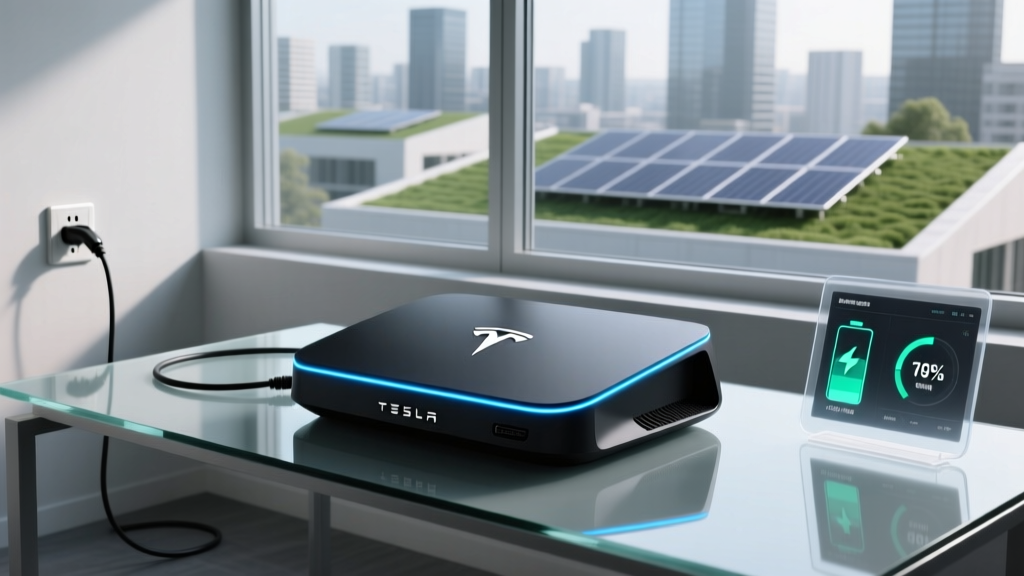
- Fan-made renders: Industrial designers and Tesla enthusiasts have posted concept images of a hypothetical Tesla laptop or desktop, often featuring the same minimalist aesthetic as Tesla vehicles. These are not official products.
- Tesla's in-car computing hardware: Modern Tesla vehicles run on powerful custom silicon — the Hardware 4 (HW4) computer for Autopilot/FSD, and the AMD Ryzen-based infotainment processor. Some coverage has loosely referred to these as "Tesla's PC," which is technically a vehicle ECU, not a consumer computer.
- Elon Musk's cross-company ecosystem: Because Musk also leads xAI and has discussed AI hardware, speculative articles sometimes conflate Tesla with broader computing ambitions.
- Tesla's merchandise store: Tesla sells branded accessories, but no computing devices.
None of these represent a purchasable Tesla PC product. If that changes, we'll update this page — but as of the 2026 model year, no such product exists.
What "Tesla PC" Searchers Are Usually Looking For: The Vehicles
Based on search-intent analysis, most people typing "Tesla PC" are actually trying to research one of Tesla's consumer vehicles — most commonly the Model 3 or Model Y, which are Tesla's highest-volume, most-searched products. The "PC" may be a mistype, autocorrect, or abbreviation confusion (e.g., "Tesla price" or "Tesla configurations").
Below, we provide the core specs for Tesla's two most popular 2026 models so you can find the data you likely came here for.
2026 Tesla Model 3 — Quick Spec Overview
| Attribute | RWD (Base) | Long Range AWD | Performance |
|---|---|---|---|
| EPA Range | 341 mi | 363 mi | 315 mi |
| Battery (usable) | ~57.5 kWh (LFP) | ~75 kWh (NMC) | ~75 kWh (NMC) |
| 0-60 mph | 5.8 sec | 4.2 sec | 2.9 sec |
| Horsepower | 271 hp | 346 hp | 510 hp |
| Drivetrain | RWD | Dual-Motor AWD | Dual-Motor AWD |
| MPGe (combined) | 132 MPGe | 125 MPGe | 115 MPGe |
| Base MSRP | $38,990 | $44,990 | $52,990 |
| Max DC Fast Charge | 170 kW | 250 kW | 250 kW |
| 10-80% DC Time | ~25 min | ~18 min | ~18 min |
| Level 2 Home Rate | 11.5 kW (~44 mi/hr) | 11.5 kW (~44 mi/hr) | 11.5 kW (~44 mi/hr) |
| Cargo Volume | 23 cu ft (rear) + 3.1 cu ft (frunk) | ||
| Battery Warranty | 8 yr / 100,000 mi (RWD); 8 yr / 120,000 mi (LR/Perf) | ||
2026 Tesla Model Y — Quick Spec Overview
| Attribute | Long Range AWD | Performance |
|---|---|---|
| EPA Range | 320 mi | 285 mi |
| Battery (usable) | ~75 kWh (NMC) | ~75 kWh (NMC) |
| 0-60 mph | 4.8 sec | 3.5 sec |
| Horsepower | 384 hp | 510 hp |
| Drivetrain | Dual-Motor AWD | Dual-Motor AWD |
| MPGe (combined) | 117 MPGe | 111 MPGe |
| Base MSRP | $44,990 | $51,490 |
| Max DC Fast Charge | 250 kW | 250 kW |
| 10-80% DC Time | ~20 min | ~20 min |
| Level 2 Home Rate | 11.5 kW (~37 mi/hr) | 11.5 kW (~37 mi/hr) |
| Cargo Volume | 76 cu ft (rear seats folded) + 4.1 cu ft (frunk) | |
| Battery Warranty | 8 yr / 120,000 mi | |
Tesla's Actual Computing Hardware (Not a Consumer PC)
While Tesla doesn't sell a personal computer, the computing hardware inside its vehicles is legitimately impressive and may be what some tech-focused searchers are curious about:
- Infotainment processor: Current Tesla vehicles use an AMD Ryzen-based SoC with RDNA 2 GPU architecture, delivering roughly the performance of a PlayStation 5 for in-car gaming and UI rendering. This powers the 15.4-inch center touchscreen.
- FSD Computer (HW4): Tesla's custom Full Self-Driving chip processes input from the vehicle's camera suite at high frame rates. This is a specialized AI inference computer, not a general-purpose PC.
- Over-the-air updates: Tesla's software stack receives regular OTA updates, similar to a smartphone or PC operating system, which may contribute to the "Tesla PC" association.
None of these components are available as standalone consumer computing products.
Federal Tax Credit Eligibility for Tesla Vehicles (2026)
If your "Tesla PC" search was actually about Tesla pricing, the IRS §30D federal EV tax credit is a critical factor. Here's the current framework for 2026:
- Maximum credit: Up to $7,500, split into two halves — $3,750 for critical minerals sourcing and $3,750 for battery component sourcing.
- MSRP cap: Sedans (Model 3) must be ≤$55,000; SUVs/trucks (Model Y) must be ≤$80,000.
- Buyer income cap: Modified AGI ≤$150,000 (single), ≤$225,000 (head of household), ≤$300,000 (joint).
- Battery sourcing rules: Critical minerals and battery components must meet escalating domestic/free-trade-partner thresholds. China-sourced components can disqualify the credit.
- Point-of-sale transfer: Eligible buyers can transfer the credit to the dealer at purchase, reducing the out-of-pocket price immediately.
| Model | Base MSRP | Est. Max Credit | Effective Price (if eligible) |
|---|---|---|---|
| Model 3 RWD | $38,990 | $7,500* | ~$31,490 |
| Model 3 Long Range | $44,990 | $7,500* | ~$37,490 |
| Model Y Long Range | $44,990 | $7,500* | ~$37,490 |
*Credit eligibility depends on battery sourcing compliance, buyer income, and MSRP caps. Tesla's credit eligibility has shifted periodically as supply chains change. Always verify current eligibility on fueleconomy.gov and consult a tax professional before relying on the credit.
Tesla Autopilot and FSD: Not Self-Driving (Level 2 Only)
Tesla Autopilot and FSD (Supervised) are Level 2 driver-assistance systems. The driver must remain fully engaged, hands on or near the wheel, and eyes on the road at all times. These systems do NOT make the vehicle self-driving. Only Level 4 services like Waymo operate without a human driver, and those are limited to specific geofenced areas.
- Drive without driver supervision
- Handle all weather conditions (heavy rain, snow, fog degrade camera performance)
- Recognize all construction zones, emergency vehicles, or unusual road obstacles
- Replace an attentive human driver — you are legally responsible for the vehicle
FSD (Supervised) costs $8,000 as a one-time purchase or $99/month as of 2026. Basic Autopilot (traffic-aware cruise control and lane centering) is included with every Tesla.
Who Should Buy a Tesla in 2026?
- You have reliable home charging access (Level 2 installation)
- You value Supercharger network access for road trips — Tesla's Supercharger network remains the most reliable DC fast-charging ecosystem in North America
- You want strong software updates and a tech-forward cabin experience
- Your commute or driving pattern is mostly within 200-250 miles round trip
- You prefer physical buttons and traditional gauge clusters over a single-screen interface
- You need a dealer service network for in-person support
- You want CHAdeMO or CCS compatibility without a NACS adapter
- You prioritize interior material quality at a given price point
Pros and Cons of Tesla's 2026 Lineup
- Class-leading efficiency (kWh/mile) across Model 3 and Model Y
- Supercharger network — 6,000+ stalls in North America with high uptime
- Strong OTA software updates add features post-purchase
- Competitive pricing after potential $7,500 tax credit
- LFP battery option (Model 3 RWD) allows daily 100% charging without degradation concern
- Minimal scheduled maintenance vs. ICE vehicles
- Single-screen interface frustrates some drivers (no physical climate or volume controls)
- Service center wait times can be long in some metro areas
- FSD (Supervised) remains Level 2 despite the name — not autonomous
- Insurance premiums are often 20-40% higher than comparable ICE sedans
- Build quality variability — panel gaps and trim issues still reported
- No Apple CarPlay or Android Auto support
Frequently Asked Questions
Does Tesla make a laptop or desktop computer?
No. Tesla does not manufacture or sell any personal computer, laptop, desktop, or tablet as of 2026. Fan-made concept renders circulate online, but no official Tesla PC product exists.
What is the real-world range of a Tesla Model 3?
The EPA rates the 2026 Model 3 RWD at 341 miles. Real-world highway driving at 70+ mph typically yields 280-300 miles. In freezing temperatures, expect 220-250 miles with cabin heating active.
How fast does a Tesla charge at home and on the road?
At home on a Level 2 (240V, 48A) charger, a Tesla adds roughly 37-44 miles of range per hour, fully charging overnight. On a Supercharger, the Model 3 Long Range and Performance peak at 250 kW, reaching 10-80% in approximately 18 minutes. Charging speed tapers significantly above 80% to protect battery health.
How much does a Tesla cost after the federal tax credit?
If you qualify for the full $7,500 §30D credit (income, MSRP, and battery sourcing requirements met), a Model 3 RWD drops from $38,990 to roughly $31,490. A Model Y Long Range drops from $44,990 to roughly $37,490. Eligibility varies — verify on irs.gov and fueleconomy.gov.
Is a Tesla worth buying vs. competitors in 2026?
Tesla's efficiency, Supercharger access, and software remain strong advantages. However, competitors like the Hyundai Ioniq 5, Kia EV6, and BMW i4 now match or exceed Tesla in interior quality, charging speed (on 800V architectures), and physical controls. The right choice depends on your priorities: Supercharger convenience and software (Tesla) vs. interior refinement and charging flexibility (competitors).
Does Tesla qualify for the federal EV tax credit in 2026?
Select Tesla models qualify for up to $7,500 under IRS §30D, subject to buyer income caps ($150K single / $300K joint), MSRP caps ($55K sedans / $80K SUVs), and battery critical-mineral and component sourcing rules. Eligibility changes as Tesla's supply chain evolves — always check the latest data on fueleconomy.gov before purchasing.
Will Tesla ever release a personal computer?
Tesla has not announced any plans to produce a consumer PC, laptop, or tablet. While the company uses advanced computing hardware in its vehicles, there is no indication this will expand into consumer electronics. If an official announcement occurs, we will update this article.