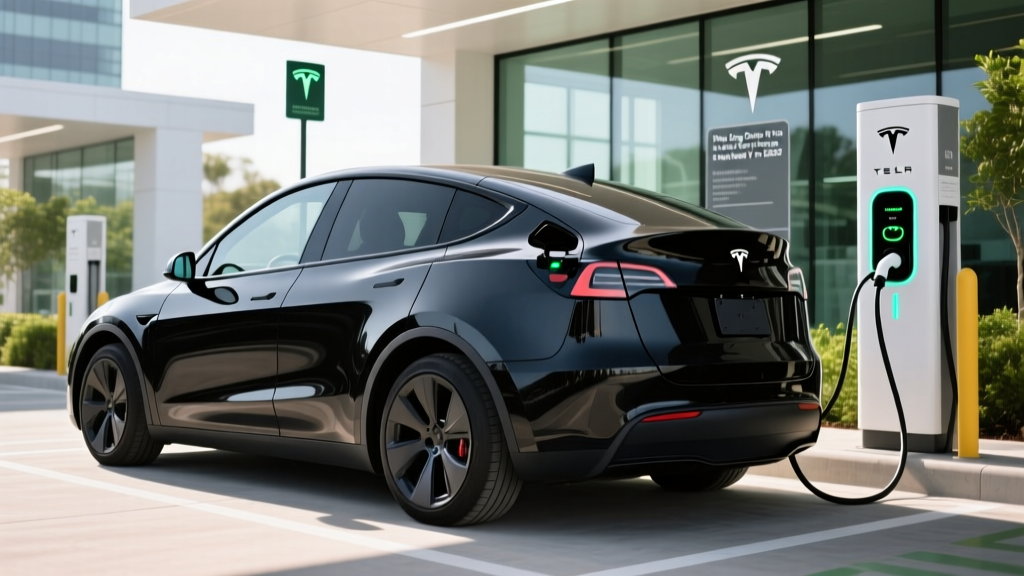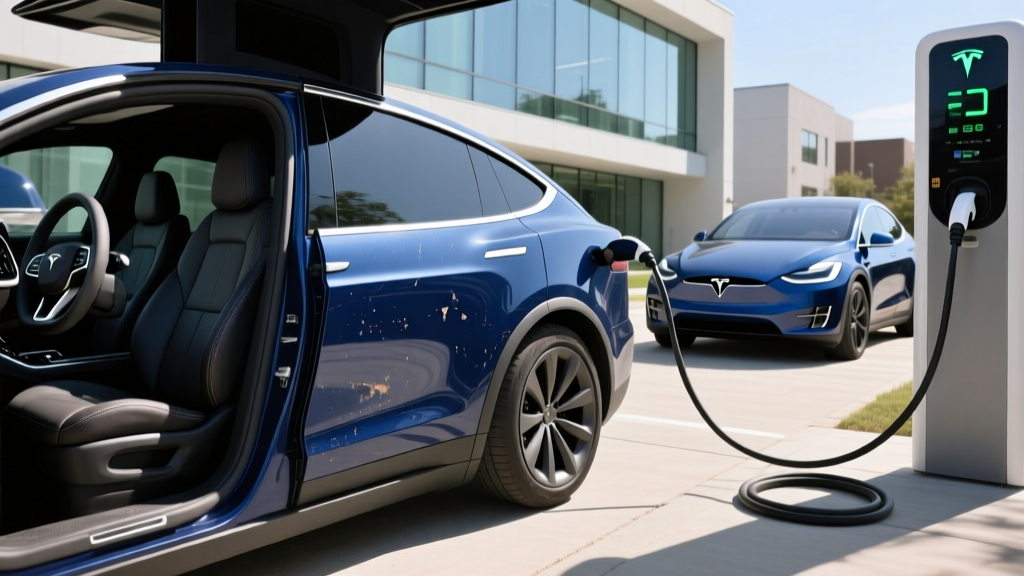
If you have spent any time in EV forums or owner groups, you have likely encountered the phrase "Tesla paint issues." The concern is well-documented: early Fremont-built Teslas developed a reputation for thin clear coats, orange-peel texture, overspray, and paint chips that appeared within the first few thousand miles. But as we move through the 2026 model year, the question buyers actually need answered is whether these problems persist — and whether the broader ownership proposition justifies the risk.
This guide examines the current state of Tesla paint quality, then layers in the hard ownership data — range, charging, pricing, and tax-credit eligibility — that determines whether a Tesla belongs on your shortlist.
Where Tesla Paint Quality Stands in 2026
Tesla's paint reputation originated at the Fremont factory, where rapid production scaling and inconsistent panel prep led to widespread reports of defects. Common complaints included:
- Orange-peel texture — uneven clear coat application creating a bumpy surface under direct light
- Premature chipping — thin paint layers on front bumpers, hoods, and mirrors vulnerable to road debris
- Overspray and runs — visible on door jambs, trunk edges, and underbody trim
- Color mismatch — slight hue differences between body panels, especially on white and silver finishes
Since Giga Texas became the primary U.S. production hub for Model Y (and Model 3 followed), paint quality has measurably improved. Tesla invested in upgraded paint-shop automation and tighter quality-control checkpoints. Giga Berlin, which supplies European markets, has produced panels generally regarded as the best in Tesla's history. That said, isolated reports of defects still surface — the variance between a perfect delivery and one needing touch-up work remains wider than legacy automakers like BMW or Toyota consistently deliver.
2026 Tesla Model 3 & Model Y: Core Specifications
Paint concerns matter in context of what you are actually buying. Here is the spec breakdown for the two highest-volume Tesla models U.S. buyers consider.
| Spec | Model 3 Long Range AWD | Model Y Long Range AWD |
|---|---|---|
| EPA Range | 363 miles | 320 miles |
| Battery (usable) | ~75 kWh, NMC | ~75 kWh, NMC |
| Drivetrain | Dual-motor AWD | Dual-motor AWD |
| Horsepower | ~384 hp | ~384 hp |
| 0-60 mph | 4.2 sec | 4.8 sec |
| Efficiency (MPGe) | 134 MPGe combined | 122 MPGe combined |
| Efficiency (kWh/100mi) | 25 kWh | 28 kWh |
| Cargo Volume | 23 cu ft (trunk+frunk) | 76 cu ft (rear seats folded) |
| Base MSRP | $47,740 | $49,630 |
Source: fueleconomy.gov and Tesla spec sheets. Figures represent Long Range AWD trims, which are the most commonly purchased configurations.
Real-World Range: What the EPA Sticker Doesn't Tell You
Model 3 Long Range — EPA 363 mi | Expect ~290-310 mi highway at 75 mph, ~250-270 mi in freezing temps.
Model Y Long Range — EPA 320 mi | Expect ~255-275 mi highway at 75 mph, ~220-240 mi in freezing temps.
Tesla's efficiency engineering remains class-leading. The Model 3 Highland refresh improved aerodynamics, and both models benefit from a standard heat pump that reduces cold-weather cabin-heating energy draw. However, no EV delivers its EPA number at sustained highway speeds in winter. The NMC battery chemistry in Long Range trims is more susceptible to cold-weather range loss than the LFP chemistry found in base RWD trims — expect 20-30% reduction at 20°F or below unless you precondition the battery.
Preconditioning — warming the battery to optimal temperature before driving or charging — is essential for maximizing both range and DC fast-charge speed. Tesla's navigation system triggers preconditioning automatically when you route to a Supercharger. On non-Tesla chargers, you must initiate it manually via the app or by setting a departure schedule.
Charging Speed: DC Fast, Home, and the Supercharger Advantage
| Level | Power / Rate | Speed | Notes |
|---|---|---|---|
| Level 1 (120V) | ~1.4 kW | ~3-4 mi/hr | Emergency/trickle only |
| Level 2 (240V, 48A) | 11.5 kW | ~32-36 mi/hr | Full overnight charge in ~8 hrs |
| DC Fast (Supercharger V3/V4) | Peak 250 kW | 10-80% in ~25 min | Sustained rate ~150 kW avg; tapers above 60% |
Tesla's Supercharger network remains the gold standard for public charging reliability. With over 6,000 V3/V4 stalls across the U.S., the plug-and-charge experience eliminates the app fragmentation and payment failures common on Electrify America or EVgo. For 2026, Tesla has opened portions of the Supercharger network to NACS-equipped non-Tesla EVs, but Tesla owners still enjoy the most seamless integration.
Charging-curve reality: The 250 kW peak is not sustained across the entire session. You will see peak rates between roughly 10-40% state of charge, after which the rate tapers to protect the battery. A 10-80% session averages closer to 150 kW. Plan road-trip stops around 20-25 minutes per charge, not the 15 minutes that peak-kW marketing implies.
For home charging, the Tesla Wall Connector at 48 amps on a 60-amp circuit delivers the fastest Level 2 rate available. Installation typically costs $800-$2,000 depending on panel proximity and whether your home needs a service upgrade. A licensed electrician should verify your panel has spare capacity before committing.
Pricing, Tax Credits, and Total Cost
| Model / Trim | Base MSRP | Under §30D MSRP Cap? | Potential Credit |
|---|---|---|---|
| Model 3 RWD | $38,990 | Yes (sedan cap: $55,000) | Up to $7,500* |
| Model 3 Long Range AWD | $47,740 | Yes | Up to $7,500* |
| Model Y Long Range AWD | $49,630 | Yes (SUV cap: $80,000) | Up to $7,500* |
| Model Y Performance | $53,130 | Yes | Up to $7,500* |
*Federal EV tax credit eligibility under IRS §30D depends on buyer income limits ($150K single / $300K joint MAGI), battery critical-mineral and component sourcing requirements, and MSRP caps ($55K sedans / $80K SUVs). The credit may be transferred at point of sale as an instant discount. Verify current-year sourcing compliance on the IRS qualified vehicles list before purchasing — battery sourcing rules have tightened annually.
After the full $7,500 credit (if eligible), a Model 3 RWD lands near $31,490 — undercutting most gas-powered midsize sedans on total cost of ownership when you factor in fuel savings, reduced maintenance, and lower per-mile energy cost (roughly $0.04-$0.06/mile on home electricity vs. $0.12-$0.16/mile for a 30-MPG gas car at $3.50/gallon).
Warranty, Battery Longevity, and the Paint Question
Tesla's warranty structure covers the areas that matter most:
- Basic Vehicle: 4 years / 50,000 miles
- Battery & Drive Unit: 8 years / 120,000 miles (Long Range AWD) with a minimum 70% capacity retention guarantee
- Paint & Corrosion: 4 years / 50,000 miles (surface) and 12 years unlimited miles (perforation/corrosion)
The paint warranty is where buyer concern meets reality. If you discover chips, runs, or clear-coat failure within the first 4 years, Tesla service will typically address confirmed manufacturing defects. However, normal road-debris chipping is not covered — which is why many owners apply paint-protection film (PPF) to the front bumper, hood, and mirrors immediately after delivery. Expect to pay $800-$1,500 for a quality front-end PPF installation.
On battery longevity, real-world data from Tesla's fleet shows average degradation of approximately 12-15% at 150,000 miles for NMC packs. LFP packs (found in RWD trims) show slower degradation and tolerate regular 100% charging, making them well-suited for high-mileage commuters who can sacrifice some range for longevity.
Tech, Driver Assistance, and Interior
Tesla's software remains the benchmark for EV infotainment. The 15.4-inch center display handles navigation, media, climate, and vehicle settings with smartphone-grade responsiveness. Over-the-air updates continue to add features years after purchase — a genuine advantage over competitors whose software stagnates at delivery.
Driver assistance requires clear terminology:
FSD (Supervised) costs $8,000 as a one-time purchase or $99/month as a subscription. For most buyers, basic Autopilot (included standard) provides sufficient highway comfort. FSD's value proposition depends heavily on your commute complexity and tolerance for beta-level behavior.
Interior quality in the refreshed Model 3 ("Highland") improved noticeably — ventilated front seats, ambient lighting, rear-seat ventilation, and a quieter cabin with acoustic glass. Model Y's interior remains more utilitarian but offers class-leading cargo volume with rear seats folded (76 cu ft) and an available third row (though the third row is best suited for small children only).
Who Should Buy a Tesla — and Who Should Look Elsewhere
- Supercharger network access is a priority for road trips
- You value OTA software updates and a minimalist tech-forward cabin
- You want the best efficiency (kWh/100mi) in the segment, which translates to lower charging costs and more range from a smaller battery
- You can install Level 2 home charging and will charge overnight 80%+ of the time
- Interior material quality and traditional luxury finishes are top priorities (consider BMW i4, Genesis GV70 Electrified)
- You need physical buttons for climate and volume (Tesla routes everything through the touchscreen)
- Paint perfection is non-negotiable and you are unwilling to risk a delivery inspection dispute
- You need a truck bed or serious towing capacity (Model Y max towing: 3,500 lbs)
Pros and Cons at a Glance
- Class-leading efficiency and real-world range
- Supercharger network reliability
- 250 kW DC fast charging with good sustained rates
- Strong OTA update track record
- Competitive pricing after tax credit
- Spacious cargo area (Model Y especially)
- Heat pump standard on all trims
- Paint quality inconsistency (improved but not eliminated)
- No physical controls — all functions via touchscreen
- Repair costs and wait times for body/paint work can be lengthy
- FSD is expensive and not truly autonomous
- Rear visibility limited in Model 3
- Insurance premiums above segment average
- No Apple CarPlay / Android Auto
Frequently Asked Questions
Are Tesla paint issues still common in 2026?
They are less common than in 2019-2022, particularly on Giga Texas and Giga Berlin vehicles. However, Tesla's paint variance remains wider than Toyota or BMW. Budget $800-$1,500 for front-end PPF if paint preservation matters to you, and inspect thoroughly at delivery.
What is the real-world highway range of a Model 3 Long Range?
Expect approximately 290-310 miles at 75 mph in mild weather (50-80°F). In freezing conditions, that drops to roughly 250-270 miles. The EPA 363-mile figure assumes a mix of city and highway driving at moderate speeds.
How fast does a Tesla charge on a Supercharger?
Peak rate is 250 kW, but the sustained average across a 10-80% session is closer to 150 kW. Plan for 25 minutes per typical road-trip stop. The charge curve tapers noticeably above 60% SoC to protect battery health.
Does the Tesla Model Y qualify for the $7,500 federal tax credit?
The Model Y qualifies under the §30D MSRP cap for SUVs ($80,000). However, full credit eligibility depends on battery sourcing compliance (critical minerals and component manufacturing requirements), your income (MAGI limits), and the vehicle appearing on the IRS qualified list for the current model year. Verify at irs.gov before purchasing. The credit can be transferred at point of sale as an instant price reduction.
Is a Tesla worth buying over a Hyundai Ioniq 5 or Ford Mustang Mach-E?
Tesla wins on efficiency, Supercharger access, and software. The Ioniq 5 charges faster on non-Tesla DC chargers (up to 350 kW peak on 800V architecture) and offers a more conventional interior with physical buttons. The Mach-E provides a more traditional driving feel and Ford dealer service network access. If road-trip charging reliability is your top priority, Tesla still leads. If interior quality and physical controls matter more, test-drive the Ioniq 5.
How much does it cost to charge a Tesla at home per month?
At the U.S. average electricity rate of ~$0.16/kWh and 1,000 miles/month of driving, a Model 3 Long Range (25 kWh/100mi) costs roughly $40/month. A comparable 30-MPG gas car at $3.50/gallon costs about $117/month. Your actual savings depend on local rates and whether you have access to off-peak time-of-use pricing, which can drop costs further.