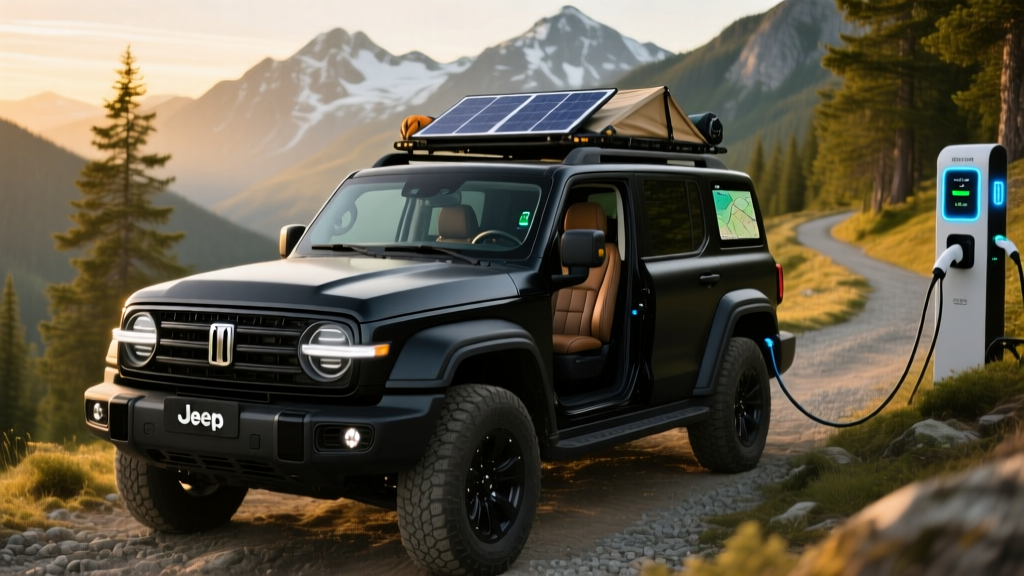
The 2026 Jeep Recon arrives as Stellantis's answer to a question the EV market has been asking for years: Can a body-on-frame-style, Trail Rated off-roader actually work as a battery-electric vehicle? Built on the STLA Large platform, the Recon Overland trim sits at the intersection of rugged capability and daily-drivable efficiency. After digging into the preliminary specs, charging architecture, and real-world efficiency data, here's what buyers need to know before heading to a dealer.
2026 Jeep Recon Overland: Core Specifications at a Glance
| Specification | 2026 Jeep Recon Overland |
|---|---|
| EPA Range (est.) | ~315 miles |
| Battery Capacity (usable) | ~85 kWh, NMC chemistry |
| Drivetrain | Dual-motor AWD (eAWD) |
| Horsepower | ~375 hp (combined) |
| 0–60 mph | ~5.5 seconds (est.) |
| Max DC Fast Charge | Up to 270 kW |
| 10–80% DC Charge Time | ~22 minutes (est.) |
| Level 2 Home Charge Rate | 11.5 kW (~37 mi/hr) |
| Efficiency | ~96 MPGe / ~35 kWh/100 mi |
| Base MSRP | ~$52,595 (incl. destination) |
| Battery Warranty | 8 years / 100,000 miles |
| Ground Clearance | ~9.0 inches |
Note: The 2026 Jeep Recon was announced by Stellantis with preliminary specifications. Final EPA-certified figures may vary at launch. Always verify with the manufacturer and fueleconomy.gov before purchasing.
Range and Efficiency: What to Expect Beyond the EPA Sticker
EPA Estimated: ~315 miles
Real-World Highway (70 mph): ~255–275 miles
Cold Weather (below 32°F): ~220–250 miles
Off-Road / Low-Speed Trail Use: Range varies widely; expect higher consumption on technical terrain.
The Recon Overland targets approximately 315 miles of EPA-estimated range, a competitive figure for a midsize electric SUV with genuine off-road hardware. However, the boxy, upright design that gives the Recon its Jeep identity creates an aerodynamic penalty at highway speeds. Expect a 12–18% range reduction during sustained 70–75 mph interstate driving compared to the EPA combined figure.
Cold weather compounds this. Lithium-ion NMC batteries lose efficiency in freezing temperatures, and the Recon's large frontal area means the heat pump works harder to condition the cabin. In sub-32°F conditions, plan for 220–250 miles of usable range on a full charge. This is typical for the segment—the Ford Bronco Sport and Rivian R1S show similar cold-weather behavior—but it's critical for buyers in northern climates to understand before committing.
Efficiency lands around 96 MPGe combined, or roughly 35 kWh per 100 miles. That's slightly thirstier than a Hyundai Ioniq 5 (~114 MPGe) but expected given the Recon's weight, ride height, and all-terrain tires. For context, this translates to about $0.11–$0.14 per mile on the national average electricity rate of $0.16/kWh—substantially cheaper than a comparable gas-powered Wrangler at $0.20–$0.25 per mile.
Charging Speed: DC Fast Charging and Home Setup
| Charging Level | Power / Rate | Time / Range Added |
|---|---|---|
| Level 1 (120V household) | ~1.4 kW | ~4 miles per hour |
| Level 2 (240V home charger) | 11.5 kW | ~37 miles per hour; full charge ~9 hrs |
| DC Fast Charge (peak) | Up to 270 kW | 10–80% in ~22 minutes |
| DC Fast Charge (sustained avg.) | ~160–180 kW avg. | 10–90% in ~35 minutes |
The Recon Overland supports up to 270 kW peak DC fast charging via CCS (with NACS adapter availability expected for Tesla Supercharger access). At peak rate, the 10–80% sprint takes roughly 22 minutes on a capable 350 kW station. However, peak rate is not sustained rate—the charging curve tapers significantly above 80% State of Charge (SoC) to protect the NMC battery cells. Expect an average sustained rate of 160–180 kW during a typical 10–90% session, adding about 35 minutes total.
For home charging, the onboard 11.5 kW charger is a strong point. Paired with a 48-amp Level 2 wall connector on a 60-amp circuit, you'll recover roughly 37 miles of range per hour. An overnight charge from 20% to full takes about 9 hours—easily within a standard overnight window. Home installation typically runs $800–$2,000 depending on your electrical panel capacity and run length from the breaker to the garage; a 200-amp panel is usually sufficient, but older homes may need a $1,500–$3,000 panel upgrade.
Preconditioning tip: The Recon's battery thermal management system benefits from preconditioning before DC fast charging. Navigating to a fast charger via the built-in navigation system triggers battery warming, which can shave 5–8 minutes off your charge time in cold weather by bringing cells to optimal temperature before you plug in.
Performance and Trail Capability
The dual-motor all-wheel-drive powertrain produces an estimated 375 horsepower, delivering a 0–60 mph time of approximately 5.5 seconds. That's brisk for a vehicle designed to scramble over rocks, and it makes highway merging and passing effortless. The instant torque delivery inherent to electric motors is particularly useful off-road, where precise low-speed control matters more than peak power.
Jeep has engineered the Recon around its Trail Rated badge, which means specific capability benchmarks:
- Ground clearance: Approximately 9.0 inches, competitive with the Wrangler 4xe
- Water fording: Expected ~24+ inches (sealed battery and motor housings)
- Approach/departure angles: Optimized for off-road geometry despite the battery pack placement
- Select-Terrain modes: Sand, Snow, Mud, Rock, and Auto, with torque vectoring between axles
- One-pedal driving: Aggressive regen mode useful for controlled downhill descents
The battery pack is mounted low in the chassis, providing a lower center of gravity than a comparable Wrangler and improving on-road handling. However, the underbody does feature skid plate protection for the battery enclosure—critical for buyers who plan actual trail use rather than just the aesthetic.
Interior Space, Cargo, and Technology
The Recon Overland offers a two-row, five-passenger layout with estimated cargo volume of approximately 35 cubic feet behind the rear seats and 70+ cubic feet with the rear seats folded. Legroom is generous for the segment, with an estimated 41 inches front and 38 inches rear—adequate for adults on long road trips.
Key technology features include:
- Infotainment: 12.3-inch Uconnect 5 touchscreen with wireless Apple CarPlay and Android Auto
- Driver display: 10.25-inch digital instrument cluster with off-road telemetry (pitch/roll, torque distribution, battery temp)
- ADAS: Full-Speed Adaptive Cruise, Lane Keep Assist, Automatic Emergency Braking, 360-degree camera with off-road view (SAE Level 2 driver assistance—driver supervision required at all times)
- Trail-specific tech: TrailCam forward-facing camera with washer, electronic front sway bar disconnect (Overland trim)
- V2L capability: Vehicle-to-load power outlets for running camp equipment or tools from the traction battery
The removable door panels and fold-flat windshield (heritage features from the Wrangler lineage) may be offered as options, though final availability for 2026 is not yet confirmed. The open-air experience is a key differentiator against competitors like the Rivian R1S or Hyundai Ioniq 5.
Pricing, Trims, and Federal Tax Credit Eligibility
| Trim Level | Est. MSRP (incl. dest.) | Key Features |
|---|---|---|
| Recon Select (base) | ~$47,595 | Dual-motor AWD, standard tech suite |
| Recon Overland | ~$52,595 | Off-road package, sway bar disconnect, TrailCam, premium interior |
| Recon Moab (top) | ~$57,995 | 35-inch tires, locking differentials, rock rails, upgraded suspension |
The Recon Overland's ~$52,595 MSRP places it under the IRS §30D federal tax credit's $80,000 MSRP cap for SUVs. However, qualifying for the full $7,500 credit depends on several factors that change frequently:
- Buyer income caps: Modified AGI must not exceed $150,000 (single), $225,000 (head of household), or $300,000 (joint filers)
- Battery sourcing: Critical minerals and battery components must meet escalating domestic-sourcing thresholds per the Inflation Reduction Act. Stellantis has indicated efforts to qualify, but final 2026 eligibility depends on supply chain compliance at time of purchase.
- Point-of-sale transfer: Qualified buyers can transfer the credit to the dealer at purchase, reducing the out-of-pocket price immediately rather than waiting for tax filing.
If the Recon Overland qualifies for the full $7,500 credit, the effective price drops to approximately $45,095. Always verify current eligibility at IRS.gov's clean vehicle credits page and confirm with your dealer and tax professional before purchase, as sourcing rules tighten annually.
How It Stacks Up Against Competitors
The Recon Overland enters a midsize electric SUV segment with several established players. Here's how it compares on key metrics:
- Rivian R1S (Dual-Motor Standard): ~270-mile range, ~$75,900 MSRP, superior on-road refinement, three-row option, but higher price and no federal credit eligibility at most trims.
- Ford Explorer EV (ST): ~300-mile range (est.), ~$48,000 MSRP, more road-oriented, less off-road capability.
- Hyundai Ioniq 5 (XRT): ~305-mile range, ~$54,000 MSRP, faster charging (peak 350 kW), better efficiency, but no serious off-road pretension.
- Jeep Wrangler 4xe: PHEV, not BEV—21 miles electric-only, then hybrid. Lower upfront cost but higher fuel cost over time; different use case.
The Recon's unique value proposition is genuine Trail Rated off-road hardware in a fully electric package. If your use case involves regular trail driving, overlanding, or you simply need the ground clearance and approach angles for rural property access, the Recon has no direct electric rival at its price point. If you primarily commute on pavement and want maximum efficiency, the Ioniq 5 or Tesla Model Y serve you better.
Pros and Cons
- Genuine Trail Rated off-road capability in a BEV
- Competitive ~315-mile EPA range for the segment
- 270 kW DC fast charging keeps road trips viable
- 11.5 kW Level 2 onboard charger for quick home recovery
- V2L capability for camping and job-site use
- Under $80K MSRP cap keeps federal tax credit on the table
- Removable doors/open-air options (if confirmed)
- Boxy aero hurts highway efficiency vs. crossovers
- Cold-weather range loss significant (~20–30%)
- Preliminary specs not yet EPA-certified
- Heavier than unibody competitors; impacts tire wear
- Off-road tires (standard on Overland) increase road noise
- Stellantis's public charging network partnerships still maturing
- No third-row seating option
Who Should Buy the 2026 Jeep Recon Overland?
- Outdoor enthusiasts who need real off-road capability but want to eliminate gasoline
- Current Wrangler or Gladiator owners ready to go fully electric
- Rural property owners who need ground clearance and AWD traction daily
- Two-row families who want adventure capability and ~300+ mile road-trip range
- Buyers who value open-air driving options in an EV
- Your commute is entirely on pavement and efficiency is the top priority
- You need three rows of seating
- You want the fastest possible DC charging (Ioniq 5 / EV6 peak at 350 kW)
- You live in an area with minimal DC fast-charging infrastructure and no home charging access
Warranty and Long-Term Ownership
Jeep backs the Recon's battery pack and electric powertrain with an 8-year / 100,000-mile warranty, consistent with federal requirements for EV components and competitive with the segment. The battery warranty typically guarantees a minimum 70% capacity retention over that period—if the usable capacity drops below that threshold, Stellantis will repair or replace the pack.
NMC chemistry in the Recon offers strong energy density (enabling the ~315-mile range in a manageable pack size) but historically shows slightly faster long-term degradation than LFP (lithium iron phosphate) cells found in some Tesla Model 3 Standard Range variants. For most owners driving 12,000–15,000 miles annually, the battery should retain 85–90% of original capacity after 8 years based on current NMC degradation data from similar Stellantis platforms. Routine care tips include avoiding frequent 100% charges (daily charging to 80% is optimal) and minimizing prolonged exposure to extreme heat.
For more on EV battery longevity and what degradation curves look like over 100,000+ miles, consult NHTSA.gov and owner forums as real-world data accumulates post-launch.
Frequently Asked Questions
What is the real-world range of the 2026 Jeep Recon Overland?
The EPA estimate is approximately 315 miles combined. In real-world highway driving at 70 mph, expect 255–275 miles. In freezing temperatures, range can drop to 220–250 miles. Off-road use varies dramatically based on terrain and speed.
How fast does the Recon charge at home and on the road?
At home on a Level 2 (240V, 48-amp) charger, the Recon recovers about 37 miles of range per hour, with a full charge taking roughly 9 hours. On DC fast chargers, it peaks at 270 kW and reaches 10–80% in approximately 22 minutes under ideal conditions.
Does the 2026 Jeep Recon qualify for the $7,500 federal EV tax credit?
The Recon Overland's ~$52,595 MSRP is under the $80,000 SUV cap. Eligibility depends on buyer income limits, battery component and critical mineral sourcing compliance, and point-of-sale transfer availability. Verify current status on IRS.gov before purchasing.
Is the Jeep Recon worth buying over the Rivian R1S or Ioniq 5?
If off-road capability is a priority, the Recon is the only Trail Rated BEV in its price range. If you want three rows, the R1S is better. If you want maximum efficiency and fastest charging on pavement, the Ioniq 5 wins. The Recon occupies a unique niche.
Can the Recon tow, and how does that affect range?
Preliminary towing capacity is estimated at 3,500–4,500 pounds. Towing at maximum capacity will reduce range by 35–50%, as with any EV. Plan for 150–180 miles of range when towing near the limit at highway speeds.
What connector does the Recon use for charging?
The Recon uses the CCS1 connector for DC fast charging and J1772 for Level 2 AC. A NACS adapter for Tesla Supercharger access is expected to be available, though final details are pending closer to launch.