The Sales Gap: By the Numbers
If you follow EV headlines, you've seen the recurring headline: Tesla outsells GM, Ford, and Rivian in the U.S. electric vehicle market — not just by a small margin, but often by a factor that surprises even seasoned analysts. Through early 2026, Tesla's combined Model Y and Model 3 deliveries continue to dwarf the entire U.S. EV output of legacy automakers and startups alike. The question isn't whether Tesla leads — it's why the gap persists despite an expanding field of competitors.
This isn't a single-vehicle review. Instead, we're profiling the core of Tesla's U.S. lineup — the 2026 Model Y Long Range and 2026 Model 3 Long Range — and examining the concrete specs, infrastructure advantages, and pricing dynamics that explain the sales chasm. We'll also compare these head-to-head against the Chevrolet Equinox EV, Ford Mustang Mach-E, and Rivian R1S to see where competitors close the gap and where they fall short.
Tesla's Core Lineup: Model Y and Model 3 at a Glance
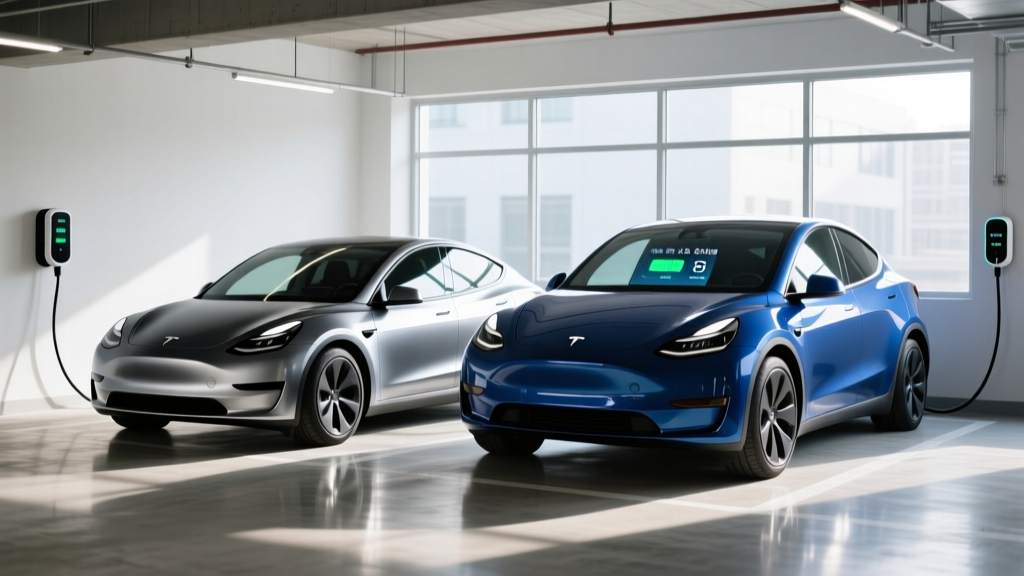
The Model Y remains the best-selling vehicle in the world by volume (across all powertrains, per Tesla's 2025 earnings reports), and the refreshed Model 3 "Highland" continues as the entry point into the Tesla ecosystem. Here's what the 2026 models deliver on paper:
| Spec | Model Y Long Range AWD | Model 3 Long Range AWD |
|---|---|---|
| EPA Estimated Range | 320 miles | 341 miles |
| Battery Capacity (usable) | ~75 kWh (NMC) | ~75 kWh (NMC) |
| Drivetrain | Dual-Motor AWD | Dual-Motor AWD |
| Horsepower | 384 hp | 384 hp |
| 0–60 mph | 4.8 seconds | 4.2 seconds |
| Peak DC Fast Charge | 250 kW | 250 kW |
| 10–80% DC Charge Time | ~25 minutes | ~25 minutes |
| Level 2 Home Charge Rate | 11.5 kW (~44 mi/hr) | 11.5 kW (~44 mi/hr) |
| MPGe (combined) | 111 MPGe | 132 MPGe |
| Efficiency (kWh/100 mi) | 30 kWh/100 mi | 25 kWh/100 mi |
| Cargo Volume (rear seats up) | 30.2 cu ft (76.2 cu ft folded) | 23.1 cu ft (trunk + frunk) |
| Rear Legroom | 41.6 inches | 35.2 inches |
| Battery/Drive Unit Warranty | 8 years / 120,000 miles | 8 years / 120,000 miles |
| Base MSRP | $46,630 | $42,630 |
Charging Infrastructure: The Moat That Keeps Widening
Specs alone don't explain why Tesla outsells GM, Ford, and Rivian. The Supercharger network does. As of early 2026, Tesla operates over 6,500 Supercharger stations and 65,000+ individual stalls across North America. The reliability gap is stark: Tesla Superchargers consistently deliver 95%+ uptime, while third-party networks like Electrify America and EVgo hover around 80–85% in independent audits.
Competitors now access the Supercharger network via NACS adapters (GM and Ford began offering these in 2024, with Rivian following in 2025). However, Tesla owners benefit from native integration — the car routes through Superchargers automatically, preconditions the battery en route, and handles payment without an app or RFID card. For GM and Ford drivers using an adapter, the experience works but adds friction: you still need the Tesla app for payment at many stalls, and some older V2 Superchargers (150 kW) with short cables are physically difficult to reach on non-Tesla charge ports.
| Vehicle | Peak DC kW | 10–80% Time | Level 2 Rate | Native Network |
|---|---|---|---|---|
| Tesla Model Y LR | 250 kW | ~25 min | 11.5 kW (44 mi/hr) | Supercharger (NACS) |
| Chevy Equinox EV RS | 190 kW | ~30 min | 11.5 kW (~38 mi/hr) | CCS → NACS adapter |
| Ford Mustang Mach-E (Ext. Range) | 150 kW | ~36 min | 10.5 kW (~32 mi/hr) | CCS → NACS adapter |
| Rivian R1S (Dual-Motor Max) | 220 kW | ~28 min | 11.5 kW (~30 mi/hr) | NACS (native since 2025) |
Tesla's 250 kW peak isn't the fastest in the industry — Hyundai's E-GMP platform (Ioniq 5/6) hits 800V and peaks at 350 kW — but Tesla compensates with station density and consistency. You're never more than 150 miles from a Supercharger on most U.S. interstates. That peace of mind converts fence-sitters into buyers.
Pricing and Federal Tax Credit Eligibility
Price is where the story gets nuanced. Tesla has aggressively cut MSRPs since 2023, and the 2026 Model 3 Long Range starts at $42,630 — undercutting many competitors with less range. But the federal EV tax credit under IRS §30D is no longer guaranteed across the board.
| Vehicle | Base MSRP | §30D Credit Eligibility | Effective Price (if eligible) |
|---|---|---|---|
| Tesla Model 3 LR AWD | $42,630 | Up to $7,500 (battery sourcing dependent) | ~$35,130 |
| Tesla Model Y LR AWD | $46,630 | Up to $7,500 (battery sourcing dependent) | ~$39,130 |
| Chevy Equinox EV 2LT | $34,995 | $7,500 (qualifies; point-of-sale transfer available) | ~$27,495 |
| Ford Mustang Mach-E Select | $39,995 | Partial — battery sourcing limits may reduce to $3,750 | ~$36,245 |
| Rivian R1S Dual-Motor Standard | $71,700 | $0 (exceeds $80,000 SUV MSRP cap with options) | $71,700+ |
Critical caveats on the §30D credit: Eligibility depends on the buyer's adjusted gross income (single filers: ≤$150,000; joint: ≤$300,000), the vehicle's MSRP (≤$55,000 for sedans, ≤$80,000 for SUVs/trucks), and battery component and critical mineral sourcing requirements that tighten annually. As of 2026, the critical minerals requirement demands that 80% of mineral value be sourced from the U.S. or FTA partners. Tesla's shifting supply chain means eligibility can vary by production batch. Always verify current eligibility on fueleconomy.gov before purchasing, and consult a tax professional. Point-of-sale transfer is available at participating dealers, reducing your out-of-pocket cost at purchase rather than waiting for a tax refund.
Competitor Check: Where GM, Ford, and Rivian Stand
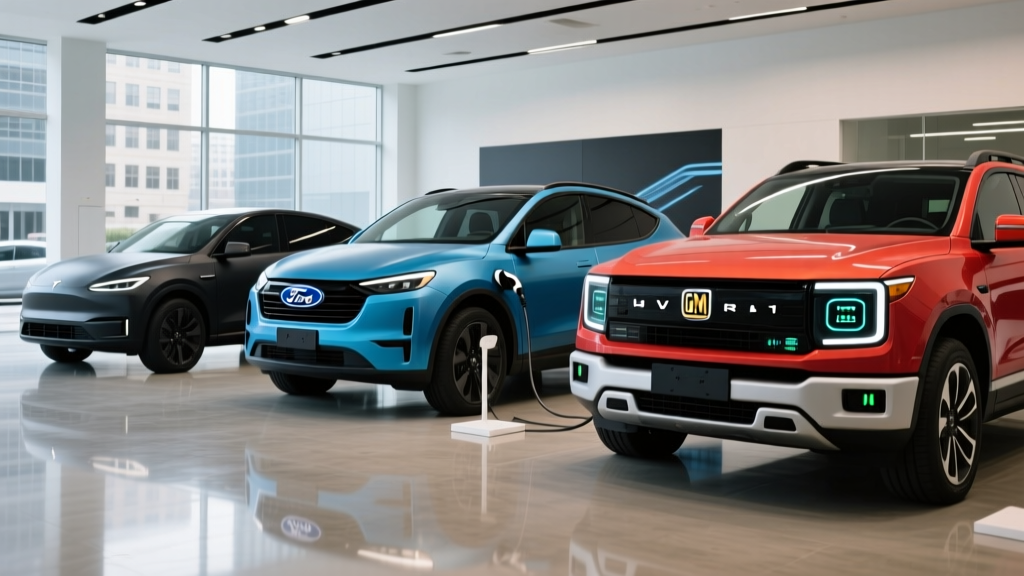
To understand why Tesla outsells GM, Ford, and Rivian, you have to look at what each competitor brings — and where the gaps remain.
Chevrolet Equinox EV (GM)
The Equinox EV is GM's volume play: an affordable, practical crossover with up to 319 miles of EPA range on the RS trim. At ~$35,000 before incentives, it undercuts the Model Y by over $10,000 and qualifies for the full $7,500 credit, making it one of the cheapest 300+ mile EVs on the market. The problem? GM's dealer network is inconsistent on EV readiness, and the Ultium platform's real-world charging speeds haven't matched Tesla's Supercharger experience. GM's Super Cruise (Level 2 hands-free on mapped highways) is genuinely excellent — arguably better than Tesla's Autopilot in hands-off comfort — but it requires a $2,500 subscription after the trial period.
Ford Mustang Mach-E
Ford's Mach-E remains a driver's EV with sharp handling and a well-built interior. The extended-range AWD model delivers 290 miles EPA. However, Ford's 150 kW peak DC charging rate is the slowest in this comparison, and the Mach-E has struggled with battery sourcing requirements that limit its tax credit. Ford has also scaled back EV production targets multiple times, creating inventory inconsistency and consumer uncertainty about long-term support.
Rivian R1S / R1T
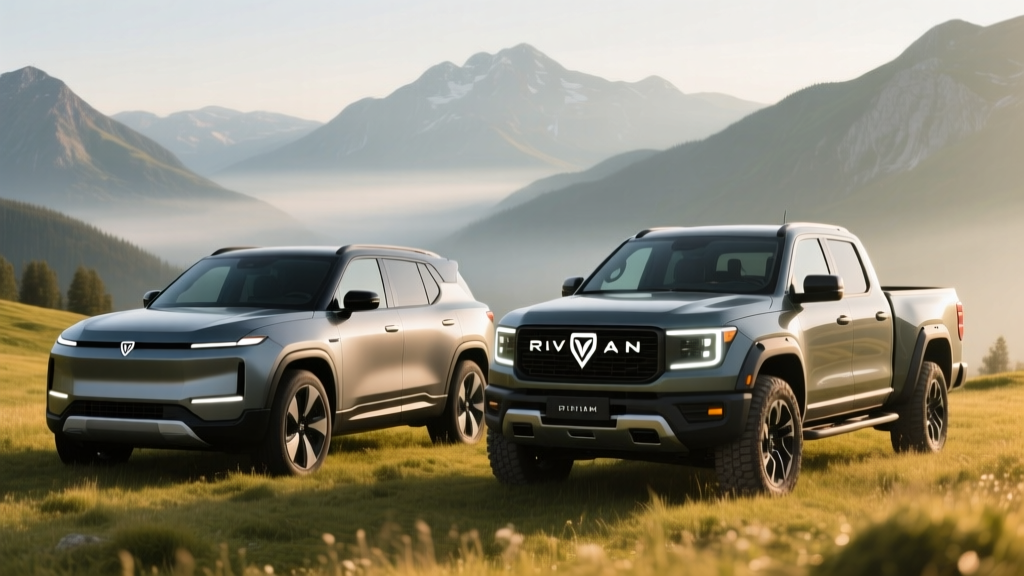
Rivian builds the most capable adventure EVs on the market — the R1S tri-motor delivers 352 miles EPA, genuine off-road chops, and a 7,700-lb tow rating. But at $71,700+ before options, it serves a niche. Rivian's production volume (approximately 57,000 vehicles in 2025) can't compete with Tesla's multi-million-unit global output. The R1S is a better vehicle than the Model Y for towing, off-roading, and three-row family hauling — but it costs nearly twice as much.
Tesla Model Y / Model 3 Pros
- Best-in-class Supercharger network (65,000+ stalls, 95%+ uptime)
- Industry-leading efficiency (25 kWh/100 mi on Model 3)
- Over-the-air updates that add features post-purchase
- Strongest resale value in the EV segment
- Native NACS — no adapter required at Superchargers
- Competitive pricing after years of cuts
Tesla Model Y / Model 3 Cons
- Minimalist interior not for everyone (no instrument cluster, limited physical controls)
- Panel gap and paint quality still inconsistent on some builds
- FSD (Supervised) is Level 2 — requires active driver attention despite the name
- Service center wait times can stretch weeks in some metro areas
- No Apple CarPlay or Android Auto
- Rear-seat comfort in Model 3 trails competitors like Hyundai Ioniq 6
Who Should Buy Tesla — and Who Should Look Elsewhere?
Tesla's dominance in sales isn't an accident. It's the result of vertical integration: Tesla controls the car, the charger, the software, and the retail experience. For many buyers, that ecosystem lock-in is a feature, not a bug.
- You road-trip frequently and want the most reliable DC fast-charging network
- You value efficiency and want the lowest cost-per-mile in the segment
- You want OTA updates and a tech-forward ownership experience
- You live in an apartment or condo and will rely primarily on public charging
- Budget is your top priority — the Equinox EV at ~$27,500 after the credit is unbeatable value
- You prefer a traditional dealership experience with a local service department
- You want hands-free highway driving (Super Cruise) without Tesla's camera-only approach
- Driving dynamics and steering feel matter more than charging speed
- You want a more conventional interior with physical gauges and Apple CarPlay
- You need three rows, genuine off-road capability, or 7,700-lb towing
- Budget is flexible and you value build quality and adventure readiness over mass-market pricing
The Bottom Line: Ecosystem Beats Individual Specs
Tesla outsells GM, Ford, and Rivian not because every Tesla model is the best vehicle in its class — the Equinox EV is cheaper, the Mach-E handles better, and the R1S is more capable off-road — but because Tesla sells a complete, proven ecosystem. The Supercharger network alone converts thousands of hesitant EV shoppers every quarter. Add competitive pricing, strong efficiency, and the industry's most mature software stack, and the sales gap makes sense.
That gap is narrowing. GM's Ultium platform is scaling, Ford is retooling its EV strategy around a next-gen platform, and Rivian's R2 (expected late 2026) targets a $45,000 price point that could challenge the Model Y directly. But as of 2026, Tesla's integrated approach — car, charger, software, and service — remains the benchmark that every competitor is still chasing.
Frequently Asked Questions
What is the real-world range of the Tesla Model Y and Model 3?
The EPA rates the 2026 Model Y Long Range at 320 miles and the Model 3 Long Range at 341 miles. In real-world highway driving at 70–75 mph, expect 270–290 miles (Model Y) and 290–310 miles (Model 3). Cold weather below 30°F can reduce range by 20–30%. Tesla's trip planner and battery preconditioning help you manage expectations on longer routes.
How fast do the Model Y and Model 3 charge?
Both vehicles peak at 250 kW on a V3 or V4 Supercharger, achieving a 10–80% charge in approximately 25 minutes. The charge curve tapers significantly above 80% — a full 80–100% top-off can add another 20+ minutes. At home on a Level 2 Wall Connector (48 amps / 11.5 kW), both vehicles add roughly 44 miles of range per hour, meaning a full overnight charge from 20% to 80% takes about 6–7 hours.
Does Tesla qualify for the federal EV tax credit in 2026?
The Model 3 and Model Y are eligible for up to $7,500 under IRS §30D, but eligibility depends on battery component sourcing, critical mineral origin, buyer income caps ($150,000 single / $300,000 joint AGI), and MSRP limits ($55,000 sedans / $80,000 SUVs). Tesla's credit eligibility has fluctuated as supply chains shift. Verify your specific vehicle's status on fueleconomy.gov before purchase, and consult a tax professional. Point-of-sale transfer is available at Tesla if you qualify.
Is Tesla's Autopilot or FSD actually self-driving?
No. Tesla's Autopilot and Full Self-Driving (Supervised) are SAE Level 2 driver-assistance systems. You must keep your hands on the wheel (or demonstrate attention via the cabin camera) and remain fully responsible for the vehicle at all times. FSD Supervised can navigate city streets, stop signs, and highway interchanges, but it makes errors and requires constant vigilance. True self-driving (Level 4) in the U.S. is currently limited to geofenced robotaxi services like Waymo in select cities.
Is it worth buying a Tesla vs. a Chevy Equinox EV or Ford Mach-E?
It depends on your priorities. If charging reliability and road-trip convenience are paramount, Tesla's Supercharger network is unmatched. If you want the lowest possible purchase price, the Equinox EV at ~$27,500 after incentives is a better deal. If driving engagement matters most, the Mach-E's chassis tuning edges out the Tesla. There is no single "best" EV — only the best EV for your specific use case, commute, and budget.