When news broke that a key Tesla Optimus project leader departed the company, the headline grabbed attention far beyond the robotics lab. For EV buyers and Tesla owners, the real question isn't about humanoid robots — it's whether executive reshuffling at Tesla signals shifting priorities that could affect vehicle development, Full Self-Driving (FSD) progress, and the product roadmap heading into 2026 and beyond.
This analysis examines what the Optimus leadership change means in practical terms for Tesla's current EV lineup, the vehicles you can actually buy today, and where the company's engineering resources appear to be flowing.
Why the Tesla Optimus Departure Matters to EV Buyers
Tesla has always operated with a relatively flat engineering hierarchy compared to legacy automakers. When a senior technical lead leaves a high-visibility project like Optimus, it typically signals one of two things: either a strategic reprioritization of resources toward revenue-generating products (vehicles, energy storage, charging), or internal disagreements about timeline feasibility and capital allocation.
For prospective Tesla buyers in 2026, the practical implications center on three areas:
- FSD development pace: Optimus and Tesla's vehicle autonomy stack share underlying neural network architectures. Leadership changes in robotics can ripple into the Autopilot/FSD team's direction.
- Vehicle refresh cadence: Engineering talent freed from Optimus may accelerate updates to the Model Y, Model 3, and the anticipated next-generation platform.
- Capital allocation: Tesla's R&D budget is finite. A leadership departure can indicate whether the board is doubling down on robotics or redirecting funds toward vehicle competitiveness against Hyundai, BMW, and Chinese EV makers.
Tesla's 2026 EV Lineup: Current Specs and Pricing
Regardless of what happens in the robotics division, Tesla's current vehicle lineup remains the core of the company's revenue. Here's what's available for 2026, with exact EPA figures and real-world expectations.
| Model | EPA Range | Battery (kWh) | 0-60 mph | Peak DC kW | 10-80% Time | Base MSRP |
|---|---|---|---|---|---|---|
| Model 3 RWD | 341 mi | 60 (LFP) | 5.8s | 170 kW | ~25 min | $38,990 |
| Model 3 Long Range AWD | 363 mi | 79 (NMC) | 4.2s | 250 kW | ~18 min | $47,490 |
| Model Y Long Range AWD | 320 mi | 79 (NMC) | 4.8s | 250 kW | ~18 min | $44,990 |
| Model Y Performance | 303 mi | 79 (NMC) | 3.5s | 250 kW | ~18 min | $52,490 |
| Model S Dual Motor | 402 mi | 100 (NMC) | 3.1s | 250 kW | ~20 min | $74,990 |
| Model X Dual Motor | 335 mi | 100 (NMC) | 3.8s | 250 kW | ~20 min | $79,990 |
Sources: EPA / fueleconomy.gov, Tesla.com specifications. Real-world highway range typically 10-15% below EPA estimates; cold-weather (below 32°F) can reduce range by 20-30%.
Real-World Range: What the EPA Sticker Doesn't Tell You
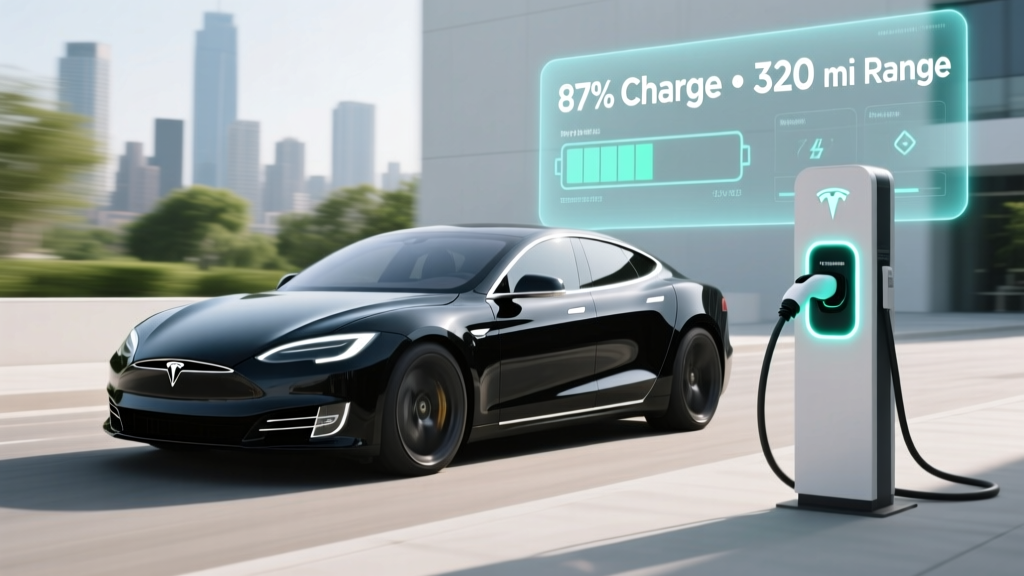
EPA Estimated: 320 miles
Real-World Highway (70 mph, 72°F): ~275-285 miles
Real-World Highway (70 mph, 20°F): ~220-240 miles
City/Commuter with Regen: ~300-310 miles
Highway driving at sustained speeds is the biggest range killer for all EVs. Cold temperatures compound this by increasing cabin heating demand and reducing battery chemistry efficiency.
The Model 3 RWD's 60 kWh LFP (lithium iron phosphate) battery deserves special attention. LFP chemistry sacrifices some energy density compared to NMC (nickel manganese cobalt), which is why the RWD model has less range despite being lighter. However, LFP offers significant advantages: Tesla recommends charging LFP batteries to 100% regularly for calibration, whereas NMC batteries last longer when daily-charged to 80-90%. For owners without home charging who rely on public DC fast charging, the LFP Model 3's tolerance for full charges simplifies ownership.
Charging Speed and Infrastructure
Tesla's Supercharger network remains the most reliable DC fast-charging infrastructure in North America. With the adoption of NACS (North American Charging Standard) by Ford, GM, Rivian, and most other automakers, Tesla's charging advantage has evolved from exclusive access to a competitive network that now serves the broader EV market.
| Charging Level | Power (kW) | Miles Added per Hour | Typical Use Case |
|---|---|---|---|
| Level 1 (120V) | 1.4-1.9 kW | 3-5 mi/hr | Emergency/trickle |
| Level 2 (240V, 48A) | 11.5 kW | 30-44 mi/hr | Home overnight |
| DC Fast (V3 Supercharger) | Up to 250 kW | ~200+ mi in 15 min | Road trips |
| DC Fast (V4 Supercharger) | Up to 350 kW* | ~250+ mi in 15 min | Road trips (select locations) |
*V4 Supercharger 350 kW capability depends on vehicle acceptance rate. Current Tesla vehicles peak at 250 kW; future architectures may utilize higher rates. Charge curves taper significantly above 80% SoC — the 10-80% time is the meaningful metric, not peak kW alone.
For home Level 2 charging, Tesla's Wall Connector at 48 amps delivers up to 11.5 kW on a 60-amp circuit. A typical installation by a licensed electrician runs $800-$2,000 depending on panel proximity and whether a 200-amp service upgrade is needed. Expect 30-44 miles of range added per hour of charging, which fully replenishes any Tesla overnight.
Federal Tax Credit Eligibility (§30D)
Tesla's eligibility for the IRS §30D federal tax credit depends on battery component sourcing, critical mineral requirements, buyer income, and MSRP caps. As of 2026, the credit structure is as follows:
- MSRP Cap: Sedans (Model 3, Model S) must be under $55,000. SUVs/trucks (Model Y, Model X) must be under $80,000.
- Income Cap: AGI must not exceed $150,000 (single), $225,000 (head of household), or $300,000 (joint).
- Battery Sourcing: Up to $3,750 for critical minerals + up to $3,750 for battery components manufactured in North America.
- Point-of-Sale Transfer: Buyers can transfer the credit to the dealer for an upfront price reduction, subject to IRS registration requirements.
- FEOC Restriction: Vehicles with battery components from a "foreign entity of concern" (primarily China-linked suppliers) may be disqualified from partial or full credit.
The Model 3 RWD at $38,990 and Model 3 Long Range at $47,490 both fall under the $55,000 sedan cap. The Model Y, classified as an SUV, qualifies under the $80,000 cap across all trims. The Model S and Model X base prices are under $80,000, but adding options can push the Model S above the sedan cap — verify the specific VIN's MSRP classification before purchase.
FSD, Autopilot, and the Optimus Connection
Tesla's Autopilot and Full Self-Driving (Supervised) are SAE Level 2 driver-assistance systems. The driver must remain fully engaged, hands on or near the wheel, and eyes on the road at all times. These systems do NOT make the vehicle self-driving. Only Level 4 services like Waymo operate without a human driver in defined operational domains.
The connection between Optimus and Tesla's vehicle autonomy stack is more than marketing. Tesla's approach to both humanoid robotics and self-driving relies on vision-based neural networks trained on massive real-world datasets. The same engineering philosophy — cameras over LiDAR, end-to-end neural nets over modular rule-based systems — underpins both projects.
When a senior Optimus leader departs, it raises questions about whether Tesla's unified AI approach is scaling as planned or whether the robotics division is consuming resources that could accelerate FSD reliability. For buyers considering the $8,000 FSD package (or $99/month subscription), the answer matters: FSD's development trajectory depends on the same talent pool and compute infrastructure that Optimus draws from.
As of 2026, FSD (Supervised) has improved significantly in urban environments but still requires active driver supervision. NHTSA continues to monitor Tesla's Autopilot and FSD systems, and buyers should understand that no consumer Tesla vehicle offers hands-off, eyes-off driving capability.
Efficiency, Cargo, and Ownership Practicalities
The Model 3 and Model Y remain among the most efficient EVs on the market. The Model 3 Long Range achieves approximately 132 MPGe combined (25 kWh/100 miles), while the Model Y Long Range delivers roughly 122 MPGe combined (28 kWh/100 miles). For comparison, the Hyundai Ioniq 6 achieves 140 MPGe, and the Ford Mustang Mach-E Extended Range AWD achieves 101 MPGe.
Cargo and passenger space:
- Model 3: 23 cu ft trunk + rear frunk; rear legroom 35.3 inches. Tighter than midsize sedans but adequate for two adults.
- Model Y: 30 cu ft behind second row, 72 cu ft with seats folded; rear legroom 40.5 inches. Genuinely practical for families with strollers, groceries, or camping gear.
- Model X: Up to 88 cu ft with all rear seats folded; available 6- or 7-seat configurations. Falcon-wing doors aid car-seat installation in tight parking spots.
Warranty: All Tesla vehicles include a 4-year/50,000-mile basic warranty and an 8-year battery and drive unit warranty. The Model 3 RWD (LFP) covers 100,000 miles on the battery; Long Range and Performance variants (NMC) cover 120,000 miles. Tesla guarantees 70% minimum capacity retention over the warranty period — a standard that aligns with industry norms but trails Hyundai's 10-year/100,000-mile coverage.
Is a Tesla Still Worth Buying vs. the Competition?
- Supercharger network access (most reliable DC charging in North America)
- Class-leading efficiency (kWh/100mi)
- Over-the-air updates continuously add features
- Strong resale value relative to most EVs
- LFP battery option (Model 3 RWD) with 100% daily charge tolerance
- Competitive 0-60 performance across all trims
- Build quality inconsistency (panel gaps, paint) still reported
- No Apple CarPlay / Android Auto integration
- Insurance premiums 20-40% higher than comparable ICE vehicles
- FSD ($8,000) remains Level 2 — expensive for supervised driving
- Minimalist interior lacks physical controls some drivers prefer
- Service center wait times can extend to weeks in some markets
The competitive landscape in 2026 is fierce. The Hyundai Ioniq 5 N offers more engaging driving dynamics and 800V architecture for faster charging curves. The BMW i4 provides a more traditional luxury interior. The Chevrolet Equus (successor to Bolt) undercuts on price. But Tesla's combination of range, charging infrastructure, software, and efficiency remains difficult to match in a single package.
Who Should Buy a Tesla in 2026?
- Commuters with home charging: The Model 3 RWD at ~$38,990 (potentially ~$31,490 after full tax credit) is one of the lowest-cost-per-mile vehicles available, electric or gas.
- Families needing cargo space: The Model Y Long Range balances 320 miles of range, 30 cu ft of cargo, and Supercharger access for road trips.
- Tech-forward buyers: Tesla's software, OTA updates, and app integration are the most advanced in the industry — if you accept the no-CarPlay tradeoff.
- Road trippers: The Supercharger network's reliability makes Tesla the default choice for drivers who regularly travel beyond their home metro area.
Who Should Look Elsewhere?
- Buyers prioritizing interior luxury: BMW i4, Mercedes EQB, or Genesis Electrified G80 offer materially better fit and finish.
- Those uncomfortable with touchscreen-only controls: Hyundai, Kia, and Ford retain physical buttons for climate and volume.
- Buyers without home charging in apartments: Tesla's reliance on proprietary connectors (pre-2025 adapters) and Supercharger pricing can make public-only charging expensive compared to Electrify America or ChargePoint plans.
Frequently Asked Questions
Does the Tesla Optimus leadership departure affect current vehicle production?
No. Optimus is a separate division from Tesla's automotive manufacturing. Current Model 3, Model Y, Model S, and Model X production is unaffected. The departure may influence long-term R&D allocation but has no near-term impact on vehicle availability, specs, or pricing.
How fast does a Tesla charge at home?
With a Tesla Wall Connector on a 240V/60-amp circuit (48A continuous), you'll add approximately 30-44 miles of range per hour depending on the model. A full overnight charge (8-10 hours) replenishes any Tesla from near-empty to full. Installation typically costs $800-$2,000 depending on electrical panel proximity and whether a service upgrade is needed.
What is the real-world range of the Model Y Long Range?
The EPA rates it at 320 miles. In real-world highway driving at 70 mph in moderate temperatures, expect 275-285 miles. In cold weather (below 32°F), highway range drops to approximately 220-240 miles. City driving with regenerative braking can approach or slightly exceed the EPA estimate.
Does the Model Y qualify for the $7,500 federal EV tax credit?
The Model Y qualifies for up to $7,500 under §30D, subject to buyer income caps ($300,000 joint AGI), the $80,000 SUV MSRP cap, and battery sourcing requirements. The credit can be transferred to the dealer at point of sale for an upfront price reduction. Verify current eligibility on fueleconomy.gov before purchasing, as sourcing rules change.
Is Tesla's FSD worth $8,000?
FSD (Supervised) is a Level 2 driver-assist system that requires active driver engagement. It handles highway lane changes, on-ramps, and some city streets competently but is not autonomous. At $8,000 (or $99/month), it's a premium for convenience, not a replacement for driving. Most buyers are better served by the included Basic Autopilot unless they commute long highway distances daily and value the reduced workload.
How does Tesla's warranty compare to competitors?
Tesla's 8-year battery warranty with 70% capacity retention guarantee is industry-standard. However, Hyundai/Kia offer 10-year/100,000-mile battery warranties, and some competitors guarantee 70% or higher retention. Tesla's 4-year/50,000-mile basic warranty is shorter than BMW's 4-year/50,000-mile coverage with included maintenance. Factor warranty differences into total cost of ownership calculations.