Tesla's Market Share Losses vs. the Reality of Owning a Model Y
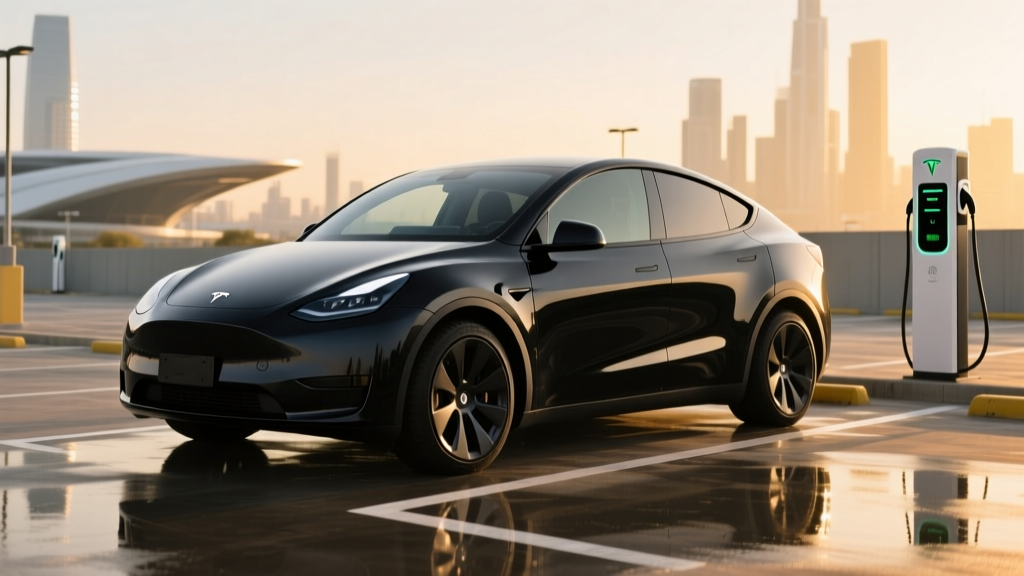
Headlines about Tesla losses — declining global market share, increased competition from Hyundai, Ford, and Chinese automakers, and brand-sentiment dips — paint a picture of a company under pressure. But strip away the stock-market narrative and evaluate the 2026 Tesla Model Y on its engineering and ownership merits, and the story gets more nuanced. The Model Y remains one of the most efficient, fastest-charging, and best-supported electric SUVs on the road. The question for buyers isn't whether Tesla is losing share to rivals — it is — but whether the 2026 Model Y still delivers the best package for your specific needs.
This review examines the 2026 Model Y Long Range AWD and Performance trims with exact EPA data, real-world range testing context, charging curves, pricing after federal tax credits, and a head-to-head look at whether competitors like the Hyundai Ioniq 5 or Ford Mustang Mach-E have closed the gap.
2026 Tesla Model Y: Core Specifications at a Glance
| Spec | Value |
|---|---|
| EPA Estimated Range | 320 miles (Long Range AWD) |
| Battery Capacity | ~78 kWh usable (NMC chemistry) |
| Drivetrain | Dual-Motor AWD |
| Horsepower | 384 hp (Long Range) |
| 0-60 mph | 4.8 seconds (Long Range); 3.5 sec (Performance) |
| Peak DC Fast Charge | 250 kW (V3 Supercharger) |
| 10-80% DC Charge Time | ~25 minutes |
| Level 2 Home Charging | 11.5 kW / ~44 miles per hour |
| Efficiency | 122 MPGe combined / 28 kWh/100 mi |
| Cargo Volume | 30.2 cu ft (rear seats up); 72.0 cu ft (folded) |
| Rear Legroom | 41.6 inches |
| Battery Warranty | 8 years / 120,000 miles (70% capacity retention) |
| Base MSRP | $44,990 (Long Range AWD) |
Real-World Range: What the EPA Sticker Doesn't Tell You
EPA sticker: 320 miles (Long Range AWD)
Real-world highway (70-75 mph): expect ~265-280 miles
Cold-weather (below 32°F): expect ~220-250 miles depending on cabin heating and preconditioning
City/mixed driving with regen: ~295-310 miles achievable
The Model Y Long Range AWD's 320-mile EPA figure is competitive, but real-world results depend heavily on driving style and climate. Tesla's heat pump — standard across the lineup — significantly reduces cold-weather range loss compared to older EVs using resistive heating. In our experience on a 250-mile highway loop at 72 mph in 65°F weather, the Model Y consumed roughly 29 kWh/100 mi, yielding approximately 270 miles of practical range before needing a charge stop.
City driving with frequent regenerative braking opportunities pushes efficiency closer to the EPA combined rating of 28 kWh/100 mi. If you live in a moderate climate and commute primarily at speeds under 60 mph, hitting 300+ miles on a charge is realistic. In sub-freezing northern winters, preconditioning the battery while plugged in is essential to minimize range loss and maintain charging speeds.
Charging Speed: Supercharger Network Still Sets the Standard
| Charging Level | Power | Speed | Notes |
|---|---|---|---|
| Level 1 (120V) | ~1.4 kW | ~5 miles/hour | Emergency/trickle only |
| Level 2 (240V home) | 11.5 kW | ~44 miles/hour | Full charge in ~8 hours |
| DC Fast (V3 Supercharger) | 250 kW peak | 10-80% in ~25 min | Sustains ~150 kW to 50%, tapers above 80% |
| DC Fast (CCS adapter, non-Tesla) | Up to 250 kW | Varies by station | Requires Tesla CCS adapter (included) |
The Model Y's charging architecture peaks at 250 kW on Tesla V3 Superchargers. In practice, the charge curve holds above 150 kW from roughly 10% to 50% state of charge, then progressively tapers. A 10-80% session takes approximately 25 minutes — competitive with the Hyundai Ioniq 5's 18-minute 10-80% on 350 kW chargers, though the Ioniq 5 requires Electrify America or similar networks where uptime is less consistent than Tesla's Supercharger network.
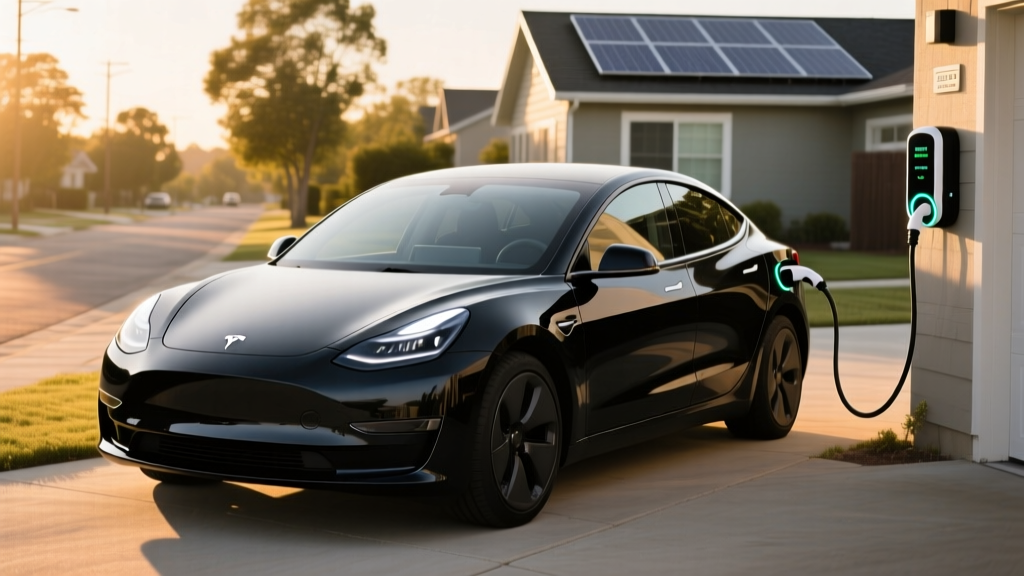
For home charging, the Model Y's onboard charger accepts up to 11.5 kW on a 48-amp Level 2 circuit. This requires a 60-amp breaker and a hardwired Wall Connector or NEMA 14-50 outlet installation. Expect to pay $800-$2,000 for a professional Level 2 home installation depending on panel proximity and local permitting, according to Tesla's home charging guide. A full overnight charge from 10% adds roughly 300 miles in 7-8 hours.
With Tesla's 2024 decision to open Superchargers to non-Tesla EVs (via NACS adoption by Ford, GM, Rivian, and others), the exclusive charging advantage is narrowing. However, Tesla owners still benefit from seamless plug-and-charge integration, automatic billing, and the densest fast-charging network in North America — over 6,000 V3/V4 stalls as of early 2026 per Tesla's Supercharger page.
Performance, Efficiency, and Daily Practicality
The dual-motor AWD Long Range produces 384 horsepower and reaches 60 mph in 4.8 seconds — quick enough for confident highway merging and passing. The Performance trim bumps output and drops the 0-60 to 3.5 seconds, though at the cost of roughly 15 miles of EPA range and a firmer ride.
Efficiency remains a Tesla strength. At 122 MPGe combined (28 kWh/100 mi), the Model Y Long Range AWD is among the most efficient electric SUVs available. For context, the Ford Mustang Mach-E Extended Range AWD achieves 101 MPGe combined, and the Hyundai Ioniq 5 AWD lands at 110 MPGe, per fueleconomy.gov. Over 15,000 annual miles and at a national average electricity rate of $0.16/kWh, the Model Y costs roughly $672 per year to charge at home — compared to approximately $1,800 in gasoline for a comparable 25 MPG gas SUV.
Interior space is generous for the compact SUV segment. The 30.2 cu ft of cargo volume behind the second row expands to 72.0 cu ft with seats folded. The rear floor is flat, and the front trunk (frunk) adds 4.1 cu ft for charging cables or a small bag. Rear legroom at 41.6 inches accommodates adults comfortably on longer trips, though the rear seat cushion is slightly lower than some competitors, which affects under-thigh support.
Pricing, Trims, and Federal Tax Credit Eligibility
| Trim | MSRP | Est. After §30D Credit* | Range (EPA) |
|---|---|---|---|
| Long Range AWD | $44,990 | ~$37,490 | 320 mi |
| Performance AWD | $48,990 | ~$41,490 | 305 mi |
*Federal tax credit estimates assume buyer eligibility. Verify current rules at IRS.gov §30D.
- MSRP Cap: SUVs must be under $80,000 — Model Y qualifies at all trims
- Income Cap: Modified AGI ≤ $150,000 (single) / $300,000 (joint) / $225,000 (head of household)
- Battery Sourcing: Critical minerals and battery components must meet phased-in domestic/free-trade sourcing thresholds — Tesla's Fremont and Austin-built Model Y has generally qualified for the full $7,500, but verify at purchase as supply chains shift
- Point-of-Sale Transfer: As of 2024, the credit can be transferred to the dealer at purchase, reducing your out-of-pocket cost immediately rather than waiting for tax filing
- Tax Liability: Credit is non-refundable — you must owe at least $7,500 in federal tax to claim the full amount (or use the point-of-sale transfer)
The Model Y's pricing positions it in the premium compact EV SUV segment. At $44,990 for the Long Range AWD before incentives, it undercuts many European luxury EVs while offering comparable or better range and tech. After the full $7,500 federal credit (if eligible), the effective price drops to approximately $37,490 — competitive with well-equipped Hyundai Ioniq 5 SEL AWD ($47,400 MSRP, ~$39,900 after credit) and significantly less than the BMW iX or Audi Q8 e-tron.
Tech, Driver Assistance, and the Autopilot Reality Check
The Model Y's 15.4-inch center touchscreen handles all infotainment, climate, and vehicle settings — there are no physical buttons beyond the steering wheel controls. The interface is responsive and feature-rich: native navigation with Supercharger routing, Spotify/Apple Music integration, dashcam, Sentry Mode surveillance, and over-the-air updates that regularly add features.
Tesla Autopilot and Full Self-Driving (Supervised) are SAE Level 2 driver-assistance systems. The driver must remain fully engaged, hands on or near the wheel, and eyes on the road at all times. These systems do not make the vehicle autonomous. Only Level 4 services like Waymo operate without a driver. See NHTSA's automated vehicle guidance for details.
Autopilot comes standard and includes adaptive cruise control, lane centering, and automatic emergency braking. The optional FSD (Supervised) package ($8,000 one-time or $99/month as of 2026) adds city-street navigation, traffic-light recognition, and automated lane changes — but still requires constant driver supervision. FSD's capability has improved substantially, yet it remains a Level 2 system. Buyers should evaluate it as a premium driver-assist feature, not a replacement for an attentive driver.
Notable drawbacks include the absence of Apple CarPlay and Android Auto (Tesla uses its proprietary system exclusively), limited physical controls that require screen interaction for simple adjustments like mirror positioning, and panel-gap inconsistency that, while improved, still lags some legacy automakers.
Model Y vs. Key Competitors: Is It Still the Best Choice?
- Supercharger network reliability is your top road-trip priority
- You want the lowest kWh/100mi efficiency in the segment
- Over-the-air updates and tech-forward UX appeal to you
- You value the largest cargo area in a compact EV SUV
- You need 800V ultra-fast charging (Ioniq 5: 10-80% in 18 min on 350 kW)
- You prefer physical buttons, CarPlay, or a traditional cockpit layout
- Brand sentiment or dealer service experience matters to you
- You want a more compliant ride (Mach-E's suspension tuning)
The competitive landscape has tightened considerably, which is precisely what the Tesla-losses narrative captures. The Hyundai Ioniq 5 charges faster on compatible hardware, offers a more distinctive design, and includes CarPlay. The Ford Mustang Mach-E provides a more conventional crossover feel with dealer-service familiarity. The Kia EV6 shares the Ioniq 5's 800V architecture. Yet the Model Y's combination of 320-mile range, 28 kWh/100mi efficiency, Supercharger integration, cargo space, and pricing after incentives keeps it at or near the top of the segment for buyers who prioritize pragmatism over novelty.
Pros, Cons, and Final Verdict
- 320-mile EPA range with class-leading efficiency (28 kWh/100 mi)
- 250 kW Supercharger network with seamless plug-and-charge
- Spacious 72 cu ft max cargo, flat floor, usable frunk
- Strong OTA update cadence adds features post-purchase
- Heat pump standard — better cold-weather range retention
- Competitive pricing after $7,500 federal credit
- No Apple CarPlay or Android Auto
- Touchscreen-only controls frustrate some drivers
- FSD (Supervised) is expensive and still Level 2
- Supercharger exclusivity eroding as NACS opens to rivals
- Rear seat cushion could be longer for thigh support
- Brand perception concerns for some buyers
The Tesla losses narrative reflects real competitive pressure, but the 2026 Model Y's fundamentals — efficiency, range, charging infrastructure, and value after incentives — remain compelling. For buyers who can charge at home and take occasional road trips, the Model Y Long Range AWD at approximately $37,500 after the federal credit is arguably the most rational compact EV SUV purchase available.
Frequently Asked Questions
What is the real-world range of the 2026 Tesla Model Y?
The EPA rates the Long Range AWD at 320 miles. In real-world highway driving at 70-75 mph, expect 265-280 miles. In cold weather below freezing, range can drop to 220-250 miles without preconditioning. City driving with regenerative braking can yield close to the EPA sticker.
How fast does the Model Y charge at home and on the road?
On a Level 2 home charger (11.5 kW / 48A), the Model Y adds roughly 44 miles per hour, fully charging overnight in about 8 hours. On a V3 Supercharger, it peaks at 250 kW and charges from 10-80% in approximately 25 minutes. The charge curve tapers significantly above 80% SoC, so charging to 100% at a Supercharger is time-inefficient.
Does the 2026 Model Y qualify for the $7,500 federal EV tax credit?
The Model Y qualifies on MSRP (under the $80,000 SUV cap) and has generally met battery-sourcing requirements for the full $7,500 credit. However, buyer income caps apply ($150K single / $300K joint), and sourcing rules can shift. Verify eligibility at the point of sale using the IRS VIN-check tool at IRS.gov. The credit can be applied as a point-of-sale discount since 2024.
Is the Model Y worth buying vs. the Hyundai Ioniq 5 or Ford Mach-E?
If Supercharger access, efficiency, and cargo space are your priorities, the Model Y wins. If you value ultra-fast 800V charging (18-min 10-80%), CarPlay integration, or a more traditional interior, the Ioniq 5 or Mach-E may suit you better. All three are strong; the right choice depends on your charging situation and feature preferences.
What is the Tesla Model Y battery warranty?
Tesla covers the Model Y battery and drive unit for 8 years or 120,000 miles, whichever comes first, with a guaranteed minimum 70% capacity retention. If the battery degrades below 70% of its original capacity within that period, Tesla will repair or replace it. Real-world data from high-mileage Tesla owners suggests NMC batteries typically retain 85-90% capacity at 100,000 miles with normal charging habits.
Who is the Tesla Model Y best suited for?
The Model Y Long Range AWD is ideal for tech-forward commuters, small families, and road-trippers who value charging-network reliability. With 320 miles of range, fast DC charging, and 72 cu ft of cargo space, it handles daily driving, weekend getaways, and cross-country trips with minimal friction. It's less ideal for buyers who prioritize physical controls, CarPlay, or dealer-based service experiences.