What the Digital Optimus Tesla Robot Actually Is
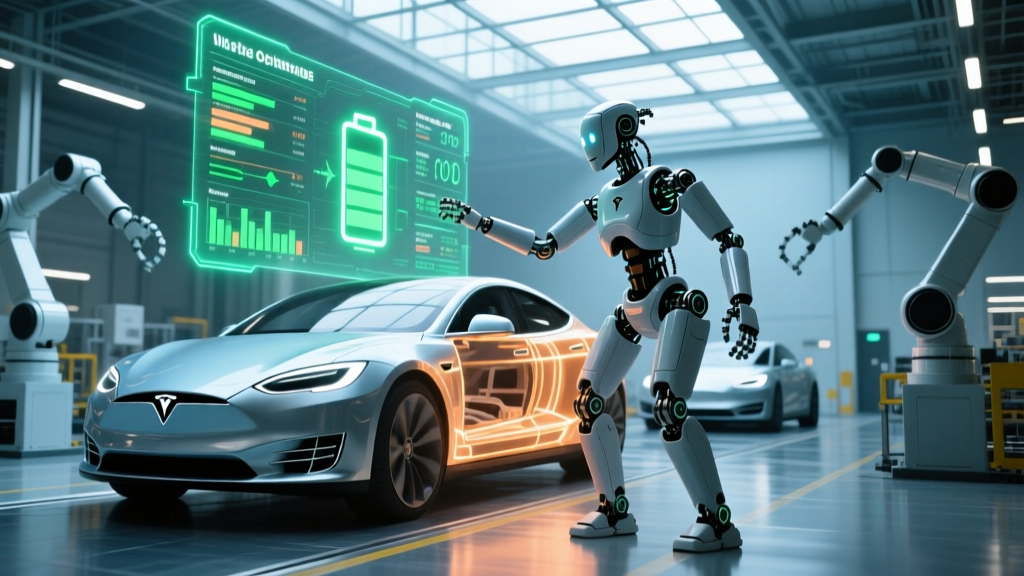
When EV shoppers search for the digital Optimus Tesla, they're usually colliding two Tesla product lines: the physical Optimus humanoid robot (sometimes called Tesla Bot) and the digital simulation environment Tesla uses to train it. As of early 2026, Optimus remains a development and limited factory-deployment program — not a consumer product you can order, configure, or take delivery of like a Model Y. Tesla uses large-scale digital twins and simulated environments (internally referred to in research updates as digital training pipelines) to teach Optimus manipulation, navigation, and assembly tasks before the hardware ever touches a production line.
This matters for EV buyers because Optimus is increasingly visible at Gigafactories, in Tesla earnings calls, and in FSD/AI narrative — but it does not change what you can buy, charge, or drive today. Below, we separate verified 2026 facts from speculation, using Tesla's own disclosures and independent reporting.
Optimus Gen 2 / 2026 Hardware Specs (As Published)
Tesla has not published a traditional automotive-style spec sheet for Optimus the way it does for vehicles on tesla.com, but the company has disclosed hardware details during AI Day presentations, Q2/Q3 2024–2025 earnings calls, and X (formerly Twitter) updates from Tesla's engineering accounts. The table below aggregates the most concrete published figures for the Gen 2 platform that has been shown on factory floors entering 2026.
| Spec | Optimus Gen 2 (published) |
|---|---|
| Height | ~5'8" (173 cm) |
| Weight | ~125 lb (57 kg) |
| Payload (hands) | Up to ~45 lb (20 kg) combined |
| Actuators | 28 custom electromechanical actuators |
| Hands | 11-DOF, tactile sensing arrays |
| Compute | Tesla-designed SoC, FSD-derived vision stack |
| Sensors | Camera-based vision + IMU + force/torque |
| Battery (onboard) | ~2.3 kWh, 52V pack (per Tesla demo disclosures) |
| Walk speed | ~5 mph (8 km/h) |
| Consumer price | Not on sale; Elon Musk has projected $20k–$30k "eventually" |
Notice the onboard battery is measured in kWh (energy capacity), not kW (power). At ~2.3 kWh, Optimus is designed for a single factory shift of light-duty tasks, not all-day continuous labor — a real-world constraint the marketing videos rarely show.
The "Digital" Layer: Simulation, Digital Twins, and AI Training
The phrase digital Optimus most accurately describes the robot's training pipeline. Tesla has publicly stated that Optimus leverages the same neural-net infrastructure built for Full Self-Driving (Supervised) — end-to-end vision models trained on massive video datasets. Before a physical Optimus unit performs a task like sorting battery cells or installing interior trim on a Model Y line, the behavior is rehearsed millions of times in simulation.
This simulation layer is the "digital twin" of the robot and its environment. It allows Tesla to:
- Generate synthetic failure modes (dropped parts, occlusions, slippery surfaces)
- Scale training without needing thousands of physical robots
- Transfer policies from sim to real hardware ("sim-to-real" transfer)
For EV owners, the practical link is this: the same Dojo supercomputer and vision stack that trains Optimus also trains FSD Supervised. Improvements in one pipeline often transfer to the other, which is why Tesla investors — and EV buyers watching Autopilot/FSD capability — track Optimus updates closely.
- It is not available for home purchase or pre-order.
- It does not operate unsupervised in public spaces (this would approach SAE Level 4 autonomy, which humanoid robots have not achieved commercially).
- It does not replace Tesla vehicles, affect vehicle range, or change your FSD subscription.
Where Optimus Is Actually Deployed (2026 Factory Reality)
As of early 2026, Tesla has shown Optimus units performing repetitive tasks inside its own EV factories — specifically:
- Parts handling: picking and placing components on Model Y and Cybertruck lines
- Battery cell sorting: handling 4680 cells in controlled environments
- Simple assembly sub-tasks: screw-driving, harness routing in pilot cells
These deployments are small-scale — dozens of units, not thousands — and closely supervised by human technicians. Think of them as paid pilots inside Tesla's own cost structure, not a commercially sold workforce. Independent reporting from outlets like Reuters and Bloomberg has confirmed limited factory visibility, but Tesla does not publish unit-count or uptime metrics the way it publishes vehicle deliveries.
What This Means for EV Buyers and Owners
If you're shopping for a Tesla vehicle in 2026, Optimus has no direct impact on your purchase decision today. A Model Y Long Range still delivers an EPA-estimated 320+ miles, charges at up to 250 kW on V3 Superchargers, and qualifies (or doesn't) for the §30D federal tax credit based on MSRP caps, buyer income, and battery-sourcing rules published at irs.gov. Optimus does not change any of that.
Indirectly, Optimus matters in two ways:
- Manufacturing cost: If Tesla scales humanoid robots on its lines, it could reduce labor cost per vehicle over the 2027–2030 timeframe, potentially enabling more aggressive EV pricing.
- AI narrative and stock: Optimus is a significant part of Tesla's valuation story. Buyers who care about Tesla's long-term health (and thus resale value, Supercharger investment, and service network) should understand that Optimus is a real program — just not a near-term consumer product.
Optimus vs. Competing Humanoid Robots (2026 Landscape)
Tesla is not alone in humanoid robotics. Figure AI (backed by major tech investors and partnered with BMW), Agility Robotics (Digit, deployed in logistics with Amazon pilots), Boston Dynamics (Atlas, now fully electric), and Chinese entrants like Unitree and Fourier Intelligence all have hardware in the field. Compared to these, Tesla's differentiation is:
- Massive in-house vision dataset from millions of FSD-equipped vehicles
- Vertical integration of actuators, compute, and battery cells
- A guaranteed first customer: Tesla's own factories
Competitors often lead in current commercial availability (Agility's Digit is orderable for warehouse tasks), while Tesla leads in projected unit cost at scale. For 2026 buyers of any product — EV or robot — the honest framing is: Optimus is promising, pilot-stage, and not yet purchasable.
Pricing, Availability, and the $20k Question
Elon Musk has repeatedly projected a long-term consumer price of roughly $20,000–$30,000 for Optimus once production scales — a figure that would undercut most competing humanoid platforms. However, as of 2026:
- No consumer pre-order exists on tesla.com
- No delivery timeline has been committed for non-Tesla customers
- No §30D tax credit, rebate, or incentive applies to humanoid robots (the credit is for clean vehicles per IRS rules)
- Any announced pricing should be treated as forward-looking projection, not MSRP
For EV buyers comparing a Tesla purchase today, Optimus should be categorized as potential future ecosystem value, not a line item in your total cost of ownership.
Frequently Asked Questions
Can I buy the digital Optimus Tesla robot in 2026?
No. Optimus is not available for consumer purchase as of 2026. It is deployed in limited pilot form inside Tesla's own EV factories and is trained heavily in digital simulation before physical tasks.
Does Optimus affect my Tesla vehicle's range, FSD, or charging?
No. Optimus is a separate product line. Your vehicle's EPA range, Supercharger access, and FSD (Supervised) functionality are unaffected. The shared element is the underlying vision AI research, which may indirectly improve FSD over time.
Is Optimus "self-driving" or autonomous?
No. Optimus in 2026 operates under close human supervision in structured factory environments. This is analogous to SAE Level 2 driver-assist in vehicles — the system performs tasks, but a human is responsible for oversight. Fully autonomous (Level 4) humanoid robots in unstructured public environments do not exist commercially.
When will Optimus be available for homes?
Tesla has not committed to a consumer delivery date. Public statements from Elon Musk reference a multi-year timeline, with volume production dependent on solving manipulation reliability at scale. Treat any specific year as speculative.
Does Optimus qualify for any EV tax credit?
No. The IRS §30D Clean Vehicle Credit applies to qualifying electric vehicles meeting MSRP, income, and battery-sourcing requirements — not to robots. See irs.gov for current vehicle credit rules.
Should I wait to buy a Tesla vehicle because of Optimus?
No. Optimus does not change the specs, price, or credit eligibility of the Model 3, Model Y, Cybertruck, or any current Tesla vehicle. If a 2026 Tesla EV fits your range, charging, and budget needs, Optimus is not a reason to delay.