When Elon Musk published his 2014 blog post titled "All Our Patent Are Belong To You," pledging that Tesla would not initiate patent lawsuits against anyone using its technology in good faith, the move was widely misunderstood. It wasn't a release of source code or blueprints. It was a strategic patent pledge — and in 2026, its ripple effects are reshaping the EV landscape in ways that directly affect what you drive, charge, and pay.
But what does the Tesla open-source patent pledge actually mean for someone shopping for an EV today? And how does Tesla's current lineup — particularly the 2026 Model Y Long Range, the brand's highest-volume seller — stack up in a market now flooded with competitors who benefited from that very openness?
This guide breaks down the open-source patent story, then delivers a complete spec-driven review of the 2026 Tesla Model Y Long Range so you can make a data-backed purchase decision.
What "Tesla Open Source" Actually Means (and Doesn't Mean)
Tesla's patent pledge is not open-source in the software sense. The company did not publish its battery management code, autopilot neural network weights, or manufacturing processes. What Tesla committed to was not enforcing its patents against competitors who act in "good faith" — a term that excludes companies that sue Tesla over its own patents or copy Tesla trademarks.
The practical impact has been significant:
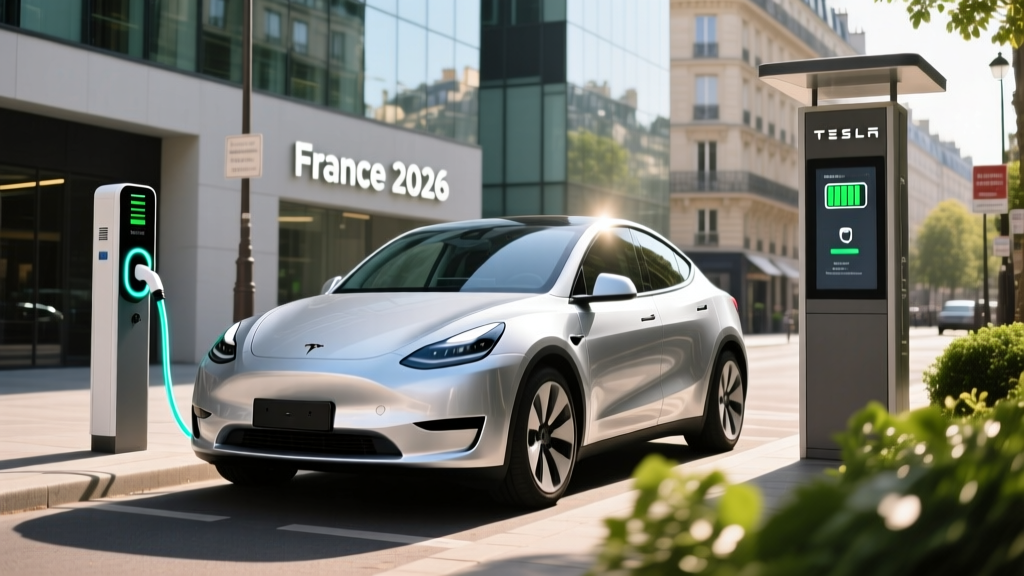
- Charging standard dominance: Tesla's North American Charging Standard (NACS) connector, originally proprietary, became the de facto industry standard after Ford, GM, Rivian, Volvo, and nearly every major automaker adopted it starting in 2024. By 2026, NACS is on virtually every new EV sold in North America, and the Supercharger network is the backbone of public DC fast charging.
- Battery pack design influence: Competitors have studied Tesla's structural battery pack and 4680 cell architecture. While no rival has replicated it identically, the industry's shift toward cell-to-pack designs and dry-electrode manufacturing owes a clear debt to Tesla's published patents.
- Thermal management: Tesla's heat pump and octovalve thermal management system patents informed how Hyundai, BMW, and others designed their cold-weather efficiency systems.
For buyers, the biggest tangible benefit is NACS adoption. You no longer need a CCS-to-NACS adapter to access Tesla Superchargers in most new EVs — a massive improvement in public charging reliability.
2026 Tesla Model Y Long Range: Full Spec Breakdown
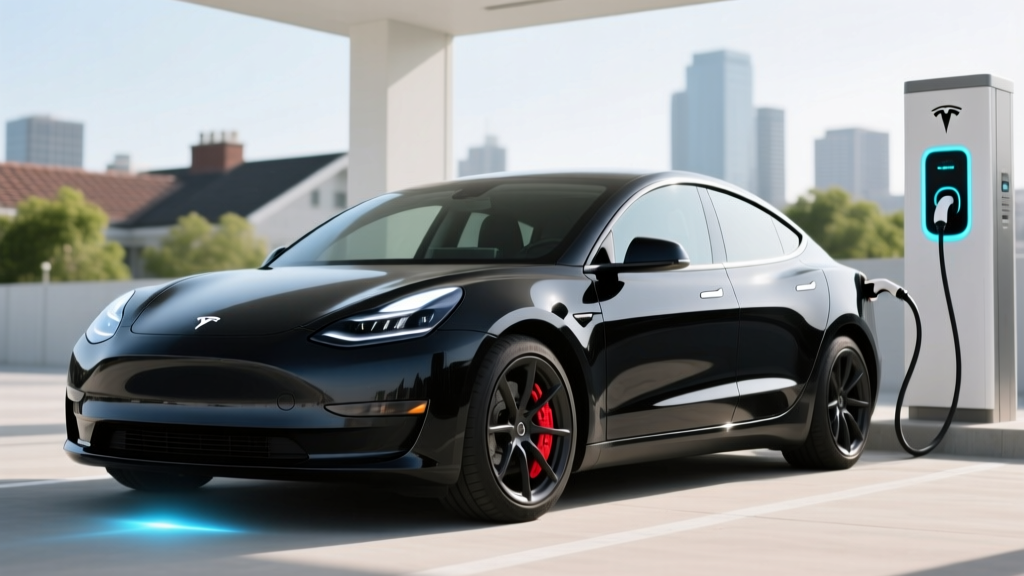
The 2026 Model Y Long Range AWD remains Tesla's volume leader and the benchmark compact electric SUV. Following the "Juniper" refresh that debuted for the 2025 model year, the 2026 version carries over with minor software and efficiency refinements.
| Specification | Value |
|---|---|
| EPA Estimated Range | 320 miles |
| Battery Capacity (usable) | ~78.1 kWh (NMC chemistry) |
| Drivetrain | Dual-Motor AWD |
| Horsepower | 384 hp (combined) |
| 0–60 mph | 4.8 seconds |
| Top Speed | 125 mph |
| Efficiency (EPA) | 122 MPGe combined / 27 kWh/100 mi |
| Max DC Fast Charge Rate | 250 kW peak |
| 10–80% DC Charge Time | ~27 minutes |
| Level 2 Home Charge Rate | 11.5 kW (~44 mi/hr) |
| Cargo Volume (rear seats up) | 30.2 cu ft |
| Cargo Volume (rear seats folded) | 72.1 cu ft |
| Rear Legroom | 38.4 inches |
| Front Trunk (Frunk) | 4.1 cu ft |
| Battery Warranty | 8 years / 120,000 miles |
| Basic Vehicle Warranty | 4 years / 50,000 miles |
| Base MSRP | $48,990 (before destination) |
Real-World Range: What the EPA Number Doesn't Tell You
Real-World Highway (70–75 mph, moderate temps): ~265–285 miles
Real-World City/Mixed (mild climate): ~290–310 miles
Cold Weather (below 30°F, highway): ~210–245 miles
The 320-mile EPA figure is achievable under ideal conditions — moderate temperatures, mixed driving at or below 65 mph, with conservative acceleration. In real-world highway testing at 75 mph, expect to see between 265 and 285 miles before needing to charge. This is a function of the Model Y's aerodynamic efficiency and the NMC pack's energy density, but highway speeds disproportionately drain any EV due to aerodynamic drag scaling with the square of velocity.
Cold weather compounds this. Below 30°F, battery chemistry slows and cabin heating draws significant energy. Even with Tesla's efficient heat pump system (which scavenges waste heat from the drivetrain), expect a 25–35% range reduction in sustained winter highway driving. If your commute is 80 miles round-trip in a Minnesota January, you'll want to charge more frequently than the EPA number suggests.
On the positive side, the Model Y's regenerative braking system is among the most effective in the industry. In stop-and-go city driving, one-pedal mode recovers substantial energy, which is why real-world city range often exceeds highway range — the opposite of a gas car.
Charging Speed: Supercharger Advantage and Home Setup
| Charging Level | Power (kW) | Miles Added per Hour | Typical Use Case |
|---|---|---|---|
| Level 1 (120V standard outlet) | ~1.4 kW | ~5 mi/hr | Emergency/top-up only |
| Level 2 (240V, 48A Wall Connector) | 11.5 kW | ~44 mi/hr | Daily home charging |
| Level 2 (240V, 32A mobile connector) | 7.7 kW | ~30 mi/hr | Home charging (lower amperage circuit) |
| DC Fast Charge (V3 Supercharger) | 250 kW peak | ~1,000 mi/hr (peak) | Road trips |
| DC Fast Charge (V4 Supercharger) | 250 kW peak | ~1,000 mi/hr (peak) | Road trips (newer stations) |
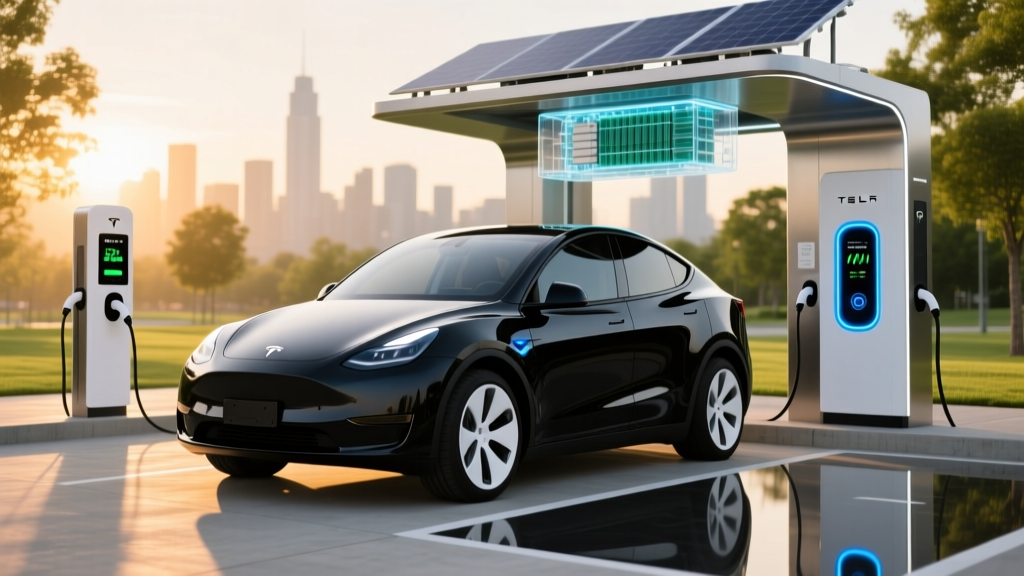
Tesla's 250 kW peak DC fast-charge rate is competitive but no longer class-leading. The Hyundai Ioniq 5 peaks at 240 kW with an 800V architecture that sustains higher power longer, and the Porsche Macan Electric can accept up to 270 kW. However, Tesla's advantage lies in the Supercharger network itself: over 28,000 stalls in North America with unmatched uptime, plug-and-charge billing (no app or RFID card needed), and integrated navigation that preconditions the battery en route to maximize charge speed.
Charging curve reality: The Model Y Long Range peaks at 250 kW only briefly, typically between 10–20% state of charge. By 50% SoC, the rate tapers to roughly 120–140 kW, and above 80% it drops further to protect battery longevity. A 10–80% session takes approximately 27 minutes at a V3 or V4 Supercharger. Charging from 80–100% adds another 25–30 minutes — plan accordingly on road trips and target 80% stops for efficiency.
For home charging, Tesla's Wall Connector at 48 amps on a 60-amp dedicated circuit delivers 11.5 kW, adding roughly 44 miles of range per hour. An overnight charge (8 hours) fully replenishes the pack. Installation costs vary: expect $800–$2,000 for a straightforward install near your electrical panel, or $2,500–$5,000+ if a panel upgrade (to 200A service) is needed. Always consult a licensed electrician for your specific setup.
Pricing, Trims, and Federal Tax Credit Eligibility
| Trim | MSRP (incl. destination) | Est. Price After §30D Credit* |
|---|---|---|
| Long Range AWD | $49,990 | $42,490 |
| Performance AWD | $54,990 | $47,490 |
*Federal tax credit eligibility is subject to IRS §30D rules. The $7,500 credit requires the buyer to meet income caps ($300,000 joint / $150,000 single MAGI), the vehicle must be under the $80,000 MSRP cap for SUVs (both trims qualify), and battery components and critical minerals must meet domestic-sourcing thresholds that tighten annually. As of 2026, the Model Y built at Giga Texas has historically qualified, but battery-sourcing rules change — verify current eligibility at IRS.gov or through Tesla's point-of-sale transfer option at purchase.
The point-of-sale transfer is a major convenience improvement: instead of waiting for a tax refund, the $7,500 credit is applied directly at purchase, reducing your out-of-pocket cost or down payment immediately. Tesla supports this directly through their checkout flow.
State incentives vary widely. California's CVRP has been restructured, Colorado offers up to $5,000, and states like New York and Massachusetts have their own rebate programs. Check your state energy office for current amounts, as these change frequently.
Technology, Driver Assistance, and the FSD Reality Check
The 2026 Model Y comes standard with Tesla's 15.4-inch center touchscreen running Tesla's proprietary infotainment OS. There is no Apple CarPlay or Android Auto — a dealbreaker for some buyers. Navigation, media, climate, and vehicle controls are all routed through the screen, with minimal physical buttons (a refreshed Juniper interior added a rear passenger screen and ventilated front seats).
Autopilot (standard): Includes adaptive cruise control, lane-centering, automatic emergency braking, and blind-spot monitoring. This is a competent SAE Level 2 driver-assistance system that requires continuous driver supervision — hands on the wheel, eyes on the road.
Full Self-Driving (Supervised) — $8,000 option: Adds automated lane changes, navigation-guided on-ramp-to-off-ramp driving, traffic light and stop sign recognition, and Autopark. Despite the name, FSD Supervised remains an SAE Level 2 system. The driver is legally and practically responsible for all vehicle operation at all times. It is not a Level 4 autonomous system like Waymo's driverless robotaxi service, which operates without any human in the driver's seat in geofenced urban areas.
Unique tech features include Sentry Mode (360-degree security recording while parked), Dog Mode (climate control for pets), Tesla's built-in dashcam, over-the-air software updates that add features post-purchase, and the Tesla app's remote preconditioning and location sharing.
How the Model Y Compares to Key Competitors
The compact electric SUV segment is now deeply competitive. Here's how the Model Y Long Range stacks up against its three primary rivals:
- vs. Hyundai Ioniq 5 (Long Range AWD): The Ioniq 5 offers 290 miles EPA range, 800V ultra-fast charging (10–80% in ~18 min), and a starting price around $4,000 lower. It has Apple CarPlay/Android Auto and a more conventional interior. The Model Y wins on range (+30 miles), Supercharger network access, cargo space, and software integration.
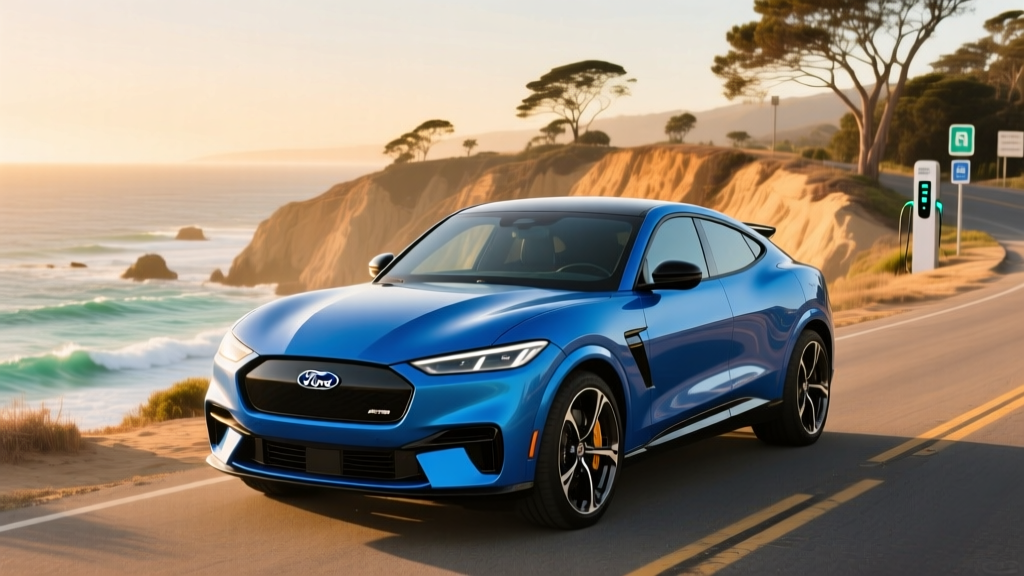
- vs. Ford Mustang Mach-E (Extended Range AWD): The Mach-E delivers ~312 miles EPA, a more traditional driving feel, and Ford's BlueCruise hands-free driving on approved highways. The Model Y edges it on efficiency, charging infrastructure, and OTA update frequency.
- vs. BMW iX xDrive50: The iX is a luxury-tier competitor at ~$87,000, offering 324 miles EPA, a premium interior, and superior ride comfort. It costs nearly double the Model Y and targets a different buyer.
- You prioritize Supercharger network access for frequent road trips
- You want maximum cargo capacity in a compact electric SUV
- You prefer Tesla's software ecosystem and OTA updates
- You don't need Apple CarPlay/Android Auto
- Fastest DC charging matters most (Ioniq 5's 800V system)
- You want hands-free highway driving with eyes-off capability (Mach-E with BlueCruise 1.0 on mapped highways)
- Physical buttons and CarPlay are non-negotiable
- You want a more premium, quiet ride (BMW iX)
Pros and Cons at a Glance
Pros
- 320-mile EPA range — among the best in the segment
- Supercharger network: 28,000+ stalls, unmatched uptime and ease of use
- Class-leading cargo space (72.1 cu ft with seats folded)
- Excellent efficiency at 122 MPGe combined
- Strong OTA update track record — vehicle improves over time
- Point-of-sale federal tax credit transfer supported
- Heat pump standard — better cold-weather efficiency than resistive heating
Cons
- No Apple CarPlay or Android Auto
- FSD ($8,000) remains Level 2 despite the "self-driving" name
- Ride quality is firm — road imperfections are noticeable on rough pavement
- Minimalist interior not for everyone — almost everything is screen-based
- Insurance costs tend to be above segment average
- DC fast-charge peak (250 kW) is no longer class-leading
- Panel gap and paint quality inconsistencies still reported by some owners
Who Should Buy the 2026 Tesla Model Y Long Range?
Best for: Daily commuters who want a reliable 250+ real-world mile buffer, families needing generous cargo space for strollers and groceries, and road-trippers who value the Supercharger network's reliability over the fastest theoretical charging speed.
Not ideal for: Buyers who require Apple CarPlay, those who prioritize a luxury ride quality, or anyone expecting FSD to replace their attention behind the wheel. If you tow frequently, note the Model Y's 3,500-pound towing capacity is adequate for light trailers but trails the Ford F-150 Lightning and Rivian R1S.
The Tesla open-source patent pledge helped create the competitive market that makes the Model Y's pricing possible today — rivals pushed Tesla to refine the Juniper refresh, improve interior quality, and keep prices in check. That competitive pressure, combined with NACS standardization, is the real legacy of Tesla's patent openness.
Frequently Asked Questions
What is the real-world range of the 2026 Tesla Model Y Long Range?
The EPA rates it at 320 miles, but expect 265–285 miles in real-world highway driving at 70–75 mph, and 210–245 miles in cold weather (below 30°F). City driving with regenerative braking can approach or match the EPA figure in mild temperatures.
How fast does the Model Y charge at home and on the road?
At home on a Level 2 Wall Connector (11.5 kW), it adds about 44 miles of range per hour, fully charging overnight. On a V3 or V4 Supercharger, it peaks at 250 kW and charges from 10–80% in approximately 27 minutes, though the charge curve tapers significantly above 50% state of charge.
Does the 2026 Model Y qualify for the $7,500 federal EV tax credit?
The Model Y Long Range ($49,990 MSRP) is under the $80,000 SUV cap and has historically qualified for the full §30D credit, subject to buyer income limits ($300,000 joint / $150,000 single MAGI) and battery-sourcing requirements that tighten annually. Verify current eligibility at IRS.gov before purchasing. Tesla supports point-of-sale credit transfer.
Is the Tesla Model Y worth buying vs. the Hyundai Ioniq 5 or Ford Mach-E?
The Model Y wins on range (320 vs. 290 miles for the Ioniq 5), cargo space, and Supercharger network access. The Ioniq 5 charges faster (18 min 10–80% on 800V), costs less, and supports CarPlay. The Mach-E offers BlueCruise hands-free driving on approved highways. Your priority — charging speed, network, or interior familiarity — determines the winner.
What are the biggest drawbacks of the Model Y?
No Apple CarPlay/Android Auto, a firm ride, screen-dependent controls, FSD's misleading name (it's Level 2, not autonomous), above-average insurance premiums, and DC fast-charge speeds that no longer lead the segment.
What is Tesla's battery warranty on the Model Y?
Tesla covers the battery and drive unit for 8 years or 120,000 miles, whichever comes first, with a minimum 70% capacity retention threshold. This is competitive with Hyundai's 10-year/100,000-mile battery warranty and Ford's 8-year/100,000-mile coverage.
Did Tesla's open-source patents make competitors' EVs better?
Yes, indirectly. Tesla's patent pledge accelerated NACS adoption, influenced thermal management designs across the industry, and encouraged cell-to-pack battery architectures. The most tangible buyer benefit is universal Supercharger access — nearly every new EV sold in 2026 uses the NACS connector natively.
Sources: EPA range and efficiency data from fueleconomy.gov; federal tax credit rules from IRS.gov §30D; vehicle specifications from Tesla's official specifications page.