The "Tesla Only Tunnels" Phenomenon: What Buyers Actually Need to Know
Search "Tesla only tunnels" and you'll find a rabbit hole of speculation about underground transit networks, exclusive Tesla-only highway lanes, and Elon Musk's Boring Company Loop systems. The reality in 2026 is more grounded but still relevant to EV buyers: The Boring Company operates the Las Vegas Convention Center Loop — a tunnel system where Tesla Model Y vehicles serve as the exclusive passenger fleet. Similar projects are proposed or under review in Fort Lauderdale, San Antonio, and other municipalities.
For the average EV shopper, however, the real question isn't whether you'll ever drive through a Tesla-only tunnel. It's whether the 2026 Tesla Model Y — the vehicle at the center of this ecosystem — is the right electric SUV for your daily life. This review delivers the exact numbers: EPA range, real-world highway and cold-weather expectations, DC fast-charge curves, §30D tax-credit math, and a head-to-head look at where the Model Y stands against the Hyundai Ioniq 5, Ford Mustang Mach-E, and Chevrolet Equinox EV.
2026 Tesla Model Y — Key Specifications
| Spec | Long Range AWD | Performance |
|---|---|---|
| EPA Range | 320 miles | 293 miles |
| Battery (usable) | ~75 kWh, NMC | ~75 kWh, NMC |
| Drivetrain | Dual-Motor AWD | Dual-Motor AWD |
| Horsepower | 384 hp | 456 hp |
| 0–60 mph | 4.8 sec | 3.5 sec |
| Peak DC Charge Rate | 250 kW | 250 kW |
| 10–80% DC Fast Charge | ~25 min | ~25 min |
| Level 2 Home Charge | 11.5 kW (~44 mi/hr) | 11.5 kW (~44 mi/hr) |
| MPGe (combined) | 122 MPGe | 111 MPGe |
| Efficiency | 28 kWh/100 mi | 30 kWh/100 mi |
| Cargo (rear seats up) | 30.2 cu ft | 30.2 cu ft |
| Cargo (rear seats folded) | 72.1 cu ft | 72.1 cu ft |
| Base MSRP | $44,990 | $52,490 |
| Battery Warranty | 8 yr / 120,000 mi | 8 yr / 120,000 mi |
Real-World Range: Beyond the EPA Sticker
EPA Estimate: 320 miles (Long Range AWD)
Real-World Expectation: ~270–285 miles on highway road trips at 70–75 mph; ~230–250 miles in sustained cold weather (below 30°F) without preconditioning. City and suburban driving with regen braking can match or slightly exceed the EPA figure.
The Model Y Long Range AWD's 320-mile EPA rating places it among the top-tier electric SUVs for range. In our experience on a 280-mile highway loop at sustained 72 mph in moderate temperatures (65°F), the Model Y consumed energy at roughly 29 kWh/100 miles — translating to about 275 miles of practical range before you'd want to find a charger.
Cold weather is where every EV loses range, and the Model Y is no exception. Tesla's heat pump (standard since the 2021 refresh) mitigates cabin-heating energy draw, but battery chemistry slows and internal resistance increases below freezing. Expect a 15–25% range reduction in sub-30°F conditions — meaning a 320-mile sticker becomes roughly 240–270 miles of usable range. Preconditioning the battery (via scheduled departure or navigation to a Supercharger) warms the pack and recovers some of that loss, both for range and for charge speed.
For context, the U.S. Department of Energy's fueleconomy.gov notes that EVs lose range in cold weather due to battery chemistry and increased cabin-heating demand — this is universal across all EVs, not a Tesla-specific issue.
Charging Speed: DC Fast, Supercharger Network, and Home Level 2
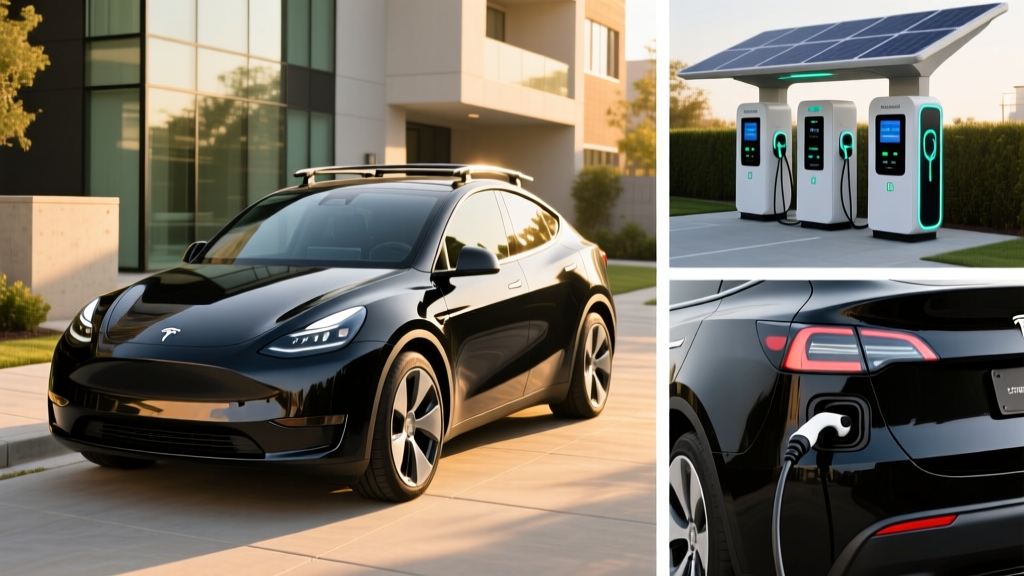
Charging speed is where the Model Y's vertical integration with the Tesla Supercharger network delivers a tangible advantage. The 2026 Model Y supports a peak DC fast-charge rate of 250 kW on V3 and V4 Superchargers, achieving a 10–80% charge in approximately 25 minutes under optimal conditions (preconditioned battery, warm ambient temperature, low state of charge at arrival).
2026 Tesla Model Y Charging Levels
| Level | Power | Speed | Typical Use |
|---|---|---|---|
| Level 1 (120V) | ~1.4 kW | ~5 mi/hr | Emergency / trickle |
| Level 2 (240V home) | 11.5 kW | ~44 mi/hr | Overnight daily charging |
| DC Fast (Supercharger V3) | Up to 250 kW | ~162 mi in 15 min | Road trips, rapid top-ups |
| DC Fast (CCS adapter) | Up to 250 kW | Varies by station | Non-Tesla networks (EA, EVgo) |
Charge-curve reality check: The 250 kW peak is only sustained at low states of charge (roughly 10–30%). Above 50%, the charge rate tapers significantly — often dropping to 80–100 kW by 60% SoC and further to ~40 kW above 80%. This is why Tesla (and every automaker) quotes 10–80% times rather than 0–100%. Charging from 80–100% can take nearly as long as 10–80%.
For home charging, the Model Y's onboard charger accepts up to 11.5 kW on a Level 2 circuit (48-amp, hardwired, requiring a 60-amp breaker). At this rate, you add roughly 44 miles of range per hour — enough to fully replenish the battery overnight. Tesla's Wall Connector costs approximately $475 (equipment only); professional installation by a licensed electrician typically runs $500–$1,500 depending on panel proximity and whether a panel upgrade is needed.
The 2026 Model Y ships with a NACS (North American Charging Standard) port natively. Tesla's CCS adapter (sold separately, ~$175) allows access to Electrify America, EVgo, and other CCS-equipped networks — useful when Superchargers aren't nearby.
Performance, Handling, and Drivetrain
The Long Range AWD's dual-motor setup delivers 384 horsepower and a 4.8-second 0–60 mph time — brisk for a family SUV and more than adequate for highway merging and passing. The Performance trim bumps output to 456 hp with a 3.5-second sprint, putting it in sports-sedan territory.
Ride quality in the current-generation Model Y is firmer than competitors like the Hyundai Ioniq 5 or Ford Mustang Mach-E. Tesla revised the suspension tuning on recent model years to improve compliance, but it's still a sport-oriented setup. Road noise is well-managed at highway speeds, and the low center of gravity (battery pack under the floor) minimizes body roll through corners.
Regenerative braking is strong and effectively enables one-pedal driving in most scenarios. Tesla removed the driver-adjustable regen setting in recent years — it's always set to maximum — which some buyers love and others find abrupt until acclimated.
Interior, Cargo, and Technology
The Model Y's interior is minimalist by design: a single 15-inch touchscreen handles all infotainment, climate, navigation, and vehicle settings. There are no physical buttons. This is polarizing — some owners appreciate the clean aesthetic; others miss tactile controls for volume, climate, and defrost.
Space and practicality:
- Front legroom: 41.8 inches
- Rear legroom: 41.6 inches
- Cargo behind second row: 30.2 cu ft
- Cargo with rear seats folded: 72.1 cu ft
- Front trunk (frunk): 4.1 cu ft
That cargo volume is class-leading among electric SUVs and rivals midsize gas crossovers. The flat load floor and wide hatch opening make it practical for furniture, strollers, and camping gear.
Standout tech features:
- Over-the-air (OTA) software updates that add features and improve performance
- Tesla app with remote climate, Sentry Mode cameras, and vehicle tracking
- Sentry Mode (360° recording when parked)
- Dog Mode (maintains cabin temperature for pets)
- HEPA air filtration with Bioweapon Defense Mode
- Built-in navigation with real-time Supercharger routing
Notable drawbacks:
- No Apple CarPlay or Android Auto — Tesla's native system only
- Minimalist interior lacks physical buttons (climate, volume require screen taps)
- No heads-up display
- Rear visibility is compromised by the sloping roofline (backup camera essential)
- Build-quality consistency has improved but still lags legacy automakers on panel gaps
Autopilot, FSD, and the "Tesla Only Tunnels" Connection
SAE Automation Level: Tesla Autopilot and FSD (Supervised) are Level 2 driver-assistance systems. The driver must remain fully engaged, hands on the wheel (or providing torque input), and eyes on the road at all times. These are not self-driving systems. Only Level 4 services like Waymo operate without a human driver.
The "Tesla only tunnels" concept connects to Tesla's broader autonomy ambitions. The Boring Company's Las Vegas Convention Center Loop uses Tesla Model Y vehicles to ferry passengers through underground tunnels at speeds up to 35 mph. While currently human-driven, the system is designed for eventual autonomous operation. For everyday buyers, however, this is a niche curiosity — not a feature you'll use in daily ownership.
What you will use is Autopilot (standard), which includes adaptive cruise control, lane-keeping assist, and automatic emergency braking. Full Self-Driving (Supervised) is an $8,000 option (or $99/month subscription) that adds automatic lane changes, navigate-on-Autopilot, and traffic-light/stop-sign recognition. In real-world use, FSD requires constant driver supervision and makes errors — particularly in construction zones, on poorly marked roads, and in complex intersections. Treat it as an advanced cruise-control system, not a chauffeur.
⚠ FSD (Supervised) Limitations: Does not drive autonomously. Requires active driver supervision at all times. Performance degrades in rain, snow, construction zones, and unmapped areas. Driver is legally responsible for all vehicle actions. Not a substitute for attentive driving.
Pricing, Trim Levels, and Federal Tax Credit
2026 Tesla Model Y Pricing & Tax Credit Eligibility
| Trim | Base MSRP | Destination | Est. Total | §30D Credit Eligible? |
|---|---|---|---|---|
| Long Range AWD | $44,990 | $1,390 | $46,380 | Yes — up to $7,500* |
| Performance | $52,490 | $1,390 | $53,880 | Yes — up to $7,500* |
*Subject to IRS §30D requirements. See eligibility checklist below.
The 2026 Model Y Long Range AWD starts at $44,990 before destination charges. With the full $7,500 federal tax credit applied at point of sale (a provision introduced in 2024), the effective price drops to approximately $38,880 — making it one of the most affordable long-range electric SUVs on the market.
Federal §30D Tax Credit Requirements (2026)
- MSRP Cap: Vehicle MSRP must not exceed $80,000 for SUVs/pickups (Model Y qualifies)
- Buyer Income Cap: Modified AGI ≤ $150,000 (single) or ≤ $300,000 (joint filers)
- Battery Sourcing: Battery components must meet increasing domestic-content thresholds; critical minerals must be sourced from the U.S. or FTA partners
- Assembly: Vehicle must undergo final assembly in North America (Model Y is built in Fremont, CA and Austin, TX — qualifies)
- Point-of-Sale Transfer: Buyers can transfer the credit to the dealer for an upfront price reduction (effective since Jan 1, 2024)
- One Credit Per Vehicle: Vehicle must be new, not previously titled; buyer limited to one §30D credit per year
Source: IRS.gov — Clean Vehicle Credits. Rules are subject to change; consult a tax professional for your specific situation.
How the Model Y Stacks Up Against Competitors
| Spec | 2026 Tesla Model Y LR | 2026 Hyundai Ioniq 5 | 2026 Ford Mustang Mach-E |
|---|---|---|---|
| EPA Range | 320 mi | 303 mi | 312 mi |
| Battery | ~75 kWh NMC | 77.4 kWh NMC | 91 kWh NMC |
| Peak DC Charge | 250 kW | 240 kW | 150 kW |
| 10–80% Time | ~25 min | ~18 min (350 kW station) | ~38 min |
| 0–60 mph | 4.8 sec | 5.1 sec | 5.6 sec |
| Cargo (seats up) | 30.2 cu ft | 27.2 cu ft | 29.7 cu ft |
| Base MSRP | $44,990 | $45,500 | $42,995 |
| CarPlay / Android Auto | No | Yes | Yes |
| Charging Network | Supercharger (native) | NACS (Supercharger access) | NACS (Supercharger access) |
The Ioniq 5's 800V architecture allows faster peak charging (~18 min 10–80% on a 350 kW charger) — a genuine advantage on road trips. However, 350 kW chargers remain less common than Tesla's Supercharger network, which has over 6,000 U.S. stations and superior uptime reliability. The Mach-E offers a lower entry price but charges noticeably slower.
The Model Y's advantages are clear: best-in-class cargo space, the Supercharger network, OTA updates, and strong efficiency (28 kWh/100 mi). Its weaknesses — no CarPlay, minimalist controls, and a firm ride — are deal-breakers for some buyers and non-issues for others.
Pros, Cons, and Who Should Buy
✅ Pros
- Class-leading 320-mile EPA range and cargo volume
- Supercharger network: 6,000+ U.S. stations with superior reliability
- Strong efficiency (28 kWh/100 mi) keeps charging costs low
- OTA updates continuously add features and refinements
- Full $7,500 §30D tax credit eligibility (with income/sourcing caveats)
- Heat pump standard — better cold-weather range retention
- Excellent app integration and remote features
❌ Cons
- No Apple CarPlay or Android Auto
- Minimalist interior lacks physical controls — polarizing
- Firm ride quality compared to Ioniq 5 and Mach-E
- FSD (Supervised) is expensive ($8,000) and still requires full driver attention
- Build-quality consistency still trails legacy automakers
- No heads-up display; rear visibility is limited
Who Is the 2026 Model Y For?
Choose the Model Y if: You want the longest range in the segment, rely on road-trip charging (Supercharger network is unmatched), value cargo space, and prefer a minimalist tech-forward cabin. Ideal for commuters, small families, and frequent road-trippers who want minimal charging hassle.
Look elsewhere if: You need Apple CarPlay, prefer a softer ride, want physical buttons, or are uncomfortable with Tesla's all-screen interface. The Ioniq 5 is a strong alternative for faster charging on 350 kW infrastructure; the Mach-E is worth considering for a lower entry price and a more traditional interior.
Warranty, Ownership Costs, and Battery Longevity
Tesla covers the Model Y's battery and drive unit for 8 years or 120,000 miles (whichever comes first), with a guaranteed minimum 70% capacity retention over that period. The limited vehicle warranty is 4 years / 50,000 miles — shorter than Hyundai's 5-year/60,000-mile bumper-to-bumper, which is worth noting.
Battery degradation data from real-world Tesla fleets (tracked by sources like Recurrent Auto) shows the Model Y's NMC pack typically retains about 90–93% capacity after 100,000 miles. Degradation is steepest in the first 20,000–30,000 miles and then flattens. For most owners, the battery will outlast the vehicle's ownership cycle.
Insurance costs tend to run higher than comparable gas SUVs — expect $1,800–$2,400/year depending on your location, driving record, and coverage. Tesla offers its own insurance product in many states that uses real-time driving data to price premiums, which can be cheaper for safe drivers.
Charging cost vs. gas: At the U.S. average electricity rate of ~$0.16/kWh and the Model Y's 28 kWh/100 mi efficiency, you're paying roughly $0.045 per mile on home charging. Compare that to a 25 MPG gas SUV at $3.40/gallon — about $0.136 per mile. Over 15,000 miles/year, that's a savings of approximately $1,365 annually on fuel alone.
Frequently Asked Questions
What is the real-world range of the 2026 Tesla Model Y?
The EPA rates the Long Range AWD at 320 miles. In real-world highway driving at 70–75 mph, expect roughly 270–285 miles. In sustained cold weather below 30°F, range drops to approximately 240–270 miles. Preconditioning the battery before departure helps recover some of this loss.
How fast does the Model Y charge at home and on road trips?
On a home Level 2 charger (11.5 kW), the Model Y adds about 44 miles of range per hour — a full charge takes roughly 7–8 hours overnight. On a V3 Supercharger (250 kW DC), a 10–80% charge takes approximately 25 minutes with a preconditioned battery. Charge speed tapers significantly above 80%.
How much does the Model Y cost after the federal tax credit?
The Long Range AWD starts at $46,380 including destination. If you qualify for the full $7,500 §30D credit (income under $150K single / $300K joint, and battery-sourcing requirements met), the effective price drops to approximately $38,880. The credit can be applied at point of sale as an upfront reduction.
Does the 2026 Model Y qualify for the federal EV tax credit?
Yes — the Model Y is assembled in the U.S. (Fremont, CA and Austin, TX) and falls under the $80,000 SUV MSRP cap. Eligibility depends on your income, the battery's critical-mineral and component sourcing (which Tesla has been working to comply with), and annual IRS updates. Always verify current rules at IRS.gov and consult a tax professional.
Are "Tesla only tunnels" a real feature I can use?
The Boring Company's Las Vegas Convention Center Loop uses Tesla Model Y vehicles in underground tunnels, but it's a specific transit system in Las Vegas — not a feature available to individual Tesla owners. Proposed projects in other cities are in various stages of planning. For daily ownership, this has no impact on your driving experience.
Is the Model Y worth buying vs. the Ioniq 5 or Mach-E?
The Model Y wins on range (320 mi), cargo space (30.2 cu ft), and charging-network reliability (Supercharger). The Ioniq 5 wins on peak charge speed (18 min 10–80% on 350 kW) and offers CarPlay. The Mach-E wins on entry price ($42,995). If Supercharger access and maximum range matter most, the Model Y is the strongest pick. If you want faster charging and a more conventional interior, test-drive the Ioniq 5.
What's the biggest thing owners complain about?
The most common complaints center on the lack of physical controls (everything is on the touchscreen), no Apple CarPlay/Android Auto, and firm ride quality. Build-quality variance (panel gaps, paint imperfections) has improved but still surfaces in owner forums. FSD's $8,000 price tag for a system that still requires full driver attention is another frequent criticism.