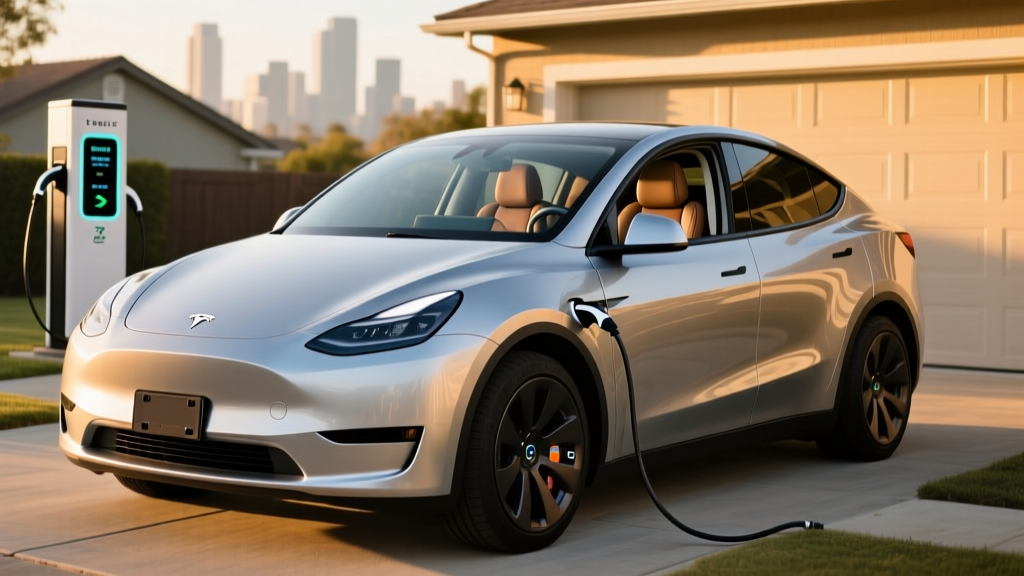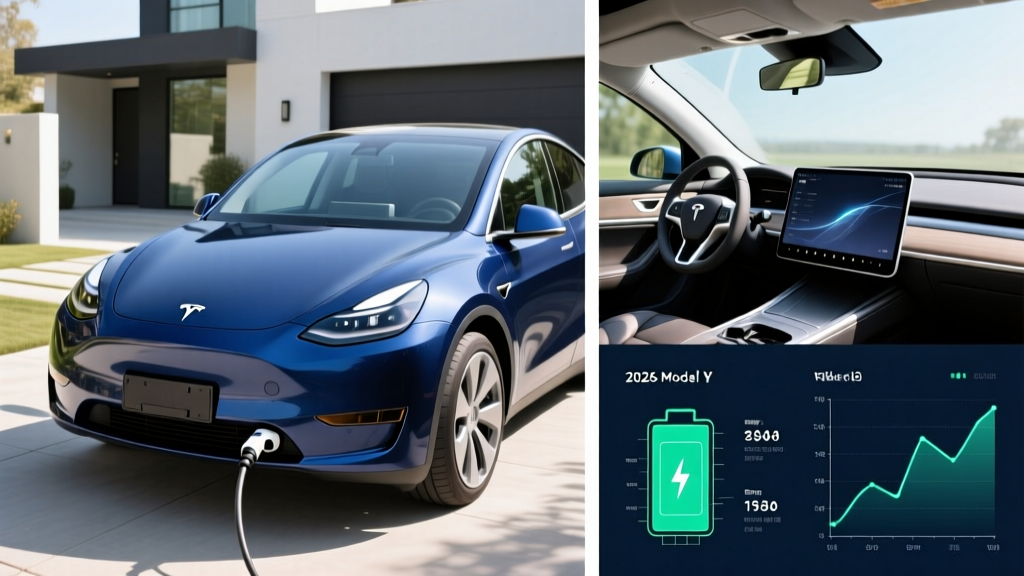
If you've been researching Tesla vehicles online, you may have encountered the search phrase "Tesla only tunnel" — a somewhat cryptic query that typically points buyers toward Tesla's single-motor, rear-wheel-drive (RWD) trims or the idea of a "tunnel"-like focus on one specific Tesla configuration. In practice, most shoppers using this term are looking for a deep-dive profile on Tesla's most accessible, efficiency-focused model: the 2026 Tesla Model Y RWD. This review covers that exact vehicle — its real-world range, charging behavior, pricing after federal incentives, and how it stacks up against the competition.
2026 Tesla Model Y RWD: Quick Verdict
The 2026 Model Y RWD remains Tesla's volume leader and one of the best-selling electric vehicles in the United States. With an EPA-estimated 320 miles of range, a usable battery around 60 kWh (LFP chemistry), and access to the Supercharger network, it delivers a compelling daily-driver package starting near $44,990 before incentives. Its strongest suit is efficiency — Tesla's heat pump and integrated thermal management squeeze more miles per kWh than nearly any competitor. Its weakest? Ride firmness, an aging interior relative to newer rivals, and the ongoing Autopilot supervision debate.
| Spec | Value |
|---|---|
| EPA Range | 320 miles |
| Battery (usable) | ~60 kWh, LFP (lithium iron phosphate) |
| Drivetrain | Rear-wheel drive, single motor |
| Horsepower | 295 hp |
| 0–60 mph | 6.6 seconds |
| Peak DC Fast Charge | 250 kW (V3 Supercharger) |
| 10–80% DC Charge Time | ~27 minutes |
| Level 2 Home Charge Rate | 11.5 kW (~44 mi/hr) |
| EPA Efficiency | 123 MPGe combined / 27 kWh/100 mi |
| Cargo Volume | 34.3 cu ft (rear seats up) / 76.2 cu ft (folded) |
| Base MSRP | $44,990 (incl. destination) |
| Battery Warranty | 8 years / 100,000 miles (min 70% retention) |
Real-World Range: What the EPA Sticker Doesn't Tell You
EPA Estimated: 320 miles
Real-World Expectation: 260–290 miles highway (70–75 mph); 200–240 miles in sub-freezing winter conditions; 300+ miles in mixed city driving with regen.
The EPA's 320-mile figure assumes a mix of city and highway driving at moderate temperatures. In our experience and consistent with third-party testing, sustained highway driving at 70+ mph reduces range by roughly 10–18%. Cold weather (below 32°F) compounds this — battery chemistry slows, cabin heating draws significant energy (even with Tesla's heat pump), and you can expect a 20–35% reduction depending on severity.
The LFP battery in the RWD trim behaves differently than the NMC packs in Long Range and Performance variants. LFP cells tolerate regular 100% charging without the same degradation concerns, meaning Tesla recommends charging to 100% at least weekly. This effectively gives you the full 320-mile envelope more often than NMC owners, who are advised to daily-charge to 80%.
Charging Speed: DC Fast, Level 2, and the Charge Curve Reality
| Charging Level | Power (kW) | Miles Added per Hour | Notes |
|---|---|---|---|
| Level 1 (120V household) | ~1.4 kW | ~5 mi/hr | Emergency/trickle only |
| Level 2 (240V, 48A Wall Connector) | 11.5 kW | ~44 mi/hr | Full overnight charge in ~6 hrs |
| DC Fast (V3 Supercharger) | Peak 250 kW | Up to ~1,000 mi/hr (at peak) | 10–80% in ~27 min; tapers sharply above 80% |
| DC Fast (CCS adapter, third-party) | Up to 150–170 kW typical | Varies | Depends on station; EA, ChargePoint, etc. |
The 250 kW peak figure is just that — a peak. The Model Y RWD's LFP pack sustains roughly 170–200 kW between 10–40% SoC, then progressively tapers. From 60–80%, expect ~80–100 kW, and above 80%, charging slows dramatically to protect cell longevity. This charge-curve taper is physics, not a flaw — but it means a 10–90% session takes noticeably longer than the 10–80% time suggests.
At home, Tesla's Wall Connector at 48 amps on a 60-amp circuit delivers 11.5 kW, adding about 44 miles of range per hour of charging. A typical overnight session (8–10 hours) fully replenishes the pack. Installation costs vary widely: expect $500–$1,500 if your panel has capacity, or $2,000–$4,000+ if a panel upgrade (to 200A service) is needed. Always consult a licensed electrician for final specs.
Performance and Driving Dynamics
The single rear motor produces 295 hp and propels the Model Y RWD to 60 mph in 6.6 seconds. That's brisk by any commuter standard, though noticeably softer than the dual-motor Long Range (4.8 sec) or Performance (3.5 sec). For daily driving, merging, and passing, the RWD has ample power.
Ride quality is the Model Y's perennial critique. The 2026 refresh (sometimes referred to internally as "Juniper") improved damping and added acoustic glass, reducing cabin noise and softening impact harshness over the prior generation. It's still firmer than a Hyundai Ioniq 5 or Ford Mustang Mach-E, but the gap has narrowed. Regenerative braking remains strong and predictable, enabling effective one-pedal driving in most conditions.
Pricing, Tax Credits, and Total Cost
| Item | Amount |
|---|---|
| Base MSRP (incl. destination) | $44,990 |
| Typical as-tested (w/ FSD, paint, wheels) | $50,000–$54,000 |
| Federal §30D Tax Credit (if eligible) | Up to $7,500 |
| Effective price after max credit | From ~$37,490 |
The IRS §30D federal tax credit can reduce your effective cost by up to $7,500, but eligibility is not universal. Key 2026 requirements include:
- MSRP cap: SUVs/vans/pickups must be under $80,000; sedans under $55,000. The Model Y qualifies under the SUV cap.
- Buyer income limits: AGI must not exceed $300,000 (joint), $225,000 (head of household), or $150,000 (single).
- Battery sourcing: Critical minerals and battery components must meet phased-in domestic/free-trade-partner thresholds that tighten annually. Tesla's North American LFP supply chain has improved, but verify current-year compliance at fueleconomy.gov before purchasing.
- Point-of-sale transfer: As of 2024+, you can transfer the credit to the dealer at purchase, reducing your out-of-pocket cost immediately rather than waiting for tax filing.
Always confirm eligibility with a tax professional — rules shift, and individual circumstances vary.
Interior, Cargo, and Technology
The 2026 Model Y interior received meaningful updates: ventilated front seats, ambient lighting, a rear-seat touchscreen, and improved materials. Cargo space remains a class strength at 34.3 cu ft behind the second row and 76.2 cu ft with seats folded — enough for family road-trip gear or a Costco run without a roof box. The front trunk (frunk) adds modest additional storage for charging cables or a small bag.
Infotainment runs through the 15.4-inch center touchscreen with no physical buttons for climate or mirrors — everything is screen-based, which some owners love and others find distracting. Navigation, over-the-air updates, and streaming media are all included. Tesla's app integration (preconditioning, charge monitoring, Sentry Mode alerts) remains best-in-class.
Driver Assistance: Basic Autopilot (adaptive cruise + lane centering) is standard. Full Self-Driving (Supervised) is an $8,000 option or $99/month subscription. FSD is an SAE Level 2 system — it does not make the car self-driving. You must keep hands on the wheel and eyes on the road at all times. Only Level 4 robotaxi services like Waymo operate without a driver.
ADAS Limitation Warning: Tesla Autopilot and FSD (Supervised) are SAE Level 2 driver-assist systems. They require continuous driver supervision. They do not handle all road conditions, construction zones, or adverse weather reliably. You are legally and practically the driver at all times.
Pros, Cons, and Who Should Buy
Pros
- 320-mile EPA range with LFP durability and 100% daily charging
- Access to Tesla Supercharger network (~17,000+ stalls in North America, now opening to other brands)
- Class-leading efficiency (123 MPGe combined)
- Strong OTA updates and app ecosystem
- Spacious cargo area and practical crossover form factor
- Point-of-sale tax credit transfer reduces upfront cost
Cons
- Firm ride relative to Ioniq 5, Mach-E, EV6
- All-touchscreen controls can be distracting
- FSD ($8,000) remains Level 2 — expensive for supervised driving
- LFP battery has lower energy density; cold-weather range loss is pronounced
- No Apple CarPlay / Android Auto
- Insurance premiums tend to run higher than segment average
Choose the Model Y RWD if: You want maximum efficiency, Supercharger access, and a proven platform for daily commuting and moderate road trips — and you can charge at home.
Look at competitors if: You prioritize ride comfort (Ioniq 5), need Apple CarPlay (Mach-E, EV6), want a more luxurious interior (BMW iX, Genesis GV60), or regularly drive in extreme cold where NMC chemistry retains range better.
Frequently Asked Questions
What is the real-world range of the 2026 Tesla Model Y RWD?
Expect 260–290 miles on the highway at 70–75 mph, and 200–240 miles in freezing temperatures. City driving with regenerative braking can exceed 300 miles. The EPA rates it at 320 miles combined.
How fast does the Model Y RWD charge at home and on the road?
On a DC fast charger (V3 Supercharger), it peaks at 250 kW and charges from 10–80% in approximately 27 minutes, though the rate tapers significantly above 80%. At home on a Level 2 Wall Connector (11.5 kW), a full charge takes about 6 hours.
Does the 2026 Model Y qualify for the $7,500 federal EV tax credit?
It can, but eligibility depends on your income (AGI caps apply), the vehicle's MSRP (under $80,000 for SUVs — the Model Y qualifies), and current-year battery sourcing requirements. Check fueleconomy.gov and consult a tax professional before relying on the credit.
Is the Model Y RWD worth buying versus the Long Range or competitors?
For most commuters who charge at home and don't need AWD, the RWD offers the best value in the lineup. If you need all-wheel drive for snow, tow frequently, or regularly road-trip beyond 300 miles between charges, the Long Range AWD (350+ mi EPA) or a competitor with CCS/NACS flexibility may suit you better.
What does "Tesla only tunnel" mean?
The phrase "Tesla only tunnel" is an informal search term that generally refers to Tesla's single-motor RWD configurations — the most focused, efficiency-oriented "tunnel" through Tesla's lineup. Some users also associate it with Tesla's manufacturing "unboxed" process or the Gigafactory casting tunnels. For buyers, it typically signals interest in the base, highest-efficiency Tesla model.
How long will the LFP battery last?
Tesla warranties the battery for 8 years or 100,000 miles, whichever comes first, with a minimum 70% capacity retention. LFP chemistry generally offers superior cycle life (2,000–3,000+ full cycles) compared to NMC, meaning the pack should outlast the vehicle's useful life under normal use.
Sources: EPA / fueleconomy.gov, IRS §30D Clean Vehicle Credits, Tesla Model Y specifications.