If you've typed "Tesla Onewheel" into a search bar, you're not alone — but you've also hit a dead end. Tesla does not manufacture a Onewheel, and Future Motion (the company behind the Onewheel brand) has no affiliation with Tesla, Inc. This isn't a review of a vehicle that doesn't exist; it's a practical buyer's guide for the intent behind the search: a compact, tech-forward, single-rider electric commuter that delivers the kind of polish Tesla brings to its cars.
Below, we clarify what a Onewheel actually is, why the Tesla association persists, and — most importantly — which real electric vehicles (from Tesla and competitors) actually fill that urban-commuter gap in 2026, complete with EPA range, charging specs, pricing, and tax-credit eligibility.
What a Onewheel Actually Is (and Why It Isn't a Tesla)
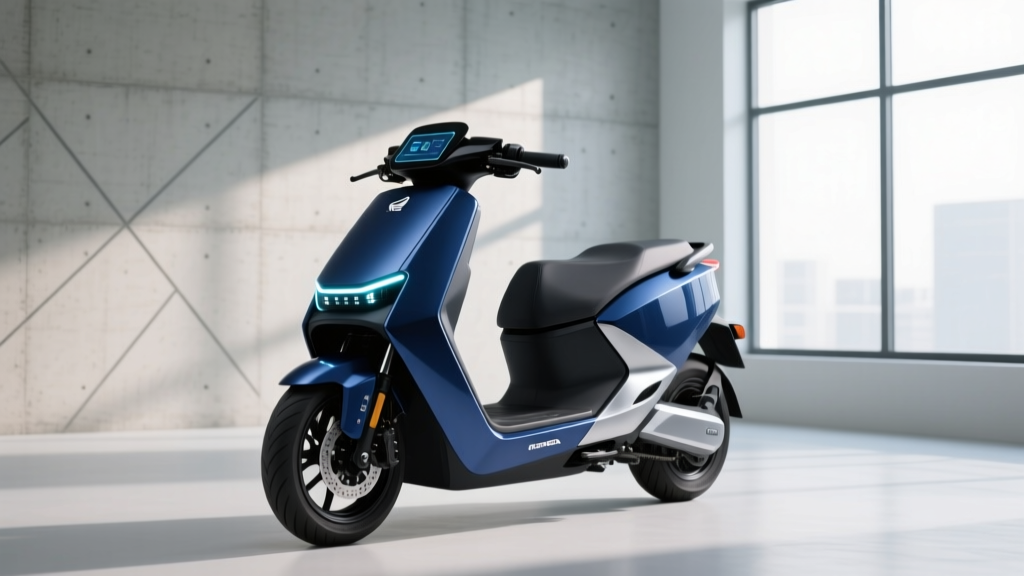
The Onewheel is a self-balancing, single-wheel electric board made by Future Motion, a Santa Cruz, California-based company founded by Kyle Doerksen. It uses a brushless hub motor, gyroscopic sensors, and a lithium battery pack to let a rider stand and glide on a single wide tire. It is classified as a personal electric device — not a car, not a motorcycle, and not a product of Tesla, Inc.
The confusion likely stems from three factors:
- Brand-name bleed. "Tesla" has become shorthand for any sleek, tech-heavy EV product, even outside the automotive space.
- Shared EV vocabulary. Onewheel marketing uses terms like "regenerative braking," "battery range," and "firmware updates" — language Tesla owners recognize.
- Search-engine autocomplete. Typing "Tesla" near any EV-adjacent product triggers suggestions that don't reflect reality.
For clarity: Tesla's current product line (as of the 2026 model year) includes the Model 3, Model Y, Model S, Model X, Cybertruck, and the Tesla Semi. None are single-rider boards.
If You Want a 'Tesla-Like' Urban EV: The Real Options
The search intent behind "Tesla Onewheel" usually points to one of two buyer needs: (1) a compact, affordable electric commuter for short trips, or (2) a Tesla vehicle that's nimble enough for dense urban life. Let's address both with concrete specs.
Option A: Tesla Model 3 RWD (2026)
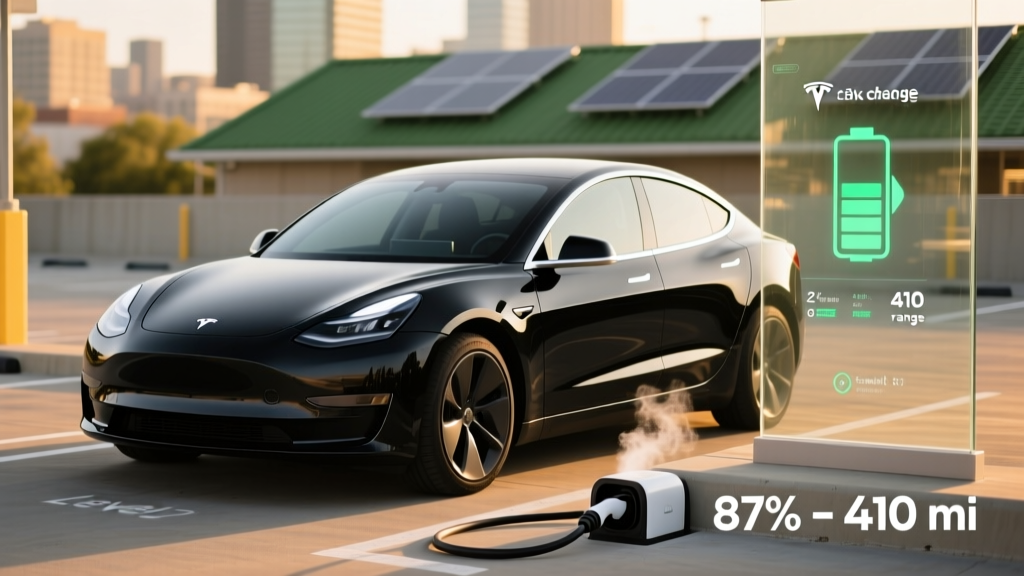
The most Tesla-like answer to urban commuting is the base Model 3 Rear-Wheel Drive. It's the smallest, lightest, and most affordable vehicle Tesla sells.
| Spec | Value |
|---|---|
| EPA Range | 363 miles |
| Battery (usable) | ~60 kWh, LFP chemistry |
| Efficiency | 132 MPGe combined / 25 kWh/100 mi |
| Peak DC Fast Charge | 170 kW |
| 10–80% DCFC Time | ~25 minutes |
| Level 2 Home Charge | 11.5 kW (~44 mi/hr) |
| 0–60 mph | 5.8 seconds |
| Horsepower | 271 hp |
| Drivetrain | Rear-Wheel Drive (single motor) |
| Cargo Volume | 23 cu ft (rear) + 3 cu ft (frunk) |
| Base MSRP | $38,990 |
| Warranty (Battery) | 8 years / 100,000 miles |
| Warranty (Vehicle) | 4 years / 50,000 miles |
Option B: True Micro-Mobility (Not a Car, Not Tesla)
If you genuinely want a stand-up electric commuter, you're shopping outside the automotive category entirely. Leading options in 2026 include the Onewheel GT (Future Motion), Segway Ninebot e-skateboards, and premium e-bikes like the Rad Power RadCity 5 Plus or Trek FX+ 2. None of these are Teslas, none qualify for the federal §30D EV tax credit (which applies to four-wheeled highway-capable vehicles), and none meet NHTSA crash-test standards for passenger vehicles.
Charging a Tesla Model 3: Home and DC Fast-Charging Explained
One reason buyers fixate on Tesla is the Supercharger network. Here's what charging actually looks like for the Model 3 RWD in 2026.
| Level | Power | Miles Added per Hour | Typical Use Case |
|---|---|---|---|
| Level 1 (120V) | ~1.4 kW | ~5 mi/hr | Emergency / trickle |
| Level 2 (240V, 48A) | 11.5 kW | ~44 mi/hr | Home daily charging |
| DC Fast (Supercharger V3/V4) | Peak 170 kW | ~200 mi in 15 min | Road trips |
Charging-curve reality check: The Model 3 RWD peaks at 170 kW only at low state-of-charge (roughly 5–25% SoC). By 50% SoC, power tapers to ~100 kW, and above 80% it drops sharply to protect the LFP cells. That 10–80% time of ~25 minutes assumes preconditioning — navigate to a Supercharger via the car's built-in nav, and the pack will warm to optimal temperature before you arrive. Skip preconditioning on a cold day and that 25-minute figure can stretch to 35+ minutes.
Home installation note: A Level 2 home setup requires a 60A circuit (for 48A continuous draw). Expect $500–$2,000 in electrician costs depending on panel proximity, plus ~$300 for a Tesla Wall Connector. Older homes with 100A service panels may require a $1,500–$3,000 panel upgrade. Always consult a licensed electrician for final specs.
Pricing, Trims, and Federal Tax Credit Eligibility (2026)
The Model 3 lineup for 2026 breaks down into three trims. Federal tax credit eligibility under IRS §30D depends on MSRP caps, buyer income, and battery-component/critical-mineral sourcing rules — which have tightened significantly since the credit's restructuring under the Inflation Reduction Act.
| Trim | Base MSRP | §30D Credit (Est.) | Effective Price* |
|---|---|---|---|
| RWD | $38,990 | Up to $7,500 (if sourcing rules met) | ~$31,490 |
| Long Range AWD | $45,240 | Up to $7,500 | ~$37,740 |
| Performance | $52,990 | Up to $7,500 | ~$45,490 |
*Effective price assumes full §30D credit eligibility. Point-of-sale transfer is available at participating dealers.
Eligibility caveats (critical):
- MSRP cap: Sedans must be ≤$55,000 MSRP. The Model 3 Performance at $52,990 qualifies; optioned heavily, it may exceed the cap.
- Income cap: Modified AGI ≤$150,000 (single), $225,000 (head of household), $300,000 (joint).
- Battery sourcing: Both battery-component and critical-mineral thresholds phase up annually. For 2026, the requirements are strict — verify VIN-specific eligibility on fueleconomy.gov before purchasing.
- Point-of-sale transfer: As of 2024+, buyers can transfer the credit to the dealer at purchase, reducing the out-of-pocket price immediately rather than waiting for tax filing.
Consult a tax professional before relying on credit eligibility. Rules change annually and are subject to IRS interpretation of manufacturer sourcing documentation.
Standout Tech — and Where Tesla Still Falls Short
Tesla's software stack remains a class leader. The Model 3's 15.4-inch center touchscreen runs navigation, media, climate, and vehicle controls with minimal lag. Over-the-air updates regularly add features. The 2026 "Highland" refresh improved cabin insulation, added ventilated front seats, and introduced ambient lighting — addressing longstanding noise and comfort complaints.
Driver assistance — SAE Level 2, not self-driving: Tesla's Autopilot (standard) and Full Self-Driving (Supervised) are SAE Level 2 systems. This means the driver must remain attentive, hands on or near the wheel, and ready to take over instantly. FSD (Supervised) can navigate highways, stoplights, and some urban streets, but it is not autonomous. For context, only Level 4 services like Waymo operate without a human driver — and those are geofenced robotaxis, not consumer vehicles.
- It does not remove the legal or practical requirement for driver attention.
- It is not rated for heavy rain, snow, or poorly marked roads.
- It does not eliminate liability — the driver remains responsible for all vehicle operation.
- NHTSA continues to investigate FSD-related incidents. Review NHTSA's automation resources before purchasing.
Notable drawbacks: No physical turn-signal stalk (signals are steering-wheel buttons on the refreshed Model 3 — polarizing among owners). No Apple CarPlay or Android Auto. Rear-seat legroom (35.3 inches) is tighter than rivals like the Hyundai Ioniq 6 (37.2 in). Insurance premiums tend to run 20–40% above segment average due to repair-cost data.
Model 3 vs. Key Competitors: 2026 Sedan Comparison
| Spec | Tesla Model 3 RWD | Hyundai Ioniq 6 SE | BMW i4 eDrive40 |
|---|---|---|---|
| EPA Range | 363 mi | 361 mi | 301 mi |
| Battery | 60 kWh LFP | 77.4 kWh NMC | 83.9 kWh NMC |
| Peak DCFC | 170 kW | 235 kW | 200 kW |
| 10–80% Time | ~25 min | ~18 min | ~31 min |
| 0–60 mph | 5.8 sec | 6.2 sec | 5.5 sec |
| Base MSRP | $38,990 | $37,500 | $52,200 |
| Supercharger Access | Native | NACS adapter avail. | NACS adapter avail. |
| Apple CarPlay | No | Yes | Yes |
The Ioniq 6 charges faster and offers CarPlay at a slightly lower base price, but lacks native Supercharger access (an adapter is required). The BMW i4 is pricier and less efficient but delivers premium materials and dealer service infrastructure. The Model 3's edge is the Supercharger network, software integration, and strong resale value.
Who This EV Suits — and Who Should Look Elsewhere
Best for: Tech-comfortable urban and suburban commuters who value charging-network access, software updates, and minimalist design. Solo drivers or couples without large cargo needs. Buyers who can install Level 2 charging at home.
Look elsewhere if: You need back-seat space for adults regularly (consider the Model Y or Ioniq 5). You live in a charging desert without reliable DCFC access. You prefer physical controls, CarPlay, or traditional dealer service. You want a true micro-mobility device for campus or last-mile commuting — that's a completely different product category.
- 363 mi EPA range, class-leading efficiency
- Native Supercharger network access
- OTA updates, strong software stack
- LFP battery tolerates daily 100% charging
- Low operating cost (~$0.04–$0.06/mi on home power)
- No CarPlay/Android Auto
- Turn-signal buttons instead of stalk (learning curve)
- Tight rear legroom vs. rivals
- Above-average insurance premiums
- FSD (Supervised) is expensive and still Level 2
Frequently Asked Questions
Does Tesla make a Onewheel or electric skateboard?
No. Tesla, Inc. manufactures electric vehicles (Model 3, Model Y, Cybertruck, etc.) and energy products. The Onewheel is made by Future Motion, an unrelated company. There is no Tesla-branded personal electric board as of 2026.
What is the real-world range of the Tesla Model 3 RWD?
EPA-rated at 363 miles, real-world highway driving at 70–75 mph typically yields 300–320 miles. In freezing temperatures (below 30°F), expect 240–270 miles due to cabin heating load and reduced battery efficiency. LFP chemistry is slightly more cold-sensitive than NMC.
How fast does the Model 3 charge at home and on the road?
On a 48A Level 2 home charger (11.5 kW), the Model 3 RWD gains ~44 miles of range per hour — a full charge in roughly 6 hours. On a V3/V4 Supercharger, it peaks at 170 kW and charges 10–80% in about 25 minutes with preconditioning.
Does the 2026 Tesla Model 3 qualify for the $7,500 federal EV tax credit?
It can, but eligibility depends on (1) buyer income (≤$150K single / $300K joint), (2) MSRP ≤$55,000 for sedans, and (3) battery sourcing compliance with 2026 critical-mineral and component rules. Verify VIN-specific eligibility on fueleconomy.gov before purchase. Point-of-sale transfer is available.
Is the Model 3 worth buying over the Ioniq 6 or BMW i4?
If Supercharger access and software integration matter most, yes. If you prioritize fast DC charging, CarPlay, or rear-seat space, the Ioniq 6 is a strong alternative at a similar price. The BMW i4 suits buyers wanting premium branding and dealer service, at a significant price premium.
Can I use a Tesla for rideshare or delivery driving?
Yes — the Model 3 is approved for Uber, Lyft, and DoorDash in most markets. However, higher insurance costs and depreciation from high mileage (common in rideshare) should be factored into total cost of ownership. The 8-year/100,000-mile battery warranty provides some protection.
Is Tesla's FSD actually self-driving?
No. FSD (Supervised) is an SAE Level 2 driver-assistance system. The driver must remain fully attentive and legally responsible at all times. It is not autonomous, not Level 4, and not approved for hands-off or eyes-off operation. Waymo's geofenced robotaxis are Level 4; Tesla's consumer system is not.