What Is Rivian Spooky Mode?
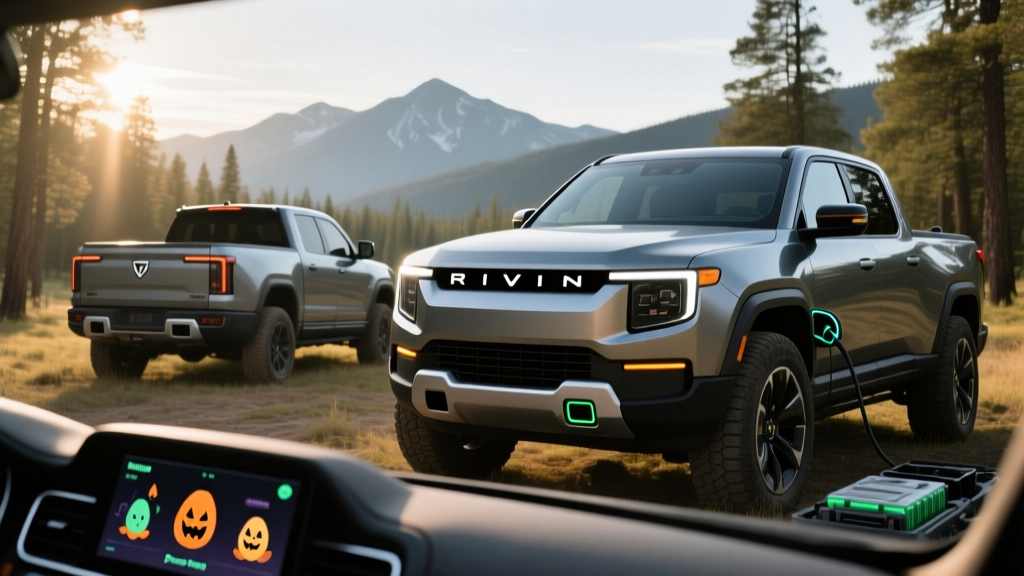
If you've seen videos of a Rivian R1S or R1T suddenly transforming its infotainment display into a haunted house on wheels, you've witnessed Rivian Spooky Mode — one of the most talked-about Easter eggs in the EV world. Triggered by entering a specific phrase into the vehicle's center console, Spooky Mode overlays ghostly animations, eerie sound effects, and themed graphics across the 15.6-inch main display and instrument cluster.
It's a party trick, sure. But the fact that buyers are searching for "Rivian Spooky Mode" tells you something important about the brand: Rivian owners are deeply engaged with their vehicles' software, and the company rewards that curiosity. Spooky Mode first appeared as a Halloween-themed surprise via an over-the-air (OTA) update and has since become a signature Rivian hidden feature alongside others like "Camp Mode" and the "Gear Tunnel" animations on the R1T.
But an Easter egg doesn't tow a trailer or survive a Minnesota winter. Below, we pair the fun with the hard data — EPA range, charging curves, battery chemistry, pricing, and federal tax credit eligibility — so you can evaluate the R1S and R1T as vehicles first and novelty machines second.
Rivian R1S and R1T: 2025-2026 Specs at a Glance
Both the R1S (three-row SUV) and R1T (pickup) share Rivian's second-generation "Gen 2" skateboard platform, which consolidated the number of ECUs, reduced wiring harness weight, and improved manufacturing efficiency. Here's the core spec breakdown for the current dual-motor and quad-motor configurations:
| Spec | Dual-Motor (Standard) | Dual-Motor Performance | Quad-Motor |
|---|---|---|---|
| Battery (usable) | 106 kWh (NMC) | 106 kWh (NMC) | 141 kWh (NMC) / 106 kWh option |
| EPA Range (R1S) | ~270 mi | ~352 mi (Max Pack) | ~321 mi (Max Pack) |
| EPA Range (R1T) | ~270 mi | ~352 mi (Max Pack) | ~328 mi (Max Pack) |
| Horsepower | 533 hp | 665 hp | 1,025 hp |
| 0-60 mph | 4.5 sec | 3.5 sec | 3.0 sec (R1T) |
| Drivetrain | AWD (dual-motor) | AWD (dual-motor) | AWD (quad-motor, torque vectoring) |
| Max Tow Capacity | 7,700 lb | 7,700 lb | 11,000 lb (R1T) |
| Ground Clearance | 7.9 - 14.9 in (adjustable) | 7.9 - 14.9 in | 7.9 - 14.9 in |
Real-World Range: What the EPA Number Doesn't Tell You
EPA sticker (Dual-Motor Standard Pack R1S): ~270 miles
Real-world highway (70-75 mph, moderate temps): ~220-240 miles
Real-world cold weather (below 30°F, highway): ~180-210 miles
EPA sticker (Dual-Motor Max Pack R1T): ~352 miles
Real-world highway: ~280-310 miles
Real-world towing (5,000+ lb trailer): ~150-180 miles
The R1S and R1T are large, heavy, boxy vehicles. The R1S curb weight exceeds 6,800 pounds in Max Pack form, and the frontal area is substantial. That means highway efficiency suffers compared to sleeker sedans. According to fueleconomy.gov, the Dual-Motor R1S achieves roughly 69 MPGe combined, translating to about 48 kWh per 100 miles — thirsty by EV standards.
In our experience and aggregated owner reports, expect to lose 15-20% from the EPA figure during sustained highway driving at 70+ mph. Cold weather compounds this: battery internal resistance increases, cabin heating draws significant power (the R1 uses a resistive PTC heater in earlier builds, with heat pump adoption in newer model years improving efficiency), and regenerative braking is limited until the battery warms up. If you live in the upper Midwest or Northeast and commute long distances in winter, the Standard Pack's real-world range may feel tight.
Towing is the real range killer. Owners pulling camping trailers or boats in the 5,000-7,000 lb range consistently report range cuts of 40-50%. Plan charging stops accordingly — and know that DC fast charging while towing requires unhitching at most stations.
Charging Speed: DC Fast Charging and Home Level 2
Charging speed is where Rivian's Gen 2 platform made meaningful gains over the original launch vehicles. Here's what you need to know:
| Charging Level | Power / Rate | Speed / Time | Connector |
|---|---|---|---|
| Level 1 (120V household) | ~1.4 kW | ~3-4 mi/hr | J1772 / NACS |
| Level 2 (240V home, 48A) | 11.5 kW | ~25-29 mi/hr | J1772 / NACS |
| Level 2 (240V home, 60A Rivian Wall Charger) | ~14.4 kW (vehicle capped at 11.5 kW) | ~25-29 mi/hr | NACS |
| DC Fast Charge (peak) | ~200-220 kW (Gen 2) | 10-80% in ~21-25 min | CCS1 (adapter) / NACS (2025+) |
The charge curve matters more than peak kW. Rivian's Gen 2 vehicles peak around 200-220 kW on DC fast chargers, but that peak is sustained only between roughly 10-40% state of charge. From 40-60%, the rate tapers to around 150 kW, and above 80%, it drops sharply to under 50 kW to protect cell longevity. This is standard behavior for NMC chemistry, but it means a 10-80% session takes approximately 21-25 minutes at a 350 kW Electrify America or Tesla Supercharger (via NACS adapter or native port on 2025+ models).
Starting in 2025, Rivian transitioned new R1 vehicles to the NACS (North American Charging Standard) connector — the Tesla-standard plug. This grants native access to Tesla's Supercharger network, which remains the most reliable DC fast-charging infrastructure in North America. Earlier CCS-equipped Rivians can use a Rivian-provided NACS adapter for Supercharger access.
For home charging, the Rivian Wall Connector (or any quality Level 2 unit on a 60-amp circuit) delivers a full overnight charge. A Standard Pack (106 kWh) refills from 10-90% in roughly 9-10 hours at 11.5 kW. Plan on a $500-$1,500 electrical installation depending on your panel capacity and run distance — and yes, a 200-amp panel upgrade may be necessary in older homes.
Pricing, Trims, and Federal Tax Credit Eligibility
| Configuration | Base MSRP (R1S) | Base MSRP (R1T) | Federal §30D Credit |
|---|---|---|---|
| Dual-Motor Standard | ~$75,900 | ~$69,900 | Eligible (up to $7,500, subject to rules) |
| Dual-Motor Performance | ~$81,000 | ~$75,000 | Eligible (up to $7,500, subject to rules) |
| Quad-Motor | ~$90,000+ | ~$87,000+ | Eligible (up to $7,500, subject to rules) |
Federal tax credit reality check: Under IRS §30D rules, the Rivian R1S and R1T qualify as SUVs/pickups with an MSRP cap of $80,000. This means:
- Dual-Motor Standard and Performance trims generally fall under the $80,000 SUV cap and are eligible for up to $7,500 in federal tax credits — provided the buyer meets income limits ($150,000 single / $300,000 joint MAGI) and the vehicle satisfies critical-mineral and battery-component sourcing requirements.
- Quad-Motor and Max Pack configurations that push MSRP above $80,000 may lose eligibility. Always confirm the exact as-built MSRP with your dealer before assuming credit qualification.
- The credit can now be transferred at point of sale (starting 2024), meaning you can apply the $7,500 directly to the purchase price rather than waiting to claim it on your tax return — subject to dealer registration and IRS verification.
- Battery sourcing rules tighten annually. Consult a tax professional and verify current-year requirements at irs.gov before purchasing.
Interior, Cargo, and Technology
The R1S seats up to seven across three rows, though the third row is best suited for children or short trips — legroom is tight at roughly 30 inches. Behind the third row, cargo space is approximately 10.5 cubic feet. Fold the third row and you get around 46 cu ft; fold both rear rows for a max of about 92 cu ft. The R1T offers a 4.5-foot bed plus the signature Gear Tunnel — a lockable, pass-through storage compartment spanning the width of the truck behind the rear seats, offering roughly 11 cu ft of secure, weather-sealed space ideal for camping gear or long items.
Up front, the 15.6-inch center touchscreen runs Rivian's proprietary OS, which has matured significantly since launch. Wireless Apple CarPlay and Android Auto are not supported — Rivian has chosen to build its own ecosystem. The interface is clean, responsive, and receives regular OTA updates (which is how features like Spooky Mode arrive). A 12.3-inch digital instrument cluster provides driving data, navigation, and — yes — Spooky Mode ghost animations when activated.
Standout tech features:
- Rivian Driver+: A Level 2 SAE driver-assistance suite including adaptive cruise control, lane centering, and automatic emergency braking. This is not hands-free driving — the driver must remain engaged at all times. Unlike Ford's BlueCruise or GM's Super Cruise, Rivian does not yet offer hands-off highway driving on mapped roads.
- Camp Mode: Maintains cabin climate and powers accessories overnight, ideal for car camping.
- Powered tonneau cover (R1T): Electric retractable bed cover integrated into the vehicle's electrical system.
- V2L (Vehicle-to-Load): The R1T and R1S can output 120V power from bed/cargo outlets for job-site tools or campsite appliances.
- Over-the-air updates: Continuous feature additions, performance tweaks, and Easter eggs like Spooky Mode.
Warranty and Long-Term Ownership
Rivian provides the following coverage:
- Battery & Powertrain: 8 years / 120,000 miles (whichever comes first), with a capacity retention threshold of 70% — meaning Rivian warrants that the battery will retain at least 70% of original capacity during the warranty period.
- Bumper-to-Bumper: 5 years / 60,000 miles
- Roadside Assistance: 5 years / 60,000 miles
The 70% retention threshold is in line with industry norms (Tesla uses the same figure). Real-world NMC degradation data from early R1 owners suggests roughly 5-8% capacity loss in the first 50,000 miles, with the curve flattening afterward. Following Rivian's recommended charge limits (20-85% daily, 100% only for trips) and avoiding frequent DC fast charging will help preserve long-term State of Health (SoH).
How to Activate Rivian Spooky Mode (and Other Easter Eggs)
Spooky Mode is activated through the infotainment system's text input field. While Rivian has changed the exact trigger phrase across OTA versions, the general method involves:
- Open the vehicle settings or search function on the center display.
- Type the designated trigger phrase (commonly reported as "Spooky" or a Halloween-themed keyword — check current Rivian owner forums for the active trigger in your software version).
- The display transforms with ghost animations, fog effects, and eerie ambient sounds through the vehicle's speakers.
Other known Rivian Easter eggs include animated startup sequences, hidden developer menus, and seasonal themes that arrive via OTA. These features don't affect vehicle performance, but they reflect a software-first culture that differentiates Rivian from legacy automakers.
Who Should Buy a Rivian R1S or R1T?
Choose the R1S if: You need three-row seating, want genuine off-road capability (14.9 inches of ground clearance, quad-motor torque vectoring), and take road trips where 300+ miles of real-world range (Max Pack) reduces charging stops.
Choose the R1T if: You need a pickup bed and towing capacity (up to 11,000 lb), value the Gear Tunnel for adventure gear, and want one of the quickest production trucks on the market (3.0 sec 0-60 in Quad-Motor form).
Look elsewhere if: Your daily commute is short and you don't need off-road or towing capability — a smaller, lighter EV like the Hyundai Ioniq 5 or Tesla Model Y will be far more energy-efficient and cost thousands less. Efficiency matters: the R1 platform consumes roughly 48 kWh/100 mi versus 25-30 kWh/100 mi for a midsize crossover.
Pros and Cons
- Class-leading off-road capability with adjustable air suspension
- Quad-Motor performance is extraordinary (1,025 hp, 3.0 sec 0-60)
- NACS connector (2025+) for native Supercharger access
- Regular OTA updates with genuine feature additions (Spooky Mode, Camp Mode)
- Excellent build quality improvements in Gen 2 platform
- Strong towing capacity (up to 11,000 lb R1T)
- Unique Gear Tunnel storage (R1T)
- High energy consumption (~48 kWh/100 mi) means higher charging costs
- Real-world range significantly below EPA, especially in cold/towing
- No Apple CarPlay or Android Auto
- Driver+ is capable but not hands-free like BlueCruise/Super Cruise
- Service center network still expanding — wait times in some regions
- Pricey: well-equipped models easily exceed $90,000
- Third-row space (R1S) is cramped for adults
Frequently Asked Questions
What exactly is Rivian Spooky Mode?
Rivian Spooky Mode is a hidden Easter egg activated via the infotainment system that transforms the R1S or R1T's displays with Halloween-themed ghost animations, fog effects, and spooky sound effects. It's purely cosmetic and does not affect driving dynamics, range, or vehicle systems. It arrives via OTA updates and the activation trigger may change between software versions.
What is the real-world range of the Rivian R1S and R1T?
Expect roughly 220-240 highway miles from the Standard Pack (EPA ~270 mi) and 280-310 highway miles from the Max Pack (EPA ~352 mi). Cold weather (below 30°F) can reduce these figures by an additional 15-25%. Towing cuts range by 40-50%.
How fast does the Rivian R1S/R1T charge?
On a DC fast charger, Gen 2 Rivians peak at approximately 200-220 kW, achieving a 10-80% charge in roughly 21-25 minutes. At home on Level 2 (240V, 48A), the onboard charger is capped at 11.5 kW, adding about 25-29 miles of range per hour — a full overnight refill for most battery packs.
Does the Rivian R1S/R1T qualify for the federal EV tax credit?
Many configurations do, but eligibility depends on the as-built MSRP staying under $80,000 (the SUV/truck cap under §30D), buyer income not exceeding $150K single/$300K joint, and battery sourcing requirements being met. Dual-Motor Standard and Performance trims typically qualify; Quad-Motor and heavily optioned builds may exceed the cap. Verify current rules at irs.gov and consult a tax professional.
Is Rivian Spooky Mode available on all R1 vehicles?
Spooky Mode has been deployed via OTA updates to most R1S and R1T vehicles running recent software versions. However, the exact activation method and availability can vary by software build. If you don't see it trigger, ensure your vehicle is updated to the latest OTA release.
Rivian R1S vs. Tesla Model X vs. Ford F-150 Lightning — which should I buy?
The R1S/R1T targets adventure-oriented buyers who prioritize off-road capability, unique storage solutions (Gear Tunnel), and build quality. The Model X offers more range, faster Supercharging, and Autopilot/FSD but at a higher price and with less off-road credibility. The F-150 Lightning is a more traditional, affordable electric truck with better service infrastructure but less performance and no three-row SUV variant. If Spooky Mode and Easter eggs appeal to you, Rivian's software culture is the most playful of the three.