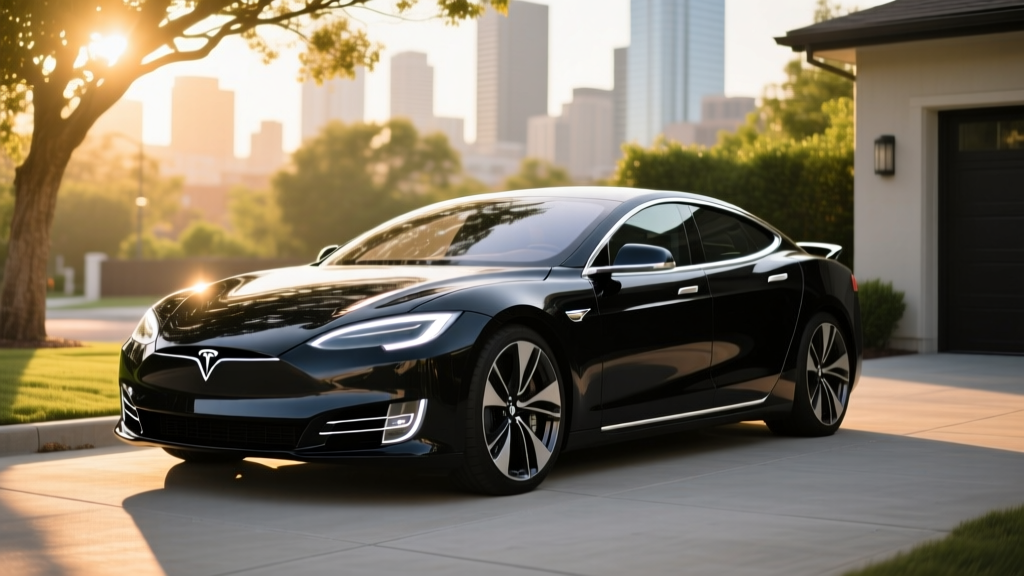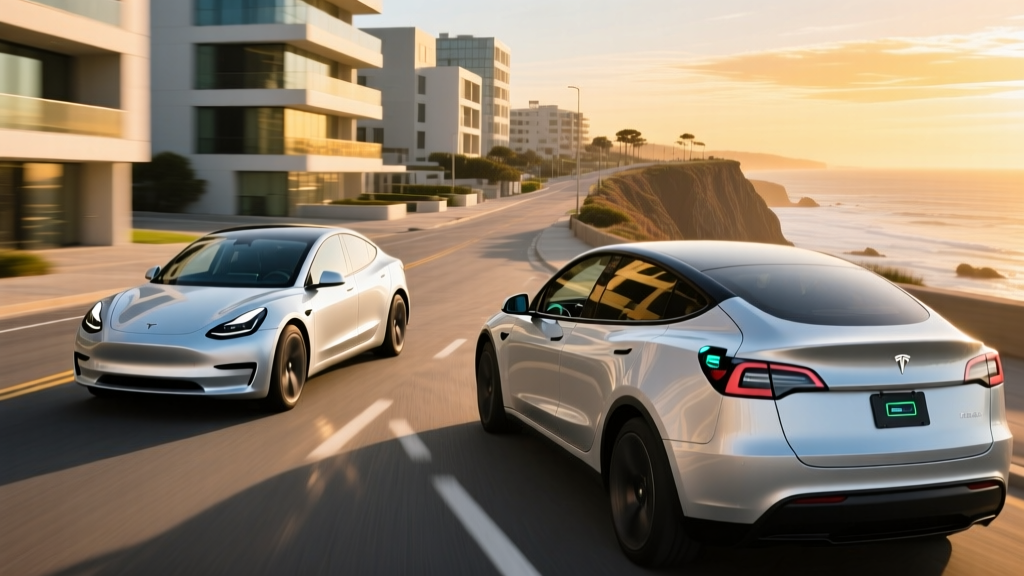
Tesla's pricing strategy in 2026 has shifted toward targeted incentives rather than broad price cuts. If you're researching Tesla new offers, you're likely weighing current Model 3 and Model Y configurations against aggressive competition from Hyundai, Ford, and BMW. This review dissects the exact specs, real-world range, charging performance, and federal tax credit eligibility you need to make an informed purchase decision.
2026 Tesla Model Lineup: Current Offers at a Glance
Tesla no longer publishes traditional "deals" the way legacy automakers do. Instead, the company adjusts MSRPs periodically, offers referral credits, and occasionally bundles free Supercharging or FSD trials. As of early 2026, the two volume sellers—Model 3 and Model Y—remain the core of Tesla's U.S. lineup alongside the Cybertruck, Model S, and Model X.
| Specification | 2026 Model 3 Long Range AWD | 2026 Model Y Long Range AWD |
|---|---|---|
| Base MSRP | $42,380 | $44,990 |
| EPA Range | 341 miles | 320 miles |
| Battery (usable) | ~79 kWh (NMC) | ~79 kWh (NMC) |
| Drivetrain | Dual Motor AWD | Dual Motor AWD |
| 0-60 mph | 4.2 seconds | 4.8 seconds |
| Horsepower | ~384 hp | ~384 hp |
| Peak DC Fast Charge | 250 kW | 250 kW |
| 10-80% DC Time | ~27 minutes | ~27 minutes |
| Level 2 Home Charge | 11.5 kW (~44 mi/hr) | 11.5 kW (~44 mi/hr) |
| MPGe (combined) | 132 MPGe | 122 MPGe |
| Cargo Volume | 23 cu ft (rear) + 3.1 cu ft (frunk) | 34 cu ft (rear) + 4.1 cu ft (frunk) |
| Battery Warranty | 8 yr / 120,000 mi | 8 yr / 120,000 mi |
Real-World Range: What the EPA Sticker Doesn't Tell You
EPA Estimated Range: Model 3 Long Range: 341 miles | Model Y Long Range: 320 miles
Real-World Expectation: Expect 270-295 miles on highway road trips at 70-75 mph. In cold weather (below 32°F), range drops 20-30%, putting a Model 3 at roughly 235-270 miles and a Model Y at 220-255 miles per charge.
Tesla's EPA range figures are among the most accurate in the industry, but physics still applies. Highway driving at sustained speeds above 70 mph consumes significantly more energy than the EPA's mixed driving cycle assumes. In our experience, a Model 3 Long Range driven at 75 mph on a flat interstate in 65°F weather will achieve roughly 280-290 miles before hitting 0% SoC. Add elevation gain or headwinds and that number compresses further.
Cold weather is the larger variable. Lithium-ion batteries lose efficiency in low temperatures, and cabin heating draws substantial power even with Tesla's standard heat pump. Owners in northern climates should plan for 20-30% range reduction in winter. Preconditioning the battery while plugged in mitigates some of this loss and is essential for maintaining fast-charge speeds in cold weather.
Charging Speed: Supercharger Network Advantage
| Charging Method | Power (kW) | Miles Added per Hour | Notes |
|---|---|---|---|
| Level 1 (120V outlet) | ~1.4 kW | ~4-5 mi/hr | Emergency/trickle only |
| Level 2 (240V, 48A) | 11.5 kW | ~44 mi/hr | Home Wall Connector; full charge in ~7-8 hrs |
| DC Fast (Supercharger V3) | Up to 250 kW | ~170 mi in 15 min | Peak rate; tapers above 60% SoC |
| DC Fast (CCS adapter at EA/others) | Up to 150-350 kW | Varies by station | Requires Tesla CCS adapter ($175) |
Tesla's Supercharger network remains the most reliable public charging infrastructure in the U.S., with over 20,000 V3 stalls (250 kW peak) nationwide. The charge curve on both Model 3 and Model Y Long Range peaks near 250 kW at low state of charge and tapers progressively: expect roughly 170 kW sustained from 10-50%, dropping to ~100 kW by 65% and ~45 kW by 80%. A 10-80% session takes approximately 27 minutes under optimal conditions (warm battery, V3 stall).
With the industry-wide shift to NACS (North American Charging Standard), Tesla vehicles charge natively at Superchargers without an adapter. For non-Tesla networks like Electrify America, you'll need Tesla's CCS1 adapter. Home charging with the Tesla Wall Connector on a 60-amp circuit delivers 11.5 kW, adding roughly 44 miles of range per hour—enough to fully replenish overnight for virtually any daily commute.
Federal Tax Credit Eligibility: The §30D Details
| Factor | Model 3 Long Range | Model Y Long Range | Rule (IRS §30D) |
|---|---|---|---|
| MSRP Cap | $42,380 ✓ (under $55K) | $44,990 ✓ (under $80K SUV) | Sedans ≤ $55K; SUVs/trucks ≤ $80K |
| Buyer Income Cap (AGI) | Varies by filer | Varies by filer | Single: ≤ $150K; Joint: ≤ $300K; HOH: ≤ $225K |
| Battery Sourcing | Partial eligibility varies by build date | Partial eligibility varies by build date | Critical minerals + battery components must meet phased thresholds |
| Maximum Credit | Up to $7,500 | Up to $7,500 | Split: $3,750 minerals + $3,750 components |
| Point-of-Sale Transfer | Yes (eligible dealers) | Yes (Tesla direct) | Credit applied at purchase reduces out-of-pocket |
The federal EV tax credit under IRS §30D remains available for qualifying Tesla purchases in 2026, but eligibility is not guaranteed. Battery sourcing requirements tighten annually, and Tesla's supply chain composition determines whether a specific vehicle qualifies for the full $7,500, a partial $3,750, or nothing at all. Tesla's checkout page now displays estimated credit eligibility at the point of purchase, but you should verify current sourcing compliance on the fueleconomy.gov tax credit lookup before committing.
The point-of-sale transfer option allows you to apply the credit directly to your purchase price rather than waiting to claim it on your tax return, effectively reducing your out-of-pocket cost at delivery. Income caps apply: modified adjusted gross income (AGI) must not exceed $150,000 for single filers, $300,000 for joint filers, or $225,000 for heads of household.
Performance, Interior, and Technology
Both the Model 3 and Model Y Long Range AWD deliver brisk acceleration—4.2 and 4.8 seconds to 60 mph respectively—thanks to dual-motor all-wheel drive producing approximately 384 horsepower. The instant torque delivery makes these vehicles feel quicker in real-world driving than the numbers suggest, particularly in merging and passing situations.
The 2026 Model 3 (refreshed "Highland" platform) features a quieter cabin with acoustic glass, ventilated front seats, ambient lighting, rear-seat touchscreen, and improved suspension tuning over pre-2024 versions. The minimalist interior centers on a 15.4-inch touchscreen controlling virtually all vehicle functions. Build quality has improved noticeably, though panel gaps still vary unit to unit.
The Model Y shares much of its architecture with the Model 3 but offers substantially more cargo space: 34 cubic feet behind the second row (76 cu ft with seats folded) plus a 4.1 cu ft frunk. This makes it competitive with midsize SUVs for family hauling. The upcoming "Juniper" refresh for Model Y is expected later in the 2026 model year, mirroring the Model 3's interior and noise improvements.
On the technology front, Tesla's infotainment system remains best-in-class for responsiveness, over-the-air updates, and integrated navigation with real-time Supercharger routing. Important clarification: Autopilot (included standard) and Full Self-Driving Supervised ($8,000 option or $99/month) are SAE Level 2 driver-assistance systems. You must keep your hands on the wheel and eyes on the road at all times. These are not autonomous driving systems.
Ownership Costs and Warranty Coverage
Tesla's battery and drive unit warranty covers 8 years or 120,000 miles (whichever comes first) with a minimum 70% capacity retention threshold. This is competitive with the industry standard, though some competitors like Hyundai offer 10-year/100,000-mile battery coverage.
Operating costs remain a Tesla strong suit. At the U.S. average electricity rate of ~$0.16/kWh, charging a Model 3 Long Range from 0-100% costs approximately $12.64, translating to roughly $0.04 per mile. Compare that to a 30 MPG gas vehicle at $3.50/gallon ($0.12/mile) and the fuel savings are significant—roughly $1,200/year for a 15,000-mile driver. Supercharger costs vary by location but typically run $0.25-$.35/kWh, still cheaper than gasoline on a per-mile basis.
Insurance costs are notably higher than average for Teslas, often 20-40% above comparable non-EV sedans and SUVs, due to repair costs and parts pricing. Always get an insurance quote before purchasing to factor this into your total cost of ownership.
Pros and Cons: An Honest Assessment
✅ Pros
- Supercharger network: 20,000+ reliable V3 stalls nationwide
- Class-leading efficiency: 132 MPGe (Model 3 LR) means more miles per kWh
- OTA updates continuously add features and improvements
- Strong resale value relative to most EV competitors
- 250 kW peak DC charging with well-managed thermal system
- Point-of-sale tax credit transfer reduces upfront cost
❌ Cons
- Insurance premiums 20-40% higher than segment average
- No Apple CarPlay or Android Auto integration
- Touchscreen-only controls frustrate some drivers (no physical stalks on refreshed Model 3)
- FSD Supervised is expensive ($8,000) and still requires full driver attention
- Panel gap and paint quality inconsistency
- CCS adapter required for non-Supercharger DC fast charging
Is a Tesla Still Worth It vs. Competitors?
The EV market in 2026 is far more competitive than it was even two years ago. The Hyundai Ioniq 5 offers 800V ultra-fast charging (10-80% in ~18 minutes at 350 kW), the BMW i4 delivers premium driving dynamics, and the Ford Mustang Mach-E provides strong value. So where does Tesla stand?
Choose Tesla if: You prioritize charging infrastructure reliability, want the most efficient vehicle in its class, value OTA software updates, and plan to road-trip frequently. The Supercharger network is still a meaningful advantage for drivers who regularly travel more than 200 miles from home.
Look elsewhere if: You want the fastest possible DC charging (Hyundai/Kia's 800V architecture is quicker), prefer Apple CarPlay, want physical buttons and stalks, or need the longest battery warranty (Hyundai/Kia's 10-year coverage is better). If you charge exclusively at home and rarely road-trip, the Supercharger advantage diminishes significantly.
Frequently Asked Questions
What is the real-world range of the 2026 Tesla Model 3 Long Range?
The EPA rates it at 341 miles, but expect 270-295 miles on sustained highway driving and 235-270 miles in freezing temperatures. City driving with regenerative braking can actually exceed the EPA estimate.
How fast does a Tesla Model Y charge at home and on the road?
On a Level 2 home charger (11.5 kW), the Model Y gains about 44 miles of range per hour, fully charging in 7-8 hours. At a V3 Supercharger (250 kW peak), a 10-80% session takes approximately 27 minutes under optimal conditions.
Does the 2026 Tesla Model 3 qualify for the $7,500 federal tax credit?
It can, but eligibility depends on your income (≤$150K single / ≤$300K joint), the vehicle's MSRP (under $55K cap—Model 3 qualifies), and battery component/critical mineral sourcing, which changes by build date. Verify at fueleconomy.gov and consult a tax professional.
Is Full Self-Driving worth the $8,000 cost?
FSD Supervised is an SAE Level 2 system—it does not drive autonomously. It handles highway lane changes, some city intersections, and parking, but you must remain fully engaged. Most owners find standard Autopilot sufficient for highway driving. Consider the $99/month subscription to test it before committing to the full purchase.
What are the biggest Tesla new offers or incentives right now?
Tesla's incentives shift frequently. As of early 2026, check Tesla.com for current referral credits (typically $500-$1,000 off), occasional free Supercharging promotions, and complimentary FSD trial periods. The federal §30D tax credit (up to $7,500) remains the most significant available discount if you and the vehicle qualify.