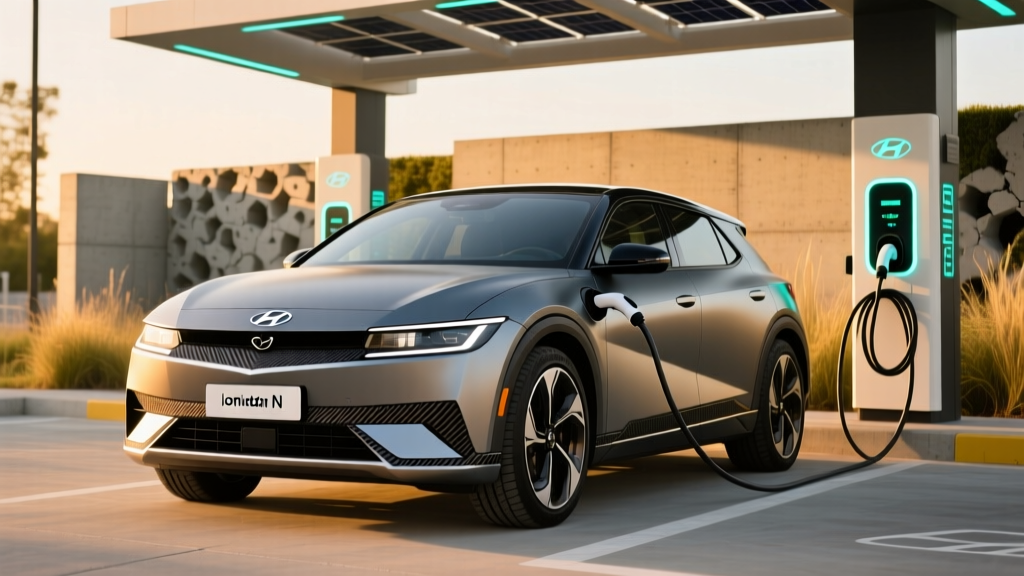
The performance EV segment is no longer a one-horse race. As vendors setting new benchmarks in electrification and sustainability push battery chemistry, thermal management, and powertrain efficiency to new heights, Hyundai's N performance division has entered the chat with a compelling argument: the 2026 Ioniq 5 N. This isn't a stripped-out track toy or a luxury cruiser wearing a sport badge. It's a 641-horsepower, dual-motor hot hatch that can lap a circuit, haul a family, and still deliver over 250 miles of real-world range. We spent a week with the 2026 Ioniq 5 N to find out if the numbers on the spec sheet translate to ownership satisfaction.
Quick Verdict: Who Is the Ioniq 5 N For?
The Ioniq 5 N targets the enthusiast buyer who wants daily usability, genuine track capability, and zero tailpipe emissions. If you prioritize 0-60 times and corner-carving over maximum range, this is the EV to beat. If your priority is squeezing 350+ miles out of a charge for cross-country road trips, the standard Ioniq 5 or a Tesla Model Y Long Range will serve you better. The Ioniq 5 N is for drivers who want to feel something in an era of numb, isolated electric transportation.
Range, Efficiency, and the Real-World Reality Check
Performance always costs efficiency, and the Ioniq 5 N is no exception. Despite sharing the E-GMP platform with the standard Ioniq 5, the N variant trades some range for grip, power, and cooling capacity.
Real-World Expectation: Expect 180–200 miles on aggressive highway driving at 75+ mph. In mild city commuting with regenerative braking maximized, 230+ miles is achievable. In sub-freezing winter conditions, plan for a 25–30% reduction, dropping effective range to roughly 155–170 miles.
The 2026 Ioniq 5 N uses an 84 kWh usable battery pack (110 kWh gross in some markets, 84 kWh usable in the U.S.). The chemistry is a lithium-nickel-manganese-cobalt (NMC) formulation optimized for high discharge rates rather than maximum energy density. This is a deliberate engineering choice: NMC cells can handle the sustained 200+ kW discharge demands of track driving without overheating, whereas a high-density LFP pack would struggle under those loads.
Efficiency lands at 85 MPGe combined, or roughly 39 kWh per 100 miles. That's thirstier than the standard Ioniq 5 (which achieves around 114 MPGe), but comparable to the Tesla Model Y Performance and significantly better than any gas-powered performance SUV in the same power bracket.
| Specification | Value |
|---|---|
| EPA Range | 221 miles |
| Battery (Usable) | 84 kWh, NMC |
| Efficiency | 85 MPGe / 39 kWh/100 mi |
| Peak DC Fast Charge | 238 kW |
| 10–80% DC Charge Time | ~18 minutes |
| Level 2 Home Charge Rate | 10.9 kW (~37 mi/hr) |
| Drivetrain | Dual-motor AWD |
| Horsepower | 601 hp (641 hp w/ N Grin Boost) |
| 0–60 mph | 3.25 seconds |
| Cargo Volume | 27.2 cu ft (rear seats up) |
| Base MSRP | $67,895 |
| Warranty (Battery) | 10 yr / 100,000 mi |
Charging Speed: DC Fast and Level 2 Home Charging
The Ioniq 5 N retains the E-GMP platform's 800-volt architecture, which remains one of the fastest-charging systems available in any production EV. At a 350 kW DC fast charger (such as Electrify America or Tesla Supercharger stalls open to NACS vehicles), the Ioniq 5 N can accept a peak charge rate of 238 kW.
| Charge Level | Power (kW) | Miles Added per Hour | Notes |
|---|---|---|---|
| Level 1 (120V) | 1.4 kW | ~4 mi/hr | Emergency/trickle only |
| Level 2 (240V, 48A) | 10.9 kW | ~37 mi/hr | Full overnight charge in ~8 hrs |
| DC Fast (peak) | 238 kW | ~650+ mi/hr | 10–80% in ~18 min |
Charging curve reality check: The 238 kW peak is sustained from roughly 10% to 45% State of Charge (SoC). Beyond 50%, the rate tapers to around 150 kW, and above 80% it drops sharply to protect the NMC cells. On a road trip, plan your stops around the 10–80% window to maximize time efficiency. Hyundai's battery preconditioning feature — activated when you navigate to a DC fast charger — warms the pack to optimal temperature, which is critical in cold weather to achieve advertised charge speeds.
The NACS port is standard on the 2026 Ioniq 5 N, granting direct access to Tesla's Supercharger network without an adapter. For home charging, a 48-amp Level 2 wall connector on a 240V/60A circuit will replenish the pack from empty in roughly 8 hours — practical for overnight top-ups.
Performance: 641 Horsepower Meets Track Engineering
The numbers are staggering: 641 horsepower with N Grin Boost engaged (601 hp in standard N mode), 0–60 mph in 3.25 seconds, and a top speed of 161 mph. But what separates the Ioniq 5 N from quick-but-soulless EVs is the engineering beneath the surface.
The dual-motor AWD system features an electronically controlled limited-slip differential (e-LSD) on the rear axle, torque vectoring, and a reinforced body structure with additional weld points and strut tower braces. Hyundai N has also developed a unique battery cooling system with a larger radiator and dedicated cooling loops to sustain repeated high-power discharge cycles without thermal throttling — a genuine problem for many performance EVs on track.
The N e-Shift feature simulates an 8-speed dual-clutch transmission, complete with synthetic shift shocks and rev-matching. It sounds gimmicky until you try it on a canyon road: the simulated shifts provide the rhythmic engagement that single-speed EVs lack, and you can turn it off for seamless acceleration when you prefer.
Interior, Tech, and Daily Practicality
Inside, the Ioniq 5 N differentiates itself with N-specific sport bucket seats (heavily bolstered, Alcantara-wrapped), an Alcantara-trimmed steering wheel with dedicated N mode buttons, and a 12.3-inch digital cluster paired with a 12.3-inch infotainment touchscreen running Hyundai's latest software.
Standout tech features:
- N Track Map — real-time lap timing and G-force display
- N Drift Optimizer — torque distribution tuning for controlled slides
- Hyundai SmartSense suite: adaptive cruise, lane-keeping, blind-spot monitoring, highway driving assist (SAE Level 2)
- Vehicle-to-Load (V2L) — power external devices up to 3.6 kW via interior and exterior outlets
- Over-the-air (OTA) updates for powertrain and infotainment
Cargo and passenger space: Rear-seat legroom is generous at 39.4 inches, and the 27.2 cu ft cargo area behind the rear seats expands to 59.3 cu ft with the 60/40 split folded. The front trunk (frunk) is modest at 0.85 cu ft — enough for charging cables but not much else. Compared to a Model Y (30.2 cu ft cargo), the Ioniq 5 N sacrifices a small amount of utility for its reinforced structure and cooling hardware.
Pricing, Trims, and Federal Tax Credit Eligibility
The 2026 Ioniq 5 N is offered in a single, well-equipped trim at a base MSRP of $67,895 (including destination). Our as-tested vehicle, equipped with Performance Blue Matte paint ($1,000) and no other options, came to $68,895.
Federal tax credit (§30D) eligibility: This is where the math gets complicated. Under current IRS rules, the Ioniq 5 N faces the SUV MSRP cap of $80,000 (it qualifies as an SUV per EPA classification), so the price cap is not an issue. However, buyer income caps apply: $300,000 for joint filers, $225,000 for heads of household, and $150,000 for single filers (modified adjusted gross income). Additionally, the battery must meet critical minerals and battery component sourcing requirements that have tightened significantly since 2024.
For the 2026 model year, Hyundai has worked to localize battery component sourcing at the Georgia plant, but critical minerals sourcing remains subject to change. Always verify current eligibility on IRS.gov or with a tax professional before relying on the credit. The point-of-sale transfer option allows eligible buyers to apply up to $7,500 directly at the dealership, reducing the upfront cost.
| Scenario | Amount |
|---|---|
| Base MSRP (incl. destination) | $67,895 |
| As-Tested (Performance Blue Matte) | $68,895 |
| Max §30D Federal Credit (if eligible) | −$7,500 |
| Effective Price After Max Credit | ~$60,395 |
Warranty, Ownership Costs, and Long-Term Outlook
Hyundai backs the Ioniq 5 N with an industry-leading warranty package:
- Battery: 10 years / 100,000 miles (capacity retention threshold: 70%)
- Powertrain: 10 years / 100,000 miles
- New Vehicle Limited: 5 years / 60,000 miles
- Roadside Assistance: 5 years / unlimited miles
The 70% battery capacity retention guarantee over 10 years is standard for the industry, but Hyundai's 100,000-mile threshold is among the most generous. For context, the federal government mandates a minimum of 8 years / 100,000 miles for EV battery warranties, so Hyundai exceeds the floor.
Insurance costs are a real consideration. Performance EVs in the $65K+ range with 641 hp command premium insurance rates. Expect annual premiums in the $2,800–$3,600 range depending on your profile — roughly 40–60% higher than a standard Ioniq 5. Get quotes before purchasing.
Maintenance is minimal compared to gas performance cars: no oil changes, no spark plugs, and regenerative braking dramatically extends pad life. Tire wear, however, is significant. The N-specific Pirelli P Zero tires (275/35 R21) are expensive (~$350 per corner) and will wear faster under spirited driving. Budget for a set every 20,000–30,000 miles if you drive the car as intended.
How It Compares: Ioniq 5 N vs. Key Rivals
The Ioniq 5 N competes in a narrow but growing segment of performance EVs. Here's how it stacks up against the most direct alternatives:
- Tesla Model Y Performance (2026): Quicker to 60 (3.0 sec), longer EPA range (~300 mi), lower base price (~$54,990), but less engaging to drive, no simulated shifts, and a less track-focused thermal management system. Choose the Model Y if range and value matter more than driving feel.
- Porsche Macan 4 Electric: Superior build quality and handling precision, but starts above $80,000 and offers less range. The Ioniq 5 N delivers 90% of the Porsche's thrills at 75% of the price.
- BMW i4 M50: A sport sedan rather than a crossover, with sharper handling dynamics and 536 hp. Slightly less practical for families, but a driver's car. Starting MSRP ~$72,000.
Pros
- 641 hp with genuine track-capable thermal management
- 238 kW DC fast charging via 800V architecture
- 10-year/100,000-mile battery warranty
- NACS port for direct Tesla Supercharger access
- Engaging e-Shift and drift modes add driving fun
- Generous rear-seat space and practical cargo area
Cons
- 221-mi EPA range is modest for the price
- Premium insurance costs
- Expensive, fast-wearing performance tires
- Tax credit eligibility depends on sourcing rules
- Firm ride quality may not suit all daily commutes
- Small frunk limits front storage
Who Should Buy the 2026 Ioniq 5 N?
- You want a daily-drivable performance EV with real track capability
- You value driving engagement over maximum range
- You have home Level 2 charging and access to DC fast chargers
- You want NACS Supercharger access without adapters
- Maximum range is your top priority (consider the Ioniq 5 Long Range or Model Y LR)
- You want luxury-grade interior materials (Porsche Macan Electric, BMW iX)
- Your budget is under $55K (Tesla Model Y Performance, standard Ioniq 5)
Frequently Asked Questions
What is the real-world range of the 2026 Hyundai Ioniq 5 N?
The EPA rates the Ioniq 5 N at 221 miles combined. In real-world highway driving at 70–80 mph, expect 180–200 miles. City driving with heavy regenerative braking can stretch it to 230+ miles. In winter temperatures below freezing, plan for 155–170 miles of effective range.
How fast does the Ioniq 5 N charge at home and on the road?
On a 350 kW DC fast charger, the Ioniq 5 N peaks at 238 kW and charges from 10–80% in approximately 18 minutes. At home on a 240V/48A Level 2 charger, it adds roughly 37 miles per hour, completing a full charge overnight in about 8 hours.
Does the 2026 Ioniq 5 N qualify for the federal EV tax credit?
It may. The Ioniq 5 N falls under the $80,000 SUV MSRP cap, so price is not a barrier. However, buyer income limits ($150K single / $300K joint) and battery sourcing requirements apply. Hyundai has been localizing production in Georgia, but critical mineral sourcing rules are strict. Verify current eligibility at IRS.gov before purchasing.
Is the Ioniq 5 N worth buying over the Tesla Model Y Performance?
If driving engagement, track capability, and build quality matter to you, yes — the Ioniq 5 N offers a more involving experience. If range, price, and software ecosystem are your priorities, the Model Y Performance remains a strong value proposition at roughly $13,000 less.
How long will the Ioniq 5 N battery last?
Hyundai warranties the battery for 10 years or 100,000 miles, guaranteeing at least 70% capacity retention. NMC batteries in 800V architectures with robust thermal management typically degrade 1–2% per year under normal use. Expect 85–90% capacity at the 100,000-mile mark with proper charging habits (avoiding frequent 100% charges and DC fast charging in extreme cold without preconditioning).
Can I use Tesla Superchargers with the Ioniq 5 N?
Yes. The 2026 Ioniq 5 N comes equipped with a native NACS port, providing direct access to Tesla's Supercharger network without any adapter — a significant advantage for road-trip charging reliability.
The 2026 Hyundai Ioniq 5 N represents what happens when a mainstream automaker commits fully to performance electrification. It isn't the longest-range EV, and it isn't the cheapest. But as vendors setting new benchmarks in electrification and sustainability continue to push the envelope, the Ioniq 5 N proves that an EV can be genuinely exciting to drive without sacrificing daily practicality — and that's a benchmark worth celebrating. For the latest EPA efficiency data, consult fueleconomy.gov, and for safety ratings, check NHTSA.gov.