Why Tesla Is Preparing a New Camera Sensor for Its Vehicles in 2026
Reports confirm that Tesla is preparing a new camera sensor for its vehicles, part of a broader hardware refresh the company internally refers to as Hardware 5 (HW5) or AI5. The new sensor suite promises higher-resolution imaging, improved low-light performance, and faster on-board inference — all aimed at closing the gap between Tesla's supervised Full Self-Driving (FSD) and true Level 4 autonomy. But what does this mean for buyers shopping the 2026 Model S, Model 3, Model X, and Model Y today?
This article reviews the current 2026 Tesla lineup with the existing HW4 sensor package, explains what the upcoming camera upgrade changes, and gives you the exact specs — range, charging speed, pricing, and tax-credit eligibility — you need to make a purchase decision right now.
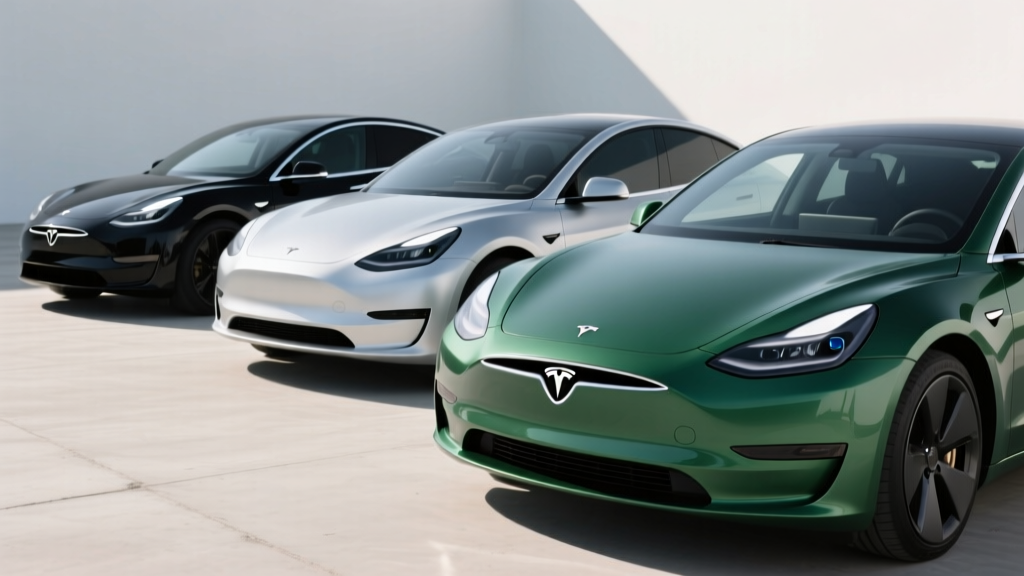
2026 Tesla Lineup: Core Specs at a Glance
| Spec | Model 3 LR AWD | Model Y LR AWD | Model S LR | Model X LR |
|---|---|---|---|---|
| EPA Range | 363 mi | 320 mi | 402 mi | 335 mi |
| Battery (usable) | ~75 kWh, NMC | ~75 kWh, NMC | ~95 kWh, NMC | ~95 kWh, NMC |
| Peak DC Charge | 250 kW | 250 kW | 250 kW | 250 kW |
| 10–80% DC Time | ~25 min | ~25 min | ~30 min | ~30 min |
| Level 2 (11.5 kW) | ~44 mi/hr | ~44 mi/hr | ~52 mi/hr | ~52 mi/hr |
| 0–60 mph | 4.2 sec | 4.8 sec | 3.1 sec | 3.8 sec |
| Horsepower | 346 hp | 384 hp | 670 hp | 670 hp |
| Drivetrain | Dual-motor AWD | Dual-motor AWD | Dual-motor AWD | Dual-motor AWD |
| Efficiency (MPGe) | 132 MPGe | 122 MPGe | 124 MPGe | 109 MPGe |
| Cargo (rear+frunk) | 23 + 3 cu ft | 30 + 4 cu ft | 28 + 5 cu ft | 88 + 7 cu ft |
| Base MSRP | $47,740 | $48,630 | $79,990 | $84,990 |
Source: EPA fueleconomy.gov and Tesla.com. Specs reflect 2026 model year Long Range trims with HW4 sensor suite. Prices include destination fee.
Real-World Range: What the EPA Sticker Doesn't Tell You
- Model 3 LR: EPA 363 mi → expect ~290–320 mi highway at 70 mph; ~230–260 mi in sub-30°F cold
- Model Y LR: EPA 320 mi → expect ~255–285 mi highway; ~200–230 mi in winter conditions
- Model S LR: EPA 402 mi → expect ~330–360 mi highway; ~270–310 mi in cold weather
- Model X LR: EPA 335 mi → expect ~270–300 mi highway; ~210–250 mi in freezing temps
Tesla's heat pump (standard across the lineup) mitigates cold-weather cabin heating losses, but battery chemistry still suffers in extreme cold. Preconditioning while plugged in recovers 5–10% of range.
The 2026 Tesla fleet uses NMC (nickel manganese cobalt) chemistry in Long Range and Performance trims, which offers higher energy density than LFP but is more sensitive to sustained 100% state-of-charge. Tesla recommends daily charging to 80% for NMC packs, reserving 100% for road trips. The RWD Model 3 uses an LFP (lithium iron phosphate) battery, which Tesla recommends charging to 100% at least weekly — a meaningful ownership difference if you have limited charging access.
Charging Speed: DC Fast, Level 2, and the Supercharger Advantage
| Charging Level | Power | Miles Added/Hour | Notes |
|---|---|---|---|
| Level 1 (120V) | ~1.4 kW | 3–5 mi/hr | Emergency/trickle only |
| Level 2 (240V/48A) | 11.5 kW | 44–52 mi/hr | Home Wall Connector; full charge in 7–9 hrs |
| DC Fast (V3 Supercharger) | 250 kW peak | ~200 mi in 15 min | 10–80% in ~25–30 min; tapers sharply above 80% |
| DC Fast (V4 Supercharger) | Up to 350 kW* | Potentially faster | *Current Tesla vehicles limited to 250 kW intake |
Charging curve reality check: Tesla's 250 kW peak rate is sustained only between roughly 10–40% state of charge. From 40–60%, the rate drops to ~175 kW, and from 60–80% it falls to ~100 kW. Above 80%, speeds plummet to under 50 kW. This means a 10–80% session takes ~25 minutes, but 10–95% can take 45+ minutes. Always precondition your battery (the car does this automatically when you navigate to a Supercharger) to hit peak speeds.
All 2026 Teslas use the NACS (North American Charging Standard) connector natively. Tesla's Supercharger network — over 6,000 stalls in the U.S. — remains the most reliable DC fast-charging network, with uptime exceeding 99% per Tesla's own data. With adapters, Teslas can also use CCS stations, but the NACS ecosystem is rapidly becoming the default.
The New Camera Sensor: What HW5/AI5 Changes
Elon Musk confirmed in mid-2025 that Tesla is preparing a new camera sensor for its vehicles under the HW5 (also called AI5) designation. Key reported upgrades include:
- Higher resolution sensors: Moving from the current 5-megapixel cameras to potentially 12+ megapixel units, providing more detail for neural-network processing at distance
- Improved dynamic range: Better performance in high-contrast scenarios (tunnel exits, direct sun, nighttime oncoming headlights)
- Increased compute: The AI5 inference chip reportedly delivers 5–10× the processing throughput of HW4, enabling more complex real-time perception models
- Lower power draw: Despite the compute increase, AI5 is designed to consume less energy — important for preserving range
As of early 2026, Tesla has not confirmed an exact rollout date for HW5/AI5 camera sensors. Vehicles currently delivered use the HW4 suite (introduced in 2023). Tesla has not offered retrofit upgrades for previous hardware generations — owners of HW3 and HW4 vehicles should not expect a free sensor swap. If HW5 is critical to your purchase decision, consider waiting or confirm hardware version with your delivery advisor before taking delivery.
The camera-only approach remains Tesla's core differentiator. While competitors like Waymo (Level 4 robotaxis) rely on lidar, radar, and camera fusion, Tesla continues to bet that high-resolution cameras paired with advanced neural networks can achieve equivalent or superior perception. The HW5 sensor upgrade is the next step in that strategy — but it does not change the SAE Level 2 classification of FSD (Supervised).
Pricing, Trims, and Federal Tax Credit Eligibility
| Model / Trim | Base MSRP | §30D Credit | Effective Price |
|---|---|---|---|
| Model 3 RWD | $38,990 | Up to $7,500* | ~$31,490 |
| Model 3 LR AWD | $47,740 | Up to $7,500* | ~$40,240 |
| Model Y LR AWD | $48,630 | Up to $7,500* | ~$41,130 |
| Model S LR | $79,990 | $0 (over MSRP cap) | $79,990 |
| Model X LR | $84,990 | $0 (over MSRP cap) | $84,990 |
*The IRS §30D clean vehicle credit has strict eligibility rules. See checklist below.
- MSRP cap: Sedans (Model 3, Model S) must be under $55,000; SUVs/trucks (Model Y, Model X) under $80,000
- Buyer income cap: AGI must not exceed $150,000 (single), $225,000 (head of household), or $300,000 (joint)
- Battery sourcing: A percentage of critical minerals and battery components must be sourced from the U.S. or FTA partners — this requirement tightens annually and can reduce the credit to $3,750 or $0
- Point-of-sale transfer: Eligible buyers can transfer the credit to the dealer at purchase, reducing the purchase price upfront rather than waiting for a tax refund
- Verify before buying: Battery-sourcing rules change frequently. Confirm current eligibility on fueleconomy.gov or consult a tax professional
Tesla vs. the Competition: Is It Worth Buying?
Here's how the 2026 Tesla lineup stacks up against key rivals:
| Category | Tesla Model Y LR | Hyundai Ioniq 5 LR | Ford Mustang Mach-E ER |
|---|---|---|---|
| EPA Range | 320 mi | 318 mi | 312 mi |
| Peak DC Charge | 250 kW | 240 kW | 150 kW |
| 10–80% Time | ~25 min | ~18 min | ~38 min |
| Base MSRP | $48,630 | $49,850 | $48,495 |
| Charging Network | NACS + Supercharger | NACS (2025+) | NACS (2025+) |
| ADAS | FSD (Supervised) L2 | Highway Driving Assist 2 | BlueCruise 1.4 |
- Choose Tesla if: You want access to the Supercharger network (still the most reliable), value over-the-air software updates, and want the highest-resolution camera-based ADAS available in a consumer vehicle
- Choose Hyundai Ioniq 5 if: Faster 10–80% charging speed matters to you (800V architecture), you prefer a more conventional interior layout, or you want competitive range at a similar price
- Choose Ford Mach-E if: You prefer a traditional dealership experience for service, want BlueCruise hands-free driving on mapped highways, or value a more car-like driving position
Pros and Cons of the 2026 Tesla Lineup
- Class-leading Supercharger network access
- Industry-best efficiency (kWh/mi) across the lineup
- Continuous OTA software improvements
- Spacious interiors with frunk storage
- Strong resale value relative to EV market
- HW5 camera upgrade pipeline signals ongoing investment
- FSD (Supervised) requires $8,000 add-on, still Level 2
- No instrument cluster — all info on central screen
- Service center wait times remain long in some markets
- Model S/X exceed §30D MSRP cap — no federal credit
- Build-quality variability still reported by some owners
- HW5 not yet shipping; no retrofit path for older hardware
Warranty, Ownership Costs, and Who Should Buy
Tesla's warranty coverage across the 2026 lineup:
- Basic vehicle: 4 years / 50,000 miles
- Battery & drive unit: 8 years / 120,000 miles (Model 3/Y) or 8 years / 150,000 miles (Model S/X), with a minimum 70% capacity retention threshold
- Roadside assistance: 4 years / 50,000 miles
Who this EV suits best:
- Model 3: Solo commuters and couples who prioritize efficiency and value; the RWD trim with LFP battery is the most affordable entry point
- Model Y: Families needing cargo space and rear-seat comfort; the most popular Tesla for a reason
- Model S: Performance-oriented buyers who want 400+ miles of range and luxury sedan refinement
- Model X: Families wanting three-row seating, falcon-wing doors, and towing capacity (up to 5,000 lbs)
Insurance costs remain higher than average for Teslas — expect $1,800–$2,800/year depending on model, location, and driving record. Always get an insurance quote before purchasing, as premiums can significantly affect total cost of ownership.
Frequently Asked Questions
What is the real-world range of the 2026 Tesla Model Y?
The EPA rates the Model Y Long Range AWD at 320 miles. In real-world highway driving at 70 mph, expect 255–285 miles. In cold weather (below 30°F), that drops to 200–230 miles. Preconditioning and using seat heaters instead of cabin heat can recover 5–10% of range.
How fast does a Tesla charge at home and on the road?
At home on a Level 2 Tesla Wall Connector (11.5 kW), Teslas add 44–52 miles of range per hour, fully charging overnight. On V3 Superchargers, peak speed is 250 kW, achieving a 10–80% charge in approximately 25–30 minutes. Charging slows significantly above 80% due to battery-protection taper.
Does the Tesla Model 3 qualify for the $7,500 federal tax credit?
The Model 3 RWD and Long Range AWD both fall under the $55,000 MSRP cap for sedans. However, eligibility depends on your income (AGI under $150K single / $300K joint), battery critical-mineral sourcing requirements, and point-of-sale transfer rules. Check current eligibility at fueleconomy.gov or consult a tax professional. The credit can be transferred to the dealer at purchase for an upfront price reduction.
When will Tesla's new HW5 camera sensor ship?
Tesla has confirmed that it is preparing a new camera sensor (HW5/AI5) but has not announced a firm shipping date as of early 2026. Current deliveries use HW4. Tesla historically does not offer retrofits for hardware upgrades — buying now means accepting HW4 with the possibility of HW5 arriving later in the model year.
Is Tesla's FSD worth the $8,000 cost?
FSD (Supervised) is an SAE Level 2 system that handles highway lane changes, on-ramps, city street navigation, and traffic-light recognition. It requires constant driver supervision and is not self-driving. Whether it's worth $8,000 depends on your commute complexity and willingness to supervise an imperfect system. Many owners find basic Autopilot (included free) sufficient for highway driving. FSD does not increase resale value dollar-for-dollar.
Is Tesla worth buying vs. Hyundai or Ford?
Tesla's Supercharger network, efficiency, and software ecosystem remain best-in-class. However, the Hyundai Ioniq 5 charges faster (10–80% in ~18 min on 800V architecture), and the Ford Mach-E offers a more traditional dealer-service experience. If charging reliability on road trips is your top priority, Tesla still wins. If you value faster peak charging or a conventional interior, competitors are compelling alternatives at similar prices.