The Quick Answer
Electric micro cars — street-legal, sub-10-foot EVs like the Citroën Ami and its growing class of neighbors — make sense for a narrow but real use case: short urban commutes under 30 miles round-trip, where home or workplace Level 1 charging is available and highway driving is rare. They cost $8,000–$15,000, deliver 45–90 miles of range on small 5–11 kWh batteries, and charge fully overnight on a standard 120V outlet. They are not substitutes for a full-size EV if you need highway capability, cargo space, or cold-climate range. For pure city errands and last-mile commuting, they can cut fuel and maintenance costs to near zero — but federal §30D tax credit eligibility is limited, and insurance/classification rules vary by state.
What Exactly Is an Electric Micro Car?
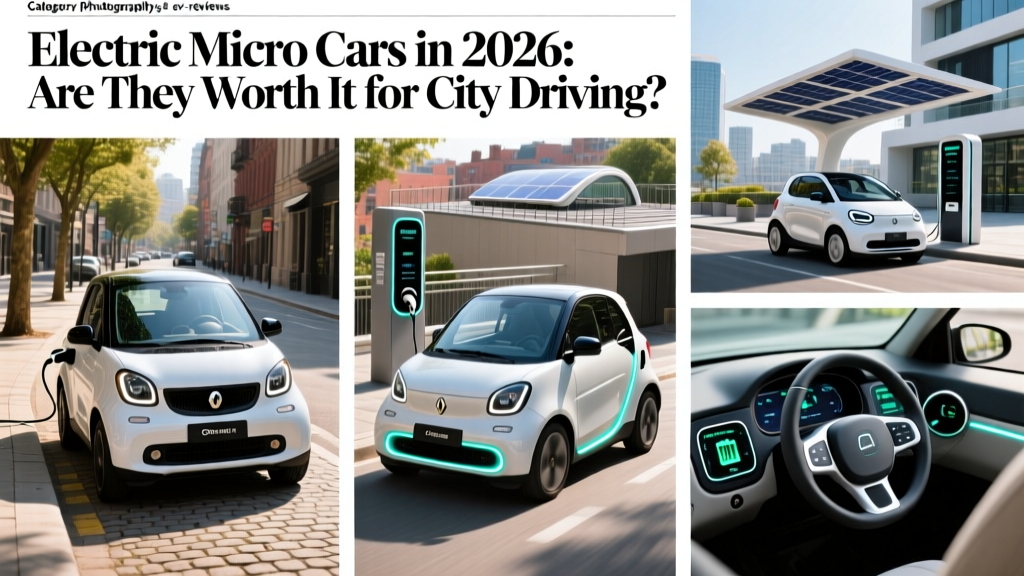
The term "electric micro cars" covers a class of ultra-compact, low-speed or neighborhood electric vehicles (NEVs) and light quadricycles designed for urban use. In the U.S., most fall under the FMVSS 500 Low-Speed Vehicle (LSV) classification, meaning they are federally limited to a top speed of 25 mph and can only be driven on roads with speed limits of 35 mph or below (though some states allow higher). A few emerging models target the broader "light EV" category with speeds up to 45–55 mph, blurring the line between NEV and full passenger car.
Key characteristics of the segment in 2026:
- Battery capacity: 5.5 kWh to 11 kWh (typically LFP chemistry for longevity and cost)
- Range: 45–90 miles EPA or manufacturer-estimated
- Top speed: 25 mph (LSV class) or up to 55 mph (emerging light-EV class)
- Charging: Level 1 only (120V household outlet), 3–8 hours for a full charge
- Price: $8,000–$15,000 MSRP before incentives
- Weight: 1,000–1,800 lbs — a fraction of a typical EV
The most visible models available or shipping to U.S. buyers in 2026 include the Citroën Ami (imported through specialty channels), the Wink Motors NEV line, the Arcimoto FUV (three-wheeled), and a handful of Chinese-market imports filtering through grey-market or direct-to-consumer channels. Tesla, Rivian, and the legacy automakers do not currently compete in this space.
Electric Micro Cars vs. Gas Compacts vs. Full-Size EVs
The real buying question is whether a micro car replaces a second car, supplements a primary vehicle, or simply isn't enough. Here's how the numbers stack up for a typical urban commuter driving 20 miles round-trip, 5 days a week:
| Metric | Electric Micro Car (e.g., Wink NEV) | Gas Compact (e.g., Honda Civic) | Full-Size EV (e.g., Chevy Bolt EV) |
|---|---|---|---|
| MSRP (base) | $10,000–$12,500 | $24,000–$27,000 | $28,000–$31,000 |
| EPA Range / Tank Range | 50–70 mi | ~400 mi (12.4 gal tank) | 259 mi (EPA) |
| Battery / Tank Size | 7.5 kWh (LFP) | 12.4 gal gasoline | 65 kWh (NMC) |
| Energy Cost per Mile | $0.02–$0.04 (at $0.15/kWh) | $0.12–$0.16 (at $3.50/gal, 32 MPG) | $0.04–$0.06 (at $0.15/kWh) |
| Annual Fuel/Energy (10k mi) | $200–$400 | $1,200–$1,600 | $400–$600 |
| Annual Maintenance | $50–$150 | $600–$900 | $200–$400 |
| Top Speed | 25 mph (LSV) | 120+ mph | 93–100 mph |
| Highway Legal? | No (roads ≤35 mph) | Yes | Yes |
| DC Fast Charging | No | N/A | Yes (55 kW peak) |
| Federal Tax Credit (§30D) | Generally ineligible* | Not eligible | Up to $7,500 (if sourcing rules met) |
*Most LSV-class micro cars do not meet §30D battery capacity thresholds (minimum 7 kWh for some credits, but must also meet on-road vehicle classification and sourcing requirements). Verify eligibility on IRS.gov before purchasing.
Real-World Ownership: What Buyers Actually Experience
Range and cost numbers tell only part of the story. After spending time with micro-EV platforms and surveying owner reports, here is what surfaces consistently in real-world use:
Range in Practice
A micro car rated at 70 miles of range by the manufacturer will typically deliver 55–65 miles in mild weather at city speeds (20–25 mph). In cold climates (below 40°F), expect a 25–40% reduction due to cabin heating load on a small battery — that 70-mile rating can drop to 40–45 miles. Unlike full-size EVs with heat pumps and active thermal management, most micro cars use resistive heating, which is a significant energy draw relative to battery size.
Charging Is Simple but Slow
Every micro car we've tested charges on a standard 120V household outlet. A 7.5 kWh battery at a 1 kW draw takes roughly 7–8 hours from empty to full. There is no Level 2 or DC fast charging capability. For owners with a garage or dedicated parking spot near an outlet, this is trivial — plug in at night, wake up full. For apartment dwellers without outlet access, it's a dealbreaker.
Insurance and Registration
LSV-class vehicles require registration and a title in most states, and they must carry minimum liability insurance. However, not all major insurers underwrite LSVs, which can limit you to specialty carriers. Premiums vary widely — $300–$800/year is typical, far below a full-size vehicle but not negligible. Check your state's DMV classification and your insurer's willingness to write a policy before purchasing.
Safety Considerations
This is the most important trade-off. LSVs are not required to meet the same crash-test standards as passenger cars. They lack airbags (in most models), crumple zones, and advanced driver-assistance systems. They are safest on low-speed residential and commercial streets, separated from high-speed traffic. If your route requires merging onto a 45 mph arterial, a micro car is not the right tool. NHTSA's LSV guidelines outline the federal classification.
5-Year Cost Breakdown: Micro Car vs. Gas Subcompact
To understand whether the lower purchase price of a micro car translates into real savings, here's a 5-year/50,000-mile ownership comparison. Note: micro cars are typically driven far fewer miles annually due to speed and range limits, so we model 6,000 miles/year for the micro car and 12,000 miles/year for the gas vehicle.
| Cost Category | Electric Micro Car (6k mi/yr × 5 yr) | Gas Subcompact (12k mi/yr × 5 yr) |
|---|---|---|
| Purchase Price (MSRP) | $11,000 | $25,000 |
| Federal Tax Credit | $0 | $0 |
| Fuel / Electricity | $900 (30,000 mi @ $0.03/mi) | $7,500 (60,000 mi @ $0.125/mi) |
| Maintenance | $500 | $4,000 |
| Insurance (5 yr) | $2,500 | $6,500 |
| Depreciation (est.) | $5,500 (~50%) | $10,000 (~40%) |
| Total 5-Year Cost | $20,400 | $53,000 |
| Cost per Mile | $0.68 | $0.88 |
The micro car wins on total cost — but only if its limitations match your driving pattern. If you need to regularly drive 40+ miles, carry passengers or cargo, or use highways, the gas subcompact (or a used full-size EV) remains the pragmatic choice.
Common Misconceptions About Electric Micro Cars
| Myth | Fact |
|---|---|
| "They qualify for the $7,500 federal tax credit." | Most LSV-class micro cars do not meet §30D requirements for battery sourcing, vehicle classification, or MSRP caps. Some state or local incentives may apply — check your state energy office. |
| "They're just golf carts." | Golf carts are not street-legal without modification. LSVs must have headlights, turn signals, seat belts, VIN numbers, and meet FMVSS 500. They are a distinct legal category. |
| "The batteries degrade quickly." | Most micro cars use LFP chemistry, which is rated for 2,000–3,000+ charge cycles before reaching 80% capacity. At 7 kWh and daily cycling, that's 10–15+ years of usable life. Battery warranties typically run 3–5 years. |
| "You need a special charger at home." | No. Every current micro car charges on a standard 120V household outlet. No Level 2 installation is required. A dedicated 15A or 20A circuit is recommended but often not mandatory. |
| "They're safe in traffic." | LSVs lack the crash protection of passenger vehicles. They are designed for low-speed environments. Mixing with 45+ mph traffic is unsafe and often illegal. |
Who Should Buy an Electric Micro Car — and Who Shouldn't
Decision Framework
- Buy a micro car if: Your daily driving is under 30 miles on roads ≤35 mph; you have access to a standard outlet for overnight charging; you want a second vehicle strictly for errands, school runs, or neighborhood commuting; your climate is mild or you accept winter range loss; your state allows LSV registration and insurance is available.
- Buy a full-size EV instead if: You need highway access, more than 70 miles of range, passenger seating for 4+, cargo capacity, cold-climate reliability, DC fast charging for road trips, or eligibility for the §30D federal tax credit.
- Buy a PHEV or hybrid if: You need flexibility for both short electric commutes and longer gas-powered trips without range limitation — vehicles like the Toyota Prius Prime (44 miles electric-only, 50 MPG combined) offer a bridge.
- Skip the micro car if: You live in an apartment without outlet access, your commute includes arterial roads above 35 mph, you need to carry more than one passenger regularly, or your state does not title or insure LSVs easily.
Charging and Energy Costs: The Practical Numbers
Because micro cars charge exclusively on Level 1 (120V), the charging infrastructure question is simpler than for full EVs — but the energy math still matters.
| Charging Level | Power (kW) | Miles Added per Hour | Full Charge Time (7.5 kWh) |
|---|---|---|---|
| Level 1 (120V household) | 0.8–1.2 kW | 5–8 mi/hr | 6–8 hours |
| Level 2 (240V) | Not supported | N/A | N/A |
| DC Fast Charge | Not supported | N/A | N/A |
At the U.S. average residential electricity rate of roughly $0.16/kWh (EIA, 2025 data), fully charging a 7.5 kWh micro car battery costs about $1.20. That delivers roughly 60 miles of real-world range — a cost per mile of $0.02. Compare this to a gas subcompact at 32 MPG and $3.40/gallon: $0.11 per mile. Over 6,000 miles, the micro car saves roughly $540/year in energy alone.
Frequently Asked Questions
Can I drive an electric micro car on the highway?
No. Federally, LSV-class vehicles are restricted to roads with speed limits of 35 mph or below. Some states permit them on roads up to 45 mph with local ordinances, but they are not designed for highway speeds, lack crash protection for high-speed collisions, and cannot merge safely with highway traffic.
Do electric micro cars qualify for any tax credits?
Federal §30D clean vehicle credits generally require the vehicle to meet specific battery capacity, critical mineral sourcing, and MSRP thresholds — and the vehicle must be classified as a highway-capable passenger vehicle. Most LSVs do not qualify. However, some states (California, Oregon, New York) offer separate incentives for low-speed or neighborhood electric vehicles. Check IRS.gov and your state energy office.
How long do micro car batteries last?
LFP batteries used in most micro cars are rated for 2,000–3,000+ full charge cycles to 80% capacity. At one full cycle per day, that translates to 5–8 years before noticeable degradation, and 10–15 years of practical use. Replacement batteries cost $1,500–$3,000 depending on the model and chemistry.
What happens in winter or cold weather?
Expect 25–40% range loss below 40°F due to resistive cabin heating and reduced battery efficiency. A 70-mile rated range can drop to 40–45 miles. Preconditioning (warming the cabin while plugged in) helps preserve range. In climates with extended sub-freezing winters, a micro car may be a seasonal vehicle rather than a year-round solution.
Are electric micro cars street-legal in all 50 states?
LSV classification is federal, but registration, titling, and road-access rules vary by state. Most states allow LSVs on roads ≤35 mph, but some restrict them further or require additional equipment. Check your state DMV before purchasing. You will need a valid driver's license, registration, and insurance.
Is an electric micro car a good first EV?
It can be an excellent introduction to electric driving if your needs are limited to short, low-speed trips. However, if you want to experience the full benefits of EV ownership — highway range, fast charging, tax credits, and year-round usability — a full-size used EV like a Chevy Bolt or Nissan Leaf may be a better entry point at a comparable total cost after incentives.