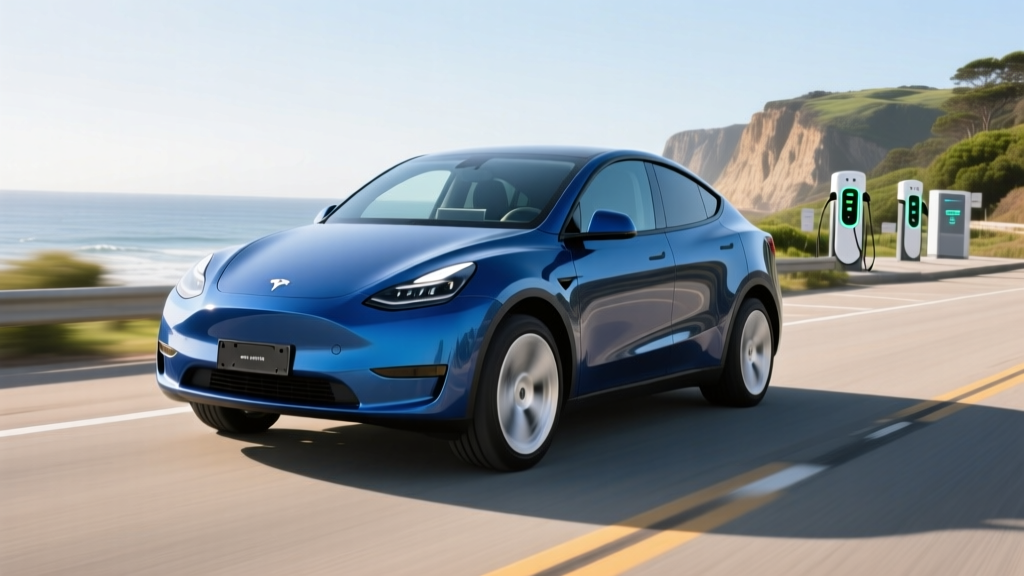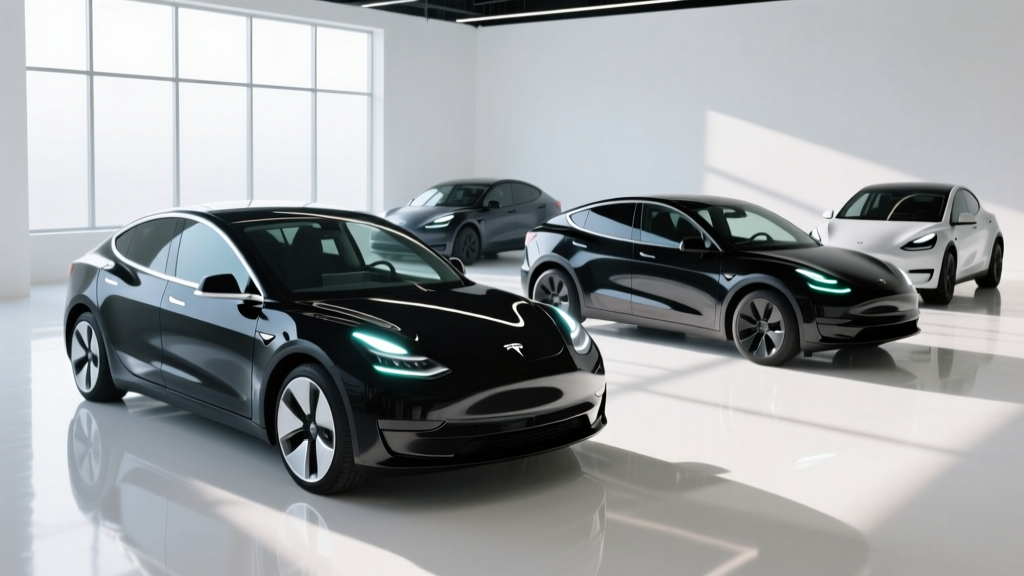
Tesla's lineup in 2026 remains the benchmark for EV efficiency and charging infrastructure access, but the question of Tesla motors subsidies — specifically which models qualify for the federal §30D clean vehicle credit and at what price point — requires careful, model-by-model analysis. Battery sourcing rules, MSRP caps, and buyer income limits all factor into whether you'll actually see a $7,500 reduction at the point of sale.
This guide dissects the 2026 Tesla fleet — Model 3, Model Y, Cybertruck, Model S, and Model X — with exact EPA range figures, charging speeds, pricing, and a clear-eyed look at which vehicles clear the subsidy hurdles. No marketing gloss, just the data you need to decide.
Tesla's 2026 Lineup: Spec-by-Spec Breakdown
| Model / Trim | EPA Range | Battery (kWh / Chemistry) | Peak DC Charge (kW) | 10–80% Time | 0–60 mph | HP | Base MSRP |
|---|---|---|---|---|---|---|---|
| Model 3 RWD | 272 mi | 57.5 / LFP | 170 kW | ~25 min | 5.8 sec | 271 | $38,990 |
| Model 3 Long Range AWD | 341 mi | 79 / NMC | 250 kW | ~22 min | 4.2 sec | 346 | $45,490 |
| Model 3 Performance | 315 mi | 79 / NMC | 250 kW | ~22 min | 2.9 sec | 510 | $52,990 |
| Model Y RWD | 260 mi | 57.5 / LFP | 170 kW | ~25 min | 6.6 sec | 295 | $41,990 |
| Model Y Long Range AWD | 320 mi | 79 / NMC | 250 kW | ~22 min | 4.8 sec | 384 | $47,490 |
| Model Y Performance | 293 mi | 79 / NMC | 250 kW | ~22 min | 3.3 sec | 456 | $52,490 |
| Cybertruck AWD | 340 mi | 123 / NMC | 250 kW | ~28 min | 4.1 sec | 600 | $79,990 |
| Model S LR | 402 mi | 100 / NMC | 250 kW | ~27 min | 3.1 sec | 670 | $74,990 |
| Model X LR | 335 mi | 100 / NMC | 250 kW | ~28 min | 3.8 sec | 670 | $79,990 |
Data sourced from fueleconomy.gov and Tesla's official specification pages. All range figures are EPA-estimated; real-world results vary as detailed below.
Real-World Range: What the EPA Sticker Doesn't Tell You
The Model 3 Long Range AWD carries an EPA rating of 341 miles. In real-world highway driving at 70–75 mph, expect approximately 280–300 miles before needing a charge. In cold weather (below 32°F / 0°C), range can drop 20–30%, bringing usable range down to roughly 230–260 miles depending on cabin heating demand and whether you precondition the battery.
Efficiency varies significantly by trim. The Model 3 RWD achieves 132 MPGe combined (25 kWh/100 mi), making it one of the most efficient EVs on the market. The heavier Model X LR drops to 102 MPGe combined (33 kWh/100 mi). The Cybertruck, with its stainless-steel exoskeleton and large frontal area, lands around 76 MPGe combined.
For LFP-equipped models (Model 3 RWD, Model Y RWD), Tesla recommends periodic charging to 100% to maintain battery calibration. NMC models perform best with daily limits set to 80–90% and 100% reserved for trips. This chemistry difference matters for daily usability: LFP owners get the full rated range every day, while NMC owners operate within a narrower daily window.
Charging Speed and Infrastructure Access
| Charging Level | Power (kW) | Miles Added per Hour | Typical Use Case |
|---|---|---|---|
| Level 1 (120V household) | 1.4 kW | ~4–5 mi/hr | Emergency / overnight trickle |
| Level 2 (240V home / Wall Connector) | 11.5 kW | ~35–44 mi/hr | Daily home charging |
| DC Fast (V3 Supercharger) | Up to 250 kW | ~200 mi in 15 min | Road trips |
| DC Fast (V4 Supercharger) | Up to 325 kW (capable) | Model-dependent | Next-gen fast stops |
Tesla's Supercharger network — now exceeding 6,500 stations and 65,000+ connectors in North America — remains the most reliable public DC fast-charging ecosystem. The key advantage isn't just speed; it's plug-and-charge simplicity with no app authentication required at most stalls.
The charging curve matters more than peak kW. A Model 3 Long Range will peak near 250 kW at low state-of-charge (SoC) but tapers significantly above 60%. The 10–80% time of approximately 22 minutes reflects this taper. Charging from 80–100% can add another 15–20 minutes — plan accordingly on road trips and charge to 80% unless you need the final stretch.
With the NACS connector now standard across the industry, Tesla's proprietary advantage has diminished, but Supercharger reliability and geographic coverage remain a significant ownership perk. Non-Tesla EVs now access Superchargers via NACS or adapter, though Tesla owners still benefit from integrated navigation preconditioning — the car warms the battery en route to a Supercharger, enabling faster charge rates upon arrival.
Tesla Motors Subsidies: Federal §30D Tax Credit Eligibility
The federal clean vehicle credit under IRS §30D remains the most impactful Tesla motors subsidy for qualified buyers, but eligibility in 2026 requires clearing three hurdles simultaneously: MSRP caps, buyer income limits, and critical mineral / battery component sourcing requirements.
- MSRP Cap: Sedans (Model 3, Model S) must have an MSRP at or below $55,000. SUVs, vans, and trucks (Model Y, Model X, Cybertruck) must be at or below $80,000. The IRS classifies the Model Y as an SUV based on its interior volume.
- Income Caps (Modified AGI): $150,000 single filer / $225,000 head of household / $300,000 joint filers. Exceeding these thresholds disqualifies you entirely.
- Battery Sourcing: The $7,500 credit splits into two halves — $3,750 for meeting critical-mineral sourcing thresholds and $3,750 for battery-component manufacturing requirements. These thresholds tighten annually under the Inflation Reduction Act.
- Point-of-Sale Transfer: Qualified buyers can transfer the credit to the dealer at purchase, reducing the purchase price directly rather than waiting for a tax refund at filing.
| Model | MSRP | MSRP Cap Met? | Est. Credit (Qualified Buyer) | Effective Price After Credit |
|---|---|---|---|---|
| Model 3 RWD | $38,990 | Yes (≤$55k) | Up to $7,500 | ~$31,490 |
| Model 3 Long Range AWD | $45,490 | Yes (≤$55k) | Up to $7,500 | ~$37,990 |
| Model 3 Performance | $52,990 | Yes (≤$55k) | Up to $7,500 | ~$45,490 |
| Model Y RWD | $41,990 | Yes (≤$80k) | Up to $7,500 | ~$34,490 |
| Model Y Long Range AWD | $47,490 | Yes (≤$80k) | Up to $7,500 | ~$39,990 |
| Model Y Performance | $52,490 | Yes (≤$80k) | Up to $7,500 | ~$44,990 |
| Cybertruck AWD | $79,990 | Borderline (≤$80k) | Up to $7,500 | ~$72,490 |
| Model S LR | $74,990 | No (sedan cap $55k) | $0 | $74,990 |
| Model X LR | $79,990 | Yes (≤$80k) | Up to $7,500 | ~$72,490 |
Critical caveat: Battery-sourcing rules are the wildcard. Tesla has shifted significant battery-cell production to U.S. facilities (notably through partnerships with Panasonic at Giga Nevada and Giga Texas), which helps meet component requirements. However, critical-mineral sourcing (lithium, nickel, cobalt) depends on trade agreements and supply-chain certifications that can shift mid-year. Always verify current eligibility on IRS.gov or via the DOE's fueleconomy.gov credit lookup tool before purchasing.
State and local incentives stack on top of the federal credit in many jurisdictions. California's CVRP (now transitioning to point-of-sale rebates under CARB), Colorado's $5,000 state credit, and various utility-company rebates for home charger installation can bring effective prices significantly lower. Consult your state's energy office for current programs.
Performance, Tech, and Daily Ownership
Every 2026 Tesla ships with the brand's latest HW4 Autopilot hardware suite, featuring enhanced camera resolution and a more powerful inference computer. Base Autopilot (Traffic-Aware Cruise Control and Autosteer) is standard. Full Self-Driving (Supervised) remains an $8,000 add-on or $99/month subscription and is firmly SAE Level 2 — the driver must remain fully engaged and responsible at all times.
Tesla's Autopilot and FSD (Supervised) require continuous driver attention. They do not make the vehicle autonomous. Only Level 4 services (Waymo, Zoox in geofenced areas) operate without a human driver. Treat every Tesla assist feature as a co-pilot, not a replacement.
The infotainment system centers on a 15.4-inch landscape touchscreen (Model 3/Y) or a 17-inch display (Model S/X/Cybertruck). There is no Apple CarPlay or Android Auto — Tesla's native system handles navigation, media, and vehicle controls exclusively. The navigation system is excellent, with real-time Supercharger availability and automatic battery preconditioning. A rear-seat 8-inch touchscreen in the refreshed Model 3 and Model Y handles climate and entertainment for passengers.
Cargo capacity breaks down as follows:
- Model 3: 23 cu ft trunk + 3.1 cu ft frunk — adequate for luggage but tight for bulk cargo
- Model Y: 30.2 cu ft behind second row (76.2 cu ft folded) + 4.1 cu ft frunk — genuinely practical for families
- Cybertruck: 6.5-foot bed with motorized tonneau + front trunk ("frunk") — utility-focused, but the bed is shorter than a full-size pickup
- Model X: Up to 88 cu ft with seats folded + optional third row (seats 6 or 7) — the family hauler of the lineup
- Model S: 28 cu ft trunk + frunk — comfortable grand touring, less cargo focus
Warranty and Long-Term Ownership Costs
Tesla's warranty structure is straightforward:
- Basic Vehicle Limited Warranty: 4 years / 50,000 miles
- Battery & Drive Unit Warranty (Model 3 RWD / Model Y RWD — LFP): 8 years / 100,000 miles, with a minimum 70% capacity retention threshold
- Battery & Drive Unit Warranty (Long Range / Performance / Model S / Model X / Cybertruck): 8 years / 120,000 miles (150,000 miles for Model S/X), 70% retention threshold
Battery degradation data from Tesla's fleet reports and third-party tracking (e.g., Recurrent Auto) shows that LFP packs in the Model 3 RWD typically lose 5–8% capacity over the first 100,000 miles, while NMC packs in Long Range variants lose roughly 8–12% over the same distance. The 70% warranty threshold is generous, but real-world data suggests most packs will comfortably exceed it within the warranty period.
Insurance costs remain a consideration. Tesla vehicles carry higher-than-average premiums due to repair costs (aluminum body panels, sensor calibration, limited collision-repair network). Expect annual premiums 15–30% above comparable non-Tesla EVs, though Tesla's own insurance product (available in most states) uses real-time driving data and can be competitive for safe drivers.
Who Should Buy Which Tesla?
Choose Model 3 RWD if: You commute under 40 miles daily, want the lowest price with full subsidy eligibility, and prefer LFP chemistry for hassle-free 100% daily charging.
Choose Model 3 Long Range AWD if: You take regular road trips, live in a cold climate where AWD matters, and need 300+ miles of real-world range.
Choose Model Y Long Range AWD if: You need family-friendly cargo space, car-seat room, and the practicality of a crossover while staying well under the $80k SUV cap.
Choose Cybertruck if: You need a truck bed and want an EV, understand the $80k MSRP cap is tight, and accept that its size makes urban driving and parking challenging.
Choose Model S/X if: Budget is secondary to luxury and range. Note that the Model S does not qualify for the federal credit due to the sedan MSRP cap.
Pros and Cons Across the Tesla Lineup
- Supercharger network — best public charging reliability in the U.S.
- Industry-leading efficiency (kWh/100mi) across the lineup
- Over-the-air updates continuously add features and refinements
- Strong §30D eligibility on Model 3 and Model Y trims
- Minimal maintenance costs — no oil, filters, or spark plugs
- Integrated navigation with battery preconditioning for faster DC charging
- No Apple CarPlay / Android Auto — proprietary infotainment only
- Higher insurance premiums vs. competitors
- Build quality variability — panel gaps and interior trim inconsistencies persist
- FSD (Supervised) costs $8,000 extra and is not autonomous
- Limited service-center density in rural areas
- Model S exceeds sedan MSRP cap — no federal credit
Frequently Asked Questions
What is the real-world range of the best-selling Tesla?
The Model Y Long Range AWD, Tesla's best-selling model, carries a 320-mile EPA rating. Expect approximately 265–285 miles in mixed highway driving, and as low as 210–230 miles in sustained sub-freezing temperatures without preconditioning. City driving with regenerative braking recovers more energy, often matching or exceeding the EPA estimate in stop-and-go traffic.
How fast does a Tesla charge at home and on the road?
At home with a Tesla Wall Connector (Level 2, 48A / 11.5 kW), you'll add roughly 35–44 miles of range per hour — an overnight session from 20% to 80% takes about 5–6 hours. On the road, V3 Superchargers deliver up to 250 kW, adding up to 200 miles in 15 minutes under ideal conditions. The 10–80% charge takes approximately 22 minutes for NMC models and 25 minutes for LFP models.
How much does a Tesla cost after tax credits?
A qualified buyer (meeting income caps) purchasing a Model 3 RWD at $38,990 can reduce the effective price to approximately $31,490 with the full $7,500 §30D credit applied at point of sale. The Model Y Long Range AWD drops from $47,490 to roughly $39,990. Always verify eligibility on IRS.gov as sourcing requirements update periodically.
Does Tesla qualify for the federal EV tax credit in 2026?
Yes — most Tesla models qualify, but with conditions. The Model 3 (all trims under $55k), Model Y (all trims under $80k), Model X, and Cybertruck AWD meet MSRP caps. The Model S does not, as it exceeds the $55,000 sedan limit. Buyer income must fall below $150k/$225k/$300k thresholds (single/HOH/joint), and battery sourcing must meet annual critical-mineral and component requirements per IRS §30D rules.
Is a Tesla worth buying versus key competitors?
Against the Hyundai Ioniq 6 (361 mi EPA, starting ~$42k), Tesla's Model 3 Long Range offers comparable range with superior charging infrastructure but less interior material quality. The Ford Mustang Mach-E and Chevrolet Equinox EV compete on price in the crossover segment, but neither matches the Model Y's efficiency or Supercharger access. If charging-network reliability and software integration are top priorities, Tesla retains a clear edge. If interior refinement, CarPlay support, or dealer-service proximity matter more, competitors deserve serious consideration.
What are the biggest drawbacks of owning a Tesla?
The three most-cited ownership frustrations are: insurance costs (15–30% above segment average), the lack of Apple CarPlay/Android Auto (Tesla's ecosystem is closed), and service-center wait times in less-populated areas. Build quality has improved but still shows occasional panel-gap inconsistencies. FSD remains an expensive add-on that does not deliver Level 4 autonomy despite its name.