Tesla Motors — now Tesla, Inc. — has reshaped the automotive industry faster than any manufacturer since Ford's Model T. But beyond the headlines, stock price swings, and Elon Musk's social media presence, what actually makes Tesla's vehicles tick? If you've been searching for Tesla motors fun facts that go deeper than trivia-night one-liners, you're in the right place.
We've driven, charged, and analyzed the current 2026 Tesla lineup — Model 3, Model Y, Model S, Model X, and the Cybertruck — to bring you fact-checked, spec-backed insights that matter to real buyers and owners. No hype, no fear-mongering. Just the numbers, the engineering quirks, and the ownership realities that separate Tesla from the rest of the EV pack.
Fact 1: The Model 3 Highland Still Sets the Efficiency Benchmark
The refreshed Tesla Model 3 (internally called "Highland") remains one of the most energy-efficient electric sedans on the road. The 2026 Long Range AWD variant achieves an EPA-estimated 341 miles of range from a 79 kWh usable NMC (nickel-manganese-cobalt) battery pack — translating to roughly 25 kWh per 100 miles, or 132 MPGe combined.
| Spec | Value |
|---|---|
| EPA Range | 341 miles |
| Battery (Usable) | 79 kWh, NMC |
| Efficiency | 132 MPGe / 25 kWh/100mi |
| 0-60 mph | 4.2 seconds |
| Horsepower | 346 hp (dual motor) |
| Drivetrain | AWD (dual motor) |
| Max DC Fast Charge | 250 kW (CCS via adapter or NACS native) |
| 10-80% DC Charge | ~25 minutes |
| Level 2 Home Charge | 11.5 kW (~44 mi/hr) |
| Cargo Volume | 23 cu ft (rear trunk + frunk) |
| Base MSRP | $47,740 |
| Battery Warranty | 8 yr / 120,000 mi (70% retention) |
Fact 2: Tesla's LFP Batteries Changed the Chemistry Game
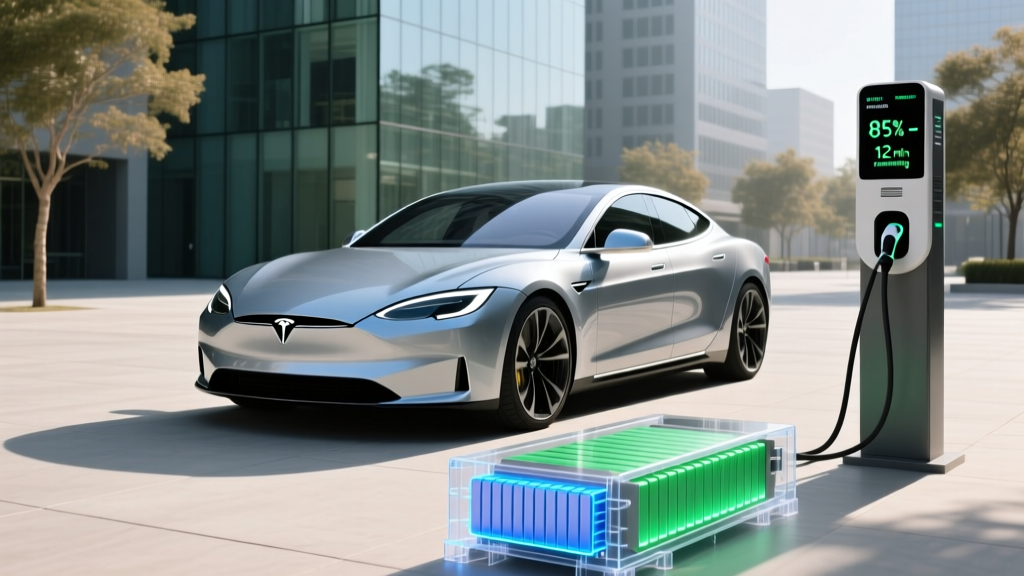
Not all Tesla batteries are created equal. The Model 3 RWD (base trim) uses LFP (lithium iron phosphate) cells — a chemistry that trades energy density for longevity, safety, and lower cost. Tesla was among the first major automakers to adopt LFP at scale in the US market, sourcing from CATL's Shanghai production.
Why does this matter? LFP batteries tolerate repeated 100% charging without accelerated degradation — Tesla actually recommends periodic full charges for LFP packs to keep the battery management system (BMS) calibrated. NMC packs, by contrast, are best kept between 20-80% for daily use to maximize cycle life.
| Trait | LFP (Model 3 RWD) | NMC (Long Range / Performance) |
|---|---|---|
| Energy Density | Lower (~160 Wh/kg) | Higher (~250 Wh/kg) |
| Cycle Life | 3,000+ cycles | 1,000-2,000 cycles |
| Cold-Weather Performance | More range loss (~40%) | Moderate loss (~25-30%) |
| 100% Charge OK? | Yes, recommended periodically | Avoid daily 100% |
| EPA Range (Model 3) | 272 mi (RWD) | 341 mi (LR AWD) |
| Cost Advantage | Lower MSRP, no cobalt | Higher range per dollar |
This is one of the most practical Tesla motors fun facts for daily commuters: if you charge at home every night and rarely road-trip, the LFP-equipped RWD at $38,990 may outlast its NMC siblings over a decade of ownership.
Fact 3: The Supercharger Network Is Tesla's Real Moat
Tesla's Supercharger network now exceeds 60,000 connectors globally, with over 25,000 in North America alone. While competitors rely on fragmented third-party networks (Electrify America, EVgo, ChargePoint), Tesla owners enjoy a vertically integrated charging experience: plug in, authenticate automatically, and charge at up to 250 kW at V3 stalls.
Starting in 2024-2025, Tesla opened select Superchargers to non-Tesla EVs via a built-in CCS adapter or the Magic Dock connector. But Tesla owners still get priority pricing and seamless navigation that preconditions the battery en route — a feature that shaves 5-10 minutes off a typical fast-charge session by warming the pack to optimal temperature.
| Level | Power | Miles Added/Hour | Typical Use |
|---|---|---|---|
| Level 1 (120V) | ~1.4 kW | 3-5 mi/hr | Emergency / overnight trickle |
| Level 2 (240V Wall Connector) | 11.5 kW | ~44 mi/hr | Daily home charging |
| DC Fast (V3 Supercharger) | Up to 250 kW | ~1,000 mi/hr (peak) | Road trips, 10-80% in ~25 min |
| DC Fast (V4 Supercharger) | Up to 350 kW (cabinet) | Vehicle-dependent | Newer installs; current Teslas cap at 250 kW |
Charging curve reality: The 250 kW peak only holds between roughly 10-30% SoC. By 50%, power tapers to ~150 kW, and above 80%, it drops below 50 kW. That 10-80% time of ~25 minutes is the number that actually matters — not the peak figure marketing departments love to highlight.
Fact 4: The Model Y Is the Best-Selling Vehicle on Earth
This isn't just a Tesla fun fact — it's an automotive milestone. The Tesla Model Y became the world's best-selling vehicle (of any powertrain) in 2023, a position it has largely maintained through 2025-2026. The 2026 "Juniper" refresh brought a redesigned interior, ventilated seats, ambient lighting, a rear touchscreen, and improved suspension tuning.
For the 2026 Model Y Long Range AWD, the numbers tell the story:
- EPA Range: 320 miles (NMC, ~75 kWh usable)
- Efficiency: 125 MPGe combined / 27 kWh/100mi
- 0-60 mph: 4.8 seconds
- Horsepower: 384 hp (dual motor AWD)
- Cargo: 76 cu ft (rear seats folded) + 4.1 cu ft frunk
- Base MSRP: $48,990
- Battery Warranty: 8 yr / 120,000 mi
Fact 5: Tesla's 4680 Cells Are Real — But Not Everywhere Yet
Announced on Battery Day in 2020, Tesla's 4680 cylindrical cells (46mm diameter, 80mm height) promised a step-change in energy density and manufacturing cost. As of 2026, 4680 cells are in production at Tesla's Austin GigaFactory and are used in select Cybertruck and Model Y configurations built there.
However, most Model 3 and Model Y vehicles still use 2170 cells from Panasonic (Nevada) or CATL's LFP prismatic cells (Shanghai). The transition has been slower than initially projected — a reminder that battery manufacturing scale-up is one of the hardest challenges in the EV industry.
The 4680's "tabless" electrode design reduces internal resistance, which improves thermal management and allows sustained higher charge rates. For buyers, the practical difference today is modest — but it signals Tesla's long-term vertical integration strategy.
Fact 6: Autopilot and FSD Are Level 2 — Not Self-Driving
Tesla's FSD (Supervised) has improved substantially through its neural-network-based "end-to-end" architecture introduced in v12+. It handles complex urban intersections, unprotected left turns, and highway lane changes with increasing competence. However, it still requires active supervision — and NHTSA continues to investigate incidents involving the system.
The FSD package costs $8,000 as a one-time purchase or $99/month as a subscription (2026 pricing). For most buyers, the monthly subscription is the smarter play until FSD reaches a more mature Level 3 or Level 4 capability — which remains unannounced.
- It does not drive the car autonomously — you are the driver, legally and practically
- It does not eliminate the need for attention in construction zones, adverse weather, or unmapped areas
- It does not transfer to a new owner if you sell the vehicle (unless Tesla explicitly allows it)
- It is not a substitute for safe driving habits or insurance
Fact 7: Tesla's Tax Credit Situation Is More Complex Than $7,500
Under IRS §30D Clean Vehicle Credit rules, Tesla buyers may qualify for up to $7,500 in federal tax credits — but eligibility depends on a matrix of requirements that trip up many shoppers.
| Category | Requirement |
| MSRP Cap (Sedans) | ≤ $55,000 (Model 3 qualifies) |
| MSRP Cap (SUVs/Trucks) | ≤ $80,000 (Model Y, Cybertruck qualify) |
| Buyer Income (Single) | AGI ≤ $150,000 |
| Buyer Income (Joint) | AGI ≤ $300,000 |
| Battery Minerals | Increasing % must be sourced from US/FTA countries ($3,750 portion) |
| Battery Components | Increasing % must be manufactured in North America ($3,750 portion) |
| Point-of-Sale Transfer | Available — credit applied at purchase, reducing out-of-pocket |
As of 2026, the Model 3 RWD and Long Range typically qualify for the full $7,500, while the Model Y Long Range also qualifies. However, battery-sourcing rules tighten annually, and certain trims or build configurations may only receive $3,750. Always verify current eligibility on fueleconomy.gov before purchasing — and consult a tax professional for your specific situation.
| Model / Trim | Base MSRP | Est. Credit | Effective Price* |
|---|---|---|---|
| Model 3 RWD (LFP) | $38,990 | $7,500 | ~$31,490 |
| Model 3 Long Range AWD | $47,740 | $7,500 | ~$40,240 |
| Model Y Long Range AWD | $48,990 | $7,500 | ~$41,490 |
| Model S Long Range | $79,990 | $0 (over MSRP cap) | $79,990 |
| Cybertruck AWD | $79,990 | $7,500 | ~$72,490 |
*Effective price assumes full §30D eligibility. Income, sourcing, and MSRP rules apply. Verify at irs.gov before purchase.
Fact 8: Over-the-Air Updates Actually Add Hardware-Level Features
Most automakers now offer OTA (over-the-air) updates, but Tesla pioneered the concept of meaningfully improving a car after delivery. In 2025-2026, Tesla pushed updates that added improved regenerative braking profiles, enhanced Sentry Mode recording, better route planning for towing (Cybertruck), and even a new "Adaptive Damping" mode for Model S/X air suspension — features that would have required a dealer visit (or been impossible) on legacy vehicles.
The fun fact? Some OTA updates have actually improved 0-60 times and range through software optimization of the inverter and thermal management — no hardware swap needed. That's the advantage of a fully software-defined vehicle architecture.
Fact 9: The Cybertruck's Exoskeleton Is Both Brilliant and Polarizing
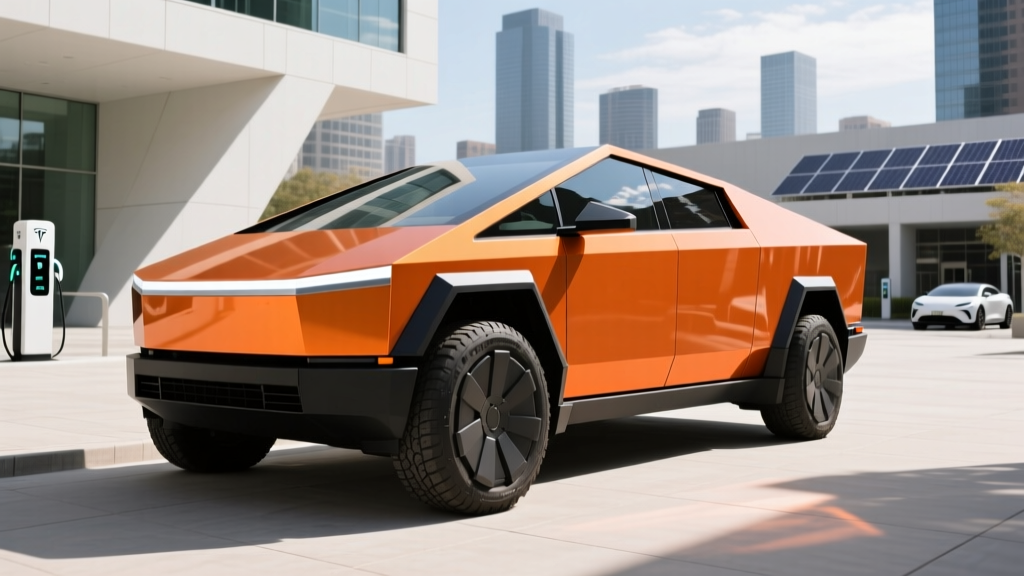
The Cybertruck's cold-rolled stainless steel body panels aren't just for show — they eliminate the need for a paint shop entirely (one of the most expensive and environmentally intensive steps in auto manufacturing). The 48-volt electrical architecture is also an industry first for a production vehicle, reducing wiring harness weight by up to 70%.
But here's the ownership reality: the Cybertruck's EPA range of 340 miles (AWD, ~123 kWh usable pack) drops significantly when towing — expect 150-200 miles at highway speeds with a loaded trailer. Its 250 kW peak DC charge rate means a 10-80% session takes roughly 35 minutes, slower than the lighter Model 3/Y. The stainless steel body resists dents but shows fingerprints aggressively, and panel gap consistency remains a topic of owner discussion.
Fact 10: Tesla's Gigafactories Are Among the Largest Buildings on Earth
Giga Nevada's floor area spans approximately 5.4 million square feet (and is still not fully built out to its planned 10 million). Giga Texas, the current global headquarters, covers roughly 10 million square feet of floor space. These facilities don't just assemble cars — they manufacture battery cells, drive units, and seat components on-site, achieving a vertical integration level unseen in modern auto manufacturing.
For owners, this matters because it gives Tesla tighter control over supply chains, faster iteration on manufacturing processes (like the controversial "giga-casting" single-piece rear underbody), and the ability to adjust pricing more aggressively than competitors dependent on tier-1 suppliers.
Pros, Cons, and the Verdict
Pros
- Class-leading efficiency and real-world range per kWh
- Supercharger network reliability and integration
- OTA updates that genuinely improve the vehicle over time
- LFP battery option for budget-conscious, high-cycle buyers
- Strong resale value relative to most EV competitors
- Minimal maintenance (no oil changes, fewer brake replacements with regen)
Cons
- Panel gaps and build consistency still trail German/Japanese rivals
- FSD (Supervised) is expensive and remains Level 2 — not autonomous
- No Apple CarPlay or Android Auto (Tesla's closed ecosystem)
- Service center wait times can stretch weeks in high-demand metro areas
- Insurance premiums run 15-30% higher than comparable ICE vehicles
- Touchscreen-dependent controls (no physical stalks on refreshed Model 3/Y)
Who Should Buy a Tesla in 2026?
Choose Tesla If:
- Daily commuter with home charging: The Model 3 RWD at ~$31,500 after credits is one of the best value-per-mile EVs available
- Frequent road-tripper: The Supercharger network removes the charging-infrastructure gamble that still plagues non-Tesla EVs on cross-country drives
- Tech-forward buyer: OTA updates, app integration, Sentry Mode, and the software-defined architecture appeal to those who want a car that improves post-purchase
- Family needing cargo space: Model Y's 76 cu ft with seats folded rivals mid-size SUVs, and the frunk adds bonus storage
Look Elsewhere If:
- You demand luxury-grade fit and finish: BMW i4, Mercedes EQB, or Genesis GV60 offer better panel gaps and interior materials at similar prices
- You want Apple CarPlay: Hyundai Ioniq 5, Ford Mustang Mach-E, and most non-Tesla EVs support phone projection
- You need a dedicated service network: Legacy brands (Ford, Hyundai, BMW) have far more service locations nationwide
Frequently Asked Questions
What is the real-world range of a Tesla Model 3?
The 2026 Model 3 Long Range AWD has an EPA-estimated 341 miles. In real-world highway driving at 75 mph, expect 285-305 miles. In sub-freezing temperatures, plan for 230-260 miles. The RWD (LFP) model is rated at 272 miles EPA, with real-world highway range around 225-245 miles.
How fast does a Tesla charge at home and on the road?
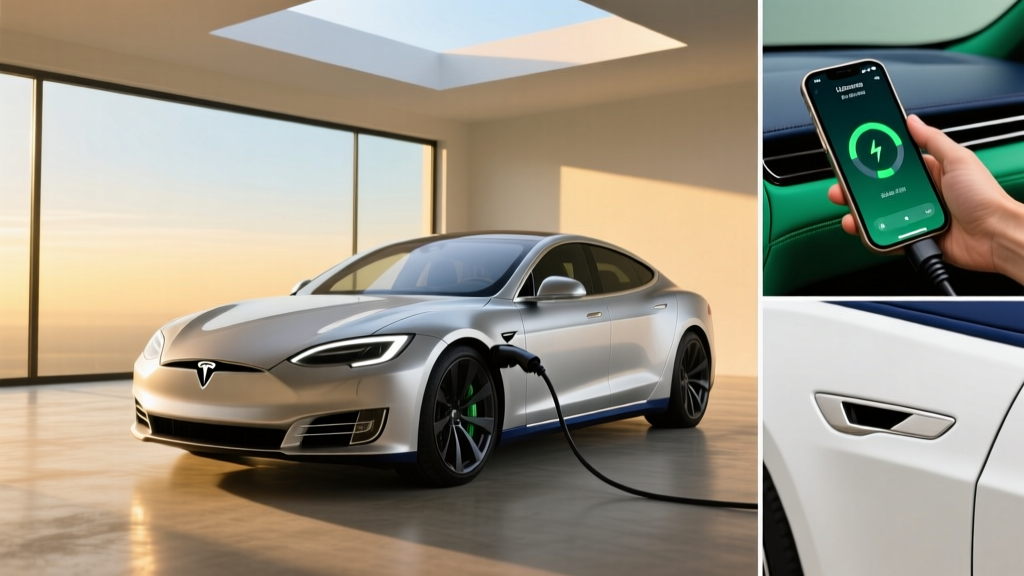
At home on a Level 2 Tesla Wall Connector (240V, 48A), Teslas charge at up to 11.5 kW, adding roughly 44 miles of range per hour — a full overnight session replenishes most daily driving. On V3 Superchargers, peak rate is 250 kW with a 10-80% charge in approximately 25 minutes. Above 80%, charging slows dramatically to protect battery health.
Does the Tesla Model Y qualify for the $7,500 federal tax credit?
Yes, the 2026 Model Y Long Range AWD at $48,990 MSRP falls under the $80,000 SUV/truck cap and generally qualifies for the full $7,500 credit — provided the buyer meets income limits ($150K single / $300K joint AGI) and the vehicle's battery meets critical-mineral and component-sourcing thresholds. Eligibility can change as sourcing rules tighten. Always verify at irs.gov and consult a tax professional.
Is a Tesla worth buying vs competitors like the Hyundai Ioniq 5 or Ford Mach-E?
Tesla wins on Supercharger network access, efficiency (kWh/100mi), and software. The Ioniq 5 charges faster on non-Tesla DC networks (up to 350 kW on 800V architecture) and offers Apple CarPlay. The Mach-E provides a more traditional crossover feel and Ford's dealer network for service. If charging convenience and software matter most, Tesla leads. If interior quality, phone integration, or dealer service access are priorities, competitors deserve a test drive.
How long do Tesla batteries last?
Tesla warranties its batteries for 8 years / 100,000-120,000 miles (depending on model) with a minimum 70% capacity retention. Real-world data from high-mileage owners suggests most NMC packs retain 85-90% capacity at 100,000 miles. LFP packs show even slower degradation. Full battery replacement outside warranty costs approximately $12,000-$16,000 depending on the model — but is rarely needed within the first decade.
Is Tesla's Full Self-Driving worth $8,000?
For most buyers, no — at least not yet. FSD (Supervised) is a Level 2 system requiring constant driver attention. The $99/month subscription is a lower-risk way to try it. The technology is impressive and improving, but it does not replace an attentive driver, and its value proposition will shift significantly if/when Tesla achieves true supervised-free operation in more areas.
Tesla remains the most scrutinized, debated, and data-rich brand in the EV space. These Tesla motors fun facts aren't just trivia — they're the engineering and economic realities that should inform your purchase decision. Whether you're drawn to the Model 3's efficiency, the Model Y's versatility, or the Cybertruck's audacity, the numbers don't lie. Charge one up, check the specs, and decide for yourself.