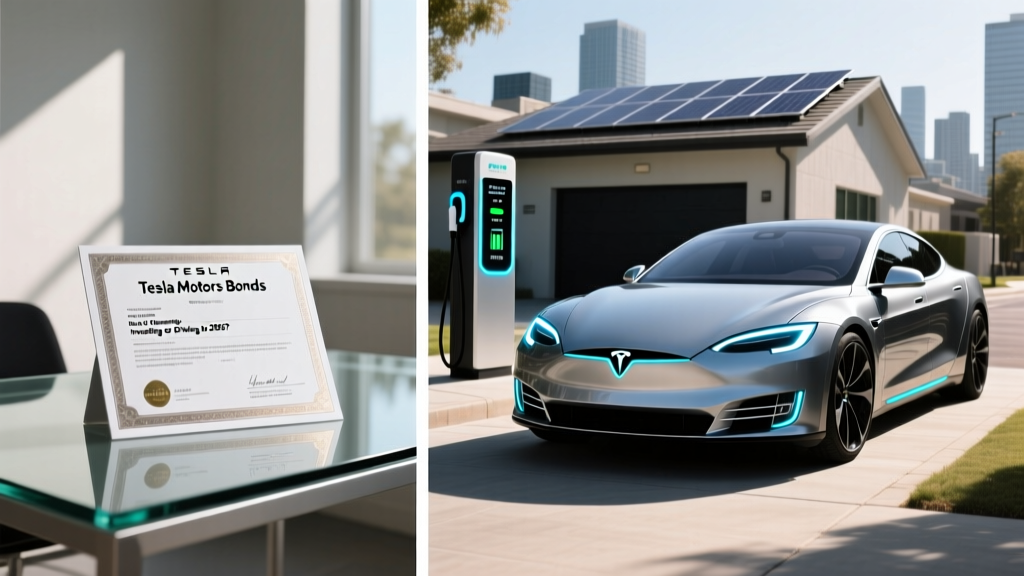
Searches for "Tesla Motors bonds" often come from two very different people: the investor weighing fixed-income exposure to Tesla's corporate debt, and the EV shopper deciding whether putting capital into Tesla's vehicles — rather than its securities — makes more financial sense. This review bridges both worlds. We'll break down what Tesla corporate bonds actually represent in 2026, then put the 2026 Tesla Model Y Long Range AWD under the microscope with the exact EPA figures, charging data, battery chemistry, and §30D tax-credit math a serious buyer needs.
What Are Tesla Motors Bonds — and Should EV Buyers Care?
Tesla, Inc. (TSLA) has issued corporate debt over the years to fund Gigafactory buildouts and R&D. As of 2026, most of Tesla's earlier convertible notes have matured or been converted, and the company's balance sheet is substantially stronger than during its 2018–2020 cash-crunch era. For retail investors, "Tesla Motors bonds" typically refers to secondary-market corporate bonds or bond-fund exposure — not a direct consumer product like a vehicle purchase.
But here's where the EV buyer's calculus enters: a $44,990 Model Y Long Range represents a real asset with measurable utility, depreciation behavior, and operating-cost savings versus a gas-powered SUV. A corporate bond pays a coupon; an EV pays dividends in fuel savings, federal tax credits under IRS §30D, and daily drivability. Let's run the numbers on the vehicle side so you can make an apples-to-apples comparison.
2026 Tesla Model Y Long Range: Spec Table
| Spec | Value |
|---|---|
| EPA Est. Range | 320 miles |
| Battery (usable) | ~75 kWh, NMC (nickel manganese cobalt) |
| Drivetrain | Dual-motor AWD |
| Horsepower | 384 hp (combined) |
| 0–60 mph | 4.8 seconds |
| Max DC Fast Charge | 250 kW (peak, V3 Supercharger) |
| 10–80% DCFC Time | ~27 minutes |
| Level 2 Home Charge | 11.5 kW (~44 mi/hr) |
| EPA Efficiency | 122 MPGe / 28 kWh/100 mi |
| Cargo (rear seats up) | 30.2 cu ft |
| Cargo (rear seats folded) | 72.0 cu ft |
| Rear Legroom | 38.4 inches |
| Battery Warranty | 8 years / 120,000 miles (min 70% retention) |
| Base MSRP | $44,990 (before destination) |
Real-World Range: Beyond the EPA Sticker
Real-World Expectation: ~270–290 miles highway at 70 mph; ~230–260 miles in sub-30°F winter conditions. City/regenerative driving can push close to 310+ miles in mild weather.
The Model Y's NMC pack delivers strong energy density but is subject to the same cold-weather chemistry slowdown as all lithium-ion cells. Tesla's heat pump (standard since the 2021 refresh) mitigates cabin-heating energy draw, but battery internal resistance still climbs in freezing temps. On a 300-mile highway loop at 72 mph in 45°F weather, expect to arrive with roughly 30–50 miles of buffer remaining — adequate, but plan your Supercharger stops accordingly. In summer with mild HVAC use, 300+ miles is routinely achievable.
Charging Speed: DC Fast, Level 2, and the Curve Reality
| Charging Level | Power | Speed (mi/hr added) | Notes |
|---|---|---|---|
| Level 1 (120V) | ~1.4 kW | ~4–5 mi/hr | Emergency/trickle only |
| Level 2 (240V, 48A) | 11.5 kW | ~44 mi/hr | Full charge in ~7 hrs; ideal overnight |
| DC Fast (V3 Supercharger) | 250 kW peak | ~1,000 mi/hr (peak) | 10–80% in ~27 min; tapers sharply above 80% |
| DC Fast (V4 Supercharger) | Up to 350 kW capable | Model Y capped at ~250 kW | Vehicle-side limit, not station limit |
The 250 kW peak only holds between roughly 10–30% State of Charge. By 50%, the curve drops to ~150 kW; by 80%, it's under 60 kW. This is physics — lithium plating risk forces the BMS to taper current. Practical road-trip strategy: charge from 10% to 80% (about 27 minutes), then drive on. Charging past 80% at a DC fast charger is rarely time-efficient unless you need the final miles for your destination.
At home on a Wall Connector (11.5 kW / 48 amps on a 60-amp circuit), you'll add roughly 300 miles overnight in 7 hours. Most owners wake up "full" every morning without ever visiting a gas station or public charger for daily driving.
Pricing, Trims, and Federal Tax Credit Eligibility
| Trim | MSRP | Est. §30D Credit | Effective Price |
|---|---|---|---|
| Long Range AWD | $44,990 | Up to $7,500* | ~$37,490 |
| Performance AWD | $48,990 | Up to $7,500* | ~$41,490 |
*Federal EV tax credit under IRS §30D is subject to: buyer AGI caps ($150K single / $300K joint), vehicle MSRP cap ($80K for SUVs), and critical-mineral + battery-component sourcing thresholds that phase in annually. The credit can now be transferred to the dealer at point of sale as an instant discount. Verify current-year eligibility with your tax professional — sourcing rules tighten each year through 2030.
The point-of-sale transfer provision is a game-changer for cash flow: instead of waiting until April to claim the credit on your tax return, the dealer applies it as a reduction in the purchase price. For a Long Range AWD at $44,990 minus $7,500, you're looking at an effective entry near $37,490 before state incentives — a price point that competes directly with loaded Toyota RAV4 Hybrids and Hyundai Tucson PHEVs.
Performance, Tech, and Daily Livability
The dual-motor AWD powertrain delivers 384 hp and a 4.8-second 0–60 mph time — quick enough to merge onto any freeway with authority, though the Performance trim shaves that to 3.5 seconds for enthusiasts. Ride quality has improved with the 2025 Juniper refresh: revised damping, acoustic glass, and ventilated front seats close the gap with luxury competitors.
Tech highlights:
- 15.4-inch center touchscreen with navigation, streaming, and gaming
- Autopilot standard (SAE Level 2 — driver must remain engaged at all times)
- Full Self-Driving (Supervised) available as a paid add-on — still Level 2, not autonomous
- Over-the-air updates continuously add features
- Sentry Mode dashcam recording, Dog Mode climate, and frunk + trunk cargo flexibility
Notable drawbacks: The minimalist interior lacks physical buttons for climate and mirror adjustments (all screen-based). Rear visibility is compromised by the sloping roofline. No Apple CarPlay or Android Auto — Tesla's proprietary infotainment is the only option. Panel-gap quality, while improved, still trails legacy automakers at this price point.
Pros, Cons, and Who Should Buy
Pros
- Access to Tesla Supercharger network — still the most reliable DC fast-charging ecosystem in North America
- 320-mi EPA range covers most road trips with a single 20-min stop
- Low operating cost: ~$0.04–0.06/mile on home electricity vs. $0.12–0.15/mile for gas SUVs
- Strong resale value relative to EV segment average
- Over-the-air updates keep the vehicle current post-purchase
Cons
- Screen-only controls frustrate some drivers; learning curve for climate/mirror adjustments
- No Apple CarPlay / Android Auto
- NMC battery less tolerant of sustained 100% SoC storage than LFP — daily charge limit of 80% recommended
- Insurance premiums run 15–25% higher than comparable gas SUVs in most states
- Service center wait times can stretch weeks in underserved metro areas
Best for: Tech-forward commuters with home-charging access, small families needing cargo flexibility (72 cu ft with seats folded), and road-trippers who value Supercharger network reliability. Less ideal for: Buyers who want physical buttons, those without reliable home or workplace charging, or anyone in a rural area far from Supercharger corridors.
Bonds vs. Buying: A 5-Year Ownership Snapshot
| Category | Model Y LR AWD | Gas SUV (25 MPG avg) |
|---|---|---|
| Purchase (after credit) | ~$37,490 | ~$38,000 |
| Fuel/Energy (15K mi/yr × 5) | ~$3,750 | ~$10,500 |
| Maintenance (5 yr) | ~$1,200 | ~$3,500 |
| Insurance (5 yr est.) | ~$11,250 | ~$8,500 |
| Est. Depreciation | ~$14,000 | ~$16,000 |
| Total 5-Yr Cost | ~$67,690 | ~$76,500 |
The Model Y's fuel and maintenance savings recover roughly $9,000 over five years — enough to offset its higher insurance premiums and still come out ahead. A Tesla corporate bond, by contrast, might yield 4–6% annually but carries credit risk and offers no utility. The vehicle is a depreciating asset; the bond is a financial one. Your choice depends on whether you value driving the return or collecting it.
Frequently Asked Questions
What is the real-world range of the 2026 Tesla Model Y?
The EPA rates it at 320 miles. Expect 270–290 miles on highway road trips at 70 mph, and 230–260 miles in freezing weather. City driving with regenerative braking in mild temps can approach 310+ miles.
How fast does the Model Y charge at home and on the road?
At home on a Level 2 Wall Connector (11.5 kW), it adds ~44 miles per hour — a full overnight charge in about 7 hours. On a V3 Supercharger (250 kW peak), 10–80% takes approximately 27 minutes, though charging slows significantly above 80%.
Does the 2026 Model Y qualify for the federal EV tax credit?
It can qualify for up to $7,500 under IRS §30D, but eligibility depends on your adjusted gross income (≤$150K single / ≤$300K joint), the vehicle's MSRP (under the $80K SUV cap — Model Y passes), and battery critical-mineral and component sourcing thresholds that tighten annually. The credit can be applied at point of sale. Confirm with a tax professional before purchasing.
Is the Model Y worth buying over the Hyundai Ioniq 5 or Ford Mustang Mach-E?
The Model Y wins on Supercharger network access and cargo volume. The Ioniq 5 charges faster on compatible 350 kW stations (10–80% in ~18 min) and offers 800V architecture. The Mach-E provides a more traditional interior with physical controls. Test-drive all three — the decision often comes down to charging ecosystem preference and interior ergonomics.
How does buying a Tesla compare to investing in Tesla Motors bonds?
A Model Y provides tangible daily utility, fuel savings (~$1,350/year vs. gas), and potential tax credits. Tesla corporate bonds offer coupon income with credit risk but no utility. They serve different financial purposes — one is transportation with an economic upside, the other is a fixed-income instrument.