Quick Answer: Are Toyota EVs Worth Buying in 2026?
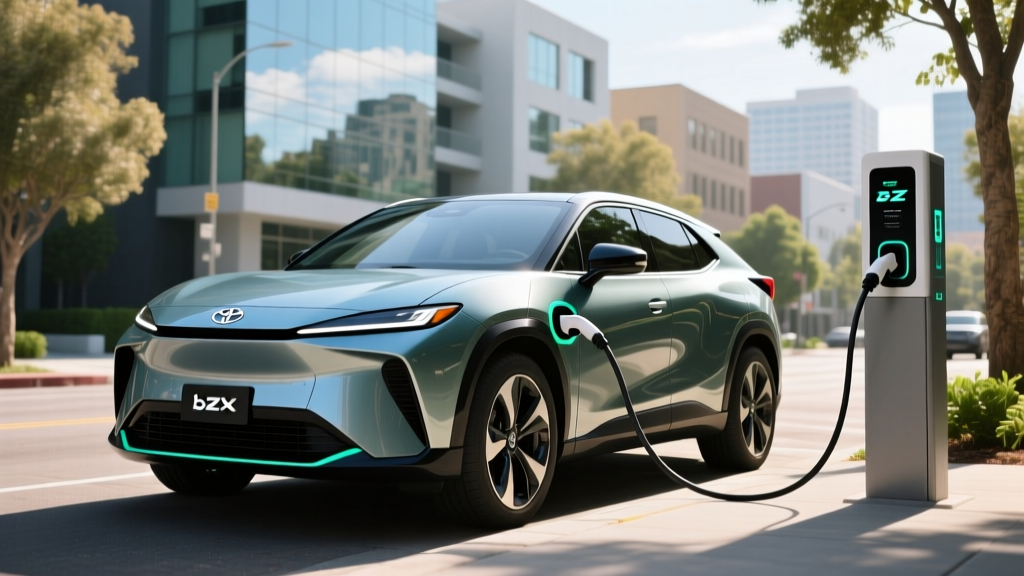
Toyota's current all-electric lineup centers on the bZ4X crossover, starting at roughly $37,070 (2026 MSRP before incentives) with an EPA-estimated range of up to 252 miles on FWD models. It qualifies for up to $7,500 in federal tax credits under IRS §30D for eligible buyers, bringing the effective price below $30,000. The bZ4X is a competent daily-driver EV, but its DC fast-charging speed (peaking around 150 kW) and real-world highway range (~210–225 miles) trail segment leaders like the Hyundai Ioniq 5 and Tesla Model Y. If you want Toyota reliability with zero tailpipe emissions and mostly drive under 200 miles a day with home charging, the bZ4X is a solid pick. If you road-trip frequently or live in a cold climate, Toyota's hybrid lineup (RAV4 Hybrid, Prius) may serve you better.
The Toyota EV Lineup: What You Can Actually Buy
As of the 2026 model year, Toyota sells one dedicated battery-electric vehicle (BEV) in the United States: the bZ4X, a compact crossover that competes with the Hyundai Ioniq 5, Kia EV6, Ford Mustang Mach-E, and Tesla Model Y. Toyota has announced additional bZ-series EVs and is developing next-generation models on a dedicated EV platform with projected 2027–2028 availability, but those are not yet on sale.
Toyota's broader electrified lineup includes over a dozen hybrids (HEVs) and plug-in hybrids (PHEVs), but this guide focuses strictly on the all-electric offering. If you're cross-shopping Toyota's electrified options, the EV-vs-hybrid section below breaks down when each makes sense.
| Spec | XLE FWD | XLE AWD | Limited AWD |
|---|---|---|---|
| Base MSRP | $37,070 | $39,130 | $43,900 |
| EPA Range | 252 mi | 228 mi | 222 mi |
| Usable Battery | 71.4 kWh (NMC lithium-ion) | ||
| Horsepower | 201 hp | 214 hp | |
| 0–60 mph | ~7.1 sec | ~5.8 sec | |
| Max DC Fast Charge | ~150 kW peak | ||
| 10–80% DC Charge | ~32 min (preconditioned) | ||
| Level 2 (240V) Rate | ~7.2 kW | ||
| Combined MPGe | 119 MPGe | 112 MPGe | 110 MPGe |
| Battery Warranty | 8 years / 100,000 miles (70% capacity retention) | ||
Real-World Range vs. the EPA Sticker
The EPA-estimated 252-mile range on the FWD bZ4X is achievable in moderate temperatures (60–75°F) on mixed city/suburban driving. But real-world conditions change the math significantly:
- Mild weather, mixed driving: 235–255 mi (close to EPA)
- Highway-only at 70–75 mph: 210–225 mi (aerodynamic drag cuts efficiency ~10–15%)
- Cold weather (20–35°F), no heat pump: 170–195 mi (battery chemistry slows; cabin heating draws 3–5 kW)
- Cold + highway: 155–175 mi (worst-case realistic scenario)
The bZ4X uses an NMC (nickel manganese cobalt) battery pack, which is more energy-dense than LFP chemistry but suffers greater cold-weather capacity loss. Toyota does not offer a standard heat pump on all trims; without one, resistive cabin heating can consume 15–20% of your battery in winter driving. Source: fueleconomy.gov
Charging the bZ4X: Home, Public, and Road Trips
Charging speed is the bZ4X's most debated spec. Its peak DC fast-charging rate of ~150 kW is modest compared to the Hyundai Ioniq 5's 240 kW or the Tesla Model Y's ~250 kW on V3 Superchargers. Here's what that means in practice:
| Charging Level | Power (kW) | Time to Full | Miles Added per Hour |
|---|---|---|---|
| Level 1 (120V household) | ~1.4 kW | ~50+ hours (10–100%) | ~4–5 mi/hr |
| Level 2 (240V home/public) | ~7.2 kW | ~10 hours (10–100%) | ~25–28 mi/hr |
| DC Fast (150 kW peak) | 150 → ~50 kW taper | ~32 min (10–80%) | N/A (session-based) |
Charging-curve reality: The bZ4X hits ~150 kW only briefly between roughly 10–30% state of charge. From 30–60%, expect ~90–110 kW. Above 80%, the rate drops sharply to ~40–50 kW to protect the battery. On a road trip, plan for 30–35 minute stops at 150+ kW chargers to go from 10–80%. This is adequate but not class-leading — you'll spend 10–15 more minutes per stop than an Ioniq 5 driver at the same charger.
Connector note: The bZ4X currently uses the CCS1 connector for DC fast charging. Toyota has announced a transition to the NACS (Tesla) connector for future models, and adapters may be available, but as of 2026 the bZ4X ships with CCS1. This means access to Electrify America, EVgo, and ChargePoint DC networks, but not native Tesla Supercharger access without an adapter (confirm availability with your dealer).
Cost Breakdown: bZ4X vs. RAV4 Gas vs. RAV4 Hybrid
One of the most common questions from Toyota shoppers is whether the bZ4X saves money compared to a RAV4 Hybrid or a conventional RAV4. Here's a five-year comparison based on 15,000 miles per year, $3.50/gallon gas, and $0.14/kWh home electricity:
| Cost Category | bZ4X XLE FWD | RAV4 Hybrid (AWD) | RAV4 Gas (AWD) |
|---|---|---|---|
| Purchase Price (MSRP) | $37,070 | $33,425 | $30,675 |
| Federal Tax Credit (§30D) | −$7,500* | $0 | $0 |
| Effective Purchase | $29,570 | $33,425 | $30,675 |
| Fuel/Energy (5 yrs) | $4,200 | $6,560 | $8,750 |
| Maintenance (5 yrs) | ~$1,500 | ~$2,800 | ~$3,200 |
| Insurance (5 yrs est.) | ~$9,000 | ~$7,500 | ~$7,200 |
| Total (5-yr est.) | $44,270 | $50,285 | $49,825 |
*$7,500 credit assumes you meet all IRS §30D requirements: income caps ($150K single / $300K joint), vehicle MSRP under $80,000 for SUVs, and battery sourcing compliance. Credit can be transferred to the dealer as a point-of-sale discount. Verify eligibility at irs.gov or with a tax professional.
Key takeaways: The tax credit is the bZ4X's financial trump card — it flips the purchase price below both RAV4 variants. Energy savings add up to $2,360–$4,550 over five years. However, EV insurance premiums run 15–25% higher on average, partially offsetting those gains. Maintenance savings are real: no oil changes, no transmission fluid, fewer brake replacements (regenerative braking extends pad life).
Tax Credits, Incentives, and the Fine Print
- Buyer income cap: AGI ≤ $150,000 (single) or ≤ $300,000 (married filing jointly)
- Vehicle MSRP cap: ≤ $80,000 for SUVs, vans, and pickups; ≤ $55,000 for sedans
- Battery sourcing: Critical minerals and battery components must meet phased-in percentages from US/FTA countries — Toyota has structured bZ4X battery supply to qualify for the full $7,500, but verify with your dealer for the specific build date
- Point-of-sale transfer: You can transfer the credit to the dealer for an immediate price reduction at purchase (no need to wait until tax filing)
- One-time use: Credit is per vehicle, not per buyer, but you can claim it on each new EV purchase that qualifies
Many states offer additional incentives (California's CVRP, Colorado's state credit, utility rebates for home charger installation). These vary by jurisdiction and change frequently — check your state energy office and local utility for current programs.
EV vs. Hybrid: Which Toyota Is Right for You?
Toyota makes the strongest hybrid lineup in the industry. Deciding between the bZ4X (BEV), a RAV4 Plug-in Hybrid (PHEV, 42 miles electric-only), or a standard RAV4 Hybrid depends on your driving pattern and charging access:
- You have reliable home Level 2 charging (garage or driveway with 240V access)
- Your daily commute is under 150 miles round-trip
- You rarely drive more than 200 miles in a single day without a planned stop
- You want the lowest per-mile fuel cost and minimal maintenance
- You qualify for the $7,500 federal credit, making it cheaper than the RAV4 Hybrid
- You have home charging but also take frequent road trips over 300 miles
- You want 35–42 miles of electric-only driving for daily commutes, with gas backup
- You live in an area with sparse DC fast-charging infrastructure
- You're not ready to plan trips around charging stops
- You cannot install a home charger (apartment, street parking, landlord restrictions)
- You regularly drive in extreme cold where EV range loss exceeds 25%
- You want the simplest ownership experience with no charging logistics
- Your annual mileage is very high (20,000+ miles) and road trips dominate
Common Misconceptions About Toyota EVs
| Myth | Fact |
|---|---|
| "Toyota doesn't make EVs." | The bZ4X has been on sale since 2023 and is in its third model year for 2026. Toyota also sells the electric bZ3 sedan in China and has announced multiple next-gen EVs for 2027–2028. |
| "The bZ4X battery will need expensive replacement within a few years." | Toyota warranties the battery for 8 years / 100,000 miles with a 70% capacity retention guarantee. Industry data from Recurrent Auto shows most NMC packs retain 85–90% capacity at 100K miles. Full replacement, if needed out of warranty, is estimated at $8,000–$12,000 — but is rarely required. |
| "Charging takes too long for road trips." | A 10–80% DC fast charge takes ~32 minutes at a 150 kW station — roughly the time for a meal break. On a 500-mile trip, you'll stop twice for ~30 minutes each. Not as fast as gassing up, but manageable with planning. |
| "EVs are worse for the environment because of battery mining." | Lifecycle analyses from Argonne National Laboratory and the ICCT show that even on the US average grid, a BEV produces 50–60% fewer lifetime CO₂ emissions than a comparable gas car. As the grid decarbonizes, that gap widens further. |
| "The bZ4X can't handle winter." | It can, but expect 25–35% range loss in sustained sub-freezing temperatures. AWD trims add traction. Preconditioning the battery while plugged in (using the Toyota app) mitigates both range loss and slow charging in cold weather. |
What First-Time Toyota EV Buyers Should Know
Home Charging Is Non-Negotiable for Most Owners
Over 80% of EV charging happens at home. If you can install a Level 2 (240V) charger, you'll wake up to a full battery every morning and rarely visit a public charger except on road trips. Budget $800–$2,500 for a quality Level 2 unit (ChargePoint Home Flex, Emporia Level 2, or Grizzl-E) plus $500–$2,000 for electrician installation, depending on your panel capacity and run distance. If your home has a 200-amp panel with spare capacity, installation is straightforward. Older 100-amp panels may require a $1,500–$3,000 upgrade — get a quote from a licensed electrician before buying the car.
Public Charging Reliability Varies
Toyota bZ4X owners rely on CCS1 networks: Electrify America, EVgo, and ChargePoint. Reliability has improved but still trails Tesla's Supercharger network. Plan road trips using PlugShare or A Better Routeplanner, and always have a backup charger identified. The bZ4X's navigation system routes through compatible stations, but third-party apps often have more up-to-date outage information.
Insurance Costs More — Shop Early
EV insurance premiums average 15–25% higher than equivalent gas vehicles, driven by higher repair costs (battery replacement, specialized body work). Get quotes from Geico, Progressive, State Farm, and EV-specialty insurers before purchasing. Some insurers offer green-vehicle discounts that partially close the gap.
Preconditioning Matters
The bZ4X can precondition its battery for fast charging when you set a charging stop in the navigation system. This warms the NMC pack to optimal temperature, enabling the full ~150 kW peak rate. Without preconditioning — especially in cold weather — your first several minutes at a DC charger may be limited to 50–70 kW, adding 10–15 minutes to your stop. Always precondition before fast-charging.
Frequently Asked Questions
Does the Toyota bZ4X qualify for the full $7,500 federal tax credit?
As of 2026, the bZ4X qualifies for up to $7,500 under IRS §30D, provided the buyer meets income limits ($150K single / $300K joint AGI) and the vehicle's battery sourcing meets critical-mineral and component requirements. Toyota has confirmed eligibility, but rules can shift — verify at the point of sale and consult IRS.gov or a tax professional.
How does the bZ4X compare to the Tesla Model Y?
The Model Y Long Range offers more EPA range (310+ mi), faster DC charging (~250 kW peak, ~15 min 10–80%), native Supercharger access, and more cargo space. The bZ4X's advantages are its lower effective price (with tax credit), Toyota dealer service network, and a more traditional driving experience. If charging speed and range are your top priorities, the Model Y wins on paper. If you value Toyota's build reputation and a lower entry price, the bZ4X is competitive.
What is the bZ4X's real-world highway range?
Expect 210–225 miles on the FWD trim at sustained 70–75 mph in moderate temperatures. The AWD trim drops to approximately 190–205 miles highway. In cold weather (below 35°F), subtract another 15–25% depending on cabin heating use and whether you precondition.
Will Toyota release more EVs soon?
Toyota has announced a next-generation EV platform targeting 2027–2028 with improved energy density, faster charging, and multiple body styles (sedan, SUV, truck). These are still in the announced/preliminary stage with no final US specs or pricing. If you need an EV now, the bZ4X is Toyota's current option; if you can wait 18–24 months, the next generation may offer meaningfully better range and charging.
How much does it cost to charge a bZ4X at home?
Filling the 71.4 kWh battery from 10% to 100% at the US average residential rate of $0.16/kWh costs roughly $10.30. That buys you ~230 real-world miles, or about $0.045 per mile. A comparable RAV4 gas AWD at 28 MPG combined and $3.50/gallon costs $0.125 per mile — nearly 3× more per mile driven.
Is the bZ4X good in snow and cold weather?
The AWD trims (XLE AWD, Limited AWD) provide competent snow traction with independent front and rear motors. However, cold weather reduces usable range by 25–35% due to NMC battery chemistry and cabin heating demands. If you live in a region with sustained sub-freezing winters and your commute approaches the reduced range limit, consider a PHEV instead, or ensure you have reliable home charging to start every day at 100%.
Sources: fueleconomy.gov (EPA range and MPGe data), irs.gov (§30D tax credit rules), Toyota Motor North America press releases and spec sheets.