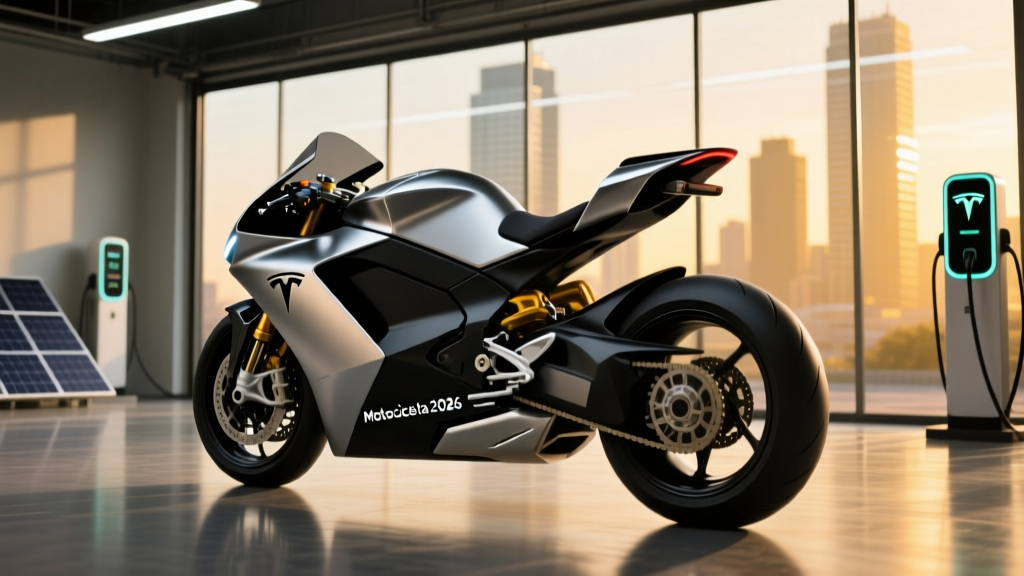
If you've been searching for a Tesla motocicleta — the Spanish and Portuguese term for a Tesla motorcycle — you're not alone. The idea of Tesla producing an electric motorcycle has circulated in forums, YouTube concept videos, and social media for years. Enthusiasts imagine a sleek, high-performance two-wheeler with Supercharger compatibility, Autopilot integration, and the kind of range that would make cross-country electric riding a reality.
Here's the reality check: Tesla has never announced, previewed, or produced an electric motorcycle. As of early 2026, there is no Tesla motocicleta available for purchase, pre-order, or even official teaser. CEO Elon Musk has occasionally referenced two-wheeled electric vehicles in passing, and Tesla holds patents related to motorcycle-like designs, but the company's public roadmap remains focused on cars, trucks, the Optimus humanoid robot, and energy products.
This article breaks down what we know (and don't know) about a potential Tesla motorcycle, examines the patents and rumors, and — most importantly — profiles the electric motorcycles you can actually buy today if you're ready to ride electric now.
Why the Tesla Motocicleta Rumor Won't Die
The fascination with a Tesla motorcycle stems from several converging factors:
- Tesla's brand power. Tesla owns the EV mindshare globally. When people think "electric vehicle," many think Tesla first — regardless of whether it has two wheels or four.
- Patent filings. Tesla has filed patents related to vehicle stability systems, battery packaging, and aerodynamic designs that could theoretically apply to two-wheeled vehicles. Patent applications, however, are routine for large technology companies and don't signal production intent.
- Elon Musk's comments. In a 2019 podcast, Musk mentioned he had considered an electric motorcycle concept but noted safety concerns — specifically, the lack of a protective cage around the rider — as a significant barrier. He has not publicly revisited the idea since.
- Concept renders and fan designs. Independent designers regularly produce photorealistic Tesla motorcycle concepts. These circulate widely but have zero connection to Tesla's actual product planning.
The bottom line: until Tesla issues an official product announcement, any "Tesla motocicleta" you see online is speculative fan art or clickbait.
What a Theoretical Tesla Motorcycle Would Need
If Tesla ever did enter the electric motorcycle market, here's what the competitive landscape would demand. We've benchmarked against the best electric motorcycles currently available to establish realistic targets:
| Spec | LiveWire S2 Del Mar | Zero SR/S | Energica Ego+ | Theoretical Tesla Target |
|---|---|---|---|---|
| Battery (usable kWh) | 5.0 kWh | 14.4 kWh (15.8 nominal) | 21.5 kWh | 12–18 kWh |
| City Range (mi) | 113 | 161 | 261 | 180+ |
| Highway Range (mi) | 43 | 82 | 120 | 100+ |
| Peak Power (hp) | 84 | 110 | 145 | 120+ |
| 0–60 mph (sec) | 3.0 | 3.3 | 2.6 | <3.0 |
| DC Fast Charge (kW) | ~15 | ~6 (optional) | ~24 (DC) | 50+ (Supercharger?) |
| Starting MSRP | $15,499 | $21,495 | $23,990 | $15,000–$22,000? |
The biggest gap in the current electric motorcycle market is DC fast charging. Most electric bikes charge at Level 2 rates (1–3 kW), meaning a full charge takes 3–8 hours. A Tesla motorcycle with Supercharger access — even at a reduced rate given a smaller battery — could theoretically add 80% charge in 15–20 minutes, transforming electric motorcycling for touring riders.
The Real Obstacle: Motorcycle Safety and Tesla's Mission
Musk's stated concern about motorcycles isn't just personal preference — it aligns with Tesla's core engineering philosophy. Tesla vehicles are designed around an occupant safety cell with crumple zones, airbags, and active safety systems like automatic emergency braking. Motorcycles, by their nature, expose the rider.
NHTSA data consistently shows that motorcyclists face approximately 28 times the fatality risk per mile traveled compared to passenger car occupants. While electric powertrains don't change this fundamental physics, Tesla's brand is built partly on safety leadership. Entering a vehicle category with inherently higher risk would create a strategic and reputational tension.
Additionally, Tesla's current production capacity is stretched across the Model 3, Model Y, Cybertruck, Semi, and next-generation platform. Diverting engineering resources to a niche, lower-volume product like a motorcycle seems unlikely in the near term.
Electric Motorcycles You Can Actually Buy in 2026
Rather than wait for a Tesla motocicleta that may never arrive, here's a detailed look at the top electric motorcycles on the market right now — machines you can test-ride, purchase, and charge today.
LiveWire S2 Del Mar (Harley-Davidson's Electric Brand)
LiveWire, spun off from Harley-Davidson as a dedicated electric motorcycle brand, offers the S2 Del Mar as its most accessible model. Built on the Arrow platform, it targets urban and suburban riders who want aggressive styling with real-world usability.
- Battery: 5.0 kWh usable (LFP chemistry)
- Range: EPA-estimated 113 miles city / 43 miles highway combined ~70 miles
- Power: 84 hp, 62 lb-ft torque
- 0–60 mph: 3.0 seconds
- Charging: Level 2 at ~1.9 kW; 0–100% in ~2.5 hours. No DC fast charging.
- Weight: 436 lbs
- MSRP: $15,499
- Warranty: 2 years unlimited mileage (vehicle); 5 years on battery
The S2 Del Mar is best for riders who commute 30–50 miles daily and can charge at home overnight. Highway touring is not its strength — at 70 mph, range drops sharply due to aerodynamic drag and the relatively small battery.
Zero SR/S (Premium Sport Tourer)
Zero Motorcycles, based in California, has been building electric motorcycles since 2006 — longer than any other major player. The SR/S is their faired sport-touring model, designed for riders who want both performance and some weather protection.
- Battery: 14.4 kWh usable (15.8 kWh nominal, NMC lithium-ion)
- Range: EPA-estimated 161 miles city / 82 miles highway / ~107 miles combined
- Power: 110 hp, 140 lb-ft torque
- 0–60 mph: 3.3 seconds
- Top speed: 124 mph
- Charging: Level 2 at 1.3 kW standard (3.6 kW with optional Charge Tank); 0–100% in ~4 hours (standard) or ~1.5 hours (with Charge Tank). No DC fast charging.
- Weight: 503 lbs
- MSRP: $21,495 (base); up to ~$24,000 with Power Tank and Charge Tank options
- Warranty: 2 years (vehicle); 5 years/unlimited miles on battery
The SR/S is the electric motorcycle closest to a legitimate touring machine. With the optional Power Tank accessory (adding ~3.6 kWh), combined range extends to roughly 130 miles — enough for 90-minute highway stints between charge stops, provided you have access to Level 2 charging at your destination.
Energica Ego+ (Italian Performance)
Energica, based in Modena, Italy, builds some of the fastest electric motorcycles in production. The Ego+ features the largest battery in the segment and has served as the spec bike for the FIM Enel MotoE World Cup.
- Battery: 21.5 kWh (NMC lithium-ion, liquid-cooled)
- Range: Up to 261 miles city / 120 miles highway / ~160 miles combined
- Power: 145 hp, 159 lb-ft torque
- 0–60 mph: 2.6 seconds
- Top speed: 150 mph (electronically limited)
- Charging: DC fast charging at ~24 kW (CCS); 0–80% in ~40 minutes. Level 2 at 3 kW (~7 hours full charge).
- Weight: 580 lbs
- MSRP: Starting at $23,990
- Warranty: 2 years (vehicle); 3 years/30,000 miles on battery
The Ego+ is the only production electric motorcycle offering genuine DC fast charging. At 24 kW, a 40-minute stop adds roughly 80–100 miles of range — enough for multi-stop day rides if CCS infrastructure is available along your route. The trade-off is significant weight (580 lbs) and a premium price.
Electric Motorcycle Charging: The Touring Problem
The single biggest barrier to electric motorcycle adoption for touring riders is charging infrastructure compatibility. Here's the reality:
| Model | Level 2 (kW) | Full Charge Time | DC Fast Charge | 10–80% DC Time |
|---|---|---|---|---|
| LiveWire S2 Del Mar | 1.9 kW | ~2.5 hours | Not available | N/A |
| Zero SR/S | 1.3 kW (3.6 opt.) | ~4 hrs (1.5 hrs opt.) | Not available | N/A |
| Energica Ego+ | 3.0 kW | ~7 hours | 24 kW CCS | ~40 min |
Most public DC fast charging stations are designed for cars — the cable height, parking layout, and connector position assume a four-wheeled vehicle. Motorcyclists often need to improvise positioning, and some station operators have policies discouraging motorcycle use of EV charging spots.
This is where a theoretical Tesla motorcycle with Supercharger access would have a transformative advantage. Tesla's NACS connector is compact, and the Supercharger network's reliability and density far exceed third-party networks. Even a 15–20 kW charge rate on a 15 kWh battery would deliver 10–80% in roughly 30 minutes — competitive with a gas stop for a touring rider.
Federal Tax Credits and Electric Motorcycles
Under current IRS §30D rules, the federal EV tax credit of up to $7,500 applies to new qualified plug-in electric drive motor vehicles with four wheels. Electric motorcycles, three-wheelers, and neighborhood electric vehicles (NEVs) fall under a separate provision — the §30D alternative motor vehicle credit — which was significantly reduced and largely expired for most two-wheeled vehicles after 2021.
As of 2026, most new electric motorcycle purchases do not qualify for a meaningful federal tax credit. Some state-level incentives may apply — California's Clean Fuel Reward, for example, has occasionally included electric motorcycles — but buyers should consult IRS.gov for current §30D eligibility and check their state's energy office for local programs.
This is another area where a Tesla motorcycle, if it were ever produced and classified as a four-wheeled enclosed vehicle (think something like the Arcimoto FUV), might have a regulatory advantage over traditional two-wheeled motorcycles.
Pros and Cons: Waiting for Tesla vs. Buying Now
✅ Reasons to Buy an Electric Motorcycle Now
- Proven products with real-world range and charging data
- Available for test rides at dealers today
- Zero tailpipe emissions for daily commuting
- Minimal maintenance — no oil changes, no chain lubing (belt drive), fewer moving parts
- Instant torque delivery makes city riding effortless
- Home charging on standard 120V or 240V outlets
❌ Reasons to Wait (or Stick with Gas)
- Limited highway range (50–120 mi at 70 mph for most models)
- No DC fast charging on most models — touring requires overnight stops
- High purchase prices ($15,000–$25,000+) with minimal tax incentives
- Heavy curb weights (430–580 lbs) affect handling at low speed
- Charging infrastructure not designed for motorcycles
- No Tesla Supercharger network access for two-wheelers
Who Should Buy an Electric Motorcycle in 2026?
Based on current technology, electric motorcycles make the most sense for a specific rider profile:
Best fit: Urban and suburban commuters who ride 20–60 miles per day, have access to home charging (a standard 120V outlet is sufficient for most electric motorcycles overnight), and prioritize low operating costs and silent operation. If your daily ride is under 50 miles and you can plug in at home, an electric motorcycle eliminates fuel stops almost entirely.
Moderate fit: Weekend riders who take day trips of 80–120 miles and can plan routes around Level 2 charging stops (lunch stops, coffee breaks). The Zero SR/S with Charge Tank or the Energica Ego+ with DC fast charging can manage this with some planning.
Poor fit: Long-distance touring riders who regularly cover 200+ miles per day on highways. Current electric motorcycle range and charging speed simply can't match a gas touring bike's 200-mile range with a 3-minute fill-up. Unless you're willing to accept 40–60 minute charge stops every 80–100 miles, gas remains the practical choice for cross-country riding.
Frequently Asked Questions
Is Tesla making a motorcycle in 2026?
No. Tesla has not announced any electric motorcycle product. Rumors and concept renders circulate online, but there is no official Tesla motocicleta in production, pre-order, or confirmed development. Tesla's current focus is on cars, trucks, robotics, and energy products.
What is the best electric motorcycle for commuting?
The LiveWire S2 Del Mar ($15,499) offers the best balance of price, range (113 miles city), and weight (436 lbs) for daily commuting under 50 miles. For riders needing more range, the Zero S ($17,995, 156 miles city) is a strong alternative with a larger battery.
How much does it cost to charge an electric motorcycle?
At the US average electricity rate of ~$0.17/kWh (per EIA data), fully charging a Zero SR/S (14.4 kWh usable) costs approximately $2.45. That delivers roughly 107 combined miles — equivalent to about $0.023 per mile, compared to $0.12–$0.15 per mile for a gas motorcycle getting 45 mpg at $4.00/gallon.
Do electric motorcycles qualify for tax credits?
Most electric motorcycles do not qualify for the federal §30D clean vehicle tax credit, which is primarily structured for four-wheeled vehicles. Some state and local incentives may apply. Always verify current eligibility on IRS.gov and your state energy office before purchasing.
Could Tesla enter the motorcycle market eventually?
It's possible but unlikely in the near term. Tesla holds patents that could apply to two-wheelers, and the company has explored diverse vehicle categories. However, CEO Elon Musk has cited rider safety concerns, and Tesla's production bandwidth is committed to higher-volume products. If Tesla ever does produce a motorcycle, it would likely need to offer Supercharger compatibility and a range exceeding 150 miles to be competitive.
What's the fastest electric motorcycle you can buy?
The Energica Ego+ reaches 0–60 mph in 2.6 seconds with 145 hp and a top speed of 150 mph. The Lightning LS-218, a limited-production superbike, holds the production electric motorcycle speed record at 218 mph, but it's a low-volume, hand-built machine starting above $38,000.
The Bottom Line on the Tesla Motocicleta
The Tesla motorcycle remains one of the most persistent "what if" questions in the EV world. While the concept is tantalizing — imagine a 150-mile-range electric sport bike with Supercharger access and Tesla's software ecosystem — there is no product, no timeline, and no official acknowledgment from Tesla. If you're ready to ride electric today, the LiveWire S2 Del Mar, Zero SR/S, and Energica Ego+ are real machines with proven specs. If you're specifically waiting for Tesla, you may be waiting a very long time — or indefinitely.