Quick Verdict: Is 1,020 Horsepower Actually Livable?
The Tesla Model S Plaid remains the benchmark for production-sedan performance. With a tri-motor all-wheel-drive powertrain producing 1,020 horsepower, it rockets to 60 mph in 1.99 seconds — a figure that still embarrasses hypercars costing five times its price. But beyond the headline-grabbing Tesla Plaid horsepower number, the 2026 Model S Plaid is also a 359-mile EPA-range luxury sedan with access to the most reliable DC fast-charging network in North America. The question for serious buyers isn't whether it's fast enough — it's whether the performance premium over the dual-motor Model S Long Range justifies the cost, the range trade-off, and the aging interior architecture.
EPA Estimated: 359 miles (2026 Model S Plaid, 19" wheels)
Real-World Highway (70 mph, mild weather): ~300–320 miles
Real-World Highway (cold weather, 30°F): ~250–280 miles
The Plaid's tri-motor drivetrain and performance tires consume more energy than the Long Range variant. Expect a 10–15% range deficit versus the EPA sticker on sustained highway driving, and up to 25–30% loss in freezing temperatures. Preconditioning the battery via the Tesla app before departure mitigates cold-weather losses.
Spec Table: 2026 Tesla Model S Plaid at a Glance
| Specification | Value |
|---|---|
| EPA Range | 359 miles (19" wheels) |
| Battery Capacity | ~95 kWh usable (NMC chemistry) |
| Horsepower | 1,020 HP (tri-motor AWD) |
| 0–60 mph | 1.99 seconds |
| Top Speed | 200 mph |
| Max DC Fast Charge | 250 kW (peak) |
| 10–80% DC Charge Time | ~30 minutes |
| Level 2 Home Charging | 11.5 kW (~34 mi/hr at 48A) |
| Efficiency | 124 MPGe combined / 28 kWh/100mi |
| Drivetrain | Tri-motor AWD (1 front, 2 rear) |
| Cargo Volume | 28 cu ft (rear hatch) + 3.1 cu ft (frunk) |
| Rear Legroom | 35.4 inches |
| Base MSRP (2026) | $89,990 |
| Battery Warranty | 8 years / 150,000 miles (min 70% retention) |
Performance Deep Dive: Where the Tesla Plaid Horsepower Comes From
The Model S Plaid's 1,020 horsepower is generated by three permanent-magnet synchronous reluctance motors — one on the front axle and two on the rear. Tesla's carbon-sleeved rotors allow these motors to spin to 20,000+ RPM without disintegrating under centrifugal force, which is the engineering reason the Plaid sustains its acceleration well past 100 mph rather than falling off a torque cliff like lesser EVs.
In real-world testing, the 1.99-second 0–60 time requires specific conditions: a prepped surface, Launch Mode engaged, and the battery at a high state of charge (above 90% SoC for maximum current delivery). On a typical public road with unprepared asphalt, expect 2.3–2.5 seconds — still absurdly quick, but the distinction matters for buyers comparing spec sheets.
The tri-motor setup also enables torque vectoring across the rear axle, which translates to remarkable corner-exit grip. This isn't just a drag-strip car; the Plaid's Nürburgring lap record (7:35.579 for a production sedan) reflects genuine track capability. The adaptive air suspension lowers the car at speed, and the carbon-ceramic brake package (a $15,000 option) is essential for sustained track use — the standard steel rotors will overheat after a few hot laps given the vehicle's 4,766-pound curb weight.
Charging Speed and Infrastructure
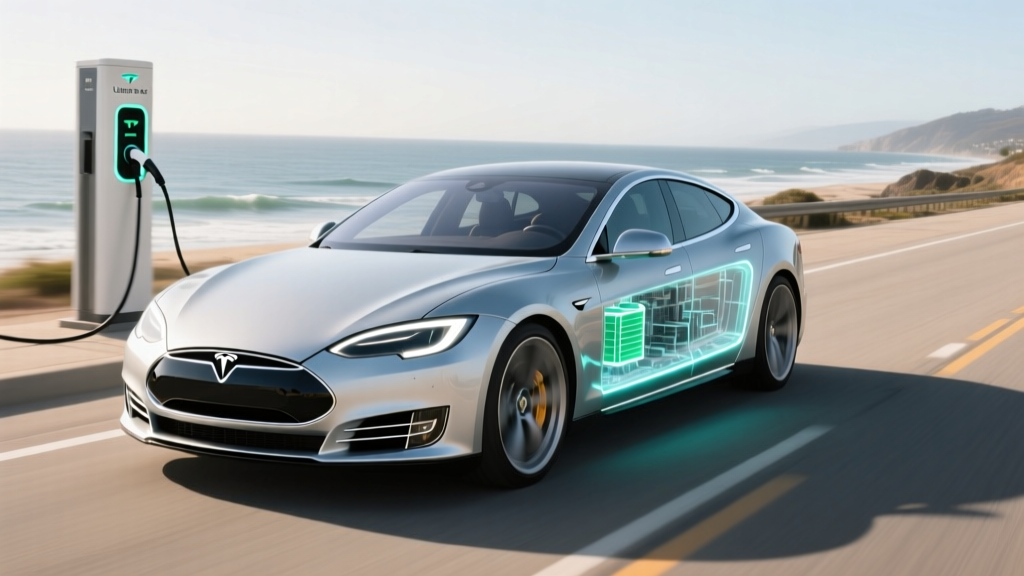
The Model S Plaid uses Tesla's proprietary NACS connector and charges at a peak rate of 250 kW on V3 Superchargers. On a V4 Supercharger cabinet with a CCS-adapter-equipped cable, the Plaid can accept similar peak rates, though sustained charging follows a typical taper curve:
| State of Charge | Approximate Power | Notes |
|---|---|---|
| 5–30% | 200–250 kW | Peak rate, requires battery preconditioning |
| 30–60% | 150–200 kW | Sustained strong charging |
| 60–80% | 80–120 kW | Significant taper begins |
| 80–100% | 30–50 kW | Very slow; avoid DC charging past 80% |
Home Level 2 charging via a Tesla Wall Connector on a 60A circuit delivers 11.5 kW (48A continuous), adding approximately 34 miles of range per hour. A full charge from 10% to 100% takes roughly 8–9 hours — easily accomplished overnight. Tesla's Mobile Connector on a standard 240V/50A NEMA 14-50 outlet delivers about 9.6 kW, or roughly 28 miles per hour.
Preconditioning is critical for achieving peak DC charge rates. Navigating to a Supercharger in the Tesla navigation system automatically begins warming the battery 10–20 minutes before arrival. Without preconditioning, especially in cold weather, peak charge rates may be limited to 100–150 kW until the battery reaches optimal temperature.
Pricing, Tax Credits, and Ownership Economics
The 2026 Tesla Model S Plaid carries a base MSRP of $89,990 before destination fees and options. Common option packages include:
- Carbon Ceramic Brake Package: ~$15,000 (required for track use and 200 mph top speed unlock)
- 21" Arachnid Performance Wheels: ~$4,500 (reduces EPA range to ~342 miles)
- Full Self-Driving (Supervised): $8,000 one-time or $99/month subscription
- Premium Interior Colors: $1,000–$2,000 depending on selection
A typical as-tested configuration with FSD and premium paint lands in the $100,000–$105,000 range before taxes.
The Model S Plaid does NOT qualify for the $7,500 federal EV tax credit under current IRS rules. The §30D credit has an MSRP cap of $55,000 for sedans, and the Plaid's $89,990 base price far exceeds this limit. Additionally, buyer income caps ($300,000 joint / $150,000 single) and critical-mineral/battery-component sourcing requirements apply to qualifying vehicles. Always verify current eligibility at IRS.gov or consult a tax professional before purchasing. Some states offer separate rebates or incentives that are not subject to the federal MSRP cap — check your local state incentive database.
Interior, Tech, and Daily Livability
The Model S Plaid's interior centers on a 17-inch OLED touchscreen running Tesla's proprietary infotainment OS. The yoke steering wheel is now optional alongside a conventional round wheel — a welcome change after years of yoke-only availability. Build quality on 2026 models has improved noticeably over the 2022–2023 production run, with tighter panel gaps, improved sound deadening, and ventilated front seats as standard.
Standout tech features:
- 17" OLED touchscreen with 22-speaker 960W audio system
- Over-the-air updates continuously adding features and performance tweaks
- Sentry Mode and Dog Mode (climate control for parked vehicle)
- Autopilot standard (SAE Level 2 — driver must remain engaged at all times)
- Rear-seat entertainment screen (8.4" display for climate/media/gaming)
- HEPA air filtration with Bioweapon Defense Mode
Notable drawbacks:
- No Apple CarPlay or Android Auto — Tesla's ecosystem is closed
- Rear-seat headroom is tight for passengers over 6'2" due to the sloping roofline
- No physical buttons for climate or mirrors — all adjustments route through the touchscreen
- Turn signal buttons on the yoke (if equipped) are divisive for low-speed maneuvering
Who Should Buy the Model S Plaid?
- Performance enthusiasts who want hypercar acceleration in a four-door daily driver
- Tech-forward buyers deeply invested in the Tesla/Supercharger ecosystem
- Commuters with home Level 2 charging who want a 300+ mile real-world buffer
- Track-day hobbyists (with the carbon-ceramic brake option)
- You need maximum rear-seat space for tall adults (consider the Lucid Air or BMW i7)
- You prefer Apple CarPlay/Android Auto integration
- Budget is a primary concern — the dual-motor Model S Long Range offers 402 miles of range for ~$20K less
- You frequently drive in extreme cold without garage parking (range loss compounds on a performance powertrain)
How It Compares: Plaid vs. Key Rivals
| Metric | Tesla Model S Plaid | Lucid Air Sapphire | Porsche Taycan Turbo GT |
|---|---|---|---|
| HP | 1,020 | 1,234 | 1,019 |
| 0–60 mph | 1.99 sec | 1.89 sec | 2.1 sec |
| EPA Range | 359 mi | 427 mi | 269 mi |
| Peak DC Charge | 250 kW | 300+ kW | 320 kW |
| Base MSRP | $89,990 | $249,000 | $230,000 |
| Charging Network | Supercharger (NACS) | NACS adapter / EA | Electrify America / NACS adapter |
The Plaid's primary advantage is value: nothing else delivers 1,000+ HP and sub-2-second acceleration under $100,000. The Lucid Air Sapphire offers more range and luxury but costs nearly three times as much. The Porsche Taycan Turbo GT delivers superior chassis dynamics and 800V charging architecture but sacrifices over 100 miles of range and costs more than double.
Pros and Cons
- 1,020 HP and 1.99s 0–60 at under $90K base
- 359-mile EPA range is strong for a performance EV
- Supercharger network remains the most reliable public charging option
- OTA updates keep the car current years after purchase
- Genuine track capability with carbon-ceramic option
- 8-year/150,000-mile battery warranty
- No federal tax credit eligibility (MSRP exceeds $55K sedan cap)
- No Apple CarPlay / Android Auto
- Interior materials and switchgear feel dated versus Lucid, Mercedes EQS
- DC fast charging peaks at 250 kW — slower than 800V rivals (Taycan, Ioniq 5)
- Rear headroom limited by coupe-like roofline
- Insurance premiums are significantly above segment average
Frequently Asked Questions
What is the real-world range of the Tesla Model S Plaid?
The EPA rates the 2026 Model S Plaid at 359 miles with 19-inch wheels. In real-world highway driving at 70 mph in mild weather, expect 300–320 miles. In cold weather (below 35°F), range drops to approximately 250–280 miles on the highway due to increased battery resistance and cabin heating demand. City driving with regenerative braking can sometimes exceed the EPA estimate in warm weather.
How fast does the Model S Plaid charge at home and on the road?
On a Tesla V3 Supercharger, the Plaid peaks at 250 kW and charges from 10–80% in approximately 30 minutes with proper battery preconditioning. At home on a Tesla Wall Connector (11.5 kW / 48A), it adds about 34 miles of range per hour, meaning a full overnight charge from 20% to 100% takes roughly 7–8 hours. Charging above 80% on DC fast chargers slows dramatically — plan to charge only to 80% on road trips for optimal time efficiency.
Does the Tesla Model S Plaid qualify for the federal EV tax credit?
No. Under IRS §30D rules, the federal clean vehicle credit has an MSRP cap of $55,000 for sedans. The Model S Plaid's $89,990 base price disqualifies it regardless of buyer income or battery sourcing. Some state-level incentives (such as those in California, Colorado, or New Jersey) may offer partial rebates independent of the federal cap. Consult IRS.gov and your tax professional for the latest rules.
Is the Model S Plaid worth buying over the Lucid Air or Porsche Taycan?
For pure performance-per-dollar, the Plaid is unmatched. At $89,990, it delivers acceleration that rivals the $249,000 Lucid Air Sapphire and the $230,000 Porsche Taycan Turbo GT. However, if luxury interior quality, rear-seat comfort, or Apple CarPlay are priorities, the Lucid Air Grand Touring (~$138K) or Porsche Taycan 4S (~$105K) offer more refined daily-driver experiences. The Plaid wins on value, Supercharger access, and the sheer audacity of its Tesla Plaid horsepower figure.
How long will the Plaid's battery last?
Tesla warranties the Model S Plaid battery for 8 years or 150,000 miles, whichever comes first, with a minimum 70% capacity retention guarantee. The Plaid uses NMC (nickel manganese cobalt) chemistry, which historically shows approximately 10–15% degradation over the first 100,000 miles based on fleet data from earlier Model S variants. To maximize longevity, Tesla recommends daily charging to 80–90% and only charging to 100% when needed for long trips. Battery replacement out of warranty is estimated at $20,000–$28,000 based on current service pricing.
Is Autopilot or FSD actually self-driving?
No. Tesla's Autopilot and Full Self-Driving (Supervised) are classified as SAE Level 2 driver-assistance systems. The driver must remain fully attentive, keep hands on the wheel, and be prepared to take over at any moment. FSD (Supervised) can handle highway on-ramps, lane changes, and some city intersections, but it is not a Level 4 autonomous system like Waymo's driverless robotaxi service. Treat it as an advanced cruise control, not a replacement for an engaged driver.
Sources: EPA Fueleconomy.gov — Tesla Model S, IRS Clean Vehicle Credits, Tesla Model S Specifications