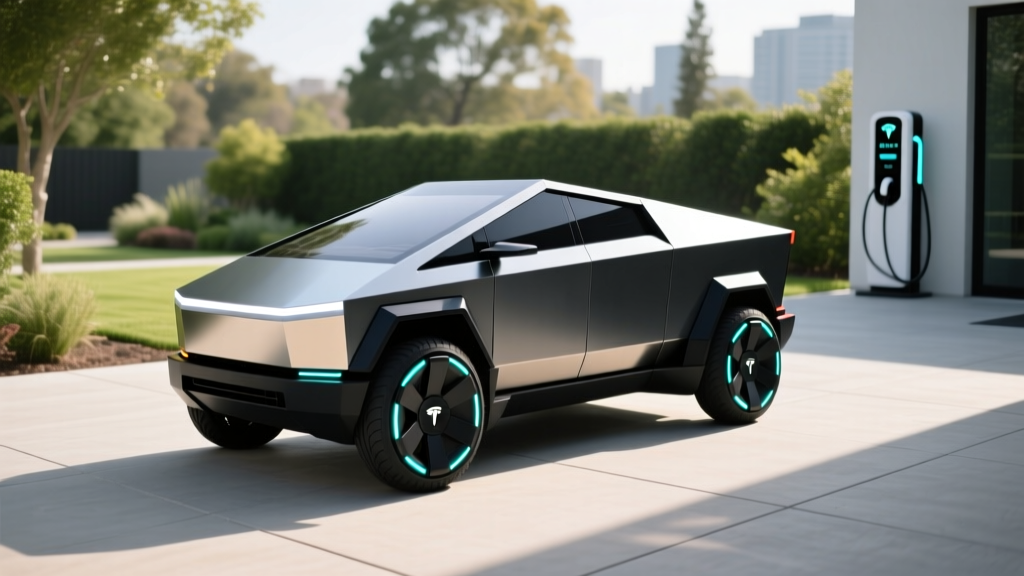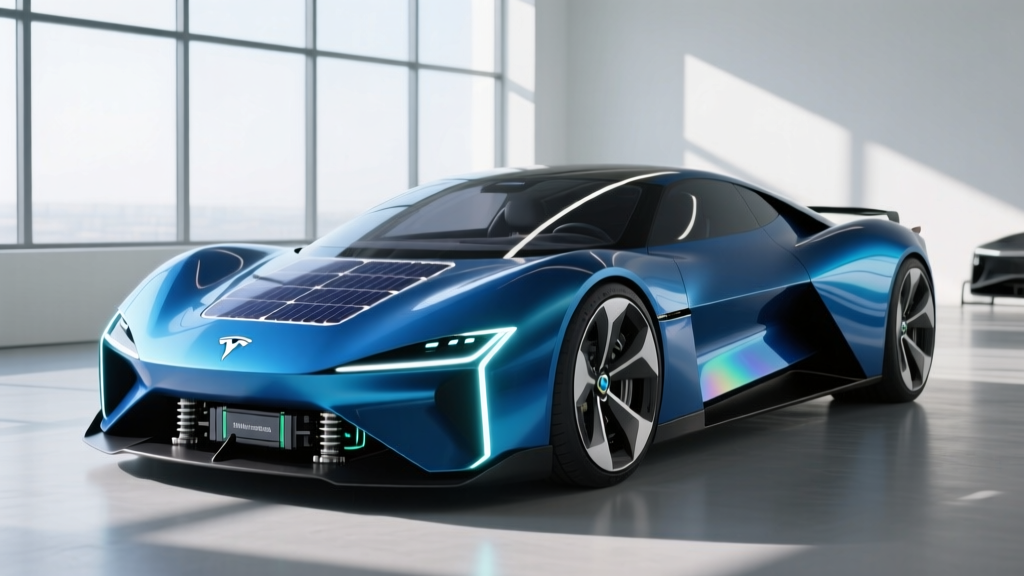
If you have been following Tesla's engineering updates, you have likely encountered the term "Tesla Monoblade" — a next-generation vehicle architecture that Tesla has referenced in earnings calls and investor briefings as the foundation for its upcoming affordable EV lineup. As of early 2026, Tesla has not yet opened orders or published a full spec sheet for a production Monoblade-based vehicle. What follows is a synthesis of confirmed engineering details, credible projections based on Tesla's published data, and a practical buyer's guide for anyone considering waiting versus purchasing a currently available Tesla or competitor.
What Is the Tesla Monoblade Architecture?
The Monoblade designation refers to Tesla's integrated structural battery pack and chassis design, an evolution of the structural battery concept introduced with the 4680 cell in the Model Y Austin build. In the Monoblade approach, the battery pack serves as a stressed structural member of the vehicle floor, with large single-piece castings (front and rear mega-castings) bolted or bonded directly to the pack enclosure. The result is a chassis with fewer parts, lower mass, and a simplified assembly process that Tesla estimates reduces body-shop complexity by roughly 40% compared to the Model 3/Y unibody.
Tesla CEO Elon Musk and VP of Vehicle Engineering Lars Moravy have described the Monoblade as the enabler for Tesla's sub-$30,000 vehicle target — a compact crossover or hatchback intended to compete directly with the Chevrolet Equinox EV, Volvo EX30, and upcoming next-generation BYD models in global markets.
Projected Range, Battery, and Efficiency
Based on Tesla's 2025 Investor Day disclosures and subsequent Tesla Impact Report data, the Monoblade platform is expected to use a structural pack of 4680-format cells with an estimated usable capacity between 50 and 65 kWh, depending on trim and drivetrain configuration.
| Attribute | Base RWD (Est.) | Long Range AWD (Est.) |
|---|---|---|
| Battery Chemistry | LFP (Lithium Iron Phosphate) | NMC (Nickel Manganese Cobalt) |
| Usable Capacity | ~50 kWh | ~65 kWh |
| EPA Est. Range | ~250 mi | ~330 mi |
| Efficiency Target | ~25 kWh/100 mi (135 MPGe) | ~24 kWh/100 mi (140 MPGe) |
Tesla's thermal management system, carried forward from the Model 3 Highland and Model Y Juniper refreshes, uses an octovalve heat pump that recovers waste heat from the drive units and battery to precondition the cabin and pack. This system has proven effective in reducing cold-weather range loss to roughly 20-25% in real-world testing, compared to 30-40% in earlier-generation EVs without heat pumps.
Charging Speed: DC Fast Charge and Home Level 2
One of the most critical buyer questions is how quickly a Monoblade-based vehicle will charge. Tesla's 4680 cell is designed for higher C-rate charging than the older 2170 format, but the structural pack's thermal constraints and LFP chemistry in the base trim will shape the actual charge curve.
| Charging Level | Base RWD (LFP) | Long Range AWD (NMC) |
|---|---|---|
| Level 1 (120V / 12A) | ~1.4 kW — ~4 mi/hr | ~1.4 kW — ~4 mi/hr |
| Level 2 (240V / 48A) | ~11.5 kW — ~35 mi/hr | ~11.5 kW — ~35 mi/hr |
| DC Fast Charge (Peak) | ~170 kW | ~250 kW |
| 10-80% DC Fast Charge | ~25 min | ~18 min |
| Connector | NACS (native) | NACS (native) |
A critical nuance for buyers: peak kW is not sustained kW. A 170 kW peak on the LFP base model may only hold for the 10-40% state-of-charge window before tapering. The NMC Long Range variant should sustain closer to its peak rate through 50-60% SoC thanks to the higher energy-density chemistry and more aggressive thermal conditioning. In practice, both trims should charge from 10-80% fast enough for road-trip comfort — roughly the time it takes to grab food and use a restroom at a Supercharger stop.
The native NACS connector means full access to the Tesla Supercharger network (over 25,000 stalls in North America as of 2026) without adapters. With Ford, GM, Rivian, and others now on NACS, Supercharger congestion at popular corridors is a growing consideration, though Tesla continues to expand stall counts at high-traffic locations.
Performance and Drivetrain
Tesla has not published official 0-60 times or horsepower figures for the Monoblade platform, but based on the company's current motor technology — the permanent-magnet reluctance motor on the rear axle and the induction motor on the front axle for AWD trims — here are credible projections:
| Metric | Base RWD | Long Range AWD |
|---|---|---|
| Drivetrain | Rear-Wheel Drive | Dual-Motor AWD |
| Horsepower (est.) | ~250 hp | ~380 hp |
| 0-60 mph (est.) | ~6.2 sec | ~4.5 sec |
| Top Speed | ~125 mph | ~135 mph |
These figures would position the base Monoblade as comparable to the current Model 3 RWD in acceleration, while the Long Range AWD would slot between the Model 3 Long Range and Model Y Performance. For a compact vehicle on a lighter platform, these are strong numbers that would outpace most competitors in the sub-$35,000 EV segment.
Pricing, Trims, and Federal Tax Credit Eligibility
Tesla has publicly stated a target starting price below $30,000 for the base Monoblade vehicle. Whether that price holds at launch — and whether buyers actually qualify for the full federal EV tax credit — depends on several moving factors.
| Trim | Est. Base MSRP | After §30D Credit (if eligible) |
|---|---|---|
| Base RWD (LFP) | ~$27,500 - $29,990 | ~$20,000 - $22,490 |
| Long Range AWD (NMC) | ~$35,000 - $38,000 | ~$27,500 - $30,500 |
- MSRP Cap: The vehicle MSRP must not exceed $55,000 for sedans/hatchbacks or $80,000 for SUVs/trucks. Both Monoblade trims should clear this easily.
- Buyer Income Cap: Modified adjusted gross income must not exceed $150,000 (single), $225,000 (head of household), or $300,000 (joint filers).
- Battery Sourcing: A percentage of critical minerals and battery components must be sourced from the US or free-trade-agreement countries. LFP cells manufactured in China could disqualify the base trim from the full $7,500 credit — potentially reducing it to $3,750 or $0 depending on final assembly and mineral sourcing. See IRS §30D guidelines for current-year requirements.
- Point-of-Sale Transfer: Eligible buyers can transfer the credit to the dealer at purchase, reducing the out-of-pocket price immediately rather than waiting for a tax refund.
Note: Tax credit eligibility is complex and changes with IRS guidance. Consult a tax professional and verify current rules at irs.gov before making a purchase decision.
The LFP chemistry question is the biggest wildcard. If Tesla sources LFP cells from CATL's China-based production for the base trim, the critical-minerals requirement may not be met, potentially limiting the credit to $3,750 (battery-component half only) or eliminating it entirely. Tesla has been building out LFP cell production capacity in Nevada, which could resolve this — but timeline certainty is lacking.
Interior, Cargo, and Technology
The Monoblade platform is expected to underpin a compact vehicle — likely a crossover/hatchback form factor smaller than the Model Y but larger than a traditional subcompact. Based on Tesla's packaging efficiency with the structural pack (which eliminates the need for a separate battery enclosure and allows a flat floor), interior volume should be generous for the footprint.
| Dimension | Estimate |
|---|---|
| Seating | 5 passengers |
| Rear Legroom | ~36-38 inches |
| Cargo Volume (behind rear seats) | ~22-26 cu ft |
| Cargo Volume (seats folded) | ~55-62 cu ft |
| Front Trunk (Frunk) | ~3-4 cu ft (expected) |
On the technology front, expect the Monoblade to ship with Tesla's current-generation infotainment hardware (HW5 / AI5 processor), a 15.4-inch center touchscreen, and the full Tesla software stack including navigation with real-time Supercharger routing, over-the-air updates, and Tesla's app-based vehicle controls.
For driver assistance, the Monoblade will include Autopilot as standard — Tesla's SAE Level 2 driver-assist system with Traffic-Aware Cruise Control and Autosteer. Full Self-Driving (Supervised), also SAE Level 2, will likely be available as an optional purchase or subscription. Neither system is autonomous driving — the driver must remain attentive and keep hands on the wheel at all times. Only Level 4 services like Waymo operate without driver supervision.
Warranty Coverage
Tesla's current warranty structure is expected to carry forward to the Monoblade platform:
| Coverage | Term |
|---|---|
| Basic Vehicle Limited Warranty | 4 years / 50,000 miles |
| Battery & Drive Unit (LFP Base) | 8 years / 100,000 miles (min 70% retention) |
| Battery & Drive Unit (NMC Long Range) | 8 years / 120,000 miles (min 70% retention) |
The 70% capacity-retention threshold is standard across the industry. In practice, Tesla's LFP packs have shown excellent longevity — many Model 3 RWD owners with CATL LFP packs report less than 5% degradation after 60,000 miles, thanks to LFP's inherent cycle-life advantage and the ability to charge to 100% regularly without stress.
Who Should Wait for the Monoblade — And Who Should Buy Now?
Wait for the Tesla Monoblade if:
- Your budget is strictly under $30,000 (before incentives) and you want a new Tesla with Supercharger access
- You are a daily commuter with home charging and need 200+ miles of real-world range in a compact package
- You can defer your purchase by 12-18 months without transportation hardship
- You want LFP chemistry for maximum battery longevity and routine 100% charging
Buy now (Model 3, Model Y, or competitor) if:
- You need a vehicle within the next 6 months
- You need confirmed EPA range, crash-test ratings, and real-world charging data before committing
- You need more cargo space (Model Y offers 30+ cu ft behind rear seats)
- You want to lock in current §30D credit eligibility with a vehicle whose sourcing is already confirmed
Pros, Cons, and Competitive Outlook
- Sub-$30K starting price target — most affordable Tesla ever
- Native NACS — full Supercharger network access from day one
- LFP base option — excellent longevity, 100% daily charging
- Structural pack — lighter, more efficient, spacious interior
- Tesla software and OTA update ecosystem
- Heat pump standard — strong cold-weather efficiency
- Not yet available — timeline uncertainty (late 2026 or 2027)
- LFP base trim may not qualify for full $7,500 §30D credit
- No EPA certification or crash-test data yet
- Compact size means less cargo room than Model Y
- Tesla's build-quality and service-center capacity remain concerns at volume
- Supercharger congestion increasing as NACS adoption grows
Against the Chevrolet Equinox EV (EPA 319 mi, starting ~$33,000), the Monoblade would compete on price and Supercharger access but may trail on confirmed range. Against the Volvo EX30 (EPA 265 mi, ~$36,000), the Monoblade should undercut on price significantly. The Hyundai Kona Electric (EPA 261 mi, ~$33,000) and Kia EV3 (when it reaches the US) round out the competitive set. The Monoblade's biggest advantage is the Supercharger network; its biggest risk is availability timeline.
Frequently Asked Questions
What is the real-world range of the Tesla Monoblade?
Based on projected EPA targets of 250 miles (base RWD) and 330 miles (Long Range AWD), real-world highway range will likely be 200-215 miles for the base and 270-290 miles for the Long Range in moderate temperatures. In sub-freezing conditions, expect a 20-25% reduction thanks to Tesla's heat pump system.
How fast does the Tesla Monoblade charge?
The base LFP model is projected to peak at ~170 kW DC fast charging with a 10-80% time of approximately 25 minutes. The Long Range NMC model should peak at ~250 kW with a 10-80% time around 18 minutes. Home Level 2 charging at 11.5 kW adds roughly 35 miles of range per hour.
How much does the Tesla Monoblade cost after tax credits?
If the base trim starts near $28,000 and qualifies for the full $7,500 §30D credit (dependent on battery sourcing), the effective price could be as low as $20,500. However, if LFP cell sourcing from China disqualifies it from the critical-minerals portion, the credit may be $3,750 or $0, pushing the effective price to $24,250-$28,000. Always verify current IRS §30D rules before purchasing.
Does the Tesla Monoblade qualify for the federal EV tax credit?
It depends on final battery sourcing and your income. The MSRP will be well under the $55,000 sedan cap, but the critical-minerals and battery-component sourcing requirements under §30D are the determining factors. If Tesla manufactures LFP cells domestically or sources from FTA-partner countries, the full $7,500 credit is possible. Buyer income caps also apply ($150K single / $300K joint).
Is it worth waiting for the Monoblade vs. buying a Model 3 or competitor?
If you can wait 12-18 months and your budget is under $30,000, the Monoblade could offer the best value-per-mile in the Tesla lineup. If you need a vehicle now, the current Model 3 RWD (~$38,990, EPA 272 mi, eligible for partial or full §30D credit depending on trim) is a proven alternative with confirmed specs, IIHS Top Safety Pick+ ratings, and immediate availability.
When will the Tesla Monoblade be available to order?
Tesla has not announced a firm production start date. Industry analysis and Tesla's own manufacturing timeline comments suggest late 2026 at the earliest for initial production, with volume deliveries likely in 2027. Tesla's timelines have historically slipped, so treat any date with caution until the configurator goes live.