2026 Tesla Model Y: Dimensions, Range, and the Wheelbase Advantage
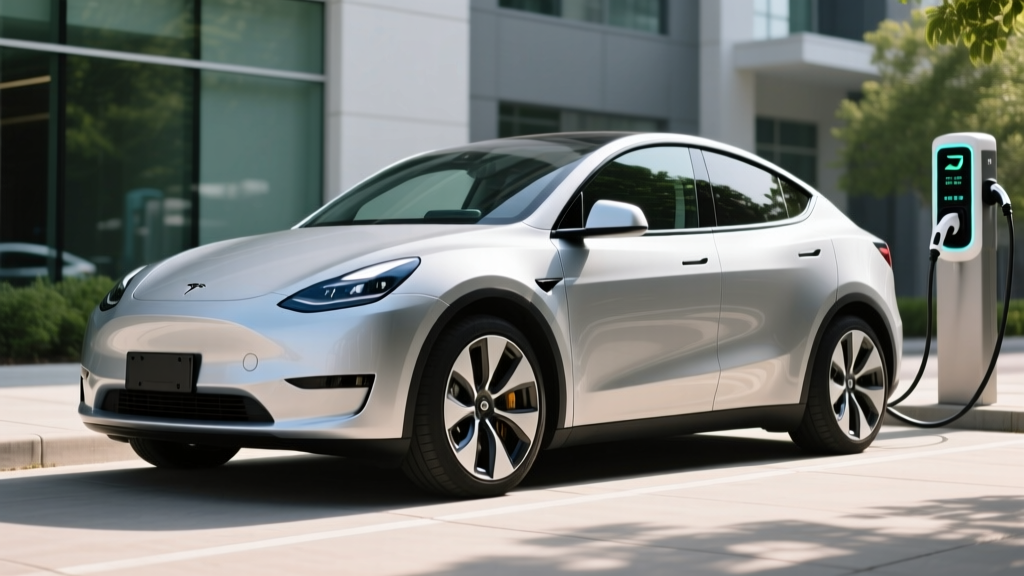
The Tesla Model Y remains one of the best-selling electric vehicles in the United States, and for good reason. It sits at the intersection of practicality, efficiency, and Tesla's Supercharger network access. But beyond the marketing, what does the Model Y actually deliver in 2026 — especially when you look at the platform geometry that defines its interior space and ride quality? The Model Y wheelbase of 113.8 inches is a core reason this compact electric SUV punches above its weight in passenger comfort and cargo utility.
This review covers the 2026 Model Y lineup — Long Range RWD, Long Range AWD, and Performance — with exact EPA figures, real-world range expectations, charging data, pricing, and federal tax credit eligibility under current IRS §30D rules.
| Spec | Long Range RWD | Long Range AWD | Performance AWD |
|---|---|---|---|
| EPA Range | 320 mi | 308 mi | 285 mi |
| Battery (usable) | ~75 kWh (NMC) | ~75 kWh (NMC) | ~75 kWh (NMC) |
| Wheelbase | 113.8 in (2,890 mm) | ||
| Overall Length | 188.0 in | ||
| 0–60 mph | 6.5 sec | 4.8 sec | 3.5 sec |
| Horsepower | ~346 hp | ~384 hp | ~456 hp |
| Drivetrain | RWD (single motor) | AWD (dual motor) | AWD (dual motor) |
| Max DC Fast Charge | 250 kW peak | ||
| 10–80% DCFC Time | ~25 min (with preconditioning) | ||
| Level 2 Home Charge | 11.5 kW (~44 mi/hr) | ||
| MPGe (combined) | 122 MPGe | 116 MPGe | 111 MPGe |
| Efficiency | 28 kWh/100mi | 29 kWh/100mi | 30 kWh/100mi |
| Base MSRP | $44,990 | $47,990 | $52,490 |
| Battery Warranty | 8 yr / 120,000 mi | ||
Wheelbase and Platform: Why 113.8 Inches Matters
The Model Y shares its platform with the Model 3, but the Model Y wheelbase at 113.8 inches is identical to the Model 3 sedan. Where the Y differs is in its taller roofline, raised ride height, and hatchback body style. That wheelbase figure is significant because it directly governs rear-seat legroom and the vehicle's ride smoothness over bumps — longer wheelbases reduce the pitch motion you feel when hitting road imperfections.
Compared to key competitors, the Model Y's wheelbase is competitive but not class-leading:
- Tesla Model Y: 113.8 in
- Ford Mustang Mach-E: 117.5 in
- Hyundai Ioniq 5: 118.1 in
- Volkswagen ID.4: 108.9 in
Despite a shorter wheelbase than the Mach-E or Ioniq 5, Tesla's packaging efficiency — particularly the flat floor and compact motor assemblies — yields 41.6 inches of rear legroom and up to 76.2 cu ft of cargo volume with the rear seats folded. The front trunk (frunk) adds another 4.1 cu ft of secure storage.
Real-World Range: Beyond the EPA Sticker
Real-World Highway (70 mph, mild weather): ~250–280 miles
Real-World Highway (cold weather, 30°F): ~200–240 miles
City/Commuter Driving: Close to EPA or slightly above, thanks to regen braking
The EPA combined range for the Long Range RWD sits at 320 miles — a strong number for the segment. But EPA tests use moderate speeds and temperatures. In sustained 70–75 mph highway driving, expect to use roughly 10–15% more energy than the sticker implies. In cold weather, lithium-ion battery chemistry becomes less efficient, cabin heating draws significant power (the Model Y uses a heat pump, which helps but doesn't eliminate the penalty), and range can drop 20–30%.
For context, on a 300-mile road trip at highway speeds in 35°F weather, a Long Range AWD owner should plan at least one 15–20 minute Supercharger stop. In summer conditions, that same trip might be doable without stopping — but it's tight.
According to fueleconomy.gov, the Long Range AWD achieves 116 MPGe combined, translating to roughly 29 kWh per 100 miles. That efficiency figure is among the best in the compact electric SUV class.
Charging Speeds: DC Fast, Level 2, and the Charge Curve
The 2026 Model Y supports a peak DC fast-charge rate of 250 kW on V3/V4 Tesla Superchargers. However, peak rate is not sustained rate — understanding the charge curve is essential for trip planning.
| Charging Method | Power | Speed (approx.) | Notes |
|---|---|---|---|
| DC Fast (Supercharger V3/V4) | 250 kW peak | ~175 mi in 15 min (10–50% SoC) | Tapers significantly above 60% SoC |
| DC Fast (10–80%) | Avg ~130 kW sustained | ~25 minutes | Preconditioning required for peak rate |
| Level 2 (Tesla Wall Connector) | 11.5 kW | ~44 mi/hr | Requires 60A circuit (48A continuous) |
| Level 2 (public J1772/NACS) | 7.2–11.5 kW | ~28–44 mi/hr | Varies by station |
| Level 1 (120V household) | ~1.4 kW | ~3–5 mi/hr | Emergency/trickle only |
Preconditioning matters. If you navigate to a Supercharger using the Tesla app or in-car nav, the battery thermal management system preheats or cools the pack to the optimal temperature before you arrive. Without preconditioning — for example, plugging into a third-party CCS station via adapter on a cold morning — you may see peak rates of only 50–90 kW for the first several minutes.
The 2026 Model Y uses the native NACS (North American Charging Standard) port, giving it seamless access to the full Tesla Supercharger network — now over 6,000 stations and 65,000+ connectors in North America. This remains the Model Y's single biggest charging advantage over competitors still using CCS1, though many legacy automakers have also adopted NACS for 2025–2026 models.
For home charging, the Tesla Wall Connector at 11.5 kW adds roughly 44 miles of range per hour of charging. A full overnight charge (8 hours on a 48A circuit) replenishes about 350 miles — more than enough to refill the pack from near-empty. Installation typically requires a licensed electrician to run a 60A dedicated circuit; costs range from $500 to $2,000+ depending on panel capacity and conduit runs.
Performance and Driving Dynamics
The Model Y Performance trim delivers a 3.5-second 0–60 mph time with approximately 456 horsepower from its dual-motor AWD setup. That's sports-car acceleration in a family crossover — and it's instantly accessible with no gear shifts or turbo lag.
The Long Range AWD (4.8 seconds, ~384 hp) is the volume seller and offers the best balance of efficiency and capability. The Long Range RWD (6.5 seconds, ~346 hp) is the most efficient variant and is ideal for buyers in mild climates who don't need all-wheel drive.
Ride quality has improved on the 2026 Model Y compared to pre-2024 models. Tesla revised the suspension tuning and added acoustic damping to reduce road noise — addressing one of the most common owner complaints. The 113.8-inch wheelbase contributes to stable highway manners, though the Y still rides firmer than a Hyundai Ioniq 5 or VW ID.4 over sharp bumps.
Pricing, Trims, and Federal Tax Credit Eligibility
| Trim | Base MSRP | §30D Credit (est.) | Effective Price | Destination |
|---|---|---|---|---|
| Long Range RWD | $44,990 | Up to $7,500* | ~$37,490 | $1,390 |
| Long Range AWD | $47,990 | Up to $7,500* | ~$40,490 | $1,390 |
| Performance AWD | $52,490 | Up to $7,500* | ~$44,990 | $1,390 |
*Critical tax credit caveats: The IRS §30D federal EV tax credit is not automatic. Eligibility for the full $7,500 depends on multiple requirements that change periodically:
- MSRP cap: SUVs must be under $80,000 — all Model Y trims qualify.
- Buyer income cap: Modified AGI must not exceed $150,000 (single), $225,000 (head of household), or $300,000 (joint filers).
- Battery sourcing: Critical minerals and battery components must meet escalating domestic-content thresholds set by the IRS. Tesla's US-built battery cells (via partnerships) have generally met these requirements, but the rules tighten annually. Verify current eligibility at irs.gov before purchasing.
- Point-of-sale transfer: As of 2024+, you can transfer the credit to the dealer at purchase, reducing your out-of-pocket cost immediately rather than waiting for tax filing.
Always confirm eligibility with a tax professional and check the latest IRS guidance. Sourcing rules have disqualified several competitors mid-year in past cycles, and Tesla's eligibility status should be verified at the time of purchase.
Interior, Tech, and Standout Features
The Model Y interior is minimalist by design — a single 15.4-inch touchscreen handles infotainment, climate controls, navigation, and vehicle settings. There is no instrument cluster; all driving information is centered on the main display. This approach divides buyers: some love the clean aesthetic, others find it distracting.
Notable tech features:
- Tesla Autopilot (standard) — adaptive cruise, lane centering, auto emergency braking (SAE Level 2; driver must remain engaged)
- Full Self-Driving Supervised (optional, ~$8,000 or $99/mo) — adds automated lane changes, traffic light recognition, city street navigation (still SAE Level 2)
- Over-the-air software updates that add features post-purchase
- Sentry Mode dashcam/security recording
- Heat pump for efficient cabin heating (reduces cold-weather range loss vs. resistive heaters)
- Power-folding second-row seats with 60/40 split
Cargo space: 30.2 cu ft behind the second row, expanding to 76.2 cu ft with seats folded. The 4.1 cu ft frunk adds secure, weatherproof storage for charging cables or a small bag.
Pros, Cons, and Who Should Buy
Pros
- Best-in-class Supercharger network access (native NACS)
- Excellent efficiency: 28–30 kWh/100mi
- Strong acceleration across all trims
- OTA updates continuously improve the vehicle
- Practical hatchback cargo layout + frunk
- Qualifies for full §30D credit (verify sourcing rules)
Cons
- Minimalist interior not for everyone; no physical controls
- Ride quality still firmer than some competitors
- FSD Supervised is expensive and remains Level 2
- No Apple CarPlay or Android Auto
- Rear visibility limited; relies on camera
- Insurance costs above segment average
Who the Model Y suits best:
- Commuters: The Long Range RWD at 320 miles EPA covers most weekly commutes on a single charge, with cheap overnight home charging.
- Small families: Rear-seat space and cargo flexibility handle two car seats and a stroller comfortably. The 113.8-inch wheelbase provides solid rear legroom.
- Road trippers: Supercharger network reliability makes the Model Y the easiest EV for long-distance travel in the US.
- Tech-forward buyers: OTA updates, app integration, and Tesla's software ecosystem are unmatched.
Consider alternatives if: You need three rows of seating (look at the Kia EV9), prefer physical buttons and Apple CarPlay (Hyundai Ioniq 5, Ford Mach-E), or want a softer ride (VW ID.4).
Warranty and Long-Term Ownership
Tesla covers the Model Y battery and drive unit for 8 years or 120,000 miles (whichever comes first), with a guaranteed minimum 70% capacity retention over that period. The basic vehicle limited warranty is 4 years or 50,000 miles.
NMC battery chemistry in the Long Range and Performance trims offers higher energy density than LFP, contributing to the 320-mile range figure. However, NMC batteries are generally more sensitive to sustained high-State-of-Charge storage. For daily use, Tesla recommends charging to 80–90% and only charging to 100% for long trips.
Insurance premiums for the Model Y tend to run 15–25% above comparable gas-powered SUVs, reflecting higher repair costs and Tesla's proprietary body panels. Get quotes before purchasing — the total cost of ownership advantage depends heavily on your local electricity rates and annual mileage.
Frequently Asked Questions
What is the real-world range of the 2026 Tesla Model Y?
The EPA rates the Long Range RWD at 320 miles, the Long Range AWD at 308 miles, and the Performance at 285 miles. In real-world highway driving at 70 mph, expect roughly 250–280 miles in mild weather and 200–240 miles in freezing temperatures. City driving with regenerative braking can match or slightly exceed EPA estimates.
How fast does the Model Y charge at home and on the road?
On a Tesla Supercharger (250 kW peak), the Model Y charges from 10–80% in approximately 25 minutes with battery preconditioning. At home on a Level 2 Tesla Wall Connector (11.5 kW / 48A), it adds about 44 miles of range per hour, fully recharging overnight. On a standard 120V outlet (Level 1), expect only 3–5 miles per hour — suitable for emergencies or very low-mileage drivers.
How much does the Model Y cost after the federal tax credit?
If you qualify for the full $7,500 §30D credit, the Long Range RWD drops from $44,990 to roughly $37,490. The Long Range AWD falls to ~$40,490, and the Performance to ~$44,990. Eligibility depends on your income, the vehicle's battery sourcing compliance, and MSRP caps. Verify at irs.gov before purchasing, as sourcing rules change.
Does the Tesla Model Y qualify for the federal EV tax credit?
As of early 2026, the Model Y generally qualifies for up to $7,500 under §30D, but this depends on battery component and critical mineral sourcing requirements that tighten annually. All trims fall under the $80,000 SUV MSRP cap. Your personal eligibility also depends on income limits ($150K single / $300K joint). Always confirm current status on the IRS clean vehicle credit page.
Is the Model Y worth buying vs. the Hyundai Ioniq 5 or Ford Mach-E?
The Model Y wins on efficiency, Supercharger network access, and software. The Ioniq 5 offers a longer wheelbase (118.1 in), more rear legroom, 800V architecture for faster peak charging at compatible stations, and a more conventional interior with physical controls. The Mach-E provides a sportier driving feel and Apple CarPlay. If charging convenience and range efficiency are your top priorities, the Model Y holds the edge. If interior design and ride comfort matter more, drive all three before deciding.
What is the Model Y wheelbase and how does it compare?
The 2026 Tesla Model Y wheelbase is 113.8 inches (2,890 mm). This is shorter than the Hyundai Ioniq 5 (118.1 in) and Ford Mach-E (117.5 in) but longer than the VW ID.4 (108.9 in). Tesla's packaging efficiency compensates with 41.6 inches of rear legroom and 76.2 cu ft of total cargo space, keeping the Y competitive in daily usability despite the more compact platform footprint.