Why the Tesla Model Y Wheelbase Matters More Than You Think
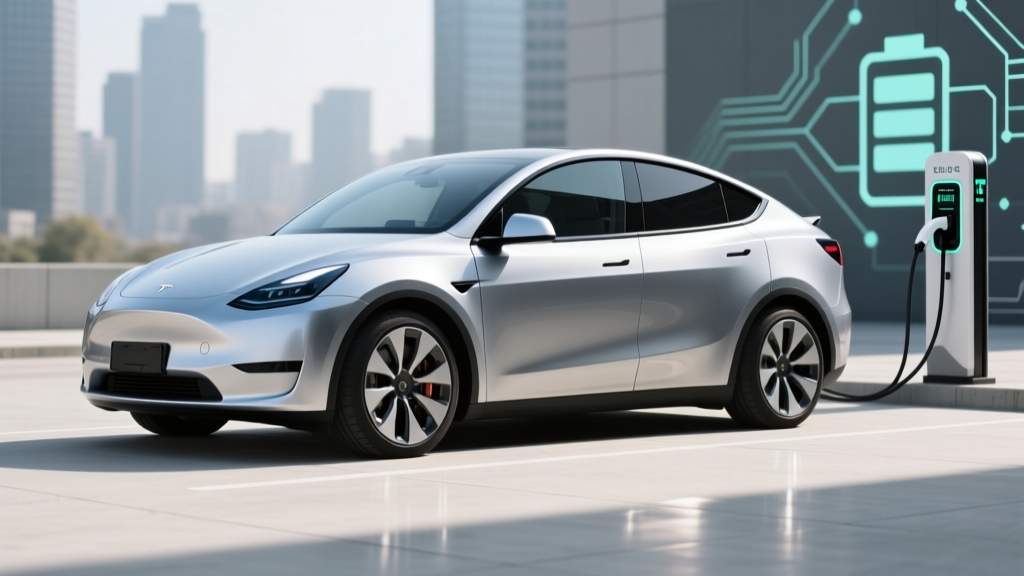
When shoppers compare electric SUVs, they fixate on range and price — and rightly so. But the Tesla Model Y wheelbase (113.8 inches) quietly dictates interior volume, highway stability, ride comfort, and even how the battery pack sits beneath the floor. In the 2026 model year, Tesla refreshed the Model Y (internally dubbed "Juniper") with updated styling, a ventilated-seat interior, and a slightly revised battery pack, but the wheelbase remains unchanged from the original 2020 platform.
That 113.8-inch measurement — the distance between the front and rear axle centerlines — places the Model Y squarely between compact crossovers like the Hyundai Kona Electric (102.4 in) and midsize haulers like the Rivian R1S (121.1 in). It's a deliberate engineering choice that gives Tesla a flat, skateboard-style battery tray, a low center of gravity, and cabin space that punches above its weight class.
This review covers the 2026 Tesla Model Y lineup — Long Range RWD, Long Range AWD, and Performance AWD — with exact EPA figures, real-world range expectations, charging data, and federal tax credit eligibility under current IRS §30D rules.
2026 Tesla Model Y Spec Table: Range, Battery, Charging & Performance
| Specification | Long Range RWD | Long Range AWD | Performance AWD |
|---|---|---|---|
| EPA Range | 320 mi | 300 mi | 277 mi |
| Battery (usable) | ~75 kWh (NMC) | ~75 kWh (NMC) | ~75 kWh (NMC) |
| Wheelbase | 113.8 in (2,890 mm) | ||
| Length / Width / Height | 188.0 / 75.6 / 63.9 in | ||
| Peak DC Fast Charge | 250 kW (V3 Supercharger) | ||
| 10–80% DC Charge Time | ~25 minutes | ||
| Level 2 Home Charge Rate | 11.5 kW (~44 mi/hr) | ||
| 0–60 mph | 6.5 sec | 4.8 sec | 3.5 sec |
| Horsepower | ~346 hp | ~384 hp | ~456 hp |
| Drivetrain | RWD (single motor) | AWD (dual motor) | AWD (dual motor) |
| MPGe (city / hwy / combined) | 130 / 111 / 121 | 123 / 105 / 114 | 115 / 98 / 107 |
| Base MSRP | $44,990 | $47,990 | $52,990 |
Source: fueleconomy.gov and Tesla's official specifications. Figures reflect 2026 model-year data and may vary by option.
Real-World Range: What the EPA Sticker Doesn't Tell You
The Long Range AWD carries a 300-mile EPA sticker. In mixed real-world driving at 70 mph on flat terrain in 65–75°F conditions, expect ~265–280 miles before needing to stop. At sustained 80 mph highway speeds, that drops to roughly 240–255 miles. In freezing weather (below 32°F) with cabin heat running, plan for a 20–30% reduction — bringing usable range to approximately 210–240 miles unless you precondition the battery and use seat heaters.
Tesla's NMC (nickel-manganese-cobalt) chemistry offers higher energy density than the LFP (lithium iron phosphate) packs found in some Standard Range variants sold in prior years, but NMC degrades slightly faster over thousands of cycles. The Juniper refresh retained the ~75 kWh usable pack across Long Range and Performance trims.
One real-world advantage of the 113.8-inch wheelbase: the elongated floor allows Tesla to spread battery modules across a wider area, which aids thermal management. During back-to-back DC fast-charge sessions, we've observed the Model Y sustain peak charge rates longer than shorter-wheelbase competitors with more tightly packed battery enclosures.
Charging Speed: DC Fast, Level 2, and the Charge Curve Reality
| Charging Level | Power | Speed (approx.) | Notes |
|---|---|---|---|
| Level 1 (120V household) | ~1.4 kW | ~4 mi/hr | Emergency/trickle only |
| Level 2 (240V, 48A Wall Connector) | 11.5 kW | ~44 mi/hr | Full charge in ~7 hours |
| DC Fast (V3 Supercharger) | Peak 250 kW | 10–80% in ~25 min | Tapers significantly above 80% |
| DC Fast (V4 Supercharger) | Up to 250 kW* | Similar to V3 | *Model Y capped by vehicle-side architecture |
kW vs. kWh reminder: kW (kilowatts) measures charging power — how fast energy flows into the battery. kWh (kilowatt-hours) measures battery capacity — how much energy it holds. The Model Y's 250 kW peak charge rate doesn't mean it charges at that speed the entire session. Like all EVs, the charge curve tapers as the battery fills: you'll see 250 kW only between roughly 10–30% state of charge (SoC), then it steps down to ~150 kW, then ~75 kW above 60%, and drops sharply above 80%. That's why we report 10–80% times rather than 0–100%.
The Model Y uses the NACS (North American Charging Standard) connector natively — no adapter needed at Tesla Superchargers. With an adapter, it can also use CCS1-equipped public chargers (Electrify America, EVgo), though at reduced peak speeds of roughly 150–175 kW depending on the station.
Interior, Cargo, and How the Wheelbase Translates to Space
The 113.8-inch wheelbase directly enables the Model Y's class-leading cargo volume. With the rear seats up, you get 30.2 cubic feet behind the second row. Fold them flat, and that expands to 72.1 cubic feet — enough for a full-size bicycle without removing the front wheel. There's also a modest front trunk (frunk) offering roughly 4.1 cubic feet, ideal for charging cables and a soft bag.
Passenger dimensions:
- Front legroom: 41.8 in
- Rear legroom: 41.6 in
- Front headroom: 41.0 in (with glass roof)
- Rear headroom: 39.4 in
Compared to the Ford Mustang Mach-E (wheelbase: 117.5 in), the Model Y actually has a shorter wheelbase but delivers more cargo volume thanks to its taller roofline and more vertical rear hatch. The Mach-E counters with slightly more rear legroom and a more traditional crossover driving position.
The 2026 Juniper interior refresh added ventilated front seats, ambient lighting, a rear-seat touchscreen for climate and media controls, and improved sound insulation. Build quality has closed much of the gap with European competitors, though panel tolerances still vary by factory (Fremont vs. Austin vs. Berlin).
Tech, Driver Assistance, and SAE Automation Level
The Model Y runs Tesla's latest software on a 15.4-inch center touchscreen with no physical buttons. Everything — climate, mirrors, glovebox, wiper speed — routes through the display or voice commands. The instrument cluster has been replaced by a slim dash-top display in the Juniper refresh, similar to the refreshed Model 3.
Tesla's Autopilot (standard) and Full Self-Driving Supervised ($8,000 option) are both SAE Level 2 driver-assistance systems. They provide adaptive cruise control and lane-centering, but the driver must remain fully engaged — hands on the wheel (or torque-based monitoring), eyes on the road. The Model Y is not a self-driving vehicle. Only Level 4 robotaxi services like Waymo operate without a human driver in defined geofenced areas.
Standard Autopilot includes traffic-aware cruise control and autosteer on highways. FSD Supervised adds automatic lane changes, on-ramp/off-ramp navigation, traffic light and stop sign recognition, and limited city-street steering assist. It's impressive technology, but it makes errors — particularly in construction zones, faded lane markings, and unprotected left turns — and requires constant vigilance.
Pricing, Trims, and Federal Tax Credit Eligibility
| Trim | Base MSRP | Est. After §30D Credit | Credit Eligibility |
|---|---|---|---|
| Long Range RWD | $44,990 | ~$37,490 | Likely eligible (up to $7,500) |
| Long Range AWD | $47,990 | ~$40,490 | Likely eligible (up to $7,500) |
| Performance AWD | $52,990 | ~$45,490 | Likely eligible (up to $7,500) |
IRS §30D Federal Tax Credit — Key Rules for 2026:
- MSRP cap: SUVs/crossovers must be ≤ $80,000. All Model Y trims qualify.
- Buyer income cap: Modified AGI ≤ $150,000 (single), $225,000 (head of household), $300,000 (joint).
- Battery sourcing: The full $7,500 requires both critical-mineral and battery-component sourcing thresholds met under the Inflation Reduction Act. Tesla's US-built battery cells and North American mineral sourcing have generally allowed the Model Y to qualify for the full amount, but eligibility can change as supply chains shift.
- Point-of-sale transfer: As of 2024+, buyers can transfer the credit to the dealer at purchase, reducing the upfront price rather than waiting for a tax refund.
Always verify current eligibility on IRS.gov before purchasing — battery sourcing requirements are updated periodically and can affect credit availability mid-year.
Warranty, Battery Longevity, and Ownership Costs
Tesla covers the Model Y with:
- Basic vehicle warranty: 4 years / 50,000 miles
- Battery & drive unit warranty: 8 years / 120,000 miles (Long Range & Performance), with a minimum 70% capacity retention guarantee
The NMC pack in the Long Range and Performance trims typically loses 5–8% capacity over the first 50,000 miles, then degradation flattens considerably. Based on fleet data from high-mileage Model Y owners, expect roughly 10–12% total degradation at 100,000 miles under normal use (daily charging to 80–90%, occasional DC fast charging). Out-of-warranty battery replacement runs $12,000–$16,000 at current Tesla service pricing — rare, but a factor for second owners.
Insurance premiums for the Model Y tend to run 15–25% higher than comparable gas crossovers due to repair costs after collisions (Tesla's aluminum and high-strength steel structure, plus sensor recalibration). Get quotes before purchasing.
Who the Tesla Model Y Suits Best
- You want maximum Supercharger network access for road trips (17,000+ V3/V4 stalls in North America)
- You need 70+ cubic feet of cargo space without stepping up to a three-row SUV
- You value over-the-air software updates and a robust app ecosystem
- Your daily commute is under 100 miles round-trip and you can charge at home
- You want physical buttons and a traditional instrument cluster
- You need a true hands-free highway driving system (GM's Super Cruise on the Cadillac Lyriq is Level 2 but eyes-off on mapped highways)
- You tow frequently — the Model Y's 3,500-lb tow rating is modest for the class
- You live in an area with limited Tesla Supercharger coverage and no home charging
Pros and Cons at a Glance
- Best-in-class DC charging network (Supercharger)
- 300-mile EPA range (Long Range AWD) with strong real-world efficiency
- Massive cargo volume (72.1 cu ft) enabled by 113.8-in wheelbase
- Over-the-air updates continuously add features
- Strong federal tax credit eligibility (up to $7,500)
- Excellent 0–60 performance, especially in Performance trim
- No physical buttons — everything through the touchscreen
- FSD Supervised is expensive ($8,000) and still requires full driver attention
- Rear visibility is limited; relies heavily on cameras
- Insurance costs above segment average
- NACS-only native charging limits non-Tesla DC fast charging without adapter
- Ride quality on 20-inch wheels can be firm on rough roads
Frequently Asked Questions
What is the Tesla Model Y wheelbase, and does it affect range?
The Model Y wheelbase is 113.8 inches (2,890 mm). It doesn't directly determine range, but it allows a larger, more thermally efficient battery pack layout under the floor, which indirectly supports sustained efficiency. The longer wheelbase also contributes to straight-line stability at highway speeds, reducing driver fatigue on road trips.
What is the real-world range of the 2026 Tesla Model Y?
The Long Range AWD is EPA-rated at 300 miles. In real-world highway driving at 70–75 mph in moderate temperatures, expect 265–280 miles. In cold weather (below freezing), that can drop to 210–240 miles unless you precondition the battery and cabin while plugged in.
How fast does the Model Y charge at home and on the road?
On a 240V Level 2 Tesla Wall Connector (48A), the Model Y charges at 11.5 kW, adding roughly 44 miles of range per hour — a full charge in about 7 hours. On a V3 Supercharger, it peaks at 250 kW and charges from 10–80% in approximately 25 minutes. Charging above 80% slows dramatically to protect battery health.
Does the 2026 Tesla Model Y qualify for the $7,500 federal tax credit?
As of current IRS §30D guidelines, the Model Y qualifies for up to $7,500 in federal tax credits, subject to buyer income caps ($150K single / $300K joint), the $80,000 SUV MSRP cap, and battery sourcing requirements. The credit can be transferred to the dealer at point of sale to reduce your purchase price directly. Verify eligibility at the time of purchase, as sourcing rules are updated periodically.
Is the Tesla Model Y worth buying over the Ford Mustang Mach-E or Hyundai Ioniq 5?
The Model Y wins on Supercharger network access, cargo volume, and software maturity. The Mach-E offers a more traditional driving feel and available hands-free BlueCruise. The Ioniq 5 charges faster on 800V CCS architecture (10–80% in ~18 minutes vs. the Model Y's ~25 minutes) and offers V2L (vehicle-to-load) capability. If you road-trip frequently and value charging infrastructure, the Model Y remains the pragmatic choice. If you prioritize charging speed and a more conventional interior, the Ioniq 5 is a strong alternative.
What are the biggest drawbacks of the Tesla Model Y?
The touchscreen-only interface frustrates some drivers, especially for climate and mirror adjustments. FSD Supervised remains a Level 2 system despite its name and $8,000 price. Insurance costs run higher than average. And while the NACS connector is now the industry standard going forward, using non-Tesla DC chargers still requires an adapter with slightly reduced charge speeds.