Why Tesla Model Y Weight Matters for Buyers
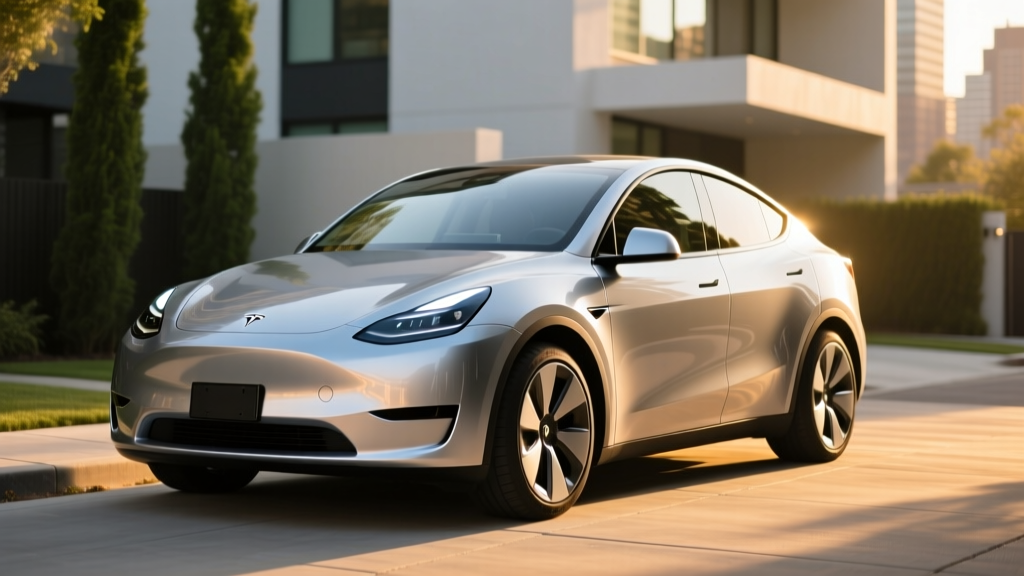
When shoppers search for how heavy the Tesla Model Y is, they are usually trying to answer three practical questions: Will my garage floor or car lift handle it? How does mass affect efficiency and tire wear? And does the weight impact braking and handling on daily commutes? The Tesla Model Y is one of the best-selling electric vehicles in the United States, and understanding its curb weight — along with the full spec sheet — is essential before signing a purchase agreement.
The 2026 Tesla Model Y (refreshed "Juniper" generation) spans multiple trims, each with a different battery pack, motor configuration, and therefore a different curb weight. Below, we break down the exact weight figures, then move into the range, charging, pricing, and ownership data you need to make an informed decision.
2026 Tesla Model Y Curb Weight by Trim
| Trim | Drivetrain | Curb Weight (lbs) | Gross Vehicle Weight Rating (lbs) |
|---|---|---|---|
| Long Range RWD | Rear-Wheel Drive | ~4,200 | ~5,100 |
| Long Range AWD | Dual-Motor AWD | ~4,398 | ~5,200 |
| Performance AWD | Dual-Motor AWD | ~4,450 | ~5,300 |
For context, the Long Range AWD Model Y at roughly 4,398 lbs is comparable to a midsize gas-powered SUV but carries its mass low in the chassis thanks to the under-floor battery pack. This gives the Model Y a lower center of gravity than similarly weighted ICE crossovers, which translates to confident cornering despite the mass. The Performance trim adds slightly more weight from upgraded brakes, larger 21-inch wheels, and additional cooling hardware.
Why weight matters for EV ownership: Heavier vehicles consume more energy per mile, wear through tires faster (expect 25,000–35,000 miles on factory rubber), and require longer braking distances. The Model Y's regen braking system helps offset some brake-pad wear, but tire replacement costs remain a real ownership factor — budget roughly $1,200–$1,800 for a set of EV-rated touring tires.
EPA Range and Real-World Efficiency
EPA Estimated Range: Up to 320 miles (Long Range AWD)
Real-World Expectation: 265–290 miles at sustained highway speeds (70–75 mph); 230–260 miles in freezing temperatures (below 32°F) with cabin heat active.
| Trim | EPA Range (mi) | MPGe (Combined) | kWh/100 mi | Battery (kWh, usable) |
|---|---|---|---|---|
| Long Range RWD | 320 | 111 MPGe | 30 | ~78 kWh, NMC |
| Long Range AWD | 308 | 107 MPGe | 31 | ~78 kWh, NMC |
| Performance AWD | 285 | 101 MPGe | 33 | ~78 kWh, NMC |
Tesla continues to use NMC (nickel manganese cobalt) chemistry in the Long Range and Performance Model Y packs. NMC offers higher energy density than LFP, which is why these trims achieve 300+ miles from a ~78 kWh usable pack. The trade-off: NMC batteries benefit from daily charge limits set to 80% to slow degradation, while LFP packs (used in the Standard Range variant in some markets) tolerate regular 100% charges without the same longevity concerns.
On a 300-mile highway road trip in moderate weather (55–70°F), expect to arrive with roughly 10–15% State of Charge remaining if you start at 100%. In winter conditions, that buffer shrinks — plan for a mid-trip DC fast-charge stop on any route over 220 miles when temperatures drop below freezing.
Charging Speed: DC Fast, Level 2, and Level 1
Charging speed is often the deciding factor for EV buyers who road-trip more than twice a year. Here is exactly what the 2026 Model Y delivers across all charging levels:
| Charging Level | Max Power (kW) | Speed (miles added/hr) | 10–80% Time |
|---|---|---|---|
| Level 1 (120V household) | ~1.4 kW | ~4–5 mi/hr | N/A (days for full charge) |
| Level 2 (240V home/public) | 11.5 kW (48A) | ~37–44 mi/hr | ~7–8 hours (0–100%) |
| DC Fast Charge (V3/V4 Supercharger) | 250 kW peak | Up to ~1,000 mi/hr (peak) | ~15–18 minutes |
Charging curve reality: The Model Y peaks at 250 kW only between roughly 10–30% State of Charge. The rate tapers progressively — by 60% SoC, you are typically seeing 100–130 kW, and above 80%, speeds drop below 50 kW to protect battery health. This is why Tesla's navigation system preconditions the battery when routing to a Supercharger, warming the pack to optimize the charge curve. Skipping preconditioning (for example, arriving at a DC charger without using navigation) can add 5–10 minutes to your session in cold weather.
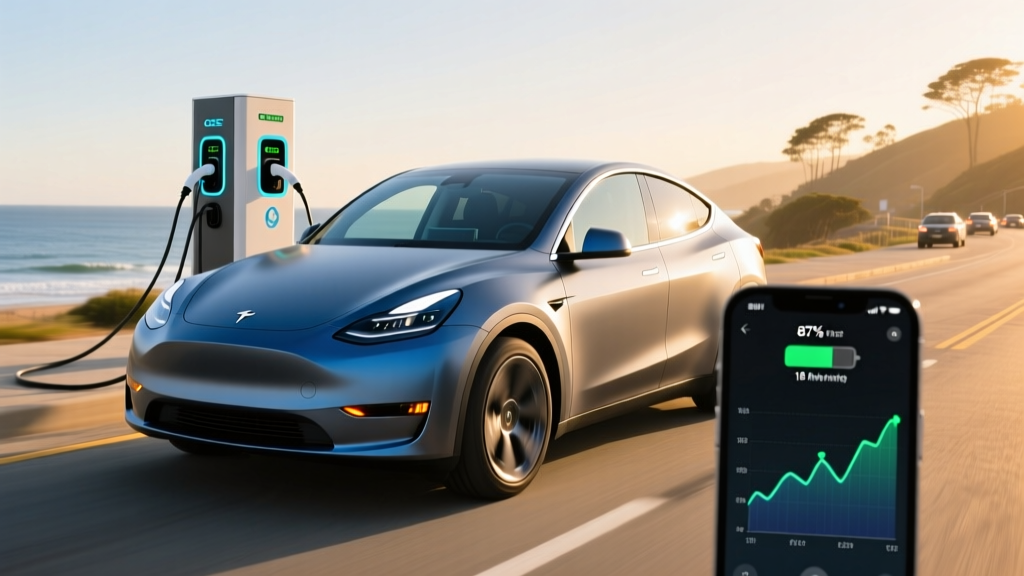
The Model Y ships with a NACS (North American Charging Standard) connector natively, giving it direct access to Tesla's Supercharger network — currently the most reliable DC fast-charging network in the US by uptime metrics. Tesla has also opened portions of this network to non-Tesla EVs, but Model Y owners benefit from seamless plug-and-charge integration with no adapter needed.
For home Level 2 charging, Tesla's Wall Connector costs approximately $420 and delivers up to 11.5 kW (48 amps) on a 60-amp dedicated circuit. Expect a licensed electrician to charge $800–$2,000 for installation depending on panel capacity and conduit run length. If your home has a 200-amp panel with available capacity, installation stays on the lower end; older 100-amp panels may require a $2,000–$4,000 service upgrade.
Performance, Handling, and Daily Drivability
| Trim | 0–60 mph | Horsepower | Top Speed | Towing Capacity |
|---|---|---|---|---|
| Long Range RWD | 5.8 sec | ~346 hp | 125 mph | 3,500 lbs |
| Long Range AWD | 4.8 sec | ~384 hp | 125 mph | 3,500 lbs |
| Performance AWD | 3.5 sec | ~456 hp | 155 mph | 3,500 lbs |
Despite weighing over 4,200 lbs, the Model Y Performance hits 60 mph in 3.5 seconds — sports-car territory from a five-seat crossover. Instant torque delivery from the dual electric motors means there is zero lag off the line, and the low center of gravity keeps body roll controlled through corners. That said, you will feel the mass during emergency lane changes and hard braking; this is physics, not a design flaw.
The 3,500-lb towing capacity is adequate for a small utility trailer or a pair of jet skis but falls short of body-on-frame SUVs. Towing cuts range dramatically — expect a 35–50% reduction at highway speeds with a loaded trailer, bringing effective range to 150–190 miles on the Long Range AWD.
Interior Space, Cargo, and Technology
| Dimension | Measurement |
|---|---|
| Front Headroom | 41.0 in |
| Rear Headroom | 38.0 in |
| Front Legroom | 41.8 in |
| Rear Legroom | 37.6 in |
| Cargo (behind 2nd row) | 30.2 cu ft |
| Cargo (seats folded) | 72.0 cu ft |
| Front Trunk (Frunk) | 4.1 cu ft |
The Juniper refresh brought a noticeably quieter cabin with acoustic glass, ventilated front seats, ambient lighting, and a rear-seat touchscreen for climate and entertainment control. The 15.4-inch front touchscreen runs Tesla's latest software, which includes navigation with real-time Supercharger availability, streaming media, and a reasonably accurate trip planner that accounts for elevation, wind, and temperature.
Driver-assist technology: Every Model Y includes Tesla Autopilot (SAE Level 2), which provides adaptive cruise control and lane-centering on marked roads. Full Self-Driving (Supervised) remains an optional $8,000 add-on or $99/month subscription. FSD Supervised is also SAE Level 2 — it does not make the vehicle autonomous. The driver must remain attentive, hands on or near the wheel, and ready to intervene at all times. True Level 4 driverless capability is not available in any consumer Tesla vehicle.
Notable drawbacks include the lack of traditional physical controls (nearly everything routes through the touchscreen), no Apple CarPlay or Android Auto integration, and panel-gap inconsistency that still appears on some Fremont and Austin-built units.
Pricing, Trims, and Federal Tax Credit Eligibility
| Trim | Base MSRP | Est. After §30D Credit | Federal Credit Eligibility |
|---|---|---|---|
| Long Range RWD | $44,990 | ~$37,490* | Eligible (partial/full varies by sourcing) |
| Long Range AWD | $47,990 | ~$40,490* | Eligible (partial/full varies by sourcing) |
| Performance AWD | $51,490 | ~$43,990* | Eligible (partial/full varies by sourcing) |
*Tax credit estimates assume buyer meets all IRS §30D requirements. Actual credit amount depends on battery component sourcing and critical mineral content, which Tesla updates periodically. Always verify current eligibility at IRS.gov and consult a tax professional before purchasing.
The federal §30D clean vehicle credit offers up to $7,500 for qualifying new EVs, but eligibility depends on three factors that change periodically:
- MSRP Cap: SUVs must have an MSRP at or below $80,000. All Model Y trims qualify.
- Buyer Income Cap: Modified adjusted gross income must not exceed $300,000 (joint), $225,000 (head of household), or $150,000 (individual).
- Battery Sourcing Requirements: A percentage of battery components must be manufactured or assembled in North America, and a percentage of critical minerals must be sourced from the US or free-trade-agreement countries. These thresholds increase annually, and automakers' eligibility can shift mid-year.
As of 2026, the §30D credit can be transferred to the dealer at the point of sale, effectively reducing your purchase price on day one rather than waiting for a tax refund. This point-of-sale transfer makes the Model Y significantly more accessible, but confirm the exact credit amount with your Tesla advisor at the time of order.
Warranty, Battery Longevity, and Ownership Costs
| Coverage | Term |
|---|---|
| Basic Vehicle Limited Warranty | 4 years / 50,000 miles |
| Battery & Drive Unit Warranty | 8 years / 120,000 miles (Long Range/Performance) |
| Battery Capacity Retention Threshold | 70% minimum over warranty period |
Tesla guarantees that the Model Y's NMC battery will retain at least 70% of its original capacity over 8 years or 120,000 miles, whichever comes first. Real-world data from Tesla's fleet suggests typical degradation of 10–12% over the first 100,000 miles for NMC packs, meaning most owners will retain 88–90% capacity well beyond the warranty period if they follow best practices (limiting daily charge to 80%, avoiding frequent DC fast charging to 100%, and not leaving the vehicle at very low or very high SoC for extended periods).
Insurance costs for the Model Y run 15–30% higher than comparable gas-powered crossovers, averaging $1,800–$2,600 annually depending on your state, driving record, and coverage level. Tesla offers its own insurance product in many states that uses real-time driving behavior (via the vehicle's telemetry) to set monthly premiums — safe drivers can sometimes save 10–20% versus third-party insurers.
Pros and Cons
- Best-in-class Supercharger network access (NACS native)
- Excellent efficiency: 30–33 kWh/100 mi
- Strong performance even in base RWD trim
- Spacious cargo area (72 cu ft max) with frunk
- Over-the-air software updates add features post-purchase
- Competitive pricing after potential tax credit
- No Apple CarPlay or Android Auto
- Touchscreen-dependent controls frustrate some drivers
- Ride quality can feel firm on rough pavement
- Tire wear accelerates due to vehicle weight and torque
- FSD remains Level 2 — not autonomous despite the name
- Insurance premiums above segment average
Who Should Buy the 2026 Tesla Model Y?
Best for: Tech-forward families and commuters who want a practical, efficient electric SUV with access to the most reliable DC fast-charging network. The Model Y's combination of 300+ mile range, 30 cu ft of cargo space, and sub-5-second 0–60 times (AWD) makes it a strong daily driver and road-trip vehicle.
Consider alternatives if: You need three rows of seating (look at the Kia EV9 or Rivian R1S), prefer physical button controls, want Apple CarPlay integration (Hyundai Ioniq 5, Ford Mustang Mach-E), or need serious towing capacity above 5,000 lbs (Rivian R1T, Ford F-150 Lightning).
Frequently Asked Questions
How heavy is the Tesla Model Y compared to gas SUVs?
The Model Y Long Range AWD weighs approximately 4,398 lbs, which is similar to a Toyota RAV4 (~3,600 lbs) or Honda CR-V (~3,500 lbs) but heavier due to the battery pack. However, the Model Y's low center of gravity gives it handling characteristics that feel more planted than its weight suggests.
What is the real-world range of the Tesla Model Y?
Expect 265–290 miles at highway speeds in moderate weather from the Long Range AWD (EPA 308 mi). In freezing temperatures, range drops to roughly 230–260 miles with cabin heating active. City driving with frequent regen braking can actually exceed the EPA estimate, sometimes reaching 320+ miles in stop-and-go traffic.
How fast does the Tesla Model Y charge at home and on the road?
At home on a Level 2 (240V, 48A) charger, the Model Y adds roughly 37–44 miles of range per hour, fully charging overnight in 7–8 hours. On a V3 or V4 Supercharger, it peaks at 250 kW and charges from 10–80% in approximately 15–18 minutes, with taper above 80% to protect battery health.
Does the Tesla Model Y qualify for the $7,500 federal tax credit?
The Model Y is eligible for the federal §30D clean vehicle credit, but the exact amount (up to $7,500) depends on current battery-sourcing rules, your income level, and the vehicle's MSRP (all trims fall under the $80,000 SUV cap). Check IRS.gov for the latest eligibility details and consult a tax professional.
Is the Tesla Model Y worth buying over the Hyundai Ioniq 5 or Ford Mustang Mach-E?
The Model Y wins on charging network access (native NACS/Supercharger), cargo space, and software integration. The Ioniq 5 offers faster 10–80% charging (under 18 min on 350 kW chargers), 800V architecture, and Apple CarPlay. The Mach-E provides a more traditional SUV feel with physical controls. Test-drive all three — the best choice depends on your priorities around charging, tech, and interior ergonomics.
Sources: EPA Fuel Economy, Tesla Specifications, IRS Clean Vehicle Credits