Quick Answer: Are There Electric Jeeps?
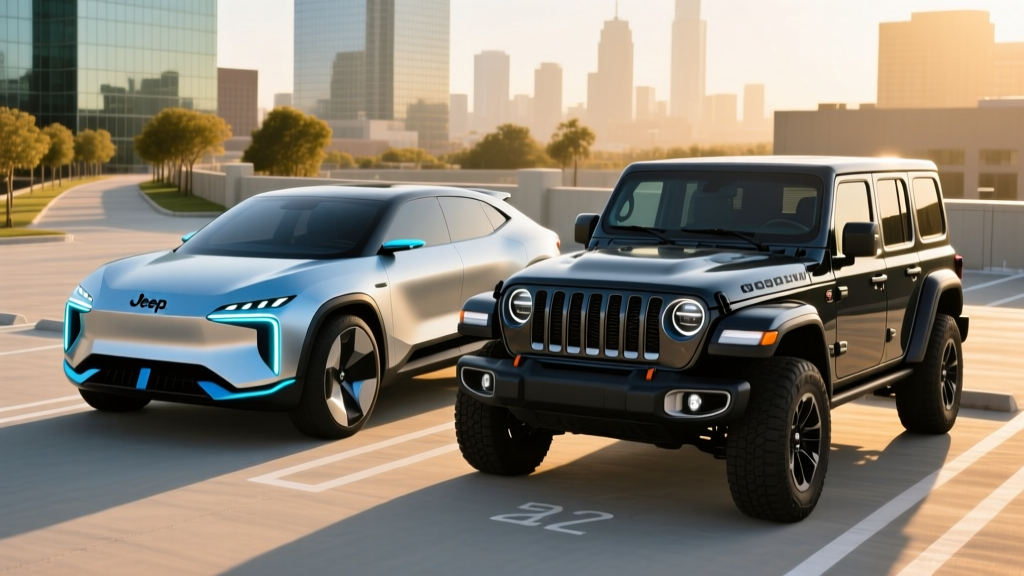
As of the 2026 model year, Jeep offers no fully electric (BEV) vehicles for sale in the United States. The Jeep Recon, originally announced as Jeep's first all-electric SUV for the U.S. market, has been delayed and remains unreleased. However, Jeep sells three plug-in hybrid (PHEV) models under the "4xe" badge: the Wrangler 4xe, Grand Cherokee 4xe, and Grand Cherokee L 4xe. These pair a turbocharged gas engine with an electric motor and a battery pack delivering 25–32 miles of electric-only range. If you want a Jeep you can plug in and drive on electricity for daily commutes, the 4xe lineup is your current option — but it is not a full EV.
Jeep's Current Electrified Lineup: 4xe PHEVs Explained
Jeep's electrification strategy in the U.S. centers on its 4xe (four-by-e) plug-in hybrid technology. Unlike a conventional hybrid (like a Toyota RAV4 Hybrid), a PHEV has a larger battery you can plug in to charge, giving you a meaningful electric-only range before the gas engine engages. Here's what's available for 2026:
| Model | Battery (kWh) | EV Range (EPA) | Combined HP | 0–60 mph | MPGe | Base MSRP |
|---|---|---|---|---|---|---|
| Wrangler 4xe | 17.3 kWh (gross) | ~22 mi | 375 hp | 6.0 sec | 49 MPGe | ~$52,095 |
| Grand Cherokee 4xe | 17.3 kWh (gross) | ~26 mi | 375 hp | 6.0 sec | 56 MPGe | ~$61,695 |
| Wagoneer S (BEV)* | 100 kWh (est.) | ~300 mi (est.) | 600 hp | ~3.5 sec | N/A | ~$71,995 (announced) |
*The Wagoneer S was announced as Jeep's first global BEV. As of early 2026, production timelines and final EPA certification remain preliminary. Specs listed are manufacturer estimates. See Jeep's Wagoneer S page for updates.
4xe vs. Gas Wrangler: Real Cost and Efficiency Comparison
The most common question from Jeep shoppers is whether the 4xe premium is worth it compared to a conventional gas Wrangler or Grand Cherokee. Let's run the numbers on the Wrangler, the brand's most popular model.
| Metric | Wrangler 4xe (PHEV) | Wrangler Gas (3.6L V6) |
|---|---|---|
| Base MSRP | $52,095 | $35,495 |
| Federal Tax Credit (§30D) | Up to $3,750* | $0 |
| Effective Starting Price | ~$48,345 | $35,495 |
| EPA Combined Fuel Economy | 49 MPGe / 20 MPG (gas-only) | 19 MPG combined |
| Annual Fuel/Energy Cost (15k mi/yr) | ~$1,650** | ~$2,450 |
| 5-Year Fuel/Energy Cost | ~$8,250 | ~$12,250 |
| 5-Year Estimated Maintenance | ~$2,800 | ~$3,200 |
| Total 5-Year Cost (purchase + fuel + maint.) | ~$59,395 | ~$50,945 |
*The §30D credit for the Wrangler 4xe is up to $3,750 based on current IRS battery-sourcing requirements. Eligibility depends on your taxable income (AGI caps: $150k single / $300k joint) and the vehicle's MSRP cap ($80k for SUVs). Always verify current eligibility at IRS.gov §30D or consult a tax professional.
**Annual fuel cost assumes 60% of driving is done on electricity (home charging at $0.16/kWh) and 40% on gasoline at $3.50/gal. Actual costs vary heavily by driving pattern and electricity rate. Source: fueleconomy.gov.
Key Takeaway
Over five years, the Wrangler 4xe saves roughly $4,000 in fuel and $400 in maintenance compared to the gas model, but the price gap after the tax credit is still about $12,850. The 4xe doesn't "pay for itself" purely on fuel savings unless you hold the vehicle 10+ years or drive significantly more than 15,000 miles annually. The real value is the daily electric commuting — if your round trip is under 22 miles and you charge at home, you may burn almost no gasoline on weekdays.
Real-World Ownership: What 4xe Buyers Need to Know
Charging at Home
The Wrangler and Grand Cherokee 4xe both use a 17.3 kWh gross battery pack (approximately 14–15 kWh usable). Charging speeds:
- Level 1 (120V household outlet): ~1.4 kW — full charge in roughly 10–12 hours. This works if you plug in overnight and only need to replenish 20–25 miles of EV range.
- Level 2 (240V home charger): ~7.2 kW — full charge in about 2–2.5 hours. A Level 2 wallbox isn't strictly necessary for a PHEV this size, but it lets you top up between errands or ensure a full battery every morning.
- DC fast charging: Not available on 4xe models. These vehicles lack DC fast-charge capability — a notable limitation if you expected road-trip charging flexibility.
Home installation cost: If you already have a 240V outlet (dryer or range), a portable Level 2 cord runs $300–$600. A hardwired Level 2 station with professional installation typically costs $800–$2,200 depending on panel capacity and run length. Most 4xe owners find Level 1 sufficient given the small battery.
Real-World EV Range vs. EPA Sticker
The EPA rates the Wrangler 4xe at roughly 22 miles of electric range. In real-world conditions:
- Mild weather, city driving: Expect 20–24 miles — close to or slightly above EPA.
- Highway driving (70+ mph): EV range drops to ~15–18 miles. The brick-like aerodynamics of a Wrangler penalize efficiency at speed.
- Cold weather (below 32°F): Expect 14–17 miles. Battery chemistry is less efficient in cold, and cabin heating draws from the pack unless you precondition while plugged in.
The Grand Cherokee 4xe, with its more aerodynamic shape, holds closer to its 26-mile EPA rating in mixed driving and may yield 18–22 miles on the highway.
Driving Patterns That Make the 4xe Shine (or Struggle)
The 4xe PHEV is ideal if:
- Your daily commute is under 25 miles round-trip.
- You have access to home charging (even a standard 120V outlet works overnight).
- You want a capable off-road SUV for weekends but hate burning gas on weekday commutes.
- You regularly take road trips beyond EV range and don't want to plan charging stops.
The 4xe is a poor fit if:
- You drive 60+ miles daily and expected to avoid the gas station entirely.
- You lack home or workplace charging — without plugging in, a 4xe is just a heavy, less-efficient hybrid.
- You want one-pedal driving or full EV silence at highway speeds — the gas engine engages frequently under hard acceleration or at sustained highway speeds.
What About a Fully Electric Jeep? The Wagoneer S and Recon
Jeep has announced two all-electric vehicles, but neither is currently available for purchase in the U.S. as of early 2026:
Wagoneer S (Announced)
Built on Stellantis' STLA Large platform, the Wagoneer S targets roughly 300 miles of range, 600 hp, and a 0–60 time around 3.5 seconds. The announced starting price is approximately $71,995 before incentives. This is a luxury-oriented, unibody SUV — not a body-on-frame off-roader. Final EPA certification and delivery timelines remain unconfirmed. Treat all specs as preliminary.
Jeep Recon (Announced)
Originally previewed as Jeep's first all-electric off-road-capable SUV, the Recon was slated for the U.S. market but has faced significant delays tied to Stellantis' shifting EV strategy. As of 2026, there is no firm on-sale date, and the Recon may launch in other markets first. If trail capability in an electric package is what you're after, the Recon is not yet an option.
Common Misconceptions About Electric Jeeps
| Myth | Fact |
|---|---|
| "The Wrangler 4xe is an electric Jeep." | It's a plug-in hybrid. It has a gas engine and requires gasoline for longer trips. EV range is ~22 miles. |
| "I'll never need to visit a gas station with a 4xe." | Unless your daily driving stays under 20 miles and you charge religiously, you'll still buy gas — just less frequently. |
| "The 4xe qualifies for the full $7,500 tax credit." | As of 2026, the Wrangler 4xe qualifies for up to $3,750 under §30D, contingent on battery-sourcing rules and your income. Always check IRS.gov. |
| "4xe models can DC fast-charge." | They cannot. Charging is limited to Level 1 (120V) and Level 2 (240V). No DC fast-charge port is included. |
| "An electric Jeep can't off-road." | The 4xe's instant electric torque is actually excellent for low-speed rock crawling. The gas engine provides range for remote trail access where no chargers exist. |
Decision Framework: Should You Buy a Jeep 4xe, Wait for a BEV, or Look Elsewhere?
Choose the Wrangler 4xe if:
- You want genuine off-road capability (solid axles, locking diffs, sway-bar disconnect) with a plug-in option for daily commuting.
- Your commute is under 25 miles and you can charge at home.
- You take road trips where charging infrastructure is unreliable or nonexistent.
- You accept the ~$13,000 premium over the gas Wrangler for the EV commute experience and torque fill.
Choose the Grand Cherokee 4xe if:
- You want a refined, family-oriented SUV with electric commuting capability and don't need hardcore off-road hardware.
- You value the 26-mile EV range and 56 MPGe for suburban driving.
- You need three rows of seating — though note the Grand Cherokee L 4xe is a separate trim with slightly lower EV range.
Wait for a full electric Jeep (Wagoneer S / Recon) if:
- You want zero tailpipe emissions and true one-pedal driving.
- You have reliable home Level 2 charging and live in an area with robust public DC fast-charging.
- You're willing to wait — possibly into 2027 or beyond — for confirmed specs, EPA ratings, and production.
Look at a competing EV or PHEV if:
- You want 250+ miles of electric range today. Consider the Ford Bronco Sport (gas, but a direct Wrangler competitor), or for a true electric SUV, the Hyundai Ioniq 5 (EPA 303 mi, peak 240 kW DC charging, starting ~$44,000) or Rivian R1S (EPA 321+ mi, genuine off-road capability, starting ~$79,900).
- You want a PHEV with longer electric range. The Toyota RAV4 Prime offers 42 miles of EV range on a 18.1 kWh battery at ~$44,500 — nearly double the Wrangler 4xe's electric range at a lower price, though without the off-road hardware.
Battery Warranty and Longevity
Jeep covers the 4xe battery pack with an 8-year / 100,000-mile warranty (whichever comes first), consistent with the federal requirement for PHEV and EV battery coverage. The warranty guarantees the battery will retain a minimum threshold of its original capacity — typically around 60–70%, though Jeep's specific retention threshold should be confirmed in your owner's manual.
For context, PHEV batteries experience less degradation than full EV batteries because:
- The usable buffer is smaller (you never fully deplete or fully charge the pack in normal operation).
- The gas engine shares propulsion duties, reducing total charge cycles on the battery.
Real-world data from early Wrangler 4xe owners (2021–2023 models) suggests minimal noticeable degradation within the first 60,000 miles. Long-term data beyond 100,000 miles is still limited.
Frequently Asked Questions
Can I drive a Jeep 4xe on electricity alone?
Yes, but only for short distances. The Wrangler 4xe gives you about 22 miles of EPA-rated EV range; the Grand Cherokee 4xe provides about 26 miles. Once the battery is depleted, the 2.0L turbocharged gas engine takes over seamlessly. You can also select "e-Save" mode to reserve battery charge for later use — useful if you want electric driving in a city center after highway driving.
Does the Jeep 4xe qualify for the federal tax credit?
Partially. Under current IRS §30D rules, the Wrangler 4xe and Grand Cherokee 4xe may qualify for up to $3,750 (not the full $7,500) depending on battery critical-mineral and component sourcing requirements that change annually. You must also meet income caps ($150,000 single / $300,000 joint AGI) and the vehicle's MSRP must not exceed $80,000. The credit can be transferred to the dealer at point of sale to reduce your purchase price. Verify current eligibility at fueleconomy.gov's tax credit tool.
How much does it cost to charge a Jeep 4xe at home?
With a usable battery of roughly 14 kWh and an average U.S. residential electricity rate of $0.16/kWh, a full charge costs about $2.24. That gives you ~22 miles of range — roughly $0.10 per mile on electricity versus $0.18–$0.22 per mile on gasoline (at 20 MPG and $3.50/gal). If you charge daily, you'll spend about $50–$65/month on electricity for commuting.
Is a 4xe better than a regular hybrid?
It depends on your access to charging. A conventional hybrid (like the Toyota RAV4 Hybrid) doesn't need to be plugged in and delivers consistent fuel economy (~40 MPG) without behavior change. A PHEV like the 4xe gives you electric-only driving for short trips — which is far cheaper per mile — but only if you plug in regularly. If you never charge a 4xe, you're hauling around dead battery weight and getting worse fuel economy than a purpose-built hybrid.
Will Jeep ever make a fully electric Wrangler?
Jeep has not confirmed a BEV Wrangler. The brand has demonstrated electric off-road concepts (the Magneto series), but production plans have not been announced. The Recon was positioned as an electric off-roader, but its U.S. availability and timeline remain uncertain. For now, the 4xe is the closest thing to an electrified Wrangler you can buy.