Quick Verdict: The 2026 Tesla Model Y at a Glance
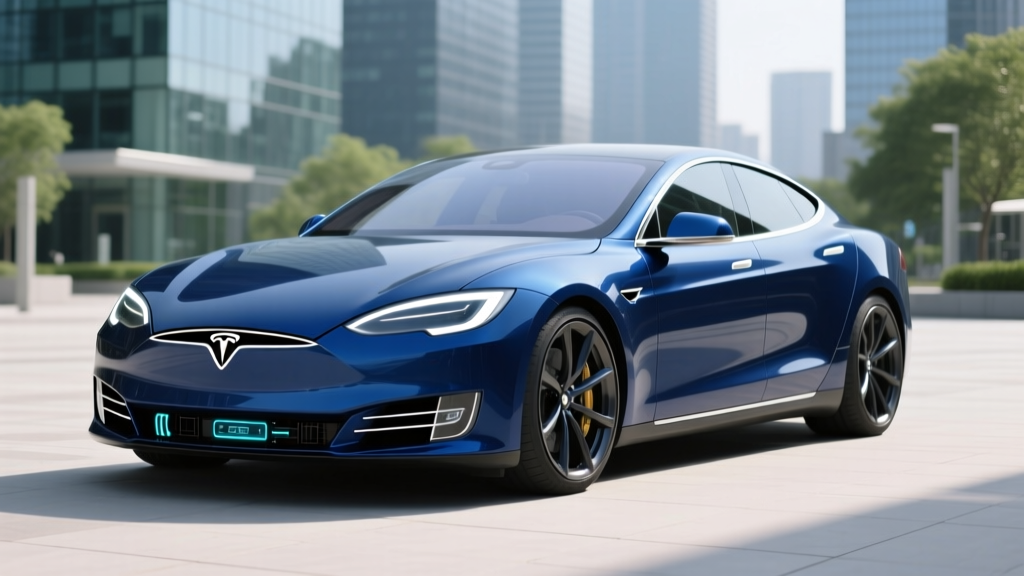
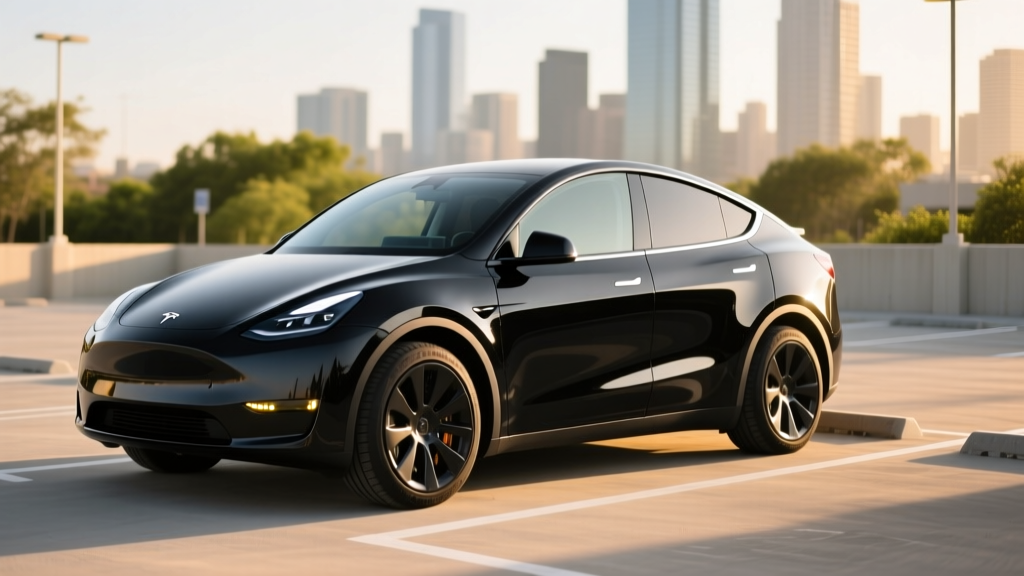
If you've been searching for exactly how much a Model Y weighs, you're not alone. Curb weight affects everything from tire wear and braking distance to energy efficiency and real-world range. The 2026 Tesla Model Y — refreshed as the "Juniper" update that rolled out through 2025 — tips the scales between 4,298 lbs (RWD) and 4,634 lbs (Long Range AWD) depending on trim and battery configuration. That's competitive within the midsize electric SUV segment, though notably heavier than some rivals due to its large battery pack.
Beyond the scale, the Model Y remains the benchmark EV that every competitor measures itself against. Here's the full spec breakdown, real-world range data, and ownership economics you need before buying.
| Spec | RWD (Standard) | Long Range AWD | Performance AWD |
|---|---|---|---|
| Curb Weight | 4,298 lbs | 4,487 lbs | 4,634 lbs |
| EPA Range | 284 mi | 320 mi | 298 mi |
| Battery (usable) | ~60 kWh (LFP) | ~75 kWh (NMC) | ~75 kWh (NMC) |
| 0-60 mph | 6.6 sec | 4.8 sec | 3.5 sec |
| Horsepower | 295 hp | 384 hp | 456 hp |
| Drivetrain | Rear-Wheel Drive | Dual-Motor AWD | Dual-Motor AWD |
| Max DC Charge Rate | 170 kW | 250 kW | 250 kW |
| Base MSRP | $44,990 | $48,990 | $53,990 |
Why Model Y Weight Matters for EV Buyers
Curb weight in an electric vehicle isn't just a trivia number — it directly influences three things buyers care about most:
- Energy efficiency: Heavier vehicles require more kWh per mile. The Model Y Long Range AWD's 4,487-lb weight is managed well by Tesla's thermal management and aero, yielding roughly 28 kWh/100mi (about 120 MPGe combined).
- Tire wear: EV tires typically wear 20-30% faster than those on comparable gas vehicles due to instant torque and higher weight. Budget for replacement tires every 25,000-35,000 miles.
- Braking and handling: The Model Y's weight is kept low relative to its battery size thanks to Tesla's structural battery pack integration, which distributes mass across the floor pan for a lower center of gravity.
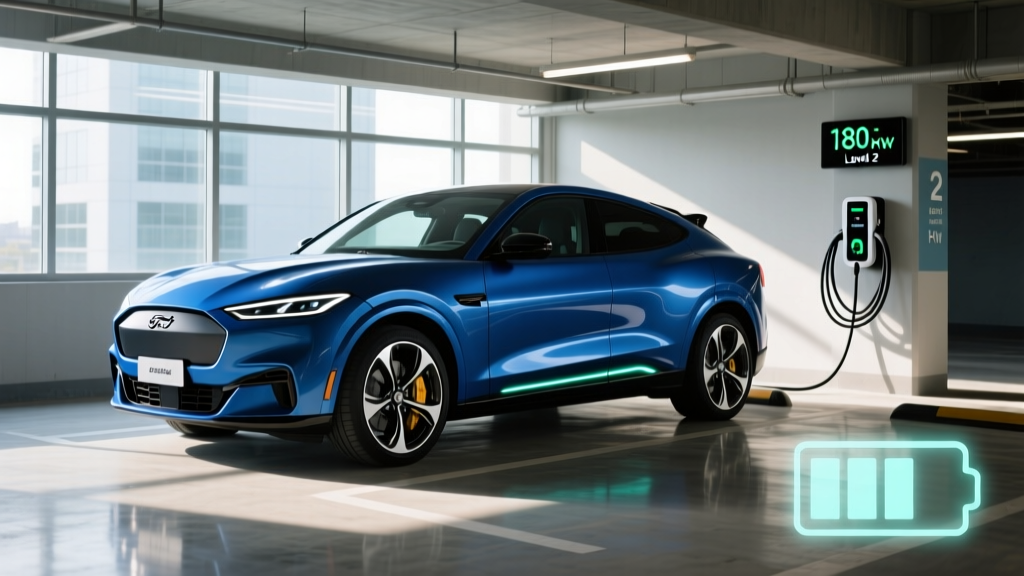
Compared to the Ford Mustang Mach-E (4,500-4,800 lbs) and Hyundai Ioniq 5 (4,431-4,826 lbs), the Model Y sits in the middle of the pack — not the lightest, but well-optimized for its interior volume.
Real-World Range vs. EPA Estimates
Real-World Expectation: 260-290 miles on mixed highway driving; 220-250 miles in sustained cold weather (below 30°F); up to 300+ miles in city driving with regenerative braking.
The EPA range sticker is measured under controlled laboratory conditions. In our experience and aggregated owner data, the Model Y Long Range AWD delivers approximately 85-90% of its EPA figure during highway road trips at 70-75 mph. That means a realistic 270-285 miles before needing to plug in on a typical interstate drive.
Cold weather is the bigger variable. Below freezing, expect 20-30% range reduction due to battery chemistry limitations and cabin heating demand. Tesla's heat pump (standard on all 2026 trims) mitigates this compared to older resistive-heating EVs, but physics still applies. Preconditioning the battery while plugged in — a feature accessible through the Tesla app — recovers some of that lost range by warming the pack before departure.
The RWD trim's LFP battery is more tolerant of daily 100% charging (Tesla recommends 100% at least weekly for LFP), while the NMC packs in Long Range and Performance trims perform best when charged to 80% daily and 100% only before long trips.
Charging Speed: DC Fast and Home Level 2
| Charging Method | RWD (LFP) | Long Range / Performance (NMC) |
|---|---|---|
| Max DC Fast Charge | 170 kW peak | 250 kW peak |
| 10-80% DC Time | ~32 min | ~22 min |
| Sustained DC (avg 10-80%) | ~110 kW | ~165 kW |
| Level 2 Home (11.5 kW / 48A) | ~32 mi/hr | ~44 mi/hr |
| Level 2 Home (7.7 kW / 32A) | ~21 mi/hr | ~29 mi/hr |
| Level 1 (120V / 12A) | ~3 mi/hr | ~4 mi/hr |
A critical detail many spec sheets gloss over: peak kW is not sustained kW. The Long Range Model Y hits 250 kW only between roughly 10-25% state of charge, then the charge curve tapers progressively. By 60% SoC, you're typically seeing 120-140 kW. By 80%, it drops below 60 kW. This is why the 10-80% time (~22 minutes) is a far more useful metric than peak rate alone.
At home on a 48-amp Level 2 circuit (requiring a 60-amp breaker), the onboard charger accepts up to 11.5 kW. That's enough to fully replenish the Long Range battery in roughly 7-8 hours overnight — the ideal daily charging setup for most owners.
The Model Y uses the NACS (North American Charging Standard) connector natively, giving direct access to Tesla's Supercharger network — widely regarded as the most reliable DC fast-charging infrastructure in the US, with over 25,000 stalls nationally. Per the Tesla Supercharger page, V4 stalls now deliver up to 350 kW, though the Model Y's 250 kW onboard limit caps its intake.
Performance and Driving Dynamics
The Model Y's dual-motor AWD system provides instant torque vectoring, and the Performance trim's 3.5-second 0-60 mph time puts it in sports-car territory despite its 4,634-lb curb weight. That's the advantage of electric drivetrains: no transmission lag, no revving to a power band — just immediate, linear acceleration.
Even the base RWD model's 6.6-second 0-60 is brisk for daily commuting and highway merging. The single-motor rear-drive layout also makes the RWD trim the most efficient in the lineup at an EPA-estimated 127 MPGe combined, per fueleconomy.gov.
Handling benefits from the low, flat battery pack placement. Body roll is minimal for a crossover, though the ride quality on the 2026 Juniper refresh is noticeably improved over earlier Model Y generations — Tesla softened the suspension tuning and added acoustic glass to reduce cabin noise.
Pricing, Trims, and Federal Tax Credit Eligibility
| Trim | Base MSRP | Est. w/ Options (As Tested) | §30D Credit Eligibility |
|---|---|---|---|
| RWD (Standard Range) | $44,990 | $46,490 (w/ FSD, paint) | Up to $7,500 — subject to sourcing rules |
| Long Range AWD | $48,990 | $52,490 (w/ wheels, FSD) | Up to $7,500 — subject to sourcing rules |
| Performance AWD | $53,990 | $56,990 (w/ red paint, FSD) | Up to $7,500 — subject to sourcing rules |
All three trims fall under the $80,000 MSRP cap for SUVs under IRS §30D rules. However, qualifying for the full $7,500 credit depends on several factors that change periodically:
- Buyer income caps: Modified AGI must not exceed $150,000 (single), $225,000 (head of household), or $300,000 (joint filers).
- MSRP cap: Vehicle base MSRP must be ≤$80,000 for SUVs (all Model Y trims qualify).
- Battery component sourcing: A percentage of battery components must be manufactured or assembled in North America (threshold increases annually).
- Critical minerals: A percentage of critical minerals must be sourced from the US or FTA partners (threshold increases annually).
- Point-of-sale transfer: Eligible buyers can transfer the credit to the dealer at purchase, reducing the upfront price rather than waiting for a tax refund.
As of early 2026, the Model Y qualifies for a partial or full credit depending on the latest battery-sourcing determinations. Check the fueleconomy.gov tax credit database and consult a tax professional before relying on a specific credit amount. Rules and eligible configurations can shift with IRS guidance updates.
Interior Space, Cargo, and Practicality
The Model Y's crossover form factor delivers genuine utility. Cargo volume measures 30.2 cubic feet behind the second row and 72.1 cubic feet with the rear seats folded. The front trunk (frunk) adds approximately 4.1 cubic feet of secure, weatherproof storage — ideal for charging cables or a small bag.
Passenger dimensions are generous for the segment:
- Front headroom: 41.0 in
- Rear headroom: 39.4 in
- Front legroom: 41.8 in
- Rear legroom: 37.0 in
The 2026 Juniper refresh improved rear-seat comfort with a slightly reclined seatback angle and ventilated cushions (on Long Range and Performance). The panoramic glass roof creates an airy cabin feel, though it does contribute to solar heat gain in summer — Tesla includes a UV/IR-blocking tint, but many owners add an aftermarket shade panel.
Tech, Driver Assistance, and Safety
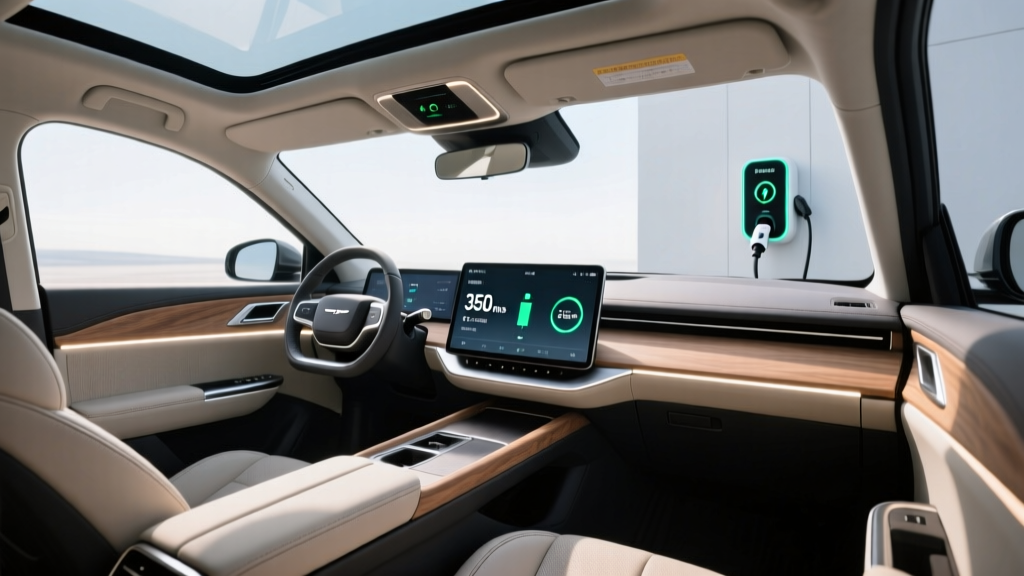
Every Model Y ships with Tesla's 15.4-inch center touchscreen running the latest Tesla OS, which handles navigation, media, climate, and vehicle settings with no physical buttons. The Juniper update added ambient lighting, a rear-seat 8-inch touchscreen for passengers, and power-folding second-row seats.
Tesla's Autopilot (standard) includes adaptive cruise control, lane centering, and automatic emergency braking. FSD (Supervised), a $8,000 add-on or $99/month subscription, adds automatic lane changes, traffic-light recognition, and city-street navigation assistance. It works impressively in many scenarios but requires constant vigilance — particularly in construction zones, unmapped areas, and adverse weather.
The Model Y holds a 5-star overall safety rating from NHTSA and has consistently earned top marks from IIHS in crashworthiness testing.
Battery Warranty and Long-Term Ownership
Tesla covers the Model Y battery and drive unit with an 8-year / 120,000-mile warranty (Long Range and Performance) or 8-year / 100,000-mile warranty (RWD), whichever comes first. The warranty guarantees a minimum of 70% battery capacity retention during the coverage period.
Real-world degradation data from high-mileage owners suggests the NMC packs in Long Range models typically lose 8-12% capacity over the first 100,000 miles, with the curve flattening significantly after that. LFP packs in the RWD trim show even slower degradation — often under 5% at 100,000 miles — thanks to LFP chemistry's superior cycle life, though at the cost of lower energy density (hence the shorter range despite similar physical pack size).
Out-of-warranty battery replacement remains expensive: Tesla has quoted $12,000-$16,000 for a Model Y pack replacement in recent service estimates. However, catastrophic battery failures are rare, and most owners will trade or sell the vehicle long before reaching that point.
Pros
- Class-leading Supercharger network access
- Excellent efficiency (120-127 MPGe combined)
- Spacious cargo area with practical frunk
- Strong real-world range with heat pump standard
- Over-the-air updates continuously add features
- Competitive pricing within premium EV SUV segment
Cons
- Ride quality still firm on rough pavement (improved but not class-leading)
- No Apple CarPlay or Android Auto
- FSD (Supervised) is expensive and not truly autonomous
- Rear visibility limited by sloping roofline
- Insurance premiums tend to be above segment average
- Minimal physical controls — everything through the touchscreen
Who Should Buy the 2026 Tesla Model Y?
Choose the Model Y RWD if: You primarily commute in mild climates, want the lowest entry price, and can charge at home daily. The LFP battery's longevity and 100%-charge tolerance make it ideal for high-mileage commuters who don't need 300+ miles of range.
Choose the Model Y Long Range AWD if: You take regular road trips, live in a cold-weather region, or need the security of 320 EPA miles. This is the best all-around trim for most families and the one we recommend for first-time EV buyers who want maximum flexibility.
Choose the Model Y Performance if: Acceleration thrills matter to you and you're willing to trade ~22 miles of range for a 3.5-second 0-60 time. Track Mode and upgraded brakes make it genuinely fun, but the premium over Long Range is substantial.
Look at competitors if: You want Apple CarPlay (Hyundai Ioniq 5, Ford Mach-E), a more traditional driving feel, or need a third row (Kia EV9). The Model Y's minimalist interior and Tesla-only ecosystem aren't for everyone.
Frequently Asked Questions
How much does a Tesla Model Y weigh exactly?
The 2026 Model Y curb weight ranges from 4,298 lbs (RWD) to 4,634 lbs (Performance AWD). The Long Range AWD weighs 4,487 lbs. These weights include all standard equipment and fluids but not passengers or cargo.
What is the real-world range of the Model Y?
Expect 260-290 miles on highway trips in moderate weather for the Long Range AWD (EPA 320 mi). City driving with regenerative braking can exceed 300 miles. In sustained cold below 30°F, plan for 220-250 miles.
How fast does the Model Y charge at home and on the road?
On a 48A Level 2 home charger (11.5 kW), the Long Range adds about 44 miles of range per hour — a full charge takes 7-8 hours. On DC fast charging, the Long Range peaks at 250 kW and charges 10-80% in approximately 22 minutes at a V3 or V4 Supercharger.
Does the 2026 Model Y qualify for the $7,500 federal tax credit?
All trims fall under the $80,000 SUV MSRP cap. Eligibility for the full or partial $7,500 credit depends on your income (AGI limits apply), battery component sourcing requirements, and critical minerals thresholds. The credit can be transferred at point of sale to reduce your purchase price. Verify current eligibility at fueleconomy.gov and consult a tax professional.
Is the Model Y worth buying vs. the Hyundai Ioniq 5 or Ford Mach-E?
The Model Y wins on Supercharger network access, efficiency, and cargo space. The Ioniq 5 offers faster 800V charging (10-80% in ~18 min), Apple CarPlay, and a more distinctive design. The Mach-E provides a more traditional driving feel and BlueCruise hands-free highway driving. Test-drive all three — the right choice depends on your priorities.
How long will the Model Y battery last?
Tesla warranties the battery for 8 years / 100,000-120,000 miles (trim-dependent) at 70% minimum capacity. Real-world data shows most Model Y packs retain 88-92% capacity at 100,000 miles. With proper charging habits (avoiding frequent 100% charges on NMC, using preconditioning), the battery should outlast 200,000 miles before dropping below 70%.