Quick Verdict: Why Tesla Model Y Weight Matters for Buyers
The Tesla Model Y weight sits between 4,216 and 4,418 pounds depending on trim, placing it among the lighter midsize electric SUVs on the market. That relatively low curb weight — combined with Tesla's industry-leading drivetrain efficiency — translates directly into real-world advantages: more miles per kWh, faster acceleration, shorter braking distances, and less tire wear than heavier rivals like the Ford Mustang Mach-E AWD (4,755 lbs) or the Hyundai Ioniq 5 AWD (4,806 lbs).
For 2026, the Model Y lineup includes the Long Range AWD and the Performance trim, both riding on Tesla's refreshed "Juniper" architecture introduced in early 2025. The Long Range AWD starts at $44,990 (before destination), while the Performance trim begins at $48,990. Both remain eligible for the full IRS §30D federal tax credit of up to $7,500, provided buyers meet income thresholds and the vehicle satisfies battery-component and critical-mineral sourcing rules.
| Spec | Long Range AWD | Performance |
|---|---|---|
| Curb Weight | 4,398 lbs | 4,418 lbs |
| EPA Range | 320 miles | 293 miles |
| Battery (Usable) | ~75 kWh (NMC) | ~75 kWh (NMC) |
| Drivetrain | Dual-Motor AWD | Dual-Motor AWD |
| Horsepower | 384 hp | 456 hp |
| 0–60 mph | 4.8 sec | 3.5 sec |
| Top Speed | 125 mph | 155 mph |
| Max DC Fast Charge | 250 kW | 250 kW |
| 10–80% DC Time | ~27 min | ~27 min |
| Level 2 Charge Rate | 11.5 kW (~44 mi/hr) | 11.5 kW (~44 mi/hr) |
| MPGe (City/Hwy/Comb) | 122 / 105 / 114 | 111 / 96 / 104 |
| kWh/100 mi | 29 | 32 |
| Cargo (rear seats up) | 30.2 cu ft | 30.2 cu ft |
| Cargo (rear seats folded) | 72.0 cu ft | 72.0 cu ft |
| Front Trunk (Frunk) | 4.1 cu ft | 4.1 cu ft |
| Rear Legroom | 41.6 in | 41.6 in |
| Base MSRP | $44,990 | $48,990 |
| Battery Warranty | 8 yr / 120,000 mi | 8 yr / 120,000 mi |
Sources: EPA / fueleconomy.gov, Tesla spec sheets.
Real-World Range vs. EPA Estimates
EPA Sticker: 320 miles (Long Range AWD) / 293 miles (Performance)
Real-World Expectation: ~265–290 miles highway at 70 mph; ~230–255 miles in sub-30°F winter conditions
The Model Y Long Range AWD's 320-mile EPA rating remains one of the highest in the midsize EV SUV segment. But EPA testing cycles include substantial low-speed city driving, where regenerative braking recovers significant energy. On sustained highway trips at 70–75 mph, expect to use roughly 30–32 kWh/100 mi, which translates to approximately 265–290 miles before the buffer warning. In cold weather (below 30°F), battery resistance increases and cabin heating demands more energy; without preconditioning, range can drop 15–25%, yielding roughly 230–255 miles.
The Model Y's relatively low weight (~4,400 lbs) helps here. Heavier competitors like the Rivian R1S (6,965 lbs) or even the GMC Hummer EV SUV (9,046 lbs) face far greater rolling-resistance and inertia penalties, particularly in stop-and-go cold-weather commuting. Tesla's heat pump — standard across all trims — also mitigates winter range loss by scavenging waste heat from the drivetrain rather than relying solely on resistive cabin heating.
For context, a 300-mile highway road trip in 40°F weather with the Long Range AWD is feasible with one 15–20 minute Supercharger stop, thanks to Tesla's robust preconditioning algorithm that warms the battery en route to a navigation-set charger.
Charging Speed: DC Fast Charge and Home Level 2
Charging speed is often the deciding factor for road-trip-capable EVs. The 2026 Model Y peaks at 250 kW on DC fast chargers (Tesla Supercharger V3 and compatible CCS/NACS stations). However, peak rate is not sustained rate. The Model Y's charge curve tapers progressively above 50% State of Charge (SoC):
| Charging Level | Power (kW) | Miles Added per Hour | Notes |
|---|---|---|---|
| Level 1 (120V household) | ~1.4 kW | ~4–5 mi/hr | Emergency/trickle only |
| Level 2 (240V / 48A Wall Connector) | 11.5 kW | ~44 mi/hr | Full charge in ~7 hours |
| Level 2 (240V / 32A Mobile Connector) | 7.7 kW | ~30 mi/hr | NEMA 14-50 outlet typical |
| DC Fast (peak) | 250 kW | ~1,000+ mi/hr (burst) | Sustains ~150 kW avg 10–80% |
| DC Fast 10–80% | ~27 minutes | — | Preconditioning required for peak rate |
On a V3 Supercharger with a preconditioned battery, the Model Y typically sustains 170–200 kW through the 10–50% SoC window, then tapers to ~100 kW by 70%, and drops below 50 kW past 85%. The 10–80% session averages about 27 minutes — competitive with Hyundai/Kia's 800V architecture (which achieves 10–80% in ~18 minutes at 350 kW chargers), though the Ioniq 5's advantage narrows at chargers below 350 kW.
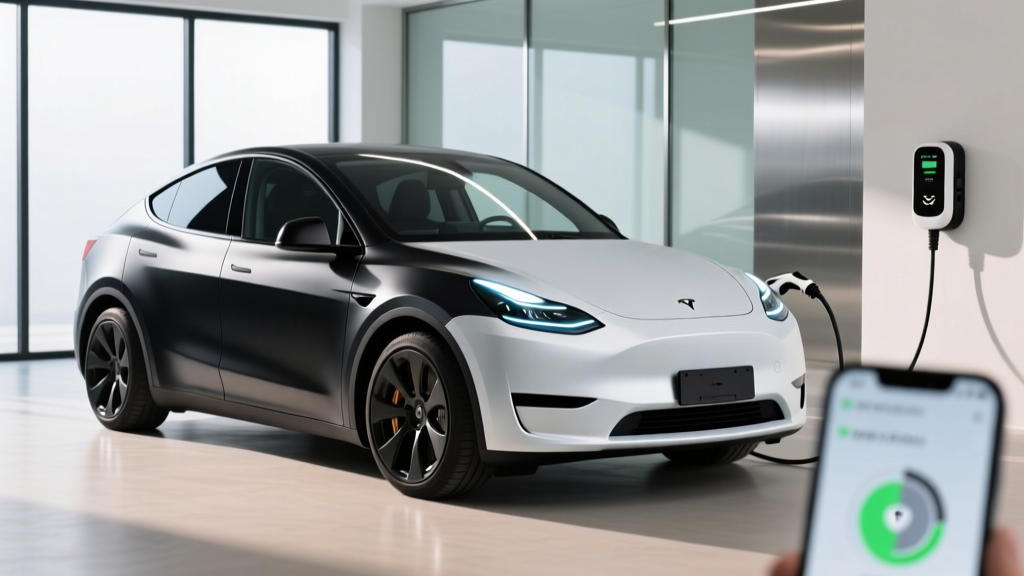
At home, the Tesla Wall Connector on a 60-amp circuit delivers 11.5 kW (48 amps continuous), adding roughly 44 miles of range per hour. A full 10–100% charge takes about 7 hours — easily accomplished overnight. Installation typically requires a 240V / 60A dedicated circuit; budget $800–$2,000 for electrician labor and permits depending on panel proximity, per industry estimates.
Performance, Drivetrain, and How Weight Shapes the Drive
The Model Y's sub-4,500-pound curb weight gives it a power-to-weight advantage that shows immediately at the stoplight. The Long Range AWD's dual-motor setup produces 384 hp and rockets to 60 mph in 4.8 seconds — brisk for a family crossover. The Performance trim bumps output to 456 hp with a 3.5-second 0–60, rivaling sports sedans at a fraction of their price.
Because the Model Y weighs roughly 300–600 pounds less than direct AWD competitors (Mach-E, Ioniq 5, VW ID.4 AWD), it exhibits noticeably less body roll in corners, shorter braking distances (roughly 115 feet from 60 mph per independent testing), and less tire scrub during aggressive driving. Lower mass also means reduced tire wear — a meaningful ownership cost, since EV tires typically need replacement every 25,000–40,000 miles due to instant torque and heavy loads.
The dual-motor AWD system provides torque-vectoring-like traction management without a mechanical center differential. In rain and light snow, the Model Y's combination of low center of gravity (battery pack mounted in the floor) and quick electronic traction response outperforms most mechanical AWD systems. However, ground clearance remains modest at 6.6 inches — adequate for suburban winter roads but not for off-pavement trails.
Pricing, Trims, and Federal Tax Credit Eligibility
For 2026, the Model Y is offered in two primary trims:
| Trim | Base MSRP | Destination | Total Before Credit | Est. After §30D Credit |
|---|---|---|---|---|
| Long Range AWD | $44,990 | $1,390 | $46,380 | ~$38,880* |
| Performance | $48,990 | $1,390 | $50,380 | ~$42,880* |
*Assumes full $7,500 §30D credit eligibility. Actual credit amount depends on battery-component and critical-mineral sourcing compliance, buyer income, and point-of-sale transfer availability. Consult IRS.gov and a tax professional for your specific situation.
- MSRP Cap: SUVs must have an MSRP at or below $80,000 — both Model Y trims qualify.
- Buyer Income Cap: Modified AGI must not exceed $150,000 (single), $225,000 (head of household), or $300,000 (joint filers).
- Battery Sourcing: The vehicle must meet escalating percentages of North American battery-component assembly and critical-mineral extraction/processing. Tesla has progressively shifted supply chains to comply, but verify current-year status at purchase.
- Point-of-Sale Transfer: Buyers can transfer the credit to the dealer at purchase, reducing the purchase price directly — no need to wait for tax filing.
As-tested pricing can climb with options: Ultra Red paint ($2,500), 20-inch wheels ($2,000 on Long Range), and Full Self-Driving (Supervised) at $8,000 or $99/month. A fully optioned Long Range can approach $57,000 before credits.
Interior, Cargo, and Technology
The Juniper-refreshed Model Y interior is noticeably quieter and more refined than pre-2025 versions, with acoustic glass, ventilated front seats, ambient lighting, and a rear-seat touchscreen for climate and entertainment. The minimalist design remains polarizing — no physical stalks (turn signals are steering-wheel buttons), no instrument cluster, and all controls route through the 15.4-inch center display.
Cargo space totals 30.2 cubic feet behind the second row and 72.0 cubic feet with seats folded, augmented by a 4.1-cubic-foot front trunk (frunk). Rear legroom measures 41.6 inches — generous for adults on longer trips. The 60/40 split-folding rear seats accommodate long cargo like skis or lumber while still seating one rear passenger.
Standout tech features:
- Tesla's 15.4-inch center touchscreen with built-in navigation, streaming, and gaming
- Over-the-air (OTA) software updates that add features post-purchase
- Autopilot (standard) — adaptive cruise, lane centering, automatic emergency braking
- Full Self-Driving (Supervised) — enhanced lane changes, traffic-light recognition, city-street navigation (still SAE Level 2, requiring full driver attention)
- Sentry Mode dashcam recording, Dog Mode climate, and phone-as-key
- Native Tesla Supercharger network access (17,000+ stalls in North America)
Notable drawbacks:
- No Apple CarPlay or Android Auto — Tesla's proprietary system only
- Buttonless turn signals require adaptation and frustrate some drivers
- No heads-up display
- FSD (Supervised) costs $8,000 extra and does not replace driver engagement
- Rear visibility is compromised by the sloping roofline; relies heavily on cameras
Warranty, Battery Longevity, and Ownership Costs
Tesla covers the Model Y's battery and drive units for 8 years or 120,000 miles, whichever comes first, with a guaranteed minimum 70% capacity retention over that period. The limited vehicle warranty runs 4 years or 50,000 miles.
The Model Y uses Nickel Manganese Cobalt (NMC) chemistry in its Long Range and Performance packs. NMC offers higher energy density than LFP (lithium iron phosphate), enabling the 320-mile range in a relatively compact, lightweight pack. However, NMC cells benefit from daily charging limits of 80–90% to maximize long-term longevity; Tesla's onboard battery-management system handles this automatically when you set a daily charge limit.
Real-world degradation data from fleet analyses suggests NMC Tesla packs lose approximately 8–12% capacity over the first 100,000 miles, with the curve flattening significantly thereafter. A full battery replacement outside warranty currently costs $12,000–$16,000 at Tesla service centers, though most owners will never need one within typical ownership periods.
5-year estimated ownership costs (15,000 miles/year, $0.13/kWh home charging, $0.35/kWh occasional DC fast charging):
- Electricity: ~$3,800 (vs. ~$9,200 gasoline for a 25 MPG comparable SUV)
- Insurance: ~$9,500–$12,000 (EV premiums run 15–25% higher on average)
- Maintenance: ~$1,800 (cabin air filter, wiper fluid, tire rotations — no oil changes)
- Tires: ~$2,800 (two sets of EV-rated tires over 5 years)
How the Model Y Stacks Up Against Key Competitors
| Spec | Tesla Model Y LR AWD | Ford Mach-E ER AWD | Hyundai Ioniq 5 AWD |
|---|---|---|---|
| Curb Weight | 4,398 lbs | 4,755 lbs | 4,806 lbs |
| EPA Range | 320 mi | 312 mi | 290 mi |
| Battery (Usable) | ~75 kWh | ~91 kWh | ~77.4 kWh |
| 0–60 mph | 4.8 sec | 5.1 sec | 5.1 sec |
| Max DC Charge | 250 kW | 150 kW | 350 kW |
| 10–80% Time | ~27 min | ~45 min | ~18 min |
| MPGe Combined | 114 | 101 | 110 |
| Cargo (rear up) | 30.2 cu ft | 29.7 cu ft | 27.2 cu ft |
| Base MSRP | $44,990 | $48,995 | $50,100 |
The Model Y's efficiency advantage is clear: it achieves 320 miles from a ~75 kWh pack, while the Mach-E needs a larger 91 kWh pack to reach 312 miles — and weighs 357 pounds more doing it. The Ioniq 5's 800V architecture delivers faster peak charging (350 kW, 10–80% in ~18 min), but only at 350 kW stations, which remain far less common than Tesla's 250 kW V3 Supercharger network.
Pros
- Class-leading efficiency (114 MPGe combined)
- Lightest curb weight in segment — better handling, tire life
- 320-mile EPA range from a compact 75 kWh pack
- Access to 17,000+ Tesla Supercharger stalls
- Strong OTA update track record
- Eligible for $7,500 federal tax credit
- Spacious 72 cu ft cargo with seats folded
Cons
- No Apple CarPlay / Android Auto
- Buttonless turn signals polarize drivers
- DC fast charge slower than Ioniq 5's 800V system
- FSD (Supervised) is expensive and still Level 2
- Rear visibility limited by coupe-like roofline
- Insurance premiums above segment average
Who Should Buy the 2026 Tesla Model Y?
Choose the Model Y Long Range AWD if: You prioritize maximum range, low running costs, and access to the most reliable DC fast-charging network for road trips. Ideal for daily commuters driving 30–80 miles round-trip with home charging, and families needing cargo versatility.
Choose the Model Y Performance if: You want sports-sedan acceleration (3.5 sec 0–60) in a practical SUV body, and you're willing to trade 27 miles of EPA range for the thrill.
Look elsewhere if: You demand Apple CarPlay (consider Mach-E or Ioniq 5), need the fastest possible DC charging for frequent long-distance driving (Ioniq 5's 800V system), or require three-row seating (Kia EV9).
Frequently Asked Questions
What is the real-world range of the Tesla Model Y?
The Long Range AWD achieves an EPA-rated 320 miles, but expect roughly 265–290 miles on sustained highway driving at 70 mph, and 230–255 miles in sub-30°F cold weather. The Performance trim rates at 293 miles EPA with proportionally lower real-world figures.
How fast does the Model Y charge at home and on DC fast chargers?
At home on a 240V / 48A Tesla Wall Connector, the Model Y charges at 11.5 kW, adding ~44 miles per hour (full charge in ~7 hours). On DC fast chargers, it peaks at 250 kW and completes a 10–80% session in approximately 27 minutes with battery preconditioning.
How much does the Model Y cost after the federal tax credit?
The Long Range AWD starts at $46,380 including destination. With the full $7,500 §30D credit (subject to income caps, MSRP limits, and battery-sourcing rules), the effective price drops to approximately $38,880. The Performance trim lands near $42,880 after credit.
Does the Tesla Model Y qualify for the federal EV tax credit?
Yes, both trims currently qualify for up to $7,500 under IRS §30D, as the MSRP is below the $80,000 SUV cap. Buyer income must not exceed $150,000 (single) / $300,000 (joint). Verify current battery-sourcing compliance at the time of purchase via fueleconomy.gov.
Is the Model Y worth buying vs. the Mach-E or Ioniq 5?
The Model Y wins on efficiency (most miles per kWh), charging-network access (Superchargers), and cargo space. The Ioniq 5 charges faster at 350 kW stations and offers CarPlay. The Mach-E provides a more traditional interior layout. For most buyers prioritizing range and road-trip convenience, the Model Y remains the benchmark.
How does Tesla Model Y weight affect efficiency and tire wear?
At ~4,400 lbs, the Model Y is 300–600 lbs lighter than key AWD competitors. This reduces energy consumption (29 kWh/100 mi vs. 33+ for heavier rivals), shortens braking distances, and extends tire life — a meaningful cost saving since EV tires typically last 25,000–40,000 miles under the stress of instant torque and heavy loads.
What is the battery warranty on the 2026 Model Y?
Tesla covers the battery and drive units for 8 years or 120,000 miles with a minimum 70% capacity retention guarantee. The general vehicle warranty is 4 years or 50,000 miles.