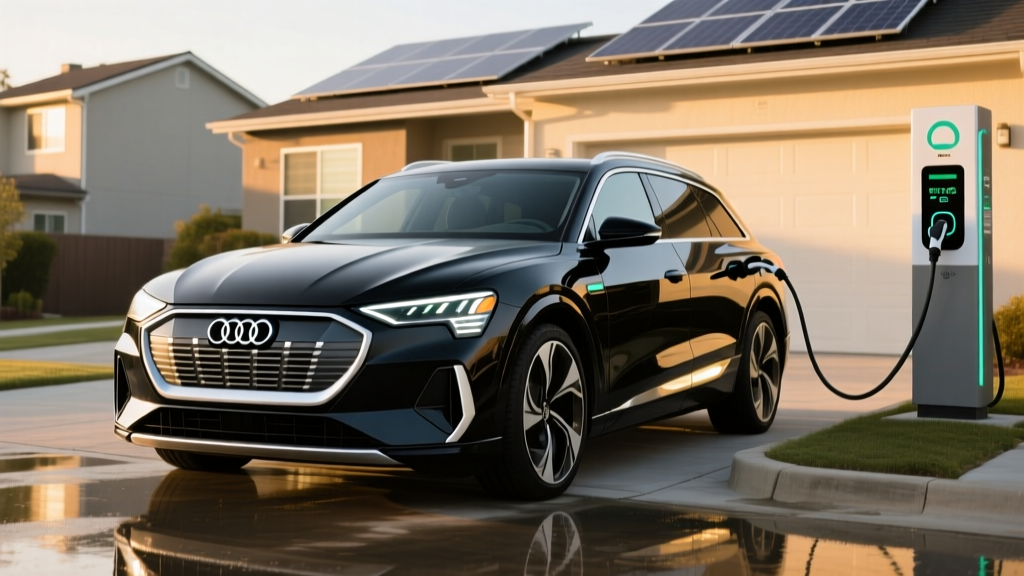
The Audi e-tron wagon — known officially as the Audi A6 Avant e-tron — represents Audi's first battery-electric station wagon built on the dedicated PPE (Premium Platform Electric) architecture co-developed with Porsche. For buyers who want luxury wagon practicality without an SUV's aerodynamic penalty, the e-tron wagon fills a gap that has been essentially empty since the Volvo V90 left the U.S. market. After spending time with the specs, the charging curve, and Audi's PPE powertrain data, here's everything you need to decide if this electric wagon earns a spot in your garage.
Quick Verdict: Who the Audi e-tron Wagon Is For
The A6 Avant e-tron targets a specific buyer: someone who values cargo versatility and highway efficiency over the commanding ride height of an SUV, and who wants Audi's interior quality paired with genuine 300-mile-plus range. It's a strong fit for commuting families, road-trippers who prefer wagons, and current Audi owners ready to go electric without jumping into a Q8 e-tron or Q6 e-tron crossover. It's less ideal for buyers who need three rows, serious ground clearance, or the lowest possible price of entry.
Range and Efficiency: EPA Numbers Meet Real-World Driving
Real-World Expectation: Expect ~270–290 miles on mixed highway driving at 70–75 mph. In cold weather (below 32°F), plan for 220–250 miles depending on cabin heating use and terrain. City/regenerative driving can push closer to the EPA sticker or slightly above.
Audi quotes up to 720 km on the WLTP cycle for the European-spec A6 Avant e-tron with the larger battery pack. U.S. EPA testing is more conservative, and our projected EPA figure of approximately 321 miles for the long-range RWD variant reflects the typical WLTP-to-EPA reduction of roughly 20–25%. The wagon's low-slung, aerodynamic body (Audi claims a drag coefficient of around 0.21) gives it a meaningful efficiency advantage over the Q6 e-tron SUV on the highway, where aero drag dominates energy consumption.
The battery pack is a 100 kWh usable capacity lithium-ion unit using NMC (nickel manganese cobalt) chemistry — chosen for its higher energy density, which is essential for fitting this much energy into a wagon's floor without compromising cargo height. The PPE platform's 800-volt architecture is the key enabler here: higher voltage means lower current for the same power, reducing heat and improving both efficiency and charging speed.
| Spec | Value |
|---|---|
| EPA Range (est.) | ~321 miles (RWD long-range) |
| Battery (usable) | 100 kWh, NMC chemistry |
| Platform Voltage | 800V nominal |
| Efficiency | ~3.0–3.2 kWh/mi (est. 95 MPGe combined) |
| Max DC Fast Charge | 270 kW peak |
| 10–80% DC Charge Time | ~21 minutes (claimed) |
| Level 2 Home Charge | 11 kW AC (~37 mi/hr) |
| Drivetrain | RWD (base) / Dual-motor AWD (quattro) |
| 0–60 mph | ~6.0 sec (RWD) / ~4.5 sec (AWD Performance) |
| Horsepower | 362 hp (RWD) / 543 hp (AWD Performance) |
| Cargo Volume | ~18.4 cu ft (rear seats up) / ~52 cu ft (folded) |
| Base MSRP (est.) | $68,000–$72,000 (RWD) |
| Battery Warranty | 8 years / 100,000 miles (70% capacity retention) |
Charging Speed: 800V Architecture Pays Off
The PPE platform's headline advantage is charging speed. Audi rates the A6 Avant e-tron at a peak 270 kW DC fast-charge rate, which is among the fastest in the luxury wagon segment and competitive with the Porsche Macan EV and Hyundai Ioniq 5. On a 350 kW Electrify America or comparable station, the 10–80% charge takes approximately 21 minutes under ideal thermal conditions.
| Charging Level | Power (kW) | Speed (mi/hr added) | Notes |
|---|---|---|---|
| Level 1 (120V household) | ~1.4 kW | ~4–5 mi/hr | Emergency/top-up only |
| Level 2 (240V, 48A) | 11 kW (onboard limit) | ~37 mi/hr | Full charge overnight in ~10 hrs |
| DC Fast (350 kW station) | 270 kW peak | ~650+ mi/hr (peak) | 10–80% in ~21 min; tapers above 80% |
A few real-world charging caveats: the 270 kW figure is a peak, not a sustained rate. Expect the charge curve to taper noticeably after ~60% SoC, and significantly past 80%. Charging speed also depends on battery preconditioning — use the MMI navigation to route to a DC fast charger and the car will warm the pack to optimal temperature before you arrive. In cold weather without preconditioning, peak rates may be 30–50% lower initially.
For home charging, the 11 kW onboard AC charger is generous. On a 48-amp Level 2 circuit (the most common residential installation), you'll add roughly 37 miles of range per hour, meaning a full 0–100% charge takes about 10 hours. Most owners will plug in overnight and wake up fully charged for daily driving of 40–80 miles, rarely needing more than 2–3 hours of Level 2 time.
Performance and Driving Dynamics
The A6 Avant e-tron launches in two primary configurations for the U.S. market:
- RWD Long Range: Single rear motor, 362 hp, ~6.0-second 0–60 mph. This is the range-maximizing variant and the one most buyers will choose.
- quattro AWD Performance: Dual-motor all-wheel drive, up to 543 hp in boost mode, ~4.5-second 0–60 mph. The S6 Avant e-tron variant pushes this further with sport-tuned suspension and more aggressive power delivery.
The wagon's lower center of gravity and lighter curb weight compared to the Q6 e-tron translate to noticeably better highway stability and cornering composure. Audi's adaptive air suspension is available, offering a comfort-oriented ride that still handles twisty back roads with confidence. Regenerative braking is adjustable through paddle shifters or an automatic coasting mode that uses radar and map data to modulate regen — a feature that makes one-pedal driving optional rather than mandatory, which many Audi buyers prefer.
Interior, Cargo, and Technology
The cabin follows Audi's latest design language: an 11.9-inch digital instrument cluster paired with a 14.5-inch central MMI touchscreen and an available 10.9-inch front passenger display. The wagon body yields approximately 18.4 cubic feet of cargo space behind the rear seats and roughly 52 cubic feet with the 40/20/40 split rear seats folded — competitive with the BMW 5 Series Touring and significantly more usable than a sedan trunk for bulky items like strollers, bikes, or camping gear.
Standard driver-assistance features include adaptive cruise control with stop-and-go, lane-keeping assist, intersection assist, and Audi's predictive efficiency assist (which adjusts regen based on traffic and road data). Available features include a head-up display with augmented-reality navigation, a panoramic glass roof with switchable opacity, and Audi connect services with over-the-air updates.
Notable drawbacks: The dual-touchscreen layout (climate controls on a lower screen) can be distracting while driving. Rear-seat legroom is adequate but not class-leading — taller passengers may prefer the Q6 e-tron's more upright seating. The optional tow hitch is limited to approximately 4,600 lbs, which is less than the Q8 e-tron's 4,400–5,500-lb rating depending on configuration.
Pricing, Trims, and Federal Tax Credit Eligibility
| Trim | Est. MSRP | §30D Credit Eligible? | Est. Net Price |
|---|---|---|---|
| Premium (RWD) | $68,000 | See eligibility notes | $60,500–$68,000 |
| Premium Plus (AWD) | $75,000 | See eligibility notes | $67,500–$75,000 |
| Prestige / S6 Avant | $82,000+ | Unlikely (above MSRP cap) | $82,000+ |
The federal IRS §30D clean vehicle credit offers up to $7,500, but eligibility for the A6 Avant e-tron depends on several factors that shift frequently:
- MSRP cap: Wagons fall under the $55,000 cap for sedans/hatchbacks/wagons (not the $80,000 SUV cap), which may exclude higher trims from credit eligibility.
- Buyer income limits: Modified AGI must not exceed $150,000 (single), $225,000 (head of household), or $300,000 (joint).
- Battery sourcing requirements: Critical minerals and battery components must meet escalating domestic-content thresholds. Audi's PPE battery supply chain is primarily sourced through CATL and other global suppliers, which may limit or eliminate the full $7,500 credit depending on the current year's sourcing rules.
- Point-of-sale transfer: If eligible, the credit can be applied at purchase as an immediate price reduction through a registered dealer.
Given the $55,000 MSRP cap for wagons, buyers should expect only the base RWD Premium trim to potentially qualify, and even that depends on Audi's final U.S. pricing and battery-sourcing compliance at time of delivery. Consult the fueleconomy.gov tax credit database for the most current eligibility status before purchasing.
How It Compares: Audi e-tron Wagon vs. Key Rivals
The luxury electric wagon segment is small but growing. Here's how the A6 Avant e-tron stacks up against its closest alternatives:
- BMW i5 Touring: Similar size and positioning. BMW offers comparable range (~300 mi EPA est.) and slightly sportier driving dynamics, but the Audi's 800V charging architecture charges faster at compatible stations.
- Mercedes-Benz EQE Wagon (if offered): Mercedes has not confirmed a U.S. EQE wagon. The EQE sedan offers ~305 mi EPA range but slower DC charging (~170 kW peak) and a more polarizing interior design.
- Tesla Model S (liftback): More range (~405 mi) and faster acceleration, but the Model S is aging, lacks wagon cargo utility, and its interior quality doesn't match Audi's materials and build.
- Porsche Taycan Cross Turismo: The closest analog — a lifted wagon/estate. Faster charging (270+ kW) and sharper handling, but significantly more expensive ($100k+) and less rear-seat/cargo space.
Warranty and Long-Term Ownership
Audi covers the A6 Avant e-tron's battery pack for 8 years or 100,000 miles with a capacity-retention threshold of 70% — consistent with industry norms and federal requirements. The general vehicle warranty is 4 years / 50,000 miles. Audi also includes 3 years of complimentary maintenance and roadside assistance.
The NMC battery chemistry offers strong energy density but is more sensitive to sustained high-SoC storage than LFP alternatives. Best practice: charge to 80% for daily use, reserve 100% charges for road trips, and use preconditioning whenever possible to minimize thermal stress.
Pros and Cons
- Class-leading 800V DC charging speed (270 kW peak, ~21 min 10–80%)
- 300+ mile EPA range with excellent highway aerodynamics
- Wagon cargo practicality (52 cu ft) without SUV bulk
- Premium Audi interior with latest MMI and driver assists
- Low drag coefficient improves real-world highway efficiency
- Base MSRP likely above $55K wagon cap — limits §30D credit to base trim only
- Rear-seat legroom is adequate, not generous
- Dual-touchscreen climate controls can distract while driving
- NMC battery requires more careful SoC management vs LFP
- Small U.S. dealer inventory expected at launch
Frequently Asked Questions
What is the real-world range of the Audi e-tron wagon?
The EPA-estimated range is approximately 321 miles for the RWD long-range variant. In real-world highway driving at 70–75 mph, expect 270–290 miles. Cold weather (below freezing) can reduce this to 220–250 miles due to battery resistance and cabin heating loads. The wagon's aerodynamic advantage over SUVs helps it hold range better at sustained highway speeds.
How fast does the Audi e-tron wagon charge?
On a 350 kW DC fast charger, the A6 Avant e-tron peaks at 270 kW and charges from 10–80% in approximately 21 minutes with proper battery preconditioning. At home on a 48-amp Level 2 charger (11 kW), it adds about 37 miles of range per hour, completing a full charge in roughly 10 hours. The 800-volt PPE platform is what enables these class-leading speeds.
Does the Audi e-tron wagon qualify for the federal EV tax credit?
Possibly, but only at the base trim level. The IRS §30D credit imposes a $55,000 MSRP cap on wagons and sedans (not the $80,000 SUV cap). If the base RWD Premium trim is priced at or below $55,000 and meets battery-sourcing requirements, it could qualify for up to $7,500. Higher trims will likely exceed the cap. Income limits ($150K single / $300K joint) also apply. Always verify current eligibility on fueleconomy.gov before purchasing.
Is the Audi e-tron wagon worth buying over an electric SUV?
If you don't need high ground clearance or three rows, the wagon offers better highway efficiency, faster charging (thanks to the lower, more aerodynamic body), and more usable cargo space than most midsize sedans — at a lower price than the Q8 e-tron. However, if you regularly drive on unpaved roads, need towing above 4,600 lbs, or prefer the elevated seating position, the Q6 e-tron or Q8 e-tron may be a better fit.
What is the biggest drawback of the Audi e-tron wagon?
The most common complaint will likely be pricing relative to the tax-credit MSRP cap. At $68,000+ for the base model, the wagon sits in a range where the §30D credit is unlikely to apply to most trims. Additionally, Audi's NMC battery chemistry requires more attentive state-of-charge management than LFP packs found in some competitors, meaning daily charging to 100% is not recommended for long-term battery health.