Quick Verdict: Two Very Different Family EVs
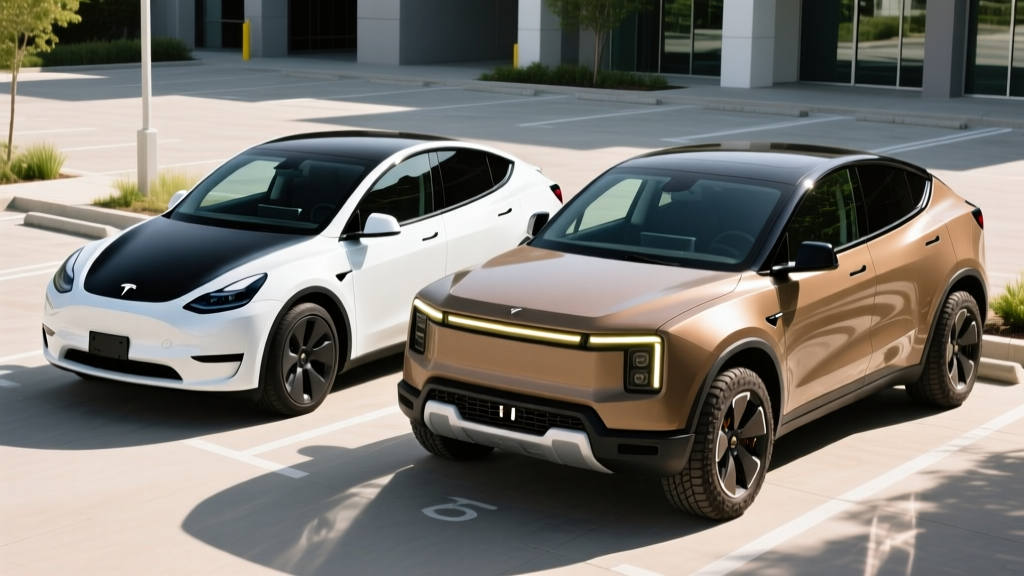
The Tesla Model Y and Rivian R1S dominate family-oriented EV shopping lists, but they solve fundamentally different problems. The Model Y is a mass-market crossover optimized for efficiency, software integration, and Supercharger convenience. The R1S is a premium three-row adventure SUV built for towing, off-road capability, and space. If your keyword search brought you here comparing Tesla Rivian options, the short answer is: choose the Model Y for daily commuting and road-trip charging ease; choose the R1S for three rows, towing, and rugged utility. Below, we break down every spec that matters.
2026 Head-to-Head Spec Table
| Spec | Tesla Model Y Long Range AWD | Rivian R1S Dual-Motor Standard |
|---|---|---|
| EPA Range | 320 miles | 270 miles |
| Battery (usable) | ~75 kWh (NMC) | ~92 kWh (NMC, Samsung SDI) |
| Max DC Fast Charge | 250 kW (CCS/NACS) | 220 kW (NACS) |
| 10–80% DC Time | ~25 min | ~30 min |
| Level 2 Home Rate | 11.5 kW (~44 mi/hr) | 11.5 kW (~31 mi/hr) |
| 0–60 mph | 4.8 sec | 4.5 sec |
| Horsepower | 384 hp | 533 hp |
| Drivetrain | Dual-Motor AWD | Dual-Motor AWD |
| MPGe (combined) | 117 MPGe | 73 MPGe |
| Efficiency | 28 kWh/100 mi | 46 kWh/100 mi |
| Cargo (behind 3rd row) | 30.2 cu ft (5-seat only) | 10.4 cu ft |
| Cargo (max) | 76.2 cu ft | 104.7 cu ft (folded) |
| Seating | 5 (optional 7) | 7 standard |
| Towing Capacity | 3,500 lbs | 7,700 lbs |
| Battery Warranty | 8 yr / 120,000 mi | 8 yr / 120,000 mi |
| Base MSRP | $48,990 | $79,900 |
Range & Real-World Efficiency
EPA Range: Model Y LR AWD: 320 mi | R1S Dual-Motor: 270 mi
Real-World Expectation: The Model Y's aerodynamic efficiency shines on highway loops — expect 280–300 miles at 70 mph in mild weather, dropping to roughly 230–250 miles in sub-freezing temperatures. The R1S, with its boxy profile and heavier curb weight, typically delivers 230–250 miles highway in fair conditions, and as low as 180–200 miles in winter cold or when towing. Towing a 5,000-lb trailer can cut R1S range nearly in half.
The Model Y's 28 kWh/100 mi combined efficiency is among the best in the crossover segment, per EPA data on fueleconomy.gov. The R1S consumes 46 kWh/100 mi — a direct consequence of its 7,000+ lb curb weight and truck-based platform. For daily commuting under 60 miles round-trip, both vehicles handle the workload easily. For road trips exceeding 250 miles, the Model Y requires fewer stops and shorter charge sessions.
Charging Speed & Infrastructure
| Charging Level | Tesla Model Y | Rivian R1S |
|---|---|---|
| Level 1 (120V) | ~3 mi/hr | ~3 mi/hr |
| Level 2 (240V, 48A) | 11.5 kW / ~44 mi/hr | 11.5 kW / ~31 mi/hr |
| DC Fast Charge (peak) | 250 kW | 220 kW |
| 10–80% DC Time | ~25 min | ~30 min |
| Connector (2026) | NACS (native) | NACS (native) |
Both vehicles now ship with the NACS (North American Charging Standard) connector natively, granting access to Tesla's Supercharger network — over 20,000 stalls in North America. The Model Y peaks at 250 kW at V3 Superchargers, though sustained rates taper significantly above 60% SoC. Expect an average of roughly 150 kW across a 10–80% session. The R1S peaks at 220 kW but has a slightly flatter charge curve, meaning its average rate across the session is competitive despite the lower peak figure.
At home on a 48-amp Level 2 circuit (the most common residential installation), the Model Y adds roughly 44 miles of range per hour of charging, while the R1S adds about 31 miles per hour — its lower efficiency means each kWh doesn't go as far. A full overnight charge easily replenishes either vehicle for daily use.
Performance & Drivetrain
Both vehicles use dual-motor all-wheel drive, but their character differs sharply. The Model Y Long Range AWD produces 384 hp and reaches 60 mph in 4.8 seconds — brisk for a family crossover, with responsive handling aided by its lower center of gravity. The R1S Dual-Motor generates 533 hp and hits 60 mph in 4.5 seconds, remarkable for a 7,000-lb SUV. The R1S also offers an available Quad-Motor configuration (1,025 hp, 3.0 sec 0-60) for buyers who want supercar-level acceleration in a three-row truck.
Where the R1S pulls ahead is off-road and utility capability. It offers 14.9 inches of ground clearance in its highest air-suspension setting, a wading depth of over 3 feet, and a 7,700-lb towing rating. The Model Y is limited to 3,500 lbs of towing and has no meaningful off-road pretensions — it's a pavement-optimized vehicle through and through.
Pricing, Trims & Federal Tax Credit
| Trim | MSRP | Est. After §30D Credit* |
|---|---|---|
| Model Y Long Range AWD | $48,990 | $41,490 |
| Model Y Performance | $53,490 | $45,990 |
| R1S Dual-Motor Standard Battery | $79,900 | $72,400 |
| R1S Dual-Motor Max Battery | $89,900 | $82,400 |
| R1S Quad-Motor | $99,900 | $92,400 |
*Assumes full $7,500 §30D credit eligibility. See IRS rules below.
Federal EV Tax Credit (§30D) Requirements for 2026
- MSRP Cap: SUVs/pickups must be under $80,000 MSRP. The Model Y qualifies at all trims. The R1S Standard Battery ($79,900) qualifies; Max Battery and Quad-Motor trims exceed the cap.
- Buyer Income Cap: AGI must not exceed $150,000 (single), $225,000 (head of household), or $300,000 (joint). Check IRS.gov §30D guidance for current-year thresholds.
- Battery Sourcing: Critical minerals and battery components must meet phased-in domestic-content and free-trade-agreement thresholds. Both Tesla and Rivian have worked to qualify, but verify VIN-level eligibility at the IRS or via the dealer's point-of-sale transfer system.
- Point-of-Sale Transfer: Eligible buyers can transfer the credit to the dealer at purchase, reducing the purchase price directly rather than waiting for a tax refund.
This is a critical divergence: the Model Y qualifies for the full credit at every trim. The R1S only qualifies at the Standard Battery trim — and only if your income falls under the cap and the battery-sourcing requirements are met for your specific VIN. Always verify eligibility before purchase. Consult a tax professional for your specific situation.
Interior, Cargo & Family Practicality
The Model Y seats five standard (a cramped third-row option exists but is best suited for small children). Cargo space behind the rear seats is 30.2 cu ft, expanding to 76.2 cu ft with seats folded. Rear legroom is 41.6 inches — generous for adults. The minimalist interior centers on a 15.4-inch touchscreen controlling virtually all vehicle functions, which some buyers love and others find distracting.
The R1S seats seven as standard with a genuinely usable third row offering 32.5 inches of legroom — adequate for adults on shorter trips. Cargo behind the third row is just 10.4 cu ft (enough for a few grocery bags), but folding the third row opens up 46.7 cu ft, and folding both rear rows yields a van-like 104.7 cu ft. The R1S also features a front trunk (frunk) with 11.0 cu ft — useful for gear or groceries. Interior materials and build quality in the 2026 R1S have improved markedly over early-production models, with real wood, leather, and a more refined 15.6-inch infotainment display.
Driver Assistance & Standout Tech
SAE Automation Level: Both Tesla Autopilot/FSD (Supervised) and Rivian Driver+ are SAE Level 2 driver-assist systems. The driver must remain fully engaged, hands on or near the wheel, and eyes on the road at all times. Neither system is self-driving.
Tesla's Autopilot comes standard and includes adaptive cruise control, lane centering, and automatic emergency braking. Full Self-Driving (Supervised) is an $8,000 option (or $99/month subscription) that adds automated lane changes, traffic-light recognition, and city-street navigation. It remains a Level 2 system requiring constant supervision, and NHTSA continues to scrutinize its safety record.
Rivian's Driver+ includes adaptive cruise, lane centering, and highway assist. It's less ambitious than FSD but has earned positive marks for smoothness and reliability. The R1S also features a unique gear tunnel (an optional pass-through storage compartment between the rear wheels on some configurations), camp kitchen accessories, and over-the-air updates that have added meaningful features post-purchase.
ADAS Limitation Warning: Neither Autopilot, FSD (Supervised), nor Driver+ replaces an attentive human driver. You are legally and physically responsible for the vehicle at all times. Do not use these systems while drowsy, distracted, or in conditions beyond their operational design (construction zones, unmapped roads, severe weather).
Ownership Costs, Warranty & Longevity
Both vehicles carry identical battery and powertrain warranties: 8 years / 120,000 miles, with a minimum 70% capacity retention threshold. Tesla's basic vehicle warranty is 4 years / 50,000 miles; Rivian matches this. Real-world battery degradation data from fleet sources suggests both NMC packs lose roughly 8–12% capacity over the first 100,000 miles, with the curve flattening significantly afterward.
Estimated 5-Year / 75,000-Mile Total Cost of Ownership
| Cost Factor | Model Y LR AWD | R1S Dual-Motor Std |
|---|---|---|
| Purchase (after credit) | $41,490 | $72,400 |
| Electricity (charging) | $3,150 | $5,175 |
| Insurance (est. avg) | $9,500 | $11,250 |
| Maintenance | $1,500 | $2,000 |
| Depreciation (est.) | $18,000 | $28,000 |
| Total 5-Year | ~$73,640 | ~$118,825 |
The Model Y's efficiency advantage compounds over time — it uses roughly 40% less electricity per mile than the R1S. Insurance premiums for both vehicles run higher than average for their segments, with the R1S commanding a premium due to its higher repair costs and MSRP. Depreciation remains the largest ownership cost for both, though Tesla's broader used-EV market liquidity may provide a modest advantage at resale.
Pros & Cons at a Glance
Tesla Model Y Pros & Cons
Pros:
- Best-in-class efficiency (117 MPGe combined)
- Extensive Supercharger network access
- Lower entry price with full §30D credit eligibility
- Strong over-the-air update track record
- Spacious 5-seat cargo area
Cons:
- No usable third row
- Limited towing (3,500 lbs)
- Minimalist interior polarizes buyers
- Panel gaps and service center wait times remain concerns
Rivian R1S Pros & Cons
Pros:
- Genuine 7-seat layout with usable third row
- 7,700-lb towing capacity
- Off-road capability with air suspension
- Premium interior materials and build quality
- Strong powertrain (533+ hp standard)
Cons:
- High entry price; most trims exceed §30D MSRP cap
- Lower efficiency (73 MPGe) means higher charging costs
- Shorter real-world range, especially when towing
- Smaller service network vs Tesla
Which Should You Choose?
Choose the Tesla Model Y if: You commute daily under 80 miles, take regular road trips where Supercharger density matters, want the lowest total cost of ownership, and don't need a third row or heavy towing.
Choose the Rivian R1S if: You need three usable rows for family or carpool duty, tow boats or trailers regularly, venture off-pavement, and can absorb the higher purchase price and charging costs.
Frequently Asked Questions
What is the real-world range of the Tesla Model Y and Rivian R1S?
The Model Y Long Range AWD delivers roughly 280–300 miles on highway drives in mild weather, falling to 230–250 miles in freezing temperatures. The R1S Dual-Motor Standard manages 230–250 miles highway in fair conditions, dropping to 180–200 miles in winter. Towing significantly reduces R1S range — expect 130–170 miles with a heavy trailer.
How fast do these EVs charge at home and on the road?
On a 48-amp Level 2 home charger, the Model Y adds ~44 miles of range per hour; the R1S adds ~31 miles per hour. At DC fast chargers, the Model Y peaks at 250 kW (10–80% in ~25 minutes) and the R1S at 220 kW (10–80% in ~30 minutes). Both use the NACS connector natively in 2026.
Does the Rivian R1S qualify for the $7,500 federal EV tax credit?
Only the R1S Standard Battery trim ($79,900 MSRP) falls under the $80,000 SUV cap for §30D eligibility. Max Battery and Quad-Motor trims exceed the cap and do not qualify. Buyer income limits and battery-sourcing rules also apply — verify your VIN's eligibility at IRS.gov before purchasing.
Is the Tesla Model Y or Rivian R1S better for families?
It depends on family size and lifestyle. Families with two or fewer children who primarily drive on pavement will find the Model Y more affordable and efficient. Larger families, those who tow, or those who camp and go off-road will benefit from the R1S's three rows, cargo volume, and 7,700-lb towing capacity.
How do insurance costs compare?
The R1S typically costs 15–25% more to insure than the Model Y, reflecting its higher MSRP, repair complexity, and parts costs. Both vehicles carry above-average premiums compared to non-electrified SUVs in their segments. Get quotes from your insurer before committing to either purchase.
Which holds its value better?
Early data suggests the Model Y depreciates roughly 40–45% over five years, while the R1S depreciates 35–40% — a slightly better percentage but on a much higher starting price, meaning greater absolute dollar loss. Tesla's larger used-EV buyer pool may make resale easier, though Rivian's limited production volumes support residual values among adventure-oriented buyers.